Quick answer
Set up the Mirror maze on a low, stable surface during a predictable lull in the day, then run a five-minute guided round where you narrate the beads' movement before handing over control. Keep sessions short, repeat the same sequence for a week, and add one new challenge only when your child finishes without frustration.
Why a bead maze earns a place in your screen-free rotation
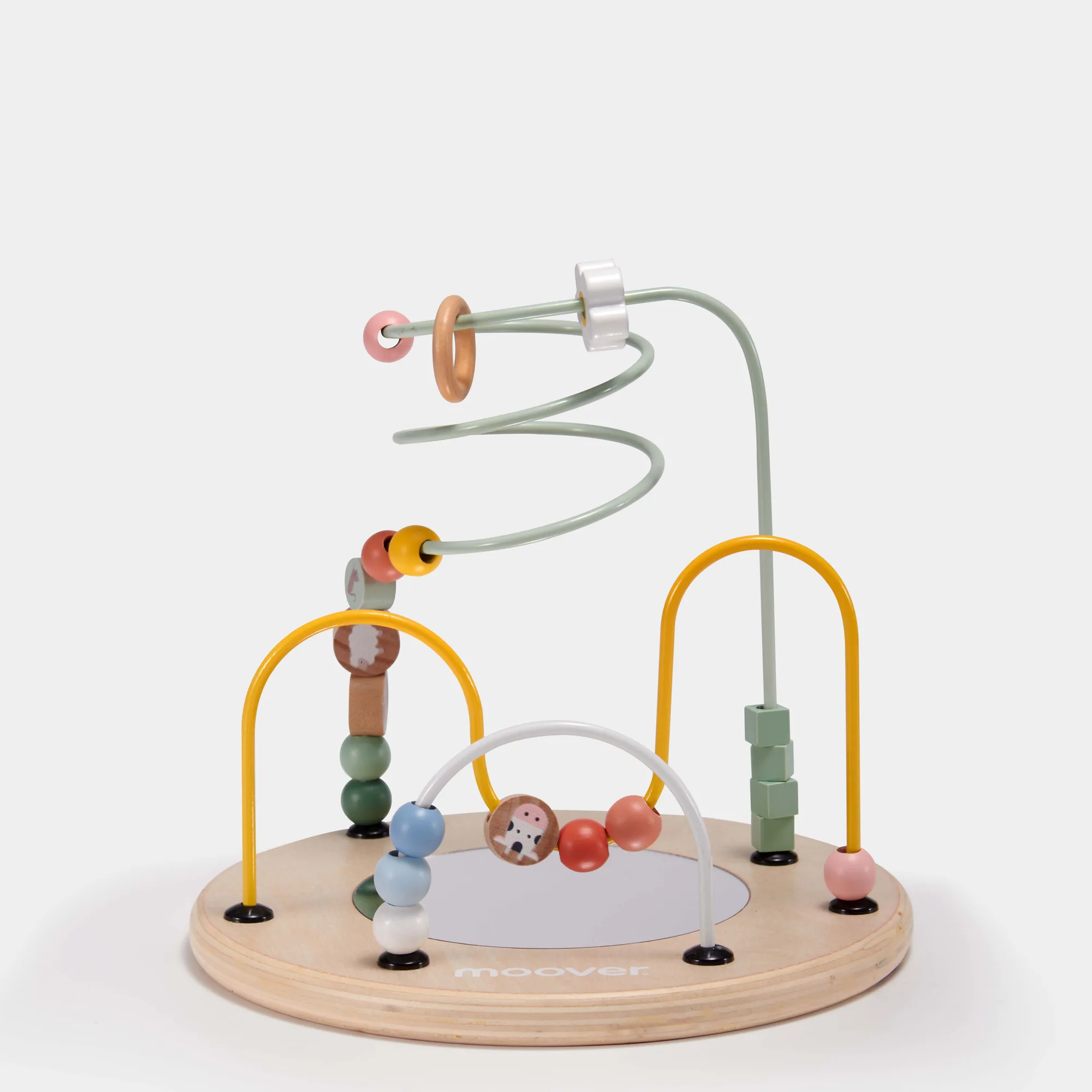
A wooden bead maze is self-contained, quiet, and needs no batteries or setup, which makes it easier to reach for than a screen when you need ten calm minutes. The Mirror maze from Moover Toys is built around twisting wire paths and colorful beads; its catalog description notes that guiding beads through the loops supports hand-eye coordination and fine motor skills, and the clicking sound gives immediate feedback. That feedback loop is what keeps young children returning to it without an adult prompting them.
Choose the right moment and spot
Placement matters more than technique. Put the maze at your child's chest height when seated, on a non-slip mat or rug, away from the main walkway. Avoid the highchair tray if your child is already frustrated there, and avoid the car unless the maze has a way to stay put. The goal is a spot where your child can lean in with both hands free and where you can sit beside them without hovering.
Run a five-minute guided round
Start by moving one bead slowly along a single path while describing what you see: 'The red bead is going up, now around the curve.' Then pause and let your child take over. If they push beads backward or skip paths, follow their lead rather than correcting. When attention fades, stop while it is still fun. A short, positive session is more likely to be repeated than a long one that ends in a meltdown.
Add problem-solving without turning it into a test
Once your child can move beads smoothly, introduce simple goals: send all the blue beads to one side, or make a bead travel from the bottom to the top without stopping. These are problem-solving toys in the truest sense because the child sets the goal and adjusts their own hand movements. Resist timing or scoring; the value is in the planning and correction, not the speed.
Step-by-step mirror maze routine
- 1. Set a predictable time: Pick a slot that already happens daily, such as after breakfast or before bath, and put the maze in the same spot each time. Common mistake: introducing it during a tired or hungry window. Checkpoint: your child reaches for it within the first minute.
- 2. Model one path, then hand over: Move a single bead along one wire while narrating direction and color. Then stop and slide the maze toward your child. Common mistake: continuing to guide their hand. Checkpoint: they move at least one bead on their own.
- 3. Name what you see, not what to do: Describe the bead's position and movement instead of giving instructions. 'The green bead is at the top' works better than 'push it left.' Common mistake: turning it into a quiz. Checkpoint: your child stays engaged for two to three minutes.
- 4. End on a finished move: When a bead reaches the end of a path, say 'You did it' and put the maze away together. Common mistake: waiting for boredom or frustration. Checkpoint: the session ends with a neutral or positive mood.
- 5. Add one challenge next week: After several smooth sessions, introduce a simple goal such as moving all beads of one color to one side. Common mistake: adding two new rules at once. Checkpoint: your child can repeat the goal without your help.
Product facts
- Mirror maze: Mirror maze is a wooden bead maze with twisting paths, loops, and vibrant beads; the catalog description says it supports hand-eye coordination and fine motor skills and produces a clicking sound as beads move. The clicking sound gives immediate auditory feedback, so a child can self-correct without an adult saying anything.
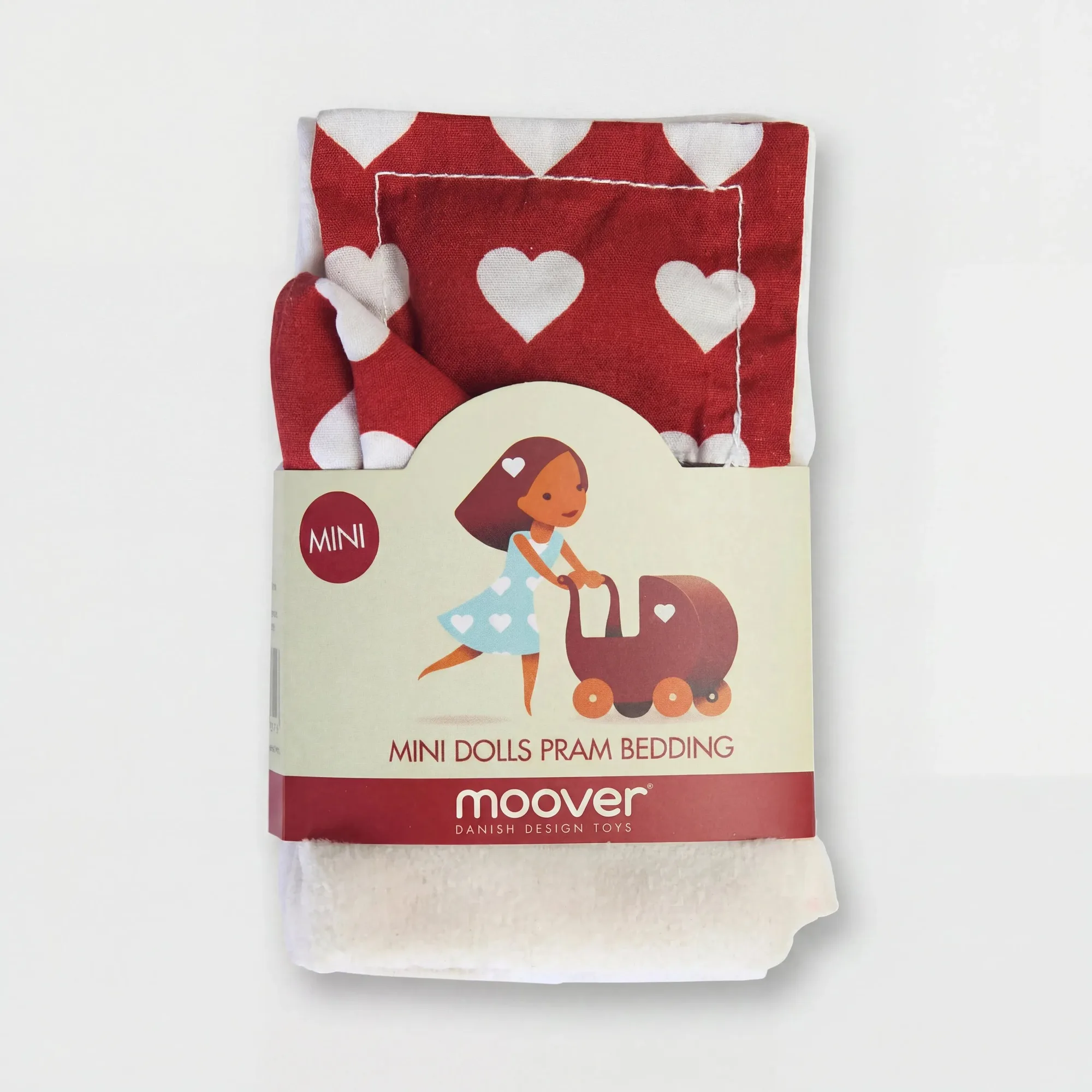
- Miniature Dolls Stroller (Pram) Bedding Set - Red: The Moover CLASSIC bedding set includes a miniature mattress, sheets, pillow, and blanket designed to fit the Moover CLASSIC Miniature Dolls Stroller; it can also be used as a standalone play accessory. If your child likes to include dolls in floor play, this set extends the maze session into roleplay without needing the stroller.