Quick answer
Dust the Mixed Flowerpot every two to four weeks with a soft makeup brush, using short strokes from the pot rim upward. Skip water and household cleaners entirely, because printed petals and clipped stems are the parts most likely to be damaged. If a piece is already loose, stop cleaning and reseat it first.
Why built blooms collect dust faster than solid models
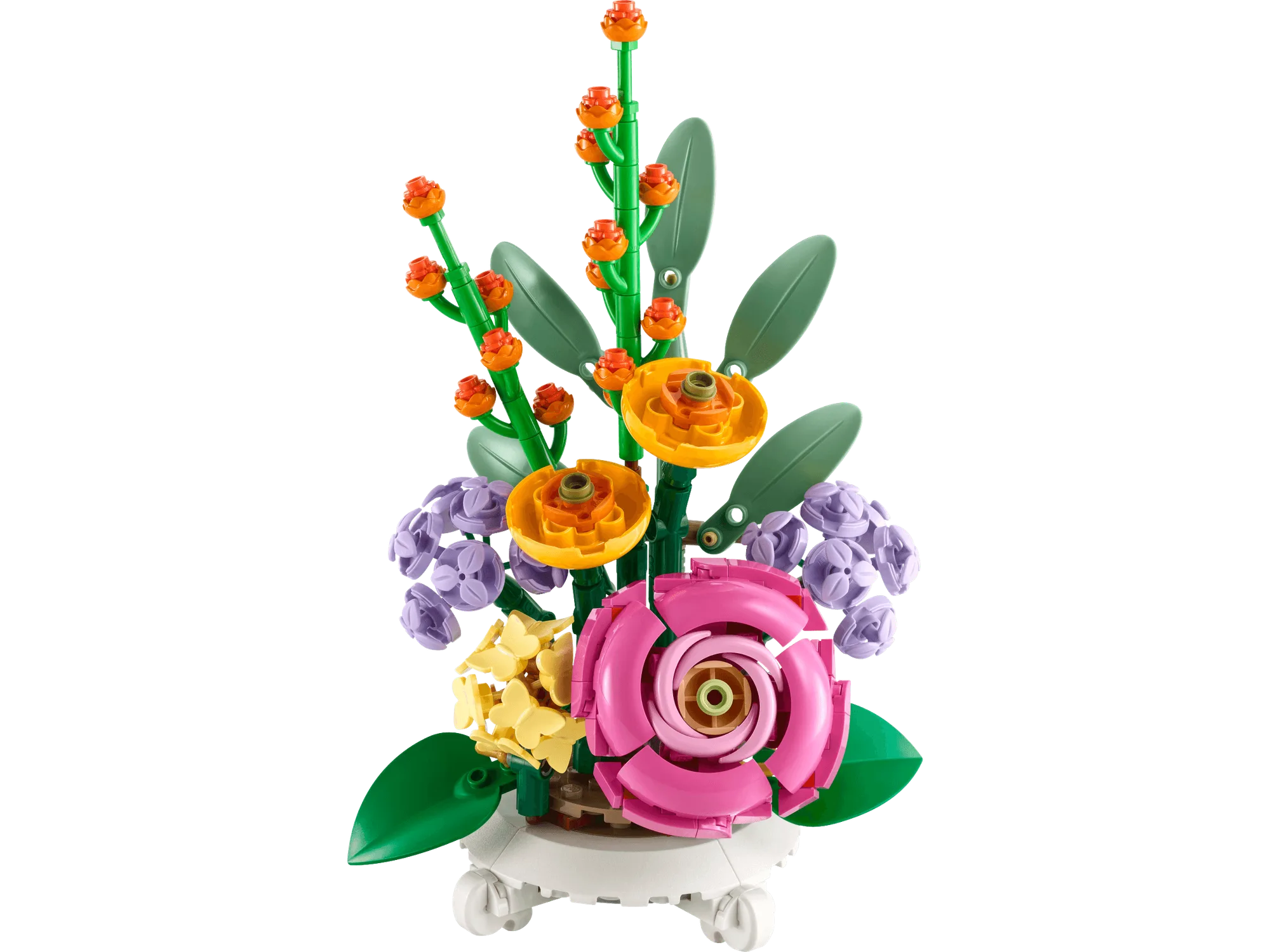
The Mixed Flowerpot is a bouquet of separate flower pieces arranged above a classic pot, so it has far more exposed edges, gaps, and upward-facing surfaces than a solid display model. Each petal edge and stem joint catches lint that a flat surface would shed. That layered arrangement is exactly what makes the set look good on a desk or windowsill, and it is also why a quick pass with a cloth misses most of the dust.
Placement decides how often you need to clean. A windowsill near an open window pulls in pollen and street grit. A desk near paper, cardboard, or a printer gathers paper fiber. A shelf in a busy room collects fabric lint. Moving the pot even a short distance from those sources usually does more for long-term cleanliness than any tool you buy.
Safe cleaning tools and the order to use them
Start dry, always. A soft makeup brush or a clean, dry paintbrush reaches between petals without scratching. Work from the top of the arrangement downward so loosened dust falls past the lower blooms instead of settling on them. For the pot itself, a dry microfiber cloth is enough; wipe the rim and outer walls, not the inside.
Compressed air is tempting but easy to overdo. If you use it, hold the can well away from the model and use short bursts, because sustained pressure can dislodge a loosely seated piece. Never aim it into the pot cavity, where it just pushes dust deeper into the arrangement.
Avoid water, alcohol wipes, glass cleaner, and furniture polish. LEGO pieces are designed to be wiped, not soaked, and cleaning agents can leave residue on printed or decorated surfaces. If a piece truly needs more than dry dusting, remove that single piece and rinse it separately with plain water, then let it air-dry completely before clipping it back in.
- Soft makeup brush or dry paintbrush for the blooms
- Dry microfiber cloth for the pot walls and rim
- Compressed air only in short bursts, held at a distance
- No water, alcohol, or polish on assembled blooms
A five-minute routine that actually holds up
Set a repeating reminder rather than cleaning by eye. Every two to four weeks, brush the top flowers first, then the middle layer, then the pot. Once a season, lift the whole arrangement off the pot, dust the pot cavity, and reseat the flowers. That deeper pass takes a few extra minutes and prevents the buildup that makes a full teardown necessary.
If you display the pot near a window, rotate it a quarter turn at each cleaning. Even light exposure can fade decorated surfaces over time, and rotation spreads that wear evenly instead of concentrating it on one side. Keep the pot out of direct afternoon sun for the same reason.
When cleaning stops being the right fix
Dust is a maintenance problem. A loose stem, a cracked clip, or a petal that will not stay seated is a parts problem, and brushing harder will not solve it. If a piece will not hold after reseating, stop cleaning the assembled model and handle that piece on its own. If a decorated surface has already worn or peeled, no cleaning method restores it, and replacement is the honest answer.
This is also the point to consider a second display set rather than over-managing one. The Mixed Flowerpot is priced at USD 18.49 against a catalog comparison price of USD 24.99, so a duplicate for a different room is a reasonable alternative to constant handling of a single build. For LEGO fans who want a companion piece on the same shelf, the Wallace & Gromit set at USD 68.99 against a comparison price of USD 99.99 is a display-first build with retro appeal, and it is cleaned the same dry way.
Diagnose the problem before you clean
- Gray film on petals and pot rim: Ordinary household dust settling on upward-facing surfaces. Brush top-down with a soft makeup brush, then wipe the pot with a dry microfiber cloth. If the film returns within days, move the pot away from the window or desk clutter.
- Lint or fibers caught between stems: Fabric or paper fiber from nearby soft furnishings, carpet, or packaging. Use short bursts of compressed air held at a distance, then brush the loosened fiber out. Stop if a piece shifts under the air pressure and reseat it before continuing.
- A stem or petal that will not stay seated: This is a connection problem, not a dirt problem. Stop cleaning the assembled model, remove the piece, check the clip, and reseat it on its own. If it still will not hold, treat it as a parts issue rather than cleaning harder.
- Faded or worn decorated surfaces: Long exposure to direct sun, or repeated rubbing with cloths and cleaners. No cleaning method reverses this. Choose replacement or a duplicate set instead of more aggressive cleaning.
Set facts that shape your care routine
- Mixed Flowerpot: Buildable flowerpot design with a mixed arrangement of flower pieces, intended for creative building and display. The layered arrangement is what collects dust in the gaps, so brush between blooms rather than only across the top.
- Wallace & Gromit: Retro-themed display set described as great for display or as a thoughtful present. Display-first builds like this one benefit from the same dry-dusting routine, so one brush and one schedule cover both.