Quick answer
Buy the harness first, not the pouches. For most small-to-medium dogs, start with a K9R - M4 Tactical MOLLE Vest if your dog has a standard or larger frame, or a K9R - D5 MOLLE Light Harness if your dog is long-bodied like a dachshund. Then add one low-profile pouch and one patch, and only expand after a full walk with a loaded setup.
What MOLLE actually changes about your setup
MOLLE is a grid of attachment points, so the vest is a platform and your pouches and patches are the configuration. That means the same harness can carry a training pouch on a weekday walk and a patch-only setup on a weekend hike. The trade-off is weight: every pouch you add sits on your dog's back, so a stripped-down vest often works better for long distances while a loaded vest is better for short working sessions.
Before you buy, decide what the vest has to carry. If the answer is treats and a patch, a low-profile pouch is enough. If you plan to add a water bottle, a leash loop, or a second pouch later, choose a vest with enough grid space to grow into.
Sizing rules that prevent a bad fit
Measure the widest part of your dog's chest, just behind the front legs, and measure the neck. Then compare those numbers to the harness size range, not to your dog's weight. Weight varies with breed and condition, while chest girth is what actually determines whether the harness sits correctly.
Check three fit points before you commit: the chest strap should sit behind the shoulder blades without rubbing the armpits, the back panel should lie flat rather than tenting, and you should be able to slide two fingers under every strap. If a harness is between sizes, size up only if the straps can be tightened enough to remove slack; otherwise size down.
Patch and pouch placement that stays balanced
Put patches on the back panel or the side panels where they will not be crushed by a leash or a pouch. Hook-and-loop patches are easy to reposition, so test placement with an empty vest first. A 4" x 1" embroidered patch such as the MAMA'S GIRL Morale Patch fits neatly along a side panel or the top of the back without covering the attachment grid you need for pouches.
For pouches, keep the heaviest item closest to your dog's spine and centered, not hanging off one side. Treat pouches belong on the side you naturally reach with your dominant hand, so you are not fumbling during a training session. If a pouch swings when your dog trots, it is either too far back or too loosely attached.
How to test a setup before a real outing
Load the vest, put it on your dog indoors, and watch for five minutes. A dog that stands still, leans away, or tries to rub the vest off is telling you the load is unbalanced or a strap is pinching. Then do a short walk with the same load and check the strap tension again, because straps loosen as the vest settles.
Add one item per walk rather than building the full setup at once. This makes it obvious which addition caused any change in gait, and it keeps you from blaming the harness for a pouch that sits too low.
Decision rules for your MOLLE vest setup
- Buy the harness before the pouches: Fit determines everything else. A perfectly chosen pouch on a poorly fitting harness will still rub, shift, and get refused by your dog. Lock in the harness size first, then shop accessories.
- Match the harness shape to your dog's body: Standard or larger small-to-medium frames suit the M4 Tactical MOLLE Vest; long-bodied breeds like dachshunds suit the D5 MOLLE Light Harness. Body shape beats weight when choosing between these two.
- Add one pouch, then walk before adding more: Start with a low-profile reward pouch, take a full walk, and check for rubbing or swing before you commit to a second pouch. One item per walk is the fastest way to find the real problem.
- Keep patches off the working grid: Place patches on the back or side panels and leave the attachment grid clear for pouches you actually use. Decorative space and functional space should not compete.
- Re-check strap tension after every load change: Straps settle as the vest breaks in, and adding weight changes how the vest sits on the chest and shoulders. A two-finger gap under each strap is your ongoing checkpoint.
Product facts that affect your decision
- K9R - M4 Tactical MOLLE Vest: K9R - M4 Tactical MOLLE Vest is built as a best-fitting harness for standard and larger small-to-medium breeds, made in the USA with a lifetime warranty, and designed with airflow for walks, adventures, and working shifts. If your dog has a standard or larger small-to-medium frame and you want one harness that handles daily walks plus working use, this is the natural starting point.
- K9R - D5 MOLLE Light Harness: K9R - D5 MOLLE Light Harness is built as the best-fitting harness for dachshunds and other long-bodied breeds, with laser-cut construction, made in the USA and a lifetime warranty. Long-bodied dogs need a harness shaped for their proportions, so this is the better choice over a standard-frame vest even if the chest measurement looks similar.
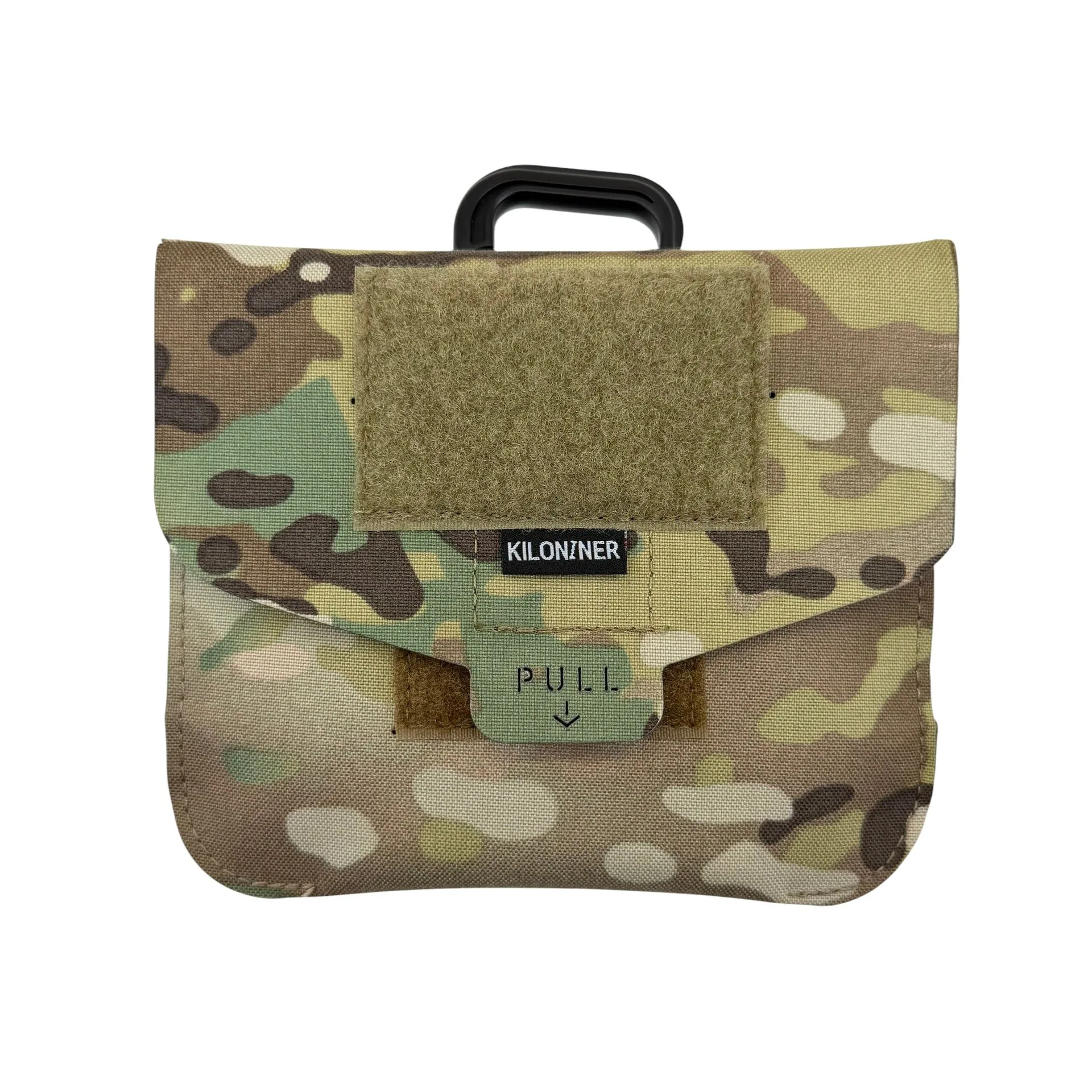
- K9R - Kiloniner Low-Profile Reward Pouch: Kiloniner Low-Profile Reward Pouch is designed for dog training, daily walks, working dogs, and outdoor adventures, keeping treats within easy reach without the bulk of traditional treat bags, with an expandable rear gusset for extra storage. It solves the most common first-pouch problem: reaching treats quickly without adding a bulky bag that shifts on the vest.
Who each MOLLE vest is for
Best for
- Dogs with standard or larger small-to-medium frames that need one harness for walks and working use
- Dachshunds and other long-bodied breeds that need a harness shaped for their proportions
- Owners who want to start with a low-profile treat pouch and expand the setup over time
Not for
- Owners who want a fully loaded vest on day one without testing the load on a walk
- Dogs whose chest girth falls outside the harness size range, who should look at a different harness style rather than forcing a size
- Anyone buying pouches before confirming the harness fits, since accessory fit depends on the platform underneath