Quick answer
If your baby is sitting and reaching but not yet crawling, choose a montessori-music-set-749c25d876014318df4574a4-1541615">Montessori music set for cause-and-effect play. If your baby is already crawling or pulling up, choose a Montessori pulling snail to encourage movement across the floor. Many families end up with both, but the pulling snail is the stronger first movement toy once your child is mobile.
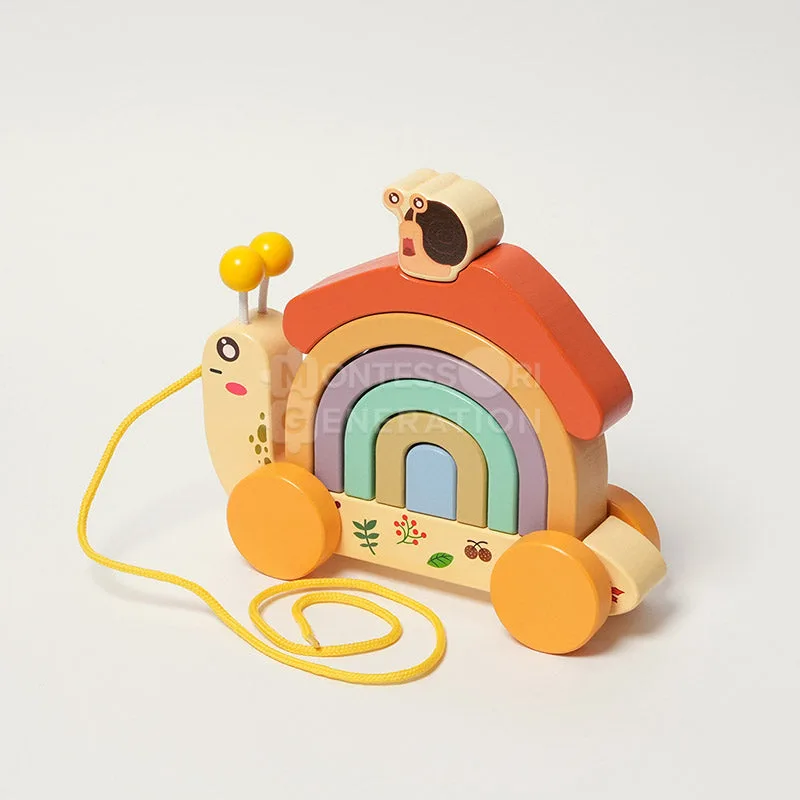
Montessori pulling snail
A first movement toy has one job: to make your baby want to move. A music set rewards still hands with sound. A pulling snail rewards forward motion with a rolling, wobbling companion. The right pick depends less on age and more on what your baby can already do.
This comparison looks at what each toy asks of a child, how the play changes over time, and where each one falls short. The goal is a clear choice, not a longer wish list.
What each toy asks of your baby
A music set is a stationary toy. Your baby sits, reaches, presses, and listens. The learning loop is short and immediate: action creates sound. That makes it a strong fit for babies who are stable in a seated position but not yet moving across a room.
A pulling snail is a moving toy. Your baby grabs a handle or cord and the toy rolls forward, so the reward is distance. This asks for more coordination and usually more trunk strength. It tends to click once a baby is crawling, scooting, or cruising.
- Choose based on current mobility, not birthday age.
- A music set can be used from a high chair or floor mat; a pulling snail needs open floor space.
How the play changes as your child grows
Music toys often have a longer stationary life. A young baby bats at keys or a drum. An older toddler starts copying rhythms and naming sounds. The toy stays in one place, but the way your child uses it shifts from sensory to intentional.
Pull toys change with the floor. Early on, your baby watches you pull it and tries to follow. Later, your toddler pulls it while walking, then invents games like delivering it to a room or lining it up with other toys. The movement itself becomes the play.
- If your home has limited open floor, a music set will get more daily use.
- If you have a hallway or safe living room run, a pull toy earns its space.
Where each option falls short
A music set can become background noise if it is left out all day. It also does not encourage crawling or walking on its own. If your main goal is to motivate movement, a stationary toy will not do that job.
A pulling snail needs a safe, clear path. On thick carpet it may drag or tip, and on stairs it is a hazard. It also offers less fine-motor variety than a music set, so some toddlers lose interest once the novelty of pulling wears off.
- Rotate toys rather than leaving everything out at once.
- Check the floor surface before buying a pull toy; smooth, low-pile surfaces work best.
Trade-offs to weigh before you buy
- Movement vs. stillness: A music set keeps your baby in one spot and builds cause-and-effect. A pulling snail asks your baby to travel and builds gross-motor coordination. Pick the music set if your baby is not yet crawling. Pick the pulling snail if they already move.
- Space and floor surface: A pulling snail needs a clear, smooth path and safe boundaries. A music set works on a mat, in a playpen, or beside a couch. Small homes or thick carpet favor the music set; open, low-pile floors favor the pull toy.
- How long it stays interesting: Music toys often stretch from sitting to toddler rhythm play. Pull toys peak during the crawling-to-walking window and can lose appeal afterward. If you want one toy to last longer, the music set is the safer bet; if you want one toy to spark first steps, choose the pulling snail.
Product facts that matter for this choice
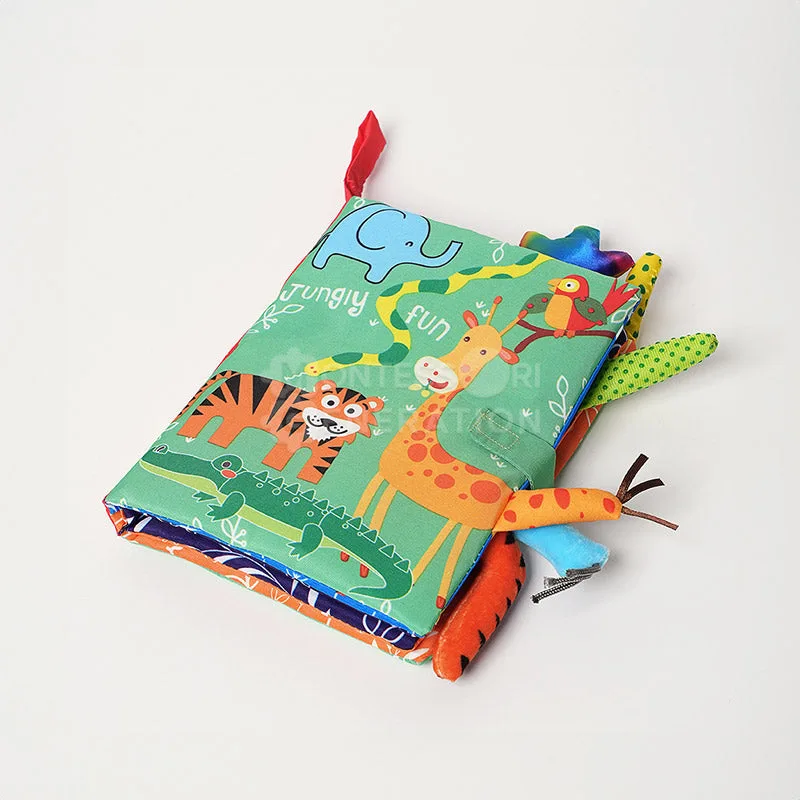
- Montessori Baby Soft Book: Age 0+, soft non-toxic PP cotton, machine washable on lower settings, 5.5 x 7.1 x 1.2 inches. A washable, lightweight first sensory item for babies who are not yet mobile, so it pairs well with a music set rather than replacing a pull toy.
- Montessori Crane & Train Magnetic Playset: Age 3+, 60 construction parts and 2 train cars, 100% wood with child-safe paint, compatible with most other wooden tracks. A later movement and building option for older toddlers who have outgrown a first pull toy and are ready for tracked, magnetic play.
- Montessori Scoop & Splash Station: Age 3+, pine wood frame with two removable plastic basins, acrylic board, water slide track, 8 dry erase markers, and a paintbrush. Shows how movement toys shift toward standing, pouring, and mark-making play once a child is steady on their feet.
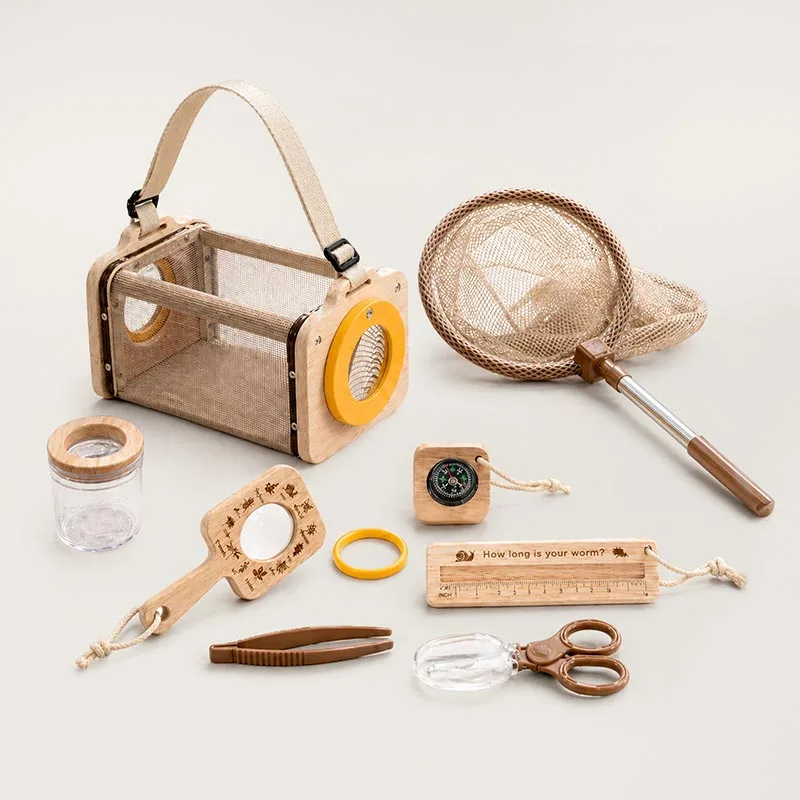
- Montessori Nature Explorer Kit: Age 4+, includes bug observation house, telescopic butterfly net, insect catcher, observation cup, wooden hand lens, wooden ruler, tweezers, and compass. A reminder that movement play eventually moves outdoors; a first pull toy is a stepping stone, not the final stage.
Which one fits your child
Best for
- Babies who sit steadily and reach for objects but are not yet crawling
- Families with limited floor space or thick carpet
- Parents who want a first toy that builds cause-and-effect and sound awareness
Not for
- Babies who are already crawling or pulling up and need a reason to move
- Homes with stairs or unsafe open floor areas where a rolling toy could travel
- Toddlers who have moved past first movement play and need building or pretend play
Choose the music set for a baby who is still stationary and the pulling snail for a baby who is already on the move. If you can only buy one, match it to your child's current mobility, not the age on the box.