Quick answer
Balance screen time by giving screens a fixed, predictable slot and protecting one long block of hands-on play every day. Choose two or three Montessori toys that match your child's current skills, keep them visible and reachable, and let your child lead the play while you stay nearby. The goal is not zero screens; it is making screen-free play the default and screens the exception.
Montessori
Most families do not set out to let screens take over. It happens one short video at a time, usually right when you need ten quiet minutes. The good news is that you do not need a strict detox or a perfectly minimalist playroom to shift the balance. You need a routine your child can predict and a small set of toys that are genuinely interesting enough to compete with a screen.
This guide walks through a practical sequence you can start this week. Each step includes the mistake that trips most parents up, so you can adjust before frustration sets in. Along the way, specific Montessori toys show how the plan works in real homes, not just in theory.
Why balancing screen time and Montessori play works better than banning screens
A total ban sounds clean but rarely survives contact with real life. Screens are part of family life, and forbidding them completely often makes them more exciting. Montessori play works on a different principle: give the child something absorbing to do, and the screen naturally loses its pull. Your job is to make the interesting option the easy option.
That means the toys need to be reachable, in working order, and matched to what your child can almost do but not quite yet. A toy that is too easy gets ignored; one that is too hard gets thrown. When the challenge is right, children repeat the activity on their own, which is exactly the focused attention you want more of.
- Keep one or two toys out and rotate the rest; too many choices at once scatters attention.
- Sit nearby without directing. Your calm presence is often what keeps a toddler engaged longer.
Match the toy to the developmental window, not the age on the box
Age labels are a starting point, not a rule. A 3-year-old who still mouths toys needs different materials than a 3-year-old who builds carefully. Watch what your child does with a toy for two minutes: if they repeat an action and adjust it, the toy fits. If they wander off immediately or get frustrated, it does not, regardless of what the box says.
This matters for screen time because a well-matched toy buys you the one thing screens are so good at providing: immediate, satisfying feedback. A toy that clicks, drops, or fits together gives that feedback without a glowing screen.
- For babies around 6 months, look for cause-and-effect toys where one simple action produces a result.
- For toddlers 12 months and up, look for matching, sorting, or fitting tasks with a clear finish.
Build a predictable daily rhythm with one protected play block
Children handle limits better when they know what comes next. Instead of announcing 'no screens now,' anchor screen time to a specific moment, such as after lunch or during a parent's work call. Then protect one longer block, ideally 30 to 45 minutes, where hands-on play is the only option on the table.
The protected block works best when it happens at the same time each day. Predictability reduces the negotiation, because the child learns that this part of the day simply is not a screen time. Keep the toys for that block in one accessible spot so setup takes seconds, not minutes.
- Put the screen remote or tablet out of sight during the play block; visible screens invite requests.
- End the block with a transition your child can see, such as tidy-up time or a snack.
Use toys that reward repetition and independent play
The toys that compete best with screens are the ones children can operate alone and repeat. A magnetic maze where a pen moves pieces through a track, or a set of eggs that twist apart and match back together, keeps hands busy and gives instant feedback. These are the moments when your child forgets to ask for the tablet.
You do not need many of these toys. Two or three reliable ones, rotated every week or two, usually do more than a shelf full of options. The point is depth of play, not quantity of toys.
- Choose toys with a clear beginning, middle, and end so your child knows when they are done.
- Rotate rather than replace; a toy that returns after two weeks feels new again.
Handle the hard moments without turning screens into a reward
The biggest mistake is using screens as the prize for playing without screens. That teaches children that the toy is the chore and the screen is the treat. Instead, treat screen time as a neutral, scheduled part of the day, like lunch or bath time. It is not something earned, and it is not something forbidden.
When your child asks for a screen during play time, acknowledge the request briefly and redirect to a specific action: 'Yes, later. Right now, can you find the red egg?' A concrete next step works better than a lecture about why screens are not good for them.
- Keep your own phone out of sight during the play block; children copy what they see.
- If you need a screen for yourself, name it honestly: 'I am sending one message, then I am done.'
Your seven-step screen time balance plan
- 1. Pick one fixed screen slot: Choose a single predictable time of day for screens, such as after lunch or during a work call. Write it down and keep it the same for at least two weeks. Checkpoint: if the slot moves every day, your child will test the limit every day.
- 2. Protect one 30-minute hands-on block: Block out 30 minutes where the only available activity is a toy. Put the tablet or remote out of sight before the block starts. Checkpoint: if you have to search for the toy, the block will not survive. Stage it in advance.
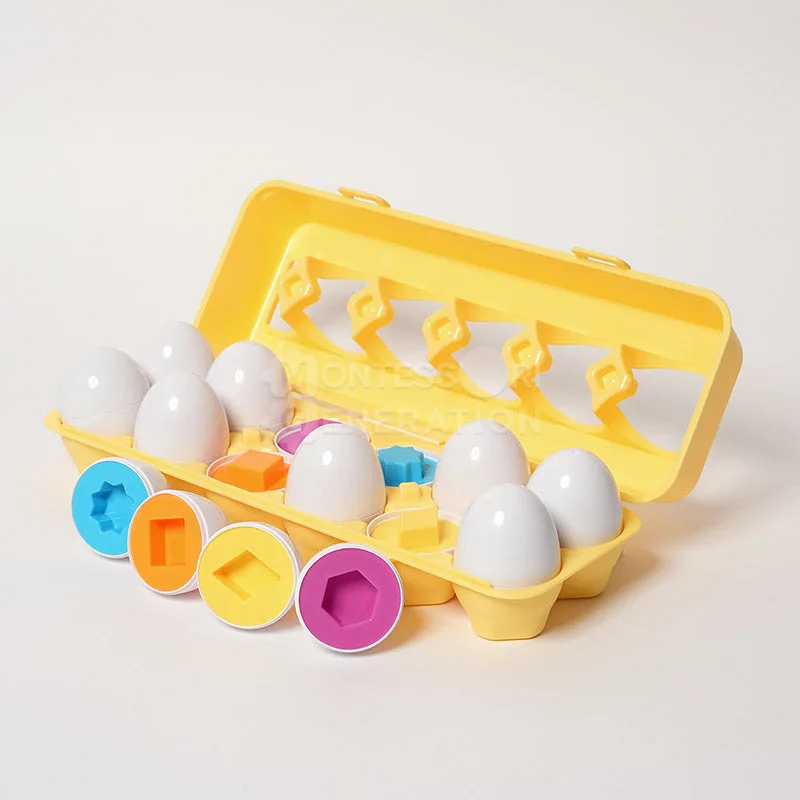
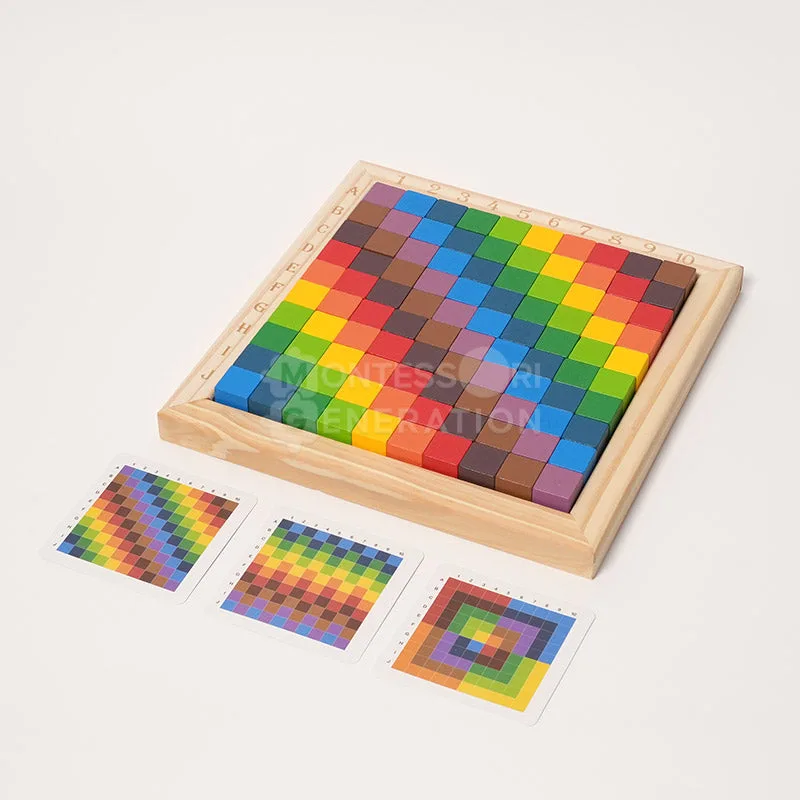
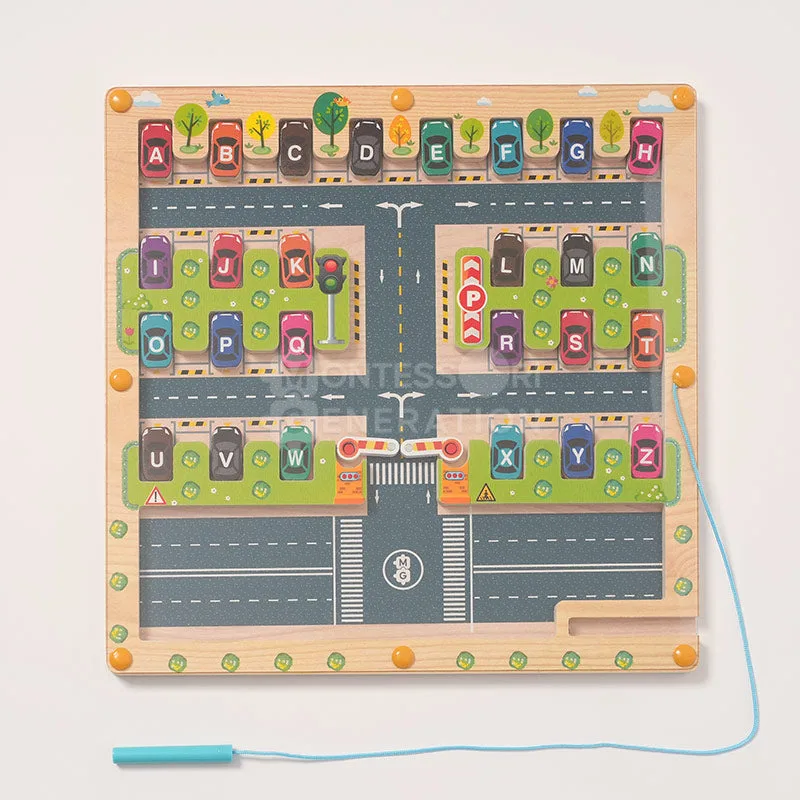
- 3. Choose two or three toys that match right now: Pick toys your child can almost do alone. For a 1-year-old, try the Montessori Geometric Eggs. For a 3-year-old, the Montessori Alphabet Parking Maze or Montessori Art Builder Set gives a longer, repeatable task. Checkpoint: if your child walks away within a minute, the toy is too easy or too hard, not broken.
- 4. Set up the play space in under a minute: Keep the chosen toys on one low shelf or tray. Remove other toys from view during the block so the choice is simple. Checkpoint: a cluttered shelf creates decision fatigue, and decision fatigue leads straight to screens.
- 5. Sit nearby without directing: Stay in the room, do something quiet of your own, and let your child lead. Answer questions but do not correct their method. Checkpoint: if you are narrating every move, you become the entertainment, and the toy becomes optional.
- 6. Redirect requests with a concrete next step: When your child asks for a screen, name the scheduled time and offer one specific action with the toy in front of them. Checkpoint: vague answers like 'later' invite repeated asking. Specific answers end the negotiation faster.
- 7. Rotate toys weekly and review what worked: At the end of each week, put two toys away and bring two back. Note which toy held attention longest and schedule that one for the hardest part of your day. Next step: after two weeks, compare your child's independent play time to where you started.
Toys that make screen-free play easier
- Montessori Alphabet Parking Maze: Age 3+, includes a magnetic maze board and an attached magnetic pen, made from eco-friendly wood with non-toxic paint. The attached pen means no loose pieces to lose, and the magnetic track gives the immediate cause-and-effect feedback that keeps a child repeating the activity instead of asking for a screen.
- Montessori Geometric Eggs: Age 12+ months, includes 12 eggs and 1 egg carton, made from BPA-free plastic with non-toxic paint. Twisting and matching the eggs is a self-contained task with a clear finish, which makes it a strong choice for a 10 to 15 minute independent play block when you need to step away.
- Montessori Art Builder Set: Age 3+, includes a 10 by 10 board, 100 wooden blocks, and 20 double-sided pattern cards, made from eco-friendly wood with non-toxic paint. The pattern cards give your child a concrete goal to work toward, which extends play time and reduces the drift toward screens when a child is bored but not sure what to do next.
Balancing Montessori toys and screen time is less about willpower and more about setup. Fix the screen slot, protect one hands-on block, and keep two or three well-matched toys within reach. Do that consistently for two weeks, and screen-free play stops feeling like a fight and starts feeling like the normal part of the day.