Quick Answer
Most Muse harness fit problems—slipping, twisting, or chafing—come from incorrect strap adjustments or size selection. A few simple tweaks usually resolve them.
Why Fit Problems Happen
The Muse harness is designed to be lightweight and modular, which means it relies on proper strap tension to stay put. If the fit is too loose, the harness can shift; too tight, and it may rub or restrict movement. Understanding the balance is key.
Diagnosis and Fixes
- Slipping or twisting: Check the chest strap: it should sit about two finger widths behind the dog's front legs. Tighten the girth strap so it's snug but not digging in. If the harness still twists, the size may be too large.
- Chafing or rubbing: Loosen the neck and chest straps slightly. Ensure the padding sits flat against the dog's body. If rubbing persists, the harness may be too small or the dog's coat needs a break-in period.
- Harness rides up toward the neck: Tighten the girth strap (the one behind the ribs) and loosen the chest strap slightly. The neck opening should allow two fingers to slide under easily. If it still rides up, try a smaller size. If you've tried all adjustments and the harness still doesn't fit, consider a different size or style for your dog's body shape.
Product Facts
-
Muse™ harness: Light on weight, big on versatility. The Muse harness is modular, low-profile, and ready for whatever the day throws at you. Its low-profile design requires precise adjustment to prevent slipping—a few seconds of tweaking can make the difference between a loose fit and a secure one.
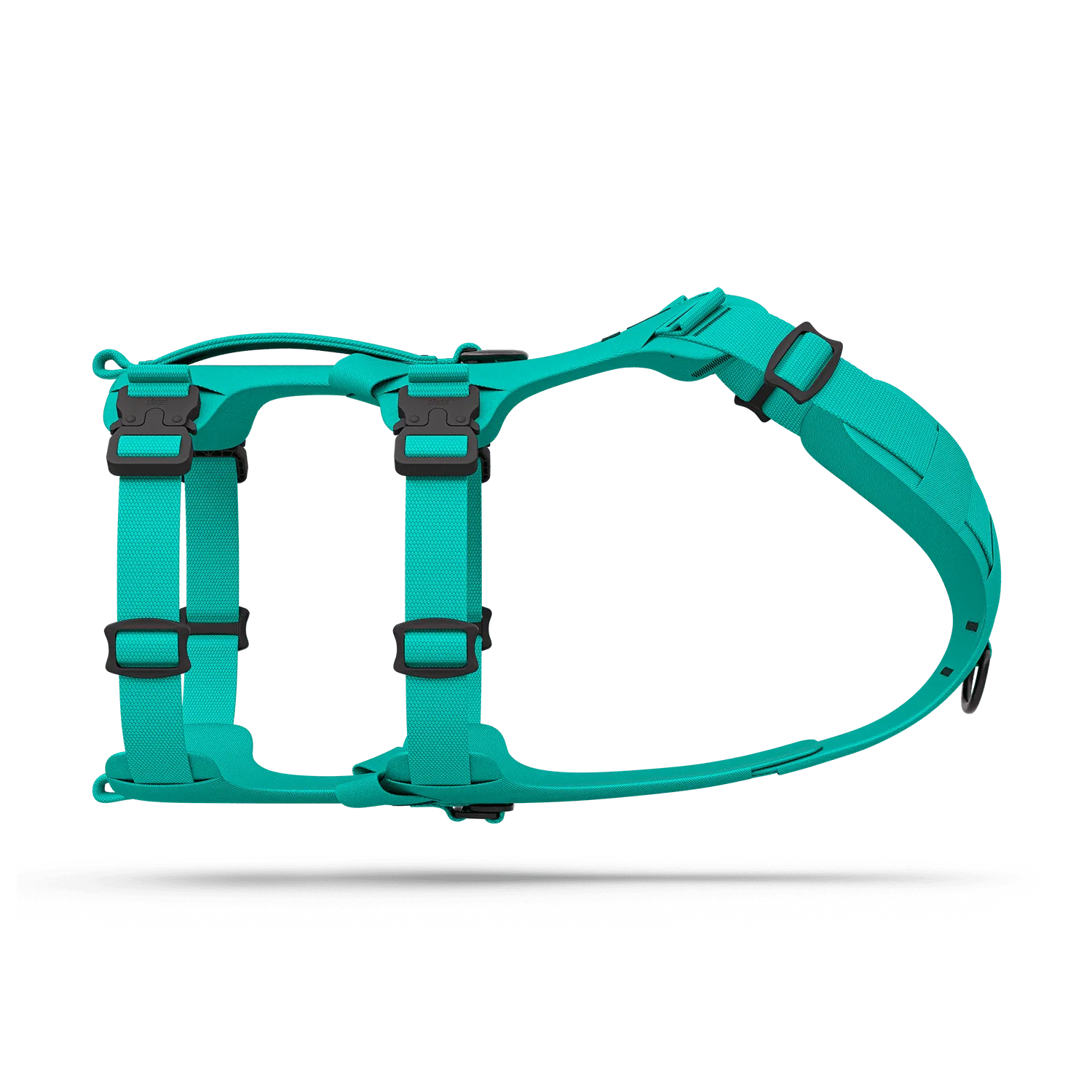
Muse™ harness