Quick answer
For curing glue gel at home, choose a lamp that matches your glue gel's requirements: check if it needs UV or LED, pick a wattage that cures in a reasonable time, and ensure the lamp fits your hand or foot comfortably. A 36-48W LED/UV lamp with a 30-60 second timer is a versatile starting point. If you mainly use press-on nails, a compact lamp with a wide opening works well for both fingers and toes.
If you're using glue gel to apply press-on nails, the lamp you choose affects how well the adhesive cures. A weak or mismatched lamp can leave sticky residue, cause lifting, or make the process take longer than necessary. This guide covers what to look for in a nail UV lamp, from wattage to bulb type, so you can cure glue gel at home with confidence.
We'll focus on practical trade-offs: LED vs UV, wattage, timer settings, and fit for different hand sizes. You'll also see how specific press-on nail designs from CLAWSIE Nails fit into the equation, so you can pick a lamp that works for your routine.
Why the Right Lamp Matters for Glue Gel
Glue gel is a light-cured adhesive: it stays workable until you expose it to the right wavelength and intensity of light. If your lamp doesn't match the glue gel's photoinitiators, the gel may not fully cure. That can lead to weak bonds, nails that pop off early, or a tacky surface that attracts dust. A lamp that's too weak may require multiple cycles, while an overpowered lamp could cure the surface too fast and leave uncured gel underneath.
The key is compatibility. Always check the glue gel instructions for the recommended lamp type (UV or LED) and curing time. If the instructions are missing, start with a lamp that offers both UV and LED output, which covers most glue gels on the market. Then test with a small amount before committing to a full set.
- Look for a lamp that explicitly states compatibility with glue gel or gel adhesives.
- If you use multiple glue gel brands, a dual UV/LED lamp gives you flexibility.
LED vs UV Nail Lamps: What's the Difference?
UV lamps use fluorescent bulbs that emit a broader spectrum, including UVA. They cure most traditional UV gels but take longer and require bulb replacement. LED lamps use light-emitting diodes that emit a narrower wavelength, typically around 365nm or 405nm. They cure faster, last longer, and use less energy. Many modern glue gels are formulated for LED, but some still require UV.
If you're buying new, LED is generally the more efficient choice. However, if you already own UV-only glue gel, you'll need a UV lamp or a dual lamp. Dual lamps combine both technologies, so you don't have to choose. They cost a bit more but save you from buying separate devices.
- LED lamps typically cure faster and have a longer lifespan than UV fluorescent bulbs.
- Check your glue gel's label: if it says 'UV/LED' or 'LED,' an LED lamp works; if it says 'UV only,' choose a UV or dual lamp.
Wattage and Curing Power: How Much Do You Need?
Wattage indicates power consumption, not directly curing intensity, but it's a useful rough guide. Higher-wattage lamps (36W and up) usually have more bulbs or stronger LEDs, which can cure faster and more evenly. For occasional home use, 24-36W is often sufficient. If you apply full sets regularly or use thick glue gel, a 48W lamp can reduce curing time and help ensure a thorough cure.
Don't assume more wattage is always better. A very high-wattage lamp can cure the surface of thick gel too quickly, trapping uncured gel underneath. The sweet spot is a lamp that cures your specific glue gel in the time recommended by the manufacturer. If you're unsure, start with a mid-range lamp and adjust your curing time.
- Match wattage to your usage: 24-36W for occasional use, 36-48W for frequent full sets.
- If your glue gel feels tacky after curing, try a longer cycle or a higher-wattage lamp.
Features to Consider: Timers, Reflectors, and Fit
A built-in timer is essential. Most lamps offer 30, 60, and 90-second settings. For glue gel, 30-60 seconds per coat is common, but always follow your product's instructions. Some lamps have motion sensors that turn on automatically when you insert your hand, which is convenient but not necessary. Reflectors or mirrored interiors help bounce light to the sides of nails, improving cure uniformity.
Fit matters more than you might think. A lamp opening that's too small won't accommodate all five fingers at once, forcing you to cure in batches. For press-on nails, you'll also want enough space for the nail tips, especially if you're wearing long or XL styles. If you plan to cure pedicures, look for a lamp with a removable base or a large enough opening for toes.
- Choose a lamp with multiple timer settings so you can follow different glue gel instructions.
- Measure your hand width and compare to the lamp's opening dimensions before buying.
How Lamp Choice Interacts with Press-On Nail Styles
The lamp you choose should accommodate the length and shape of your press-on nails. Long styles like stiletto or XL square need a lamp with a deep opening so the tips don't bump the top or sides, which can prevent proper curing. If you often wear 3D charms or bows, make sure the lamp's interior has enough clearance so the embellishments don't get caught or cast shadows.
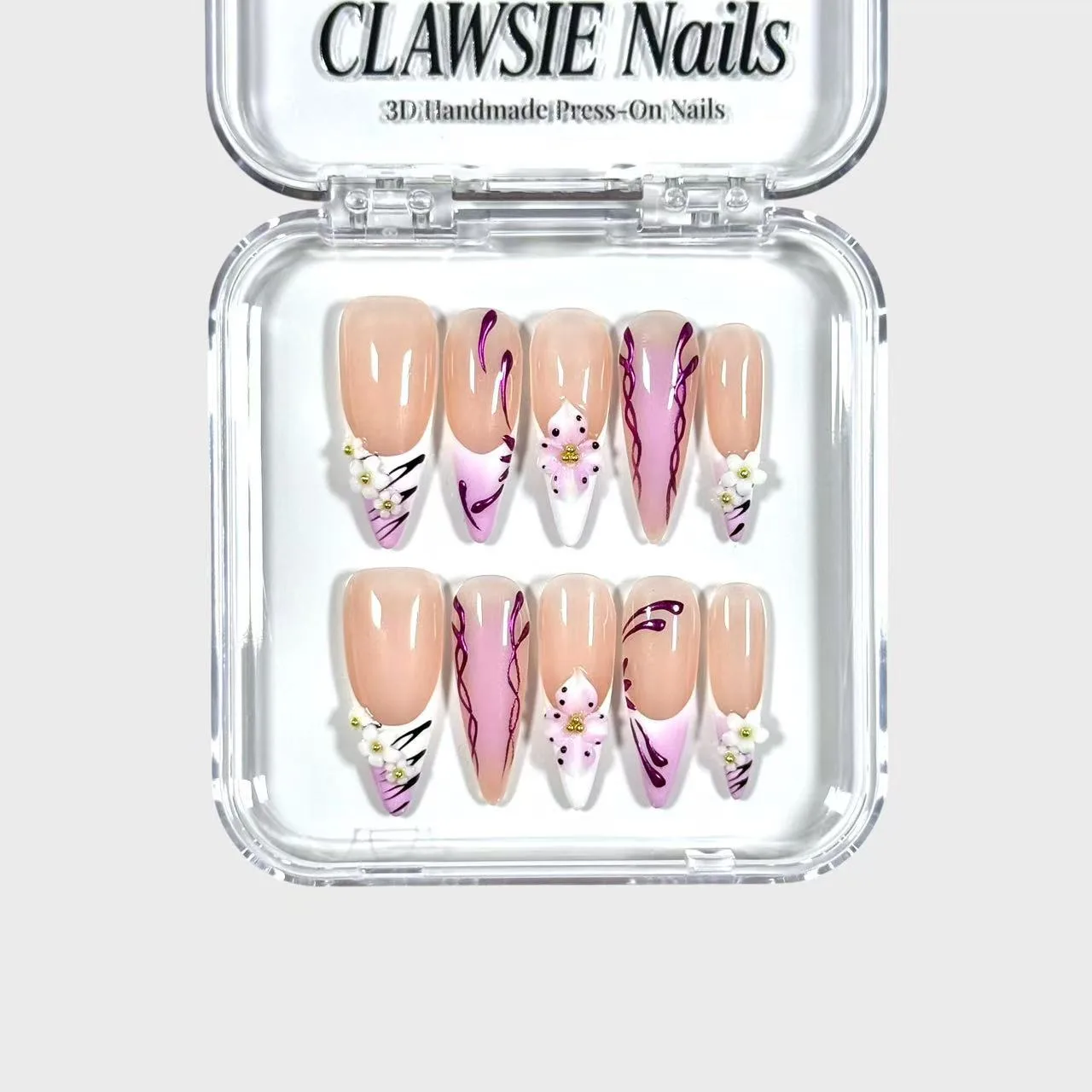
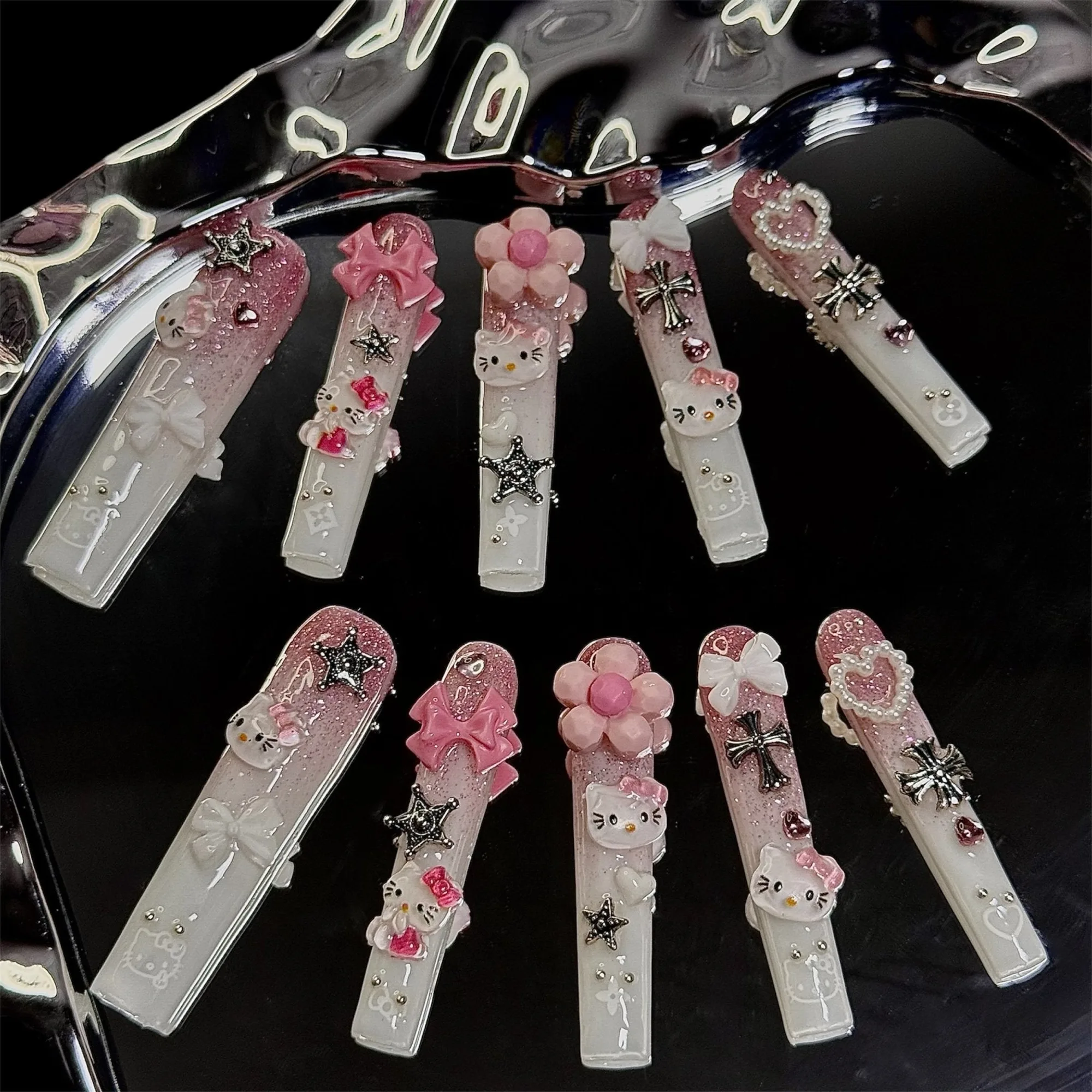
For example, Eclipse from CLAWSIE Nails is a long stiletto set with 3D floral details. A lamp with a tall interior helps ensure the glue gel under the nail cures evenly without the tips hitting the lamp. CandyDoll, a long XL square set with 3D bows and pearls, also benefits from a roomy lamp. If you prefer shorter styles like Dopamine Barbie (short square, size XS), a compact lamp may be sufficient. Always test with your longest set to be sure.
- If you wear long or XL press-on nails, prioritize a lamp with a deep, wide opening.
- For 3D embellishments, avoid lamps with tight interiors that could snag charms.
Decision Rules for Buying a Nail UV Lamp
- Match the lamp type to your glue gel: Check your glue gel's instructions: if it specifies UV, choose a UV or dual lamp; if it says LED or UV/LED, an LED lamp works. When in doubt, a dual lamp covers both. Compatibility first: the wrong wavelength means the glue gel won't cure properly.
- Choose wattage based on frequency and gel thickness: For occasional use with thin glue gel, 24-36W is often enough. If you do full sets often or use thick gel, consider 36-48W. Higher wattage can cure faster but may over-cure the surface if not matched to the gel. Start mid-range and adjust curing time based on results.
- Prioritize fit for your nail length and style: Measure your hand width and the length of your longest press-on nails. Ensure the lamp opening accommodates them without touching. For pedicures, look for a lamp with a removable base or a large opening. A lamp that doesn't fit your nails won't cure evenly, no matter how powerful.
- Look for essential features: timer, reflectors, and build quality: A timer with multiple settings (30/60/90 seconds) is a must. Reflective interiors improve cure uniformity. Motion sensors are convenient but optional. Check that the lamp feels sturdy and has a stable base. Don't pay extra for gimmicks; focus on timer and even light distribution.
Press-On Nail Styles and Lamp Fit
- Eclipse: Long stiletto press-on nails with a nude base, bold purple accents, and delicate 3D floral details. The long stiletto shape and 3D flowers require a lamp with enough depth and width so the tips and embellishments don't touch the interior, which could block light and leave uncured glue gel.
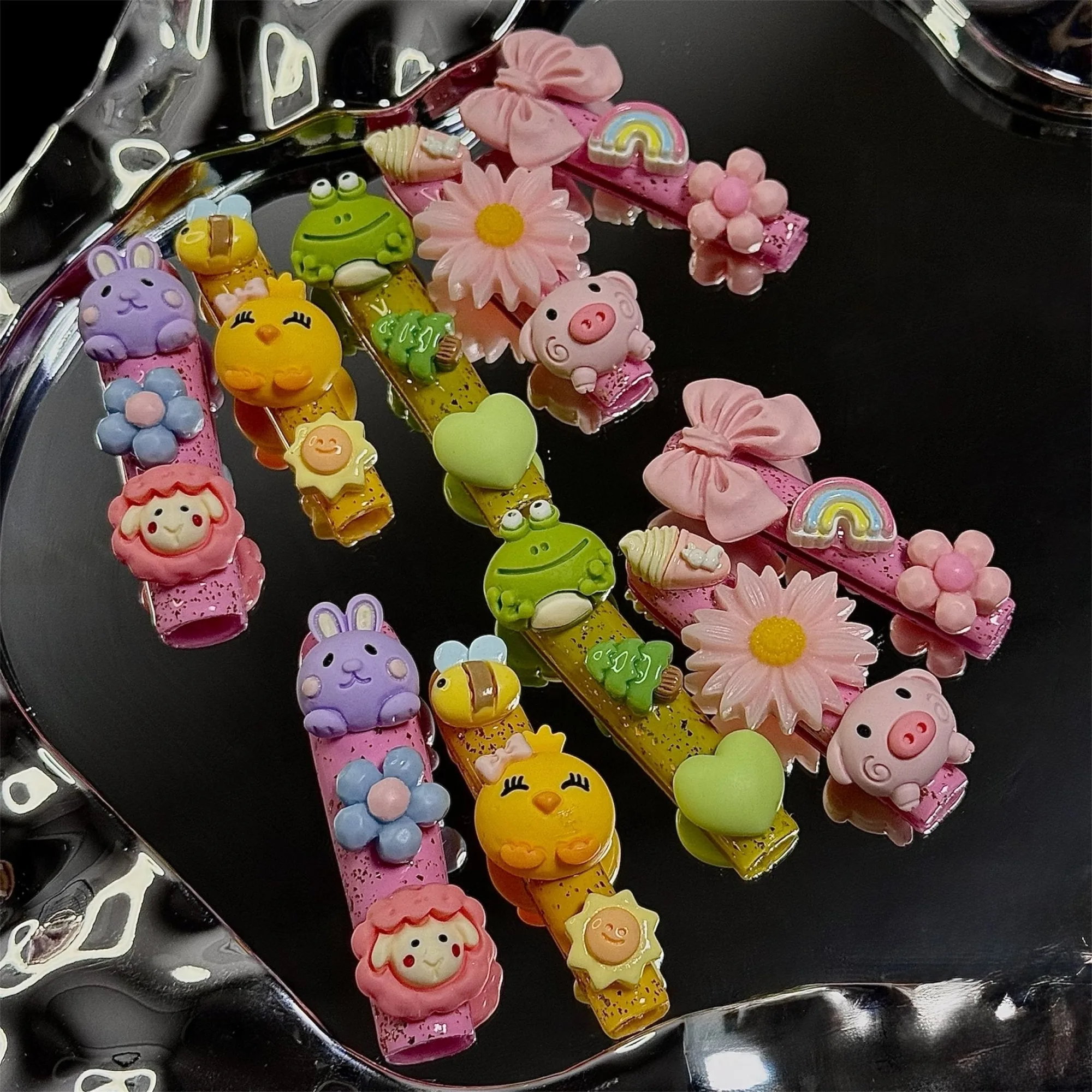
- CandyDoll: Long XL square press-on nails featuring pink 3D bows, floral charms, pearls, and kawaii-inspired details. XL square tips and 3D charms need a lamp with a spacious opening; a cramped lamp may not cure the glue gel evenly around the charms, leading to lifting.
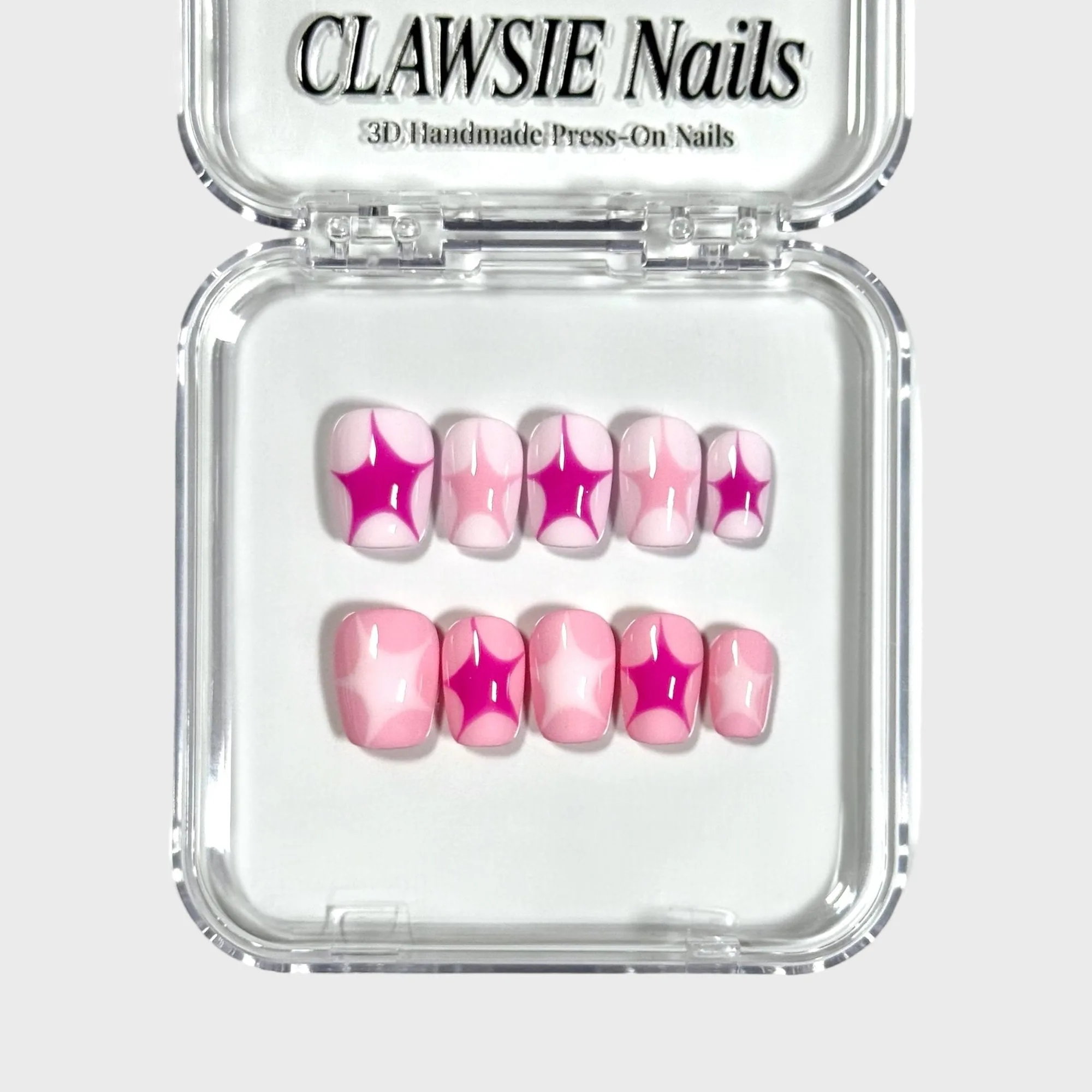
- Dopamine Barbie: Press-on nail set in a bold, playful style, offered in size XS. Shorter square nails like these fit more easily in compact lamps, so you may not need a large lamp if this is your typical style.
Is This Lamp Right for You?
Best for
- Home users who apply press-on nails with glue gel and want a reliable, compatible lamp.
- People who wear a variety of nail lengths and shapes, from short square to long stiletto, and need a lamp that accommodates them.
- Those who want to cure glue gel at home without frequent salon visits.
Not for
- Professional nail technicians who need high-volume, salon-grade curing with advanced features.
- Users who only use nail glue (not gel) and don't need light curing.
- Anyone looking for a lamp to cure traditional hard gel or acrylic, which may require specific professional lamps.
Choosing a nail UV lamp for glue gel at home comes down to compatibility, wattage, and fit. Start with your glue gel's requirements, then pick a lamp that matches your typical press-on nail styles. A dual LED/UV lamp with adjustable timers and a spacious opening gives you the most flexibility. With the right lamp, you'll get stronger, longer-lasting press-on nail applications.