Quick answer
Buy the ND-Vario if you want to slow shutter speeds or open the aperture in bright light, a polarizer if reflections and washed-out skies are your main problem, and a UV filter if you simply want a cheap sacrificial layer over the front element. If you can only buy one, start with the polarizer; add the ND-Vario for motion and the UV filter for protection.
Three filters, three different jobs
A UV filter is mostly protection: it sits in front of the lens and takes the knocks, cleaning marks and spray instead of the front element. It changes exposure only marginally, so you leave it on and forget it.
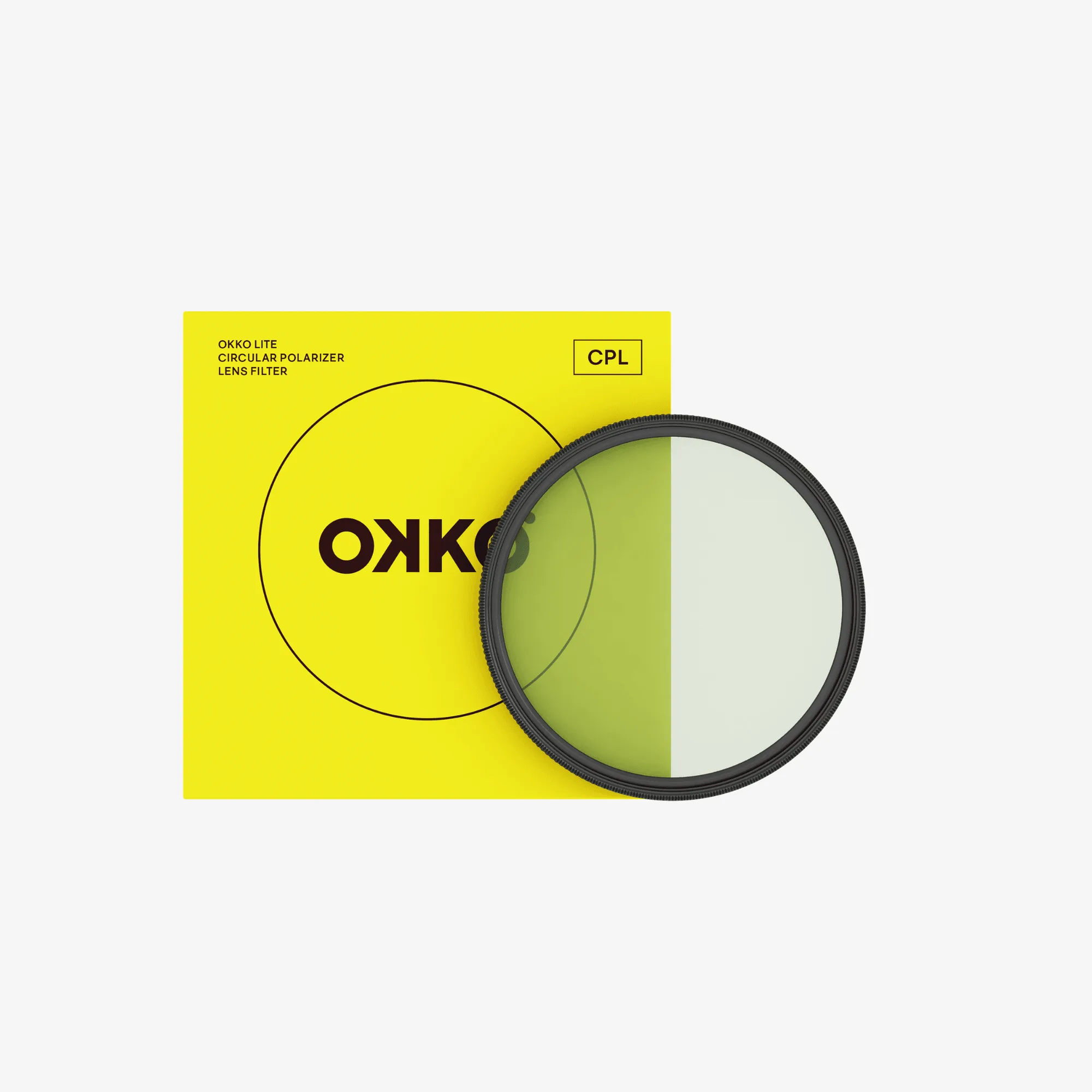
A polarizer removes polarized light from non-metallic surfaces such as water, glass and wet foliage, and deepens blue skies at the right angle. It costs you roughly one to two stops of light depending on how far you rotate it, and the effect is strongest at 90 degrees to the sun.
An ND-Vario is a variable neutral-density filter: it cuts light across the frame so you can use a slower shutter or a wider aperture than the scene would otherwise allow. The BRAUN Smooth ND-Vario covers 2 to 8 stops, which is a wide working range for one filter.
Where each filter earns its place
Reach for the ND-Vario when the light is simply too much: silky water, motion blur in crowds, panning shots, or portraits where you want a shallow depth of field at midday. The 2-to-8-stop range means you can dial in just enough density instead of committing to a fixed ND.
Reach for the polarizer when the problem is glare rather than brightness: shop windows, car paint, lake surfaces, or a sky that looks flat in the viewfinder. Rotating the filter lets you watch the effect change before you shoot.
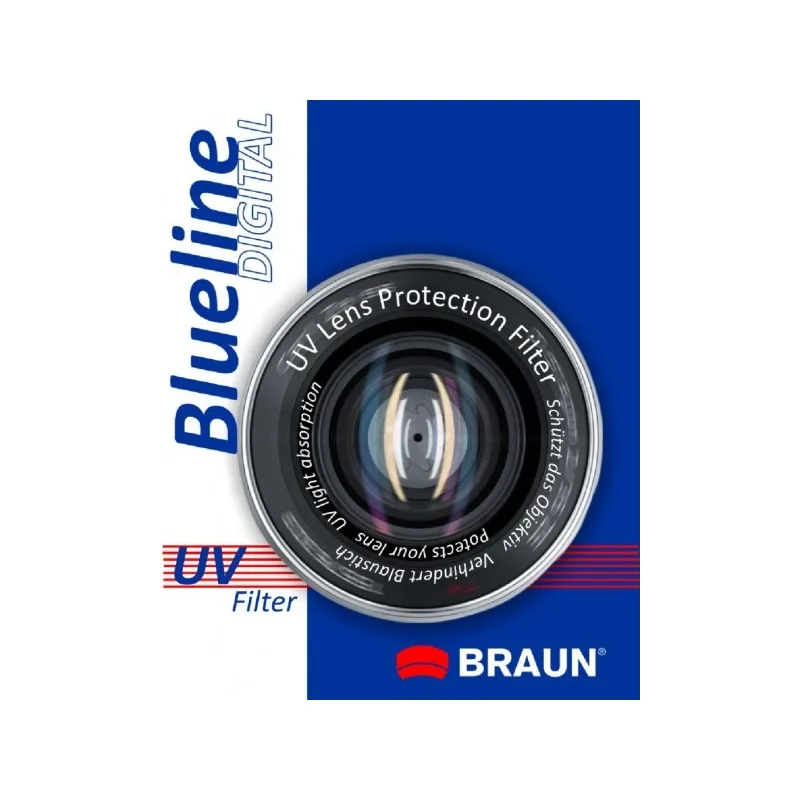
Reach for the UV filter when you are shooting in dust, sand, sea spray or a crowded environment and want to keep cleaning and impact away from the lens. It is the cheapest insurance in the bag, and the BRAUN Blueline UV-Filter 62 mm is priced accordingly.
The trade-offs you should accept before buying
Every filter adds another glass surface, so cheap stacking costs contrast. Use one filter at a time where you can, and if you must combine a polarizer with an ND, expect some vignetting on wide lenses.
A variable ND is a compromise by design: at its strongest settings some variable filters show uneven density across the frame. The BRAUN Smooth ND-Vario is built from a combination of high-quality polarizing foils, so treat the extreme end of its 2-to-8-stop range as a setting to test on your own lens before a paid shoot.
A polarizer is not a permanent filter. It eats light and can make skin or foliage look odd if over-rotated, so screw it on for the shot and take it off when the glare is gone. A UV filter, by contrast, is meant to stay on.
Match the filter to your lens thread first
Filters are sold by thread diameter, printed on the front of the lens or inside the lens cap. The BRAUN StarLine POL-Filter 62 mm and BRAUN Blueline UV-Filter 62 mm both fit 62 mm threads, while the BRAUN Smooth ND-Vario 72/77 mm Filter is offered for 72 mm and 77 mm threads.
If your lenses span several diameters, buy the filter for your largest lens and use step-down rings for the smaller ones, or standardize on one diameter. Do not buy a 72 mm filter for a 62 mm lens and expect it to screw on; the sizes are not interchangeable without an adapter.
Decision rules for choosing your filter
- If the light is too bright for the shutter speed or aperture you want: Choose the ND-Vario. Set the density you need between 2 and 8 stops, meter again, and shoot. This is the filter for long exposures, motion blur and shallow depth of field at midday. Check the extreme end of the range on your own lens before relying on it for a critical shoot.
- If reflections, glare or a flat sky are the problem: Choose the polarizer. Rotate it until the reflection weakens or the sky deepens, then adjust exposure for the light you lose. Keep it off when there is no glare to cut. A polarizer does not replace an ND; it removes glare, not overall brightness.
- If you mainly want to protect the front element: Choose the UV filter and leave it on. Clean it rather than the lens, and replace it when it gets scratched. It is the lowest-cost way to keep the front element safe in dust, sand or spray. If you shoot in harsh conditions often, budget for replacing the UV filter rather than the lens.
- If you own lenses with different thread sizes: Buy for your largest thread and add step-down rings, or standardize on one size. The 62 mm StarLine POL and Blueline UV fit 62 mm threads; the Smooth ND-Vario is offered in 72 mm and 77 mm. Measure the thread before ordering; a filter that does not fit protects nothing.
The BRAUN filters in this comparison
-
BRAUN Smooth ND-Vario 72/77 mm Filter: Variable neutral-density filter covering 2 to 8 stops, built from a combination of high-quality polarizing foils. One filter covers slow-shutter and wide-aperture work in bright light, so you can adjust density instead of carrying a set of fixed ND filters.
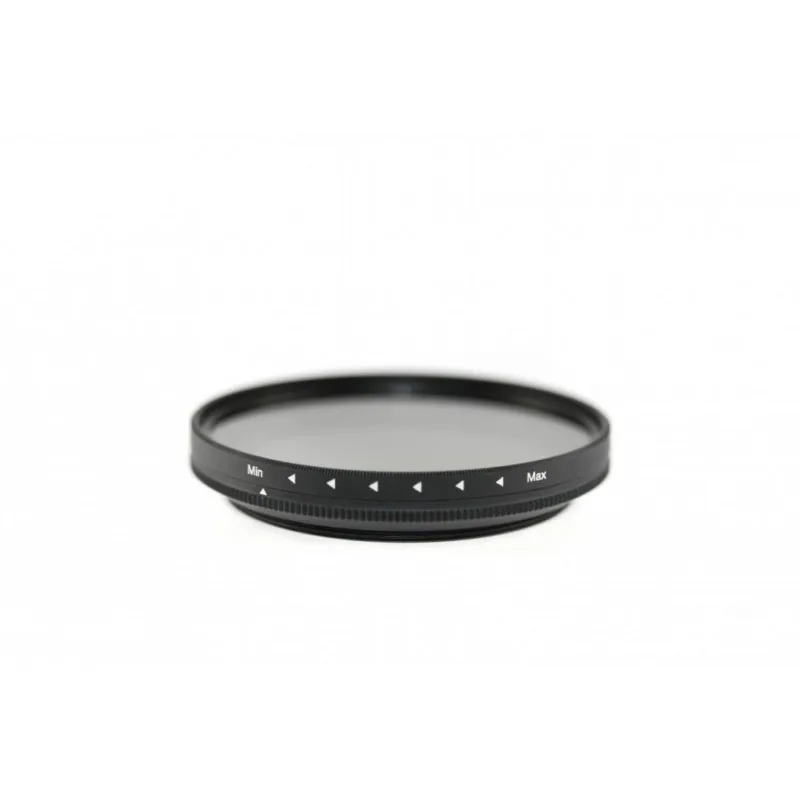
BRAUN Smooth ND-Vario 72/77 mm Filter
-
BRAUN StarLine POL-Filter 62 mm: 62 mm polarizing filter from the StarLine series, made with high-quality optical glass optimized for digital photography. A dedicated polarizer for 62 mm lenses gives you glare control and sky depth without adding an ND's light loss on top.
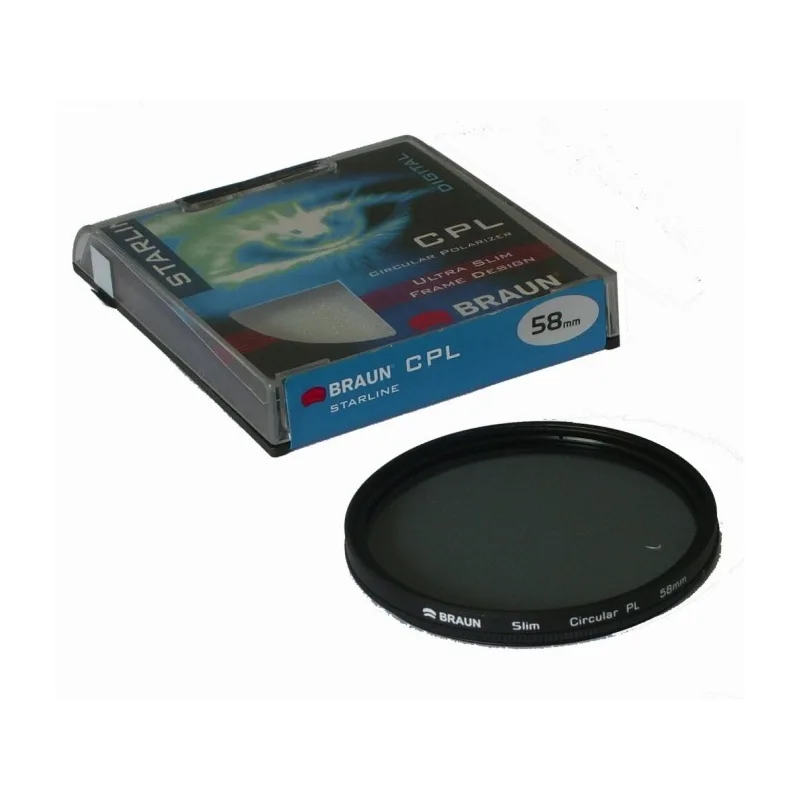
BRAUN StarLine POL-Filter 62 mm
-
BRAUN Blueline UV-Filter 62 mm: 62 mm UV filter from the Blueline series, made with high-quality optical glass optimized for digital photography. An inexpensive front-element protector for 62 mm lenses that you can leave mounted for dust, spray and everyday knocks.
Who should buy which
Best for
- Landscape and travel photographers who want one filter for glare and sky control: the 62 mm StarLine POL-Filter.
- Video and long-exposure shooters who need adjustable light reduction: the Smooth ND-Vario 72/77 mm.
- Everyday shooters who want cheap front-element protection: the Blueline UV-Filter 62 mm.
Not for
- Photographers who never shoot in bright light or slow shutter speeds: skip the ND-Vario.
- Shooters who want a single filter to do everything: no one filter covers glare, light reduction and protection equally well.
- Lenses whose thread diameter is not 62 mm, 72 mm or 77 mm: check for an adapter or a different size first.