Quick answer
Buy a needle minder that is strong enough to hold your needle through your fabric, small enough not to crowd your stitching area, and decorated in a way that makes you smile every time you pick it up. For most cross stitchers and embroiderers, a magnetic minder in the 1 to 1.5 inch range with a firm magnet is the sweet spot. If you work on thick linen or quilt layers, size up. If you stitch in hand on lightweight cotton, a smaller minder keeps the fabric from dragging.
A needle minder is one of those small tools that quietly changes how you stitch. Instead of parking your needle in the arm of the sofa or losing it in the weave of your fabric, you park it on a magnet. The needle stays exactly where you left it, and your project stays cleaner.
But not every minder works for every project. Magnet strength, size, and how the minder sits on your fabric all matter, and the wrong combination can leave you fishing for a needle anyway. This guide walks through the practical differences so you can pick one that fits how you actually stitch.
How magnet strength affects your stitching
The magnet is the whole point, so strength is the first thing to check. A strong magnet anchors your needle in one spot so it is always within reach and never lost in your project. A weak magnet lets the needle slide or drop when you bump the fabric or move your hoop. For cross stitch on standard Aida or evenweave, a firm magnet is usually enough. If you stitch through heavier linen, quilt layers, or thick felt, you will want more holding power.
Strength also affects how the minder feels to use. A very strong magnet can be slightly harder to separate when you want to move the minder, but it will not let go of your needle mid-project. A weaker magnet is easier to reposition but less forgiving. Think about how often you move your minder versus how often you lose your needle, and choose accordingly.
- Test the magnet before you commit: place your needle on the minder and give the fabric a gentle shake. If the needle stays, the strength is right for that project.
- If you stitch with several needles at once, a stronger magnet will hold more than one without dropping the extras.
Size and placement: matching the minder to your project
Size is a trade-off between holding power and visibility. A larger minder gives you more surface area for the magnet and makes a bolder statement on your work, but it can also cover part of your chart or get in the way when you are stitching close to an edge. A smaller minder stays out of the way and is easier to keep on a small hoop or a travel project. For most stitchers, a minder around 1 to 1.5 inches across handles both jobs well.
Placement matters as much as size. The minder goes on the front of your fabric, and a second magnet or backer goes behind it, sandwiching the fabric. If the minder is too heavy for lightweight fabric, it can pull the weave out of shape. If it is too small for a thick project, the magnet may not grip through all the layers. Match the minder to the fabric weight and the size of your hoop or frame.
- On a small travel hoop, choose a compact minder so it does not crowd your stitching area.
- On a large floor frame or quilt, a bigger minder is easier to find by touch and less likely to be knocked off.
Materials and finish: what holds up over time
Most needle minders combine a decorative front with a magnet on the back. The front can be enamel, acrylic, wood, or fabric-covered, and the finish affects both durability and how easy it is to clean. Enamel and smooth acrylic wipe clean with a damp cloth and resist snagging your thread. Wood and fabric fronts feel warmer but can catch on rough skin or frayed edges over time.
The magnet itself should be encased so it does not rust or scratch your fabric. A well-made minder keeps the magnet covered and the edges smooth. If you stitch with silk or delicate threads, run a finger along the edge before you use it. Any rough spot can snag a thread as you pull it through.
- Wipe enamel and acrylic minders with a soft damp cloth; avoid soaking them, which can loosen the magnet.
- Check that the back magnet is flush and covered so it does not leave rust marks on light fabric.
Matching the minder to your stitching style
Cross stitchers who work in hand on a small project often prefer a light, compact minder that does not add weight to the fabric. Embroidery stitchers working on a hoop may want a slightly larger minder that stays put when the hoop is turned. Quilters and hand sewers who work through multiple layers need the strongest magnet they can get, because the needle has more material to pass through.
If you stitch in several styles, one versatile minder in the middle of the size range will cover most projects. If you mostly stitch one way, it is worth choosing a minder tuned to that method. The goal is simple: the minder should hold your needle without fighting your fabric or your hands.
- In-hand stitchers: prioritize a light minder that will not drag on the fabric.
- Hoop and frame stitchers: prioritize a stable minder that stays in place when the work is rotated.
- Multi-layer stitchers: prioritize magnet strength over decoration.
Decision rules for choosing a needle minder
- If you stitch through thick fabric or multiple layers: Choose the strongest magnet you can find and size up slightly. A weak magnet will let the needle drop when you pull it through heavy linen, quilt layers, or felt. Strength first, decoration second.
- If you stitch in hand on lightweight cotton or Aida: Choose a compact, lighter minder. A heavy minder can drag the fabric out of shape and make your stitches uneven. Keep it light and small.
- If you stitch on a small hoop or travel project: Choose a minder around 1 inch or smaller so it does not cover your chart or crowd your working area. Measure your hoop before you buy.
- If you want one minder for everything: Choose a mid-size minder with a firm magnet. It will handle most cross stitch, embroidery, and hand sewing without being too heavy or too weak. Aim for the middle of the size range.
- If you care about the finish lasting: Choose an enamel or smooth acrylic front with a covered magnet. These wipe clean and resist snagging your thread. Check the edges before you use it on delicate fabric.
Products that fit these rules
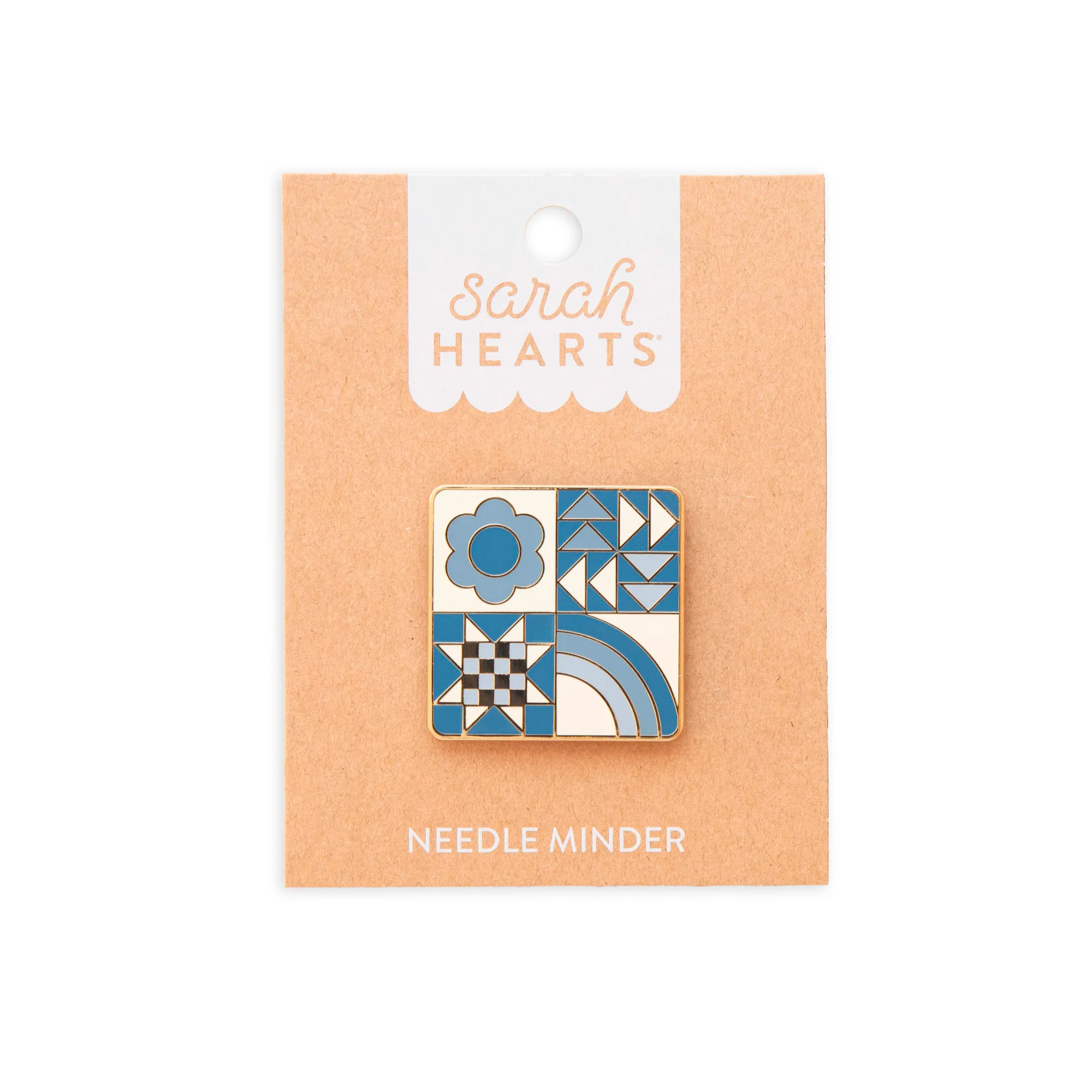
- Quilt Block Magnetic Needle Minder: This quilt block magnetic needle minder is a handy and adorable notion for sewists of all kinds. The strong magnet anchors your needles in one spot, so they're always within reach and never lost in your project. The strong magnet is the key feature here: it holds needles securely on your fabric or work surface, which is exactly what you want if you stitch through multiple layers or move your project around.
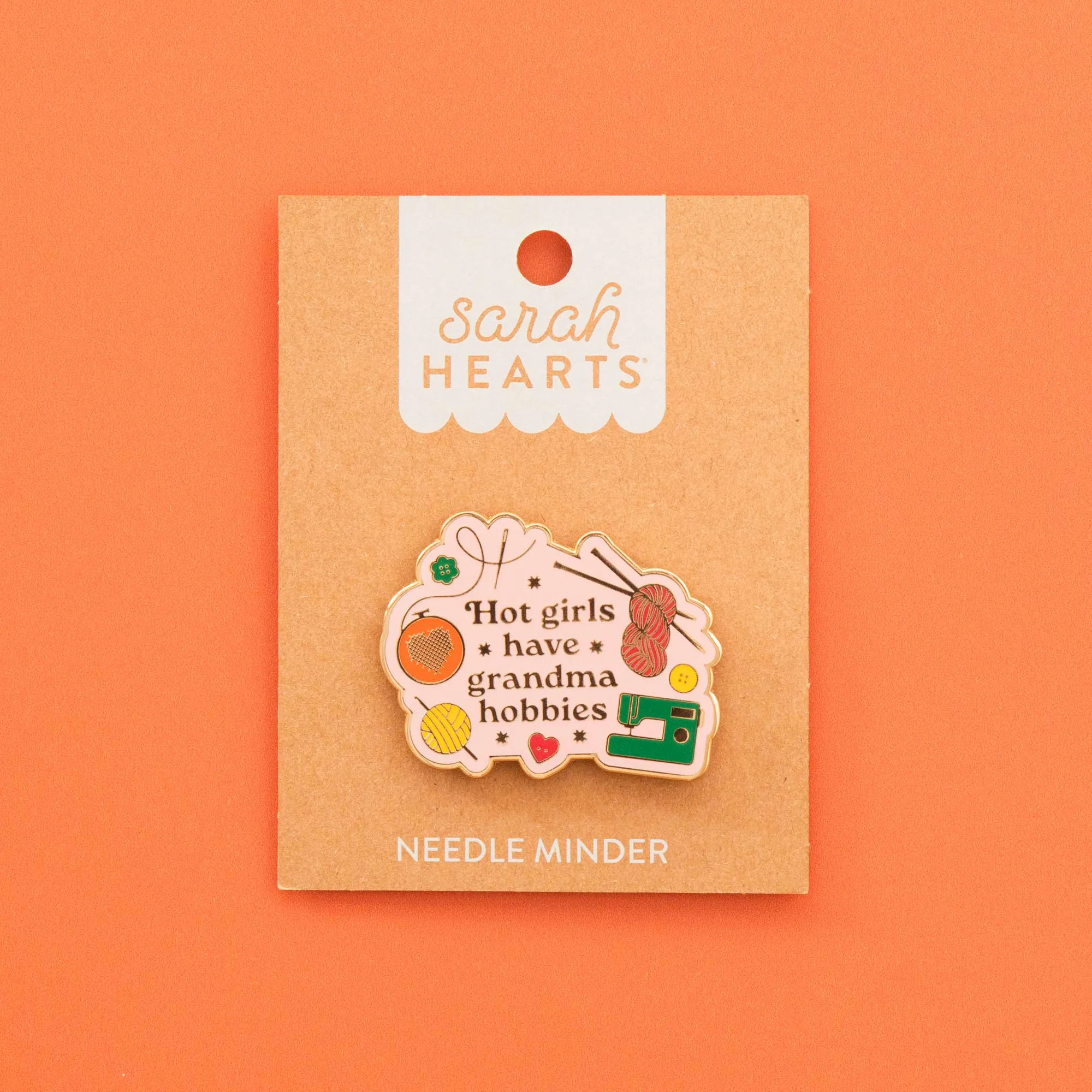
- Hot Girls Have Grandma Hobbies Magnetic Needle Minder: This strong, magnetic needle minder keeps your needle exactly where you left it - so you never have to worry about losing your needle again. Perfect for cross stitch, embroidery, quilting, and all your hand sewing adventures. It is designed for cross stitch, embroidery, quilting, and hand sewing, so it covers the main ways people use a minder. The strong magnet means it will hold up whether you stitch in hand or on a hoop.
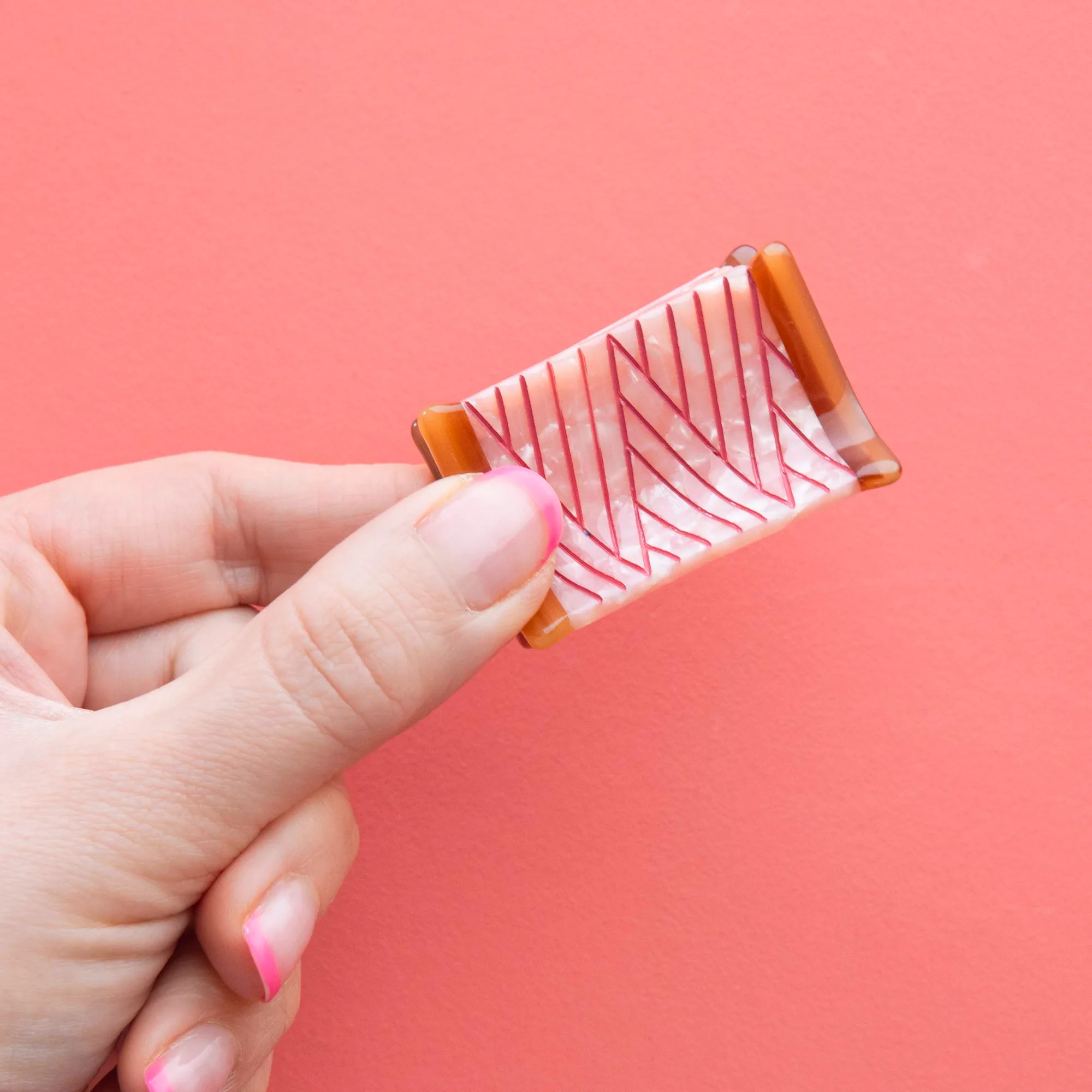
- Thread Spool Mini Hair Claw Clip: Crafted from eco-friendly plant-based acetate, this small, playful clip showcases pink iridescent thread and engraved + hand-painted details. Not a needle minder, but a practical companion if you like to keep your hair back while you stitch. The plant-based acetate and small size make it a comfortable, low-profile option for keeping hair tidy during a stitching session.
Who this is for
Best for
- Cross stitchers who work on Aida, evenweave, or linen and want their needle to stay put
- Embroidery stitchers who use a hoop or frame and rotate their work often
- Hand sewers and quilters who stitch through multiple layers and need a strong hold
- Stitchers who want a small, decorative tool that doubles as a project marker
Not for
- Anyone who prefers to park their needle in a pincushion or needle book and does not want a magnet on their fabric
- Stitchers working with very delicate or antique textiles where any added weight could cause damage
- People who stitch only with a sewing machine and never hand sew
A needle minder is a small purchase, but the right one makes your stitching smoother every time you sit down. Match the magnet strength to your fabric, keep the size in proportion to your hoop, and pick a finish that will not snag your thread. If you stitch a little of everything, a mid-size minder with a firm magnet is the safest place to start.