Quick answer
Pick a tapestry needle that passes through the canvas hole without stretching it and carries your thread without dragging. Match the needle size to your canvas mesh: finer mesh (18) needs a smaller needle, while larger mesh (13) takes a larger one. If the needle distorts the hole, go down a size; if the thread frays or the eye is too tight, go up.
A needle that's too fat will stretch your canvas holes and leave gaps in your stitching. One that's too thin can make your thread drag and fray. The fix is simple: match your tapestry needle to your canvas mesh, then fine-tune for the thread you're using.
This guide walks through a repeatable method for choosing needlepoint needle sizes, with checkpoints so you can catch problems before you stitch a whole area. You'll also see how mesh count on real canvases changes the needle you reach for.
Match the needle to your canvas mesh
Canvas mesh is the number of threads per inch. An 18 mesh canvas has 18 threads per inch, so the holes are smaller than a 13 mesh canvas. Tapestry needles are sized by number, and the higher the number, the finer the needle. As a starting point, use a size 22 tapestry needle for 18 mesh and a size 20 for 13 mesh. If your canvas is 14 mesh, a size 20 or 22 can work depending on the thread.
The checkpoint is simple: slide the needle through a hole without forcing it. If you hear a faint tearing sound or see the hole widen, the needle is too large. If the needle falls through with no resistance and the thread bunches at the eye, the needle is too small for that thread.
- Test on an unstitched corner of the canvas, not in the middle of your work.
- Keep two or three needle sizes on hand; one canvas can need a change when you switch threads.
Check the needle eye and thread thickness
A tapestry needle has a blunt tip and a long eye, which lets it slide between canvas threads instead of piercing them. The eye needs to be wide enough for your thread to pass through without fraying, but not so wide that the needle body is oversized. If you're using a thick wool, a size 20 needle may carry it more smoothly than a size 22, even on 18 mesh, as long as the hole doesn't stretch.
When you thread the needle, the thread should move through the eye with light friction. If you have to pull hard, the eye is too small. If the thread slips out while you stitch, the eye is too large or the needle is too fine. This is where a tapestry needle size guide is useful, but always confirm with your own thread and canvas.
- Thread a needle and pull a few inches through the eye; if it shreds, go up a needle size.
- For silk threads, a slightly larger eye reduces friction and keeps the strand smooth.
Adjust for stitch tension and comfort
Needle size also affects how your stitches lie. A needle that's too large can push canvas threads apart, so your stitches look loose or uneven. A needle that's too small can make you tug, which tightens your tension and distorts the canvas. The best needle for needlepoint is the one that lets you stitch with a relaxed hand and even tension.
Comfort matters over long sessions. If your hand cramps, try a slightly shorter needle or a different size. Some stitchers prefer a size 22 for detailed areas and a size 20 for larger fields, even on the same canvas. There's no rule that says you must use one needle for the whole project.
- If your stitches look pulled or the canvas buckles, change needle size before you change technique.
- Take a break and re-test the needle after 30 minutes; fatigue changes how you hold it.
Use the canvas and kit as your guide
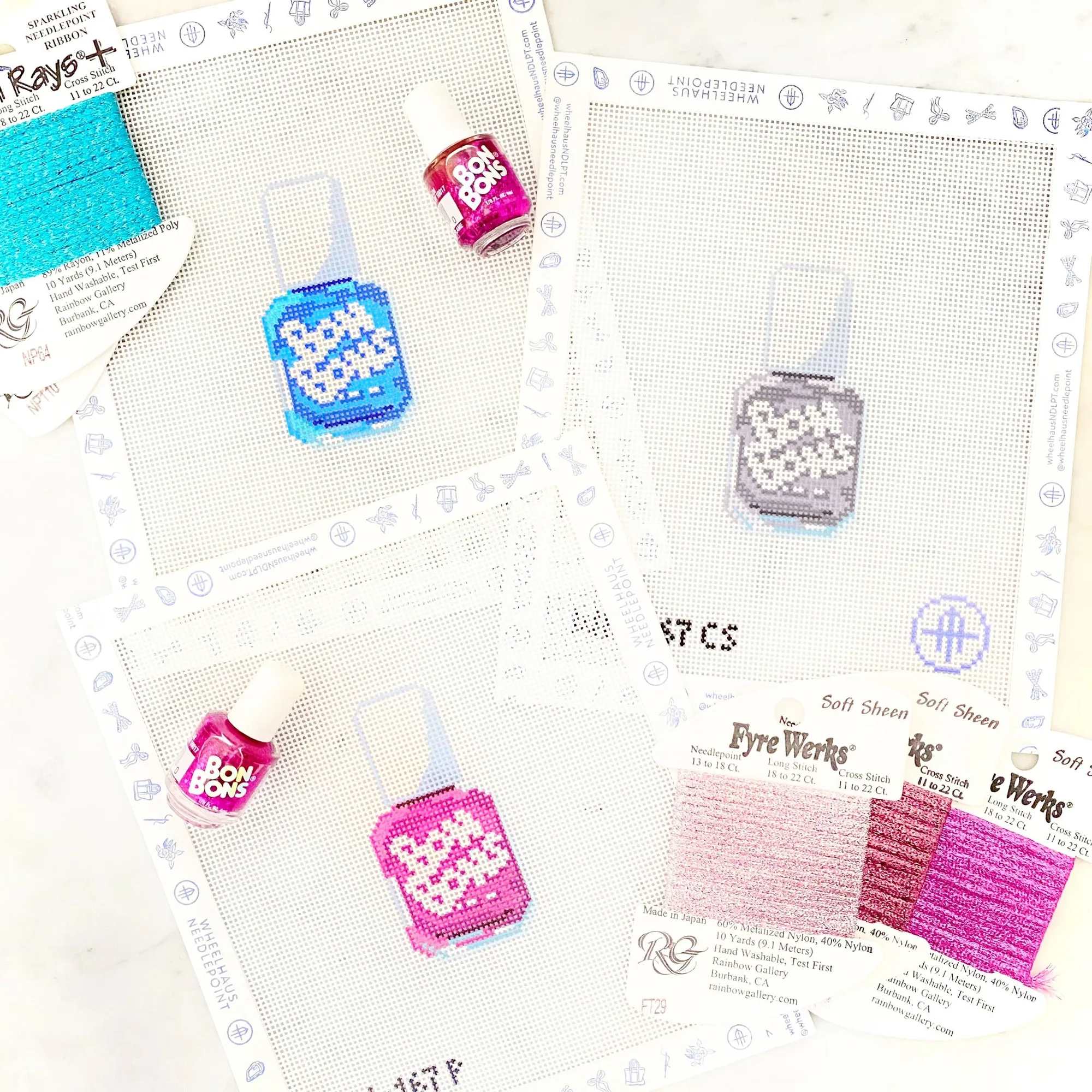
Many needlepoint canvases list their mesh count, and thread kits often include a tapestry needle. For example, the Bon Bons Nail Polish canvas is 18 mesh and its thread kit includes a tapestry needle, so you can start with the supplied needle and adjust if needed. The Nauti Flag Key Fob is 13 mesh, which takes a larger needle than 18 mesh.
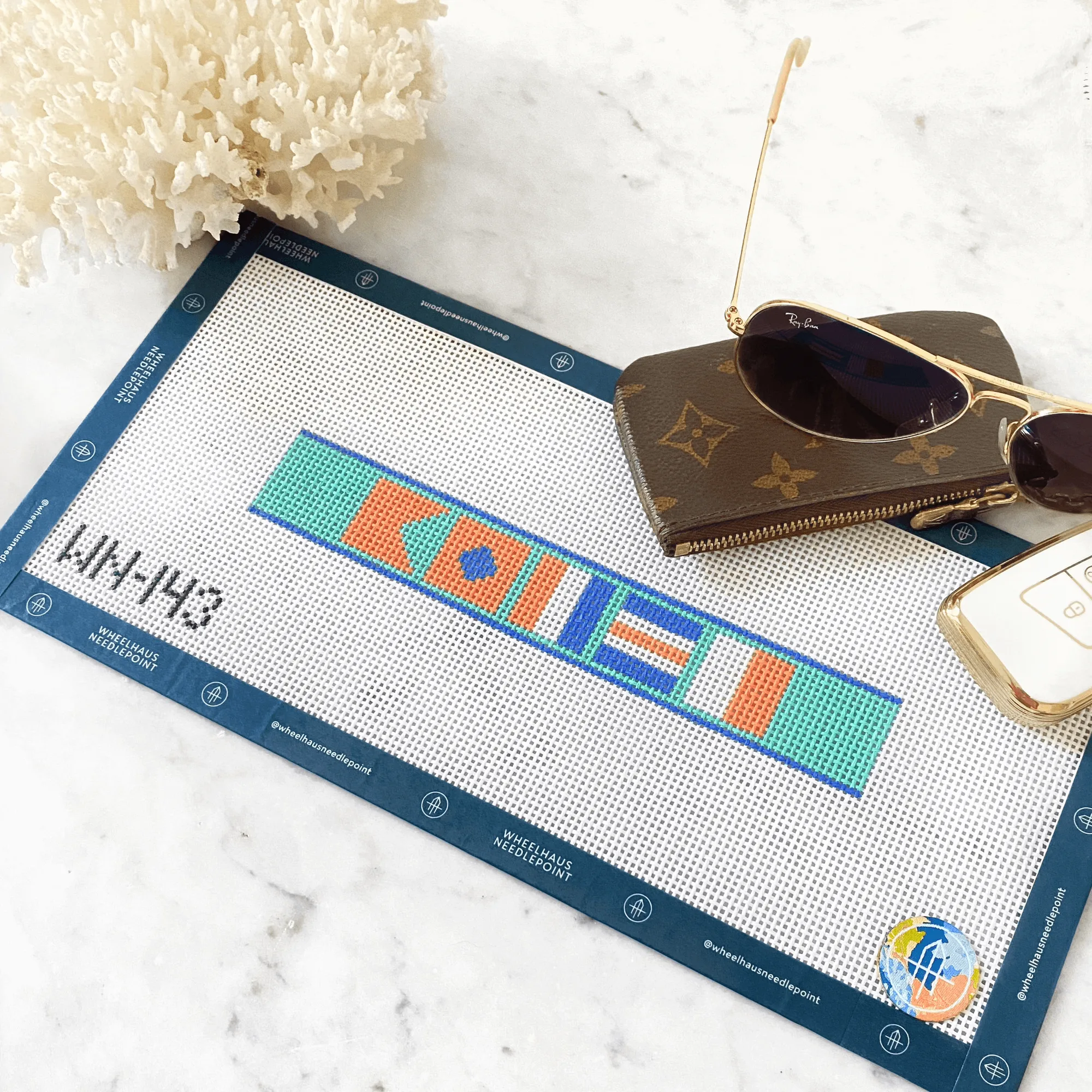
Nauti Flag Key Fob
If a canvas doesn't state its mesh, count the threads in one inch. Then use the starting sizes above. If you're buying a canvas only, check whether a needle is included; some listings specify it and some don't. When a specification is absent, treat it as a decision point: buy a small assortment of tapestry needles so you can test.
- Count threads over one inch in two directions to confirm mesh.
- Keep a needle case or a small magnet to avoid losing sizes.
Your needle selection steps
- Step 1: Find your canvas mesh: Check the product listing or count the threads per inch. Write the number down so you don't guess later. Checkpoint: if you can't confirm the mesh, count again in two directions.
- Step 2: Start with the matching needle size: Use size 22 for 18 mesh and size 20 for 13 mesh. If you're between sizes, begin with the smaller needle and test. Checkpoint: the needle should pass through a hole without widening it.
- Step 3: Thread the needle and test the eye: Pull your thread through the eye. If it frays or drags, go up one needle size. If it slips out, go down one size. Checkpoint: the thread should move with light friction, not force.
- Step 4: Stitch a test row: Work a few stitches in an unstitched area. Look for stretched holes, loose stitches, or tight tension. Checkpoint: if the canvas distorts, change needle size before continuing.
- Step 5: Adjust for thread type and comfort: Thicker wool may need a larger eye; silk may need a smoother pass. If your hand tires, try a different size or length. Checkpoint: the right needle lets you stitch with even tension and minimal effort.
Canvas facts that affect needle choice
- Bon Bons Nail Polish: 18 mesh canvas; thread kit includes a tapestry needle. 18 mesh has small holes, so start with a size 22 tapestry needle and use the included needle as your baseline.
- Nauti Flag Key Fob: 13 mesh canvas; design 8" x 1". 13 mesh has larger holes, so a size 20 tapestry needle is a better starting point than a size 22.
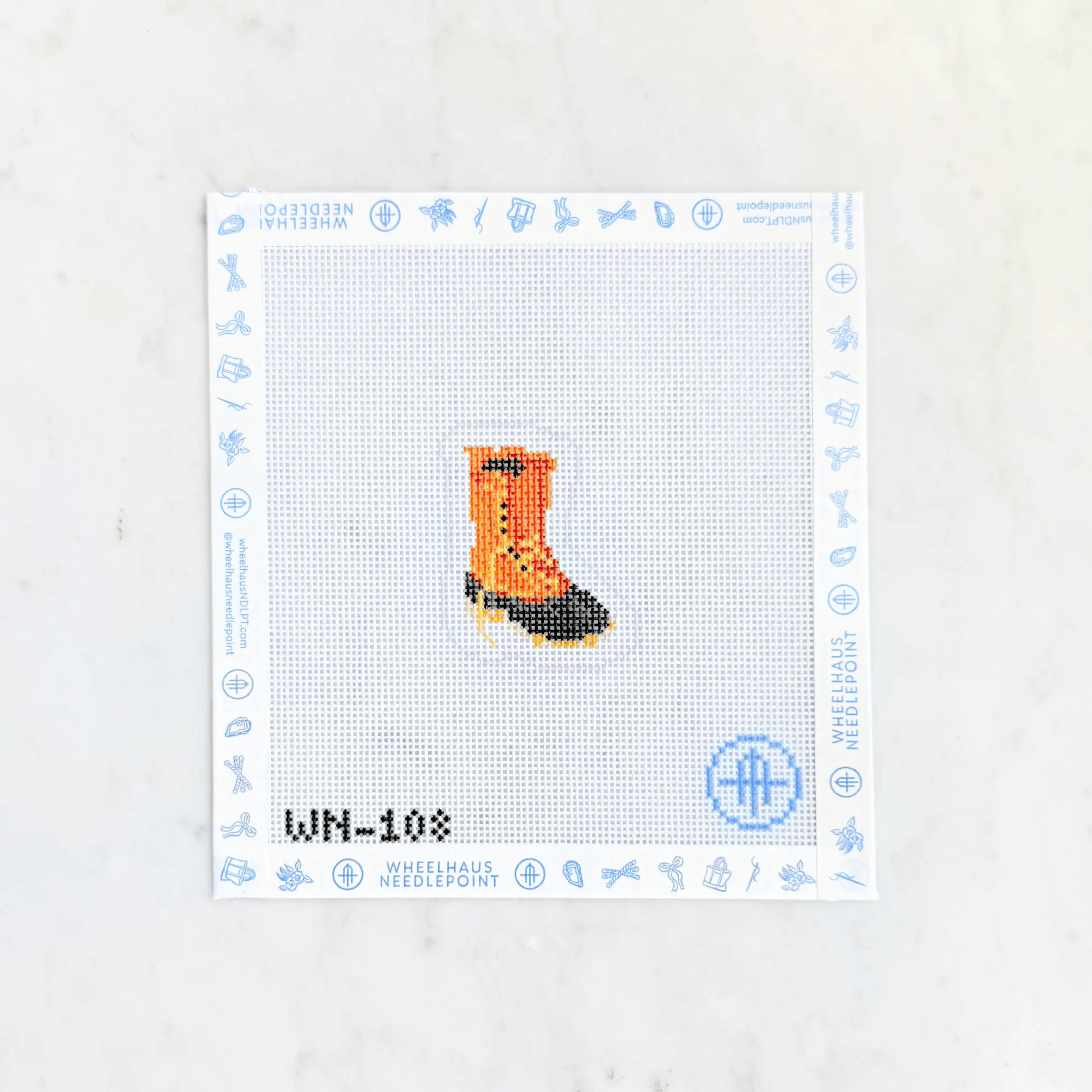
- Mini Duck Boot Charm: 18 mesh canvas; canvas does not come finished or stitched and threads are not included unless the kit is purchased. You'll need to supply your own tapestry needle and thread, so pick a size 22 needle and test it with your chosen fiber.
Choosing the right needle comes down to matching it to your canvas mesh and thread, then testing before you commit. Start with size 22 for 18 mesh and size 20 for 13 mesh, and adjust from there. A few minutes of testing saves hours of reworking stretched or uneven stitches.