Quick answer
For a newborn, prioritize a carrier that offers proper head and neck support, an ergonomic M-position for hips, and adjustability to grow with your baby. Look for models with dedicated newborn settings or inserts.
Why Newborns Need Special Carrier Features
A newborn's spine is C-shaped, and their hips are still developing. A good carrier supports this natural curve without forcing their legs straight. It also keeps their airway clear by positioning them high enough to kiss. The wrong carrier can cause discomfort or, in rare cases, hip dysplasia or positional asphyxiation.
Most standard carriers are designed for babies who can hold their heads up (around 4-6 months). For a newborn, you need a carrier with a narrow base or one that can be adjusted to a narrower setting, along with excellent head and neck support.
Ergonomic vs. Cradle Carriers: A Key Trade-Off
Many soft-structured carriers (SSCs) offer an ergonomic 'M-position' (knees higher than bottom) which is ideal for hip health. However, some newborn-specific carriers use a cradle or hammock-style seat. While these can feel cozy, they may not support the hips as well. The safest and most recommended option for long-term use is a carrier that allows an ergonomic M-position from day one, often with a removable infant insert.
Cradle carriers are generally fine for very short periods (like skin-to-skin contact) but are not recommended for extended carrying. Always check the manufacturer's guidance on weight and age limits.
5 Decision Rules for Choosing a Newborn Carrier
- 1. Check for Newborn Certification: Look for a carrier explicitly stating suitability from birth (usually 3.5-5.5 kg) without needing to guess. This ensures it has the required head support and narrow seat setting. Avoid carriers that only list a minimum age of 4 months unless they come with a certified newborn insert.
- 2. Prioritize the 'M' Position: When your baby is in the carrier, their knees should be higher than their bottom, with their thighs supported from knee to knee. This is crucial for healthy hip development. If the carrier forces your baby's legs to dangle straight down, it is not ergonomic for a newborn.
- 3. Verify Airway Access: The carrier should keep your baby's face visible and clear of fabric at all times. You should be able to see their face without moving anything. Their chin should not be pressed against their chest. Do a 'kiss test': you should be able to kiss the top of your baby's head without straining.
- 4. Choose Adjustable Shoulder Straps: Newborns are tiny, so the carrier must have adjustable chest and shoulder straps to get a snug, high fit. A loose carrier is unsafe and uncomfortable for both of you. A carrier with crossed or H-back straps offers more adjustability for different body types.
- 5. Consider Your Climate: Babies can overheat quickly in a carrier. Look for breathable mesh or thin cotton fabrics, especially if you live in a warm climate or plan to use it in summer. Avoid heavy padded carriers for indoor or warm-weather use with a newborn.
Carrier Options for Newborns
-
Cybex Laya Baby Carrier - Chocolate Brown: Laya features smart, self-adapting stretch fabric that wraps naturally around your baby's body, growing with them. This means it provides a custom-like fit from day one without needing a separate infant insert, simplifying setup for parents.
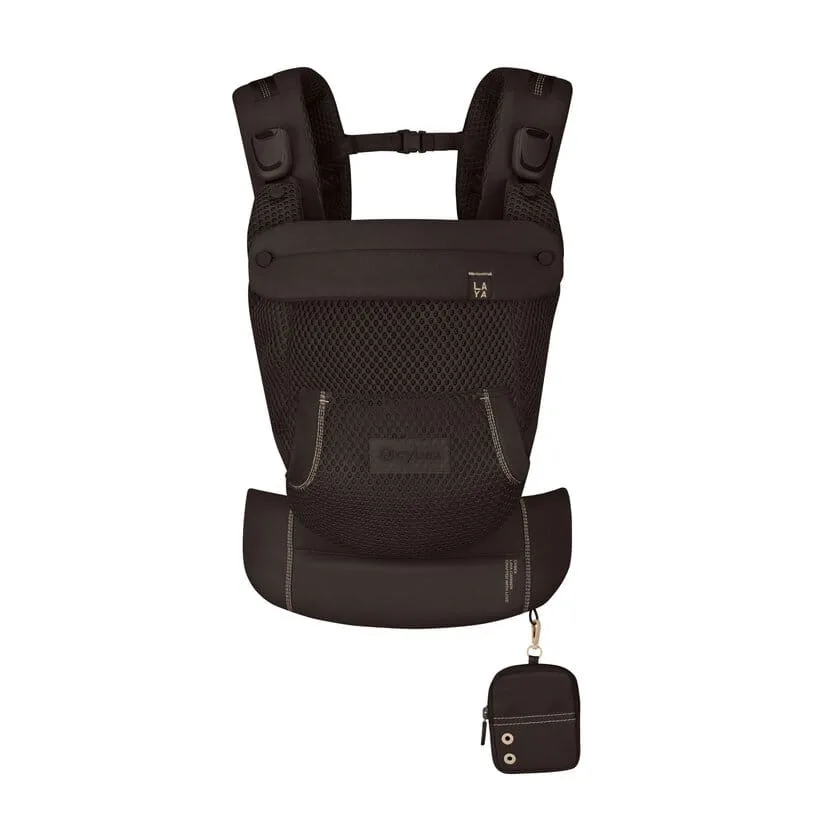
Cybex Laya Baby Carrier - Chocolate Brown
-
Cybex Amya Baby Carrier - Magic Black: Amya is suitable from day one and offers four ergonomic carrying positions, with breathable mesh fabric. The multiple positions allow you to switch from front-inward to back carry as your baby grows, making it a long-lasting choice. The mesh helps keep a newborn cool against your body.
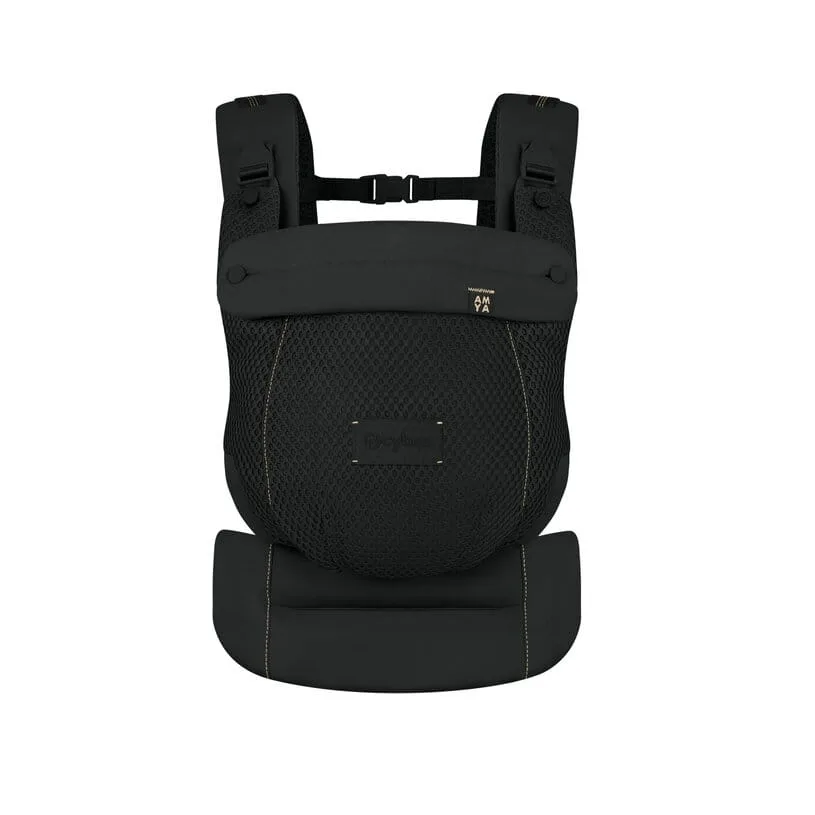
Cybex Amya Baby Carrier - Magic Black
Which Carrier Fits Your Needs?
Best for
- Parents who want a carrier that adapts from birth without extra inserts
- Parents who need a budget-friendly, long-lasting option with multiple carrying positions
Not ideal for
- Parents seeking a carrier for very long hikes or heavy toddlers (a structured backpack carrier may be better)
- Parents who prefer a wrap-style carrier (a stretchy wrap might be a simpler alternative)