Quick Answer
Start with adjustable nipple clamps that use a screw or sliding mechanism, not fixed tension, so you can begin at the lightest setting and increase only if it stays comfortable. Add a single Wartenberg-style pinwheel before a double wheel, because one rolling path is easier to control on a beginner's skin. Buy both as separate pieces rather than a prepackaged kit so you can match the clamp's grip and the wheel's pressure to your own body.
Clamp Type: Why Adjustable Wins for Beginners
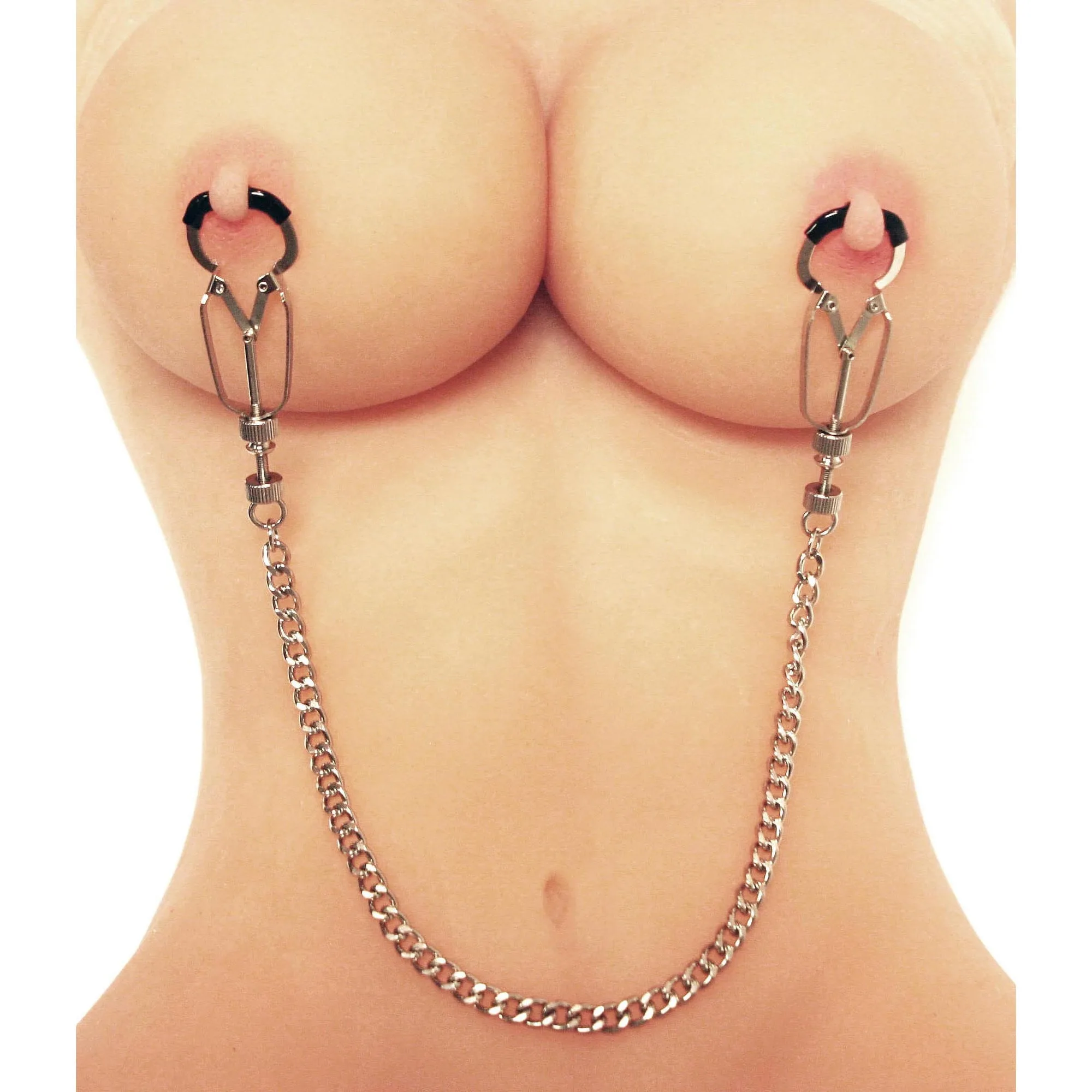
Fixed clamps, such as alligator-style clips with a preset spring, give you no way to reduce pressure once they are on. Adjustable clamps let you set the starting tightness, which matters because nipple sensitivity varies widely from person to person and even changes with temperature and arousal. A screw-based clamp like the Bauhaus Precision Nipple Vice uses adjusting screws at the base to set your level of tightness, so you can begin loose and tighten in small increments rather than committing to one fixed grip.
How Tight Should Nipple Clamps Be?
Tight enough to stay on during gentle movement, and no tighter. If the clamp leaves a deep dent, causes a sharp pinch that does not fade into a dull ache, or makes the skin turn white or blue, it is too tight. Loosen immediately and wait for normal color to return before reapplying. A clamp that slips off at the lightest setting is also a problem, but the fix is a better-fitting clamp, not more pressure. Remove clamps after 15 to 20 minutes and give the area a break before reapplying.
Pinwheel Basics: Single vs Double Wheel
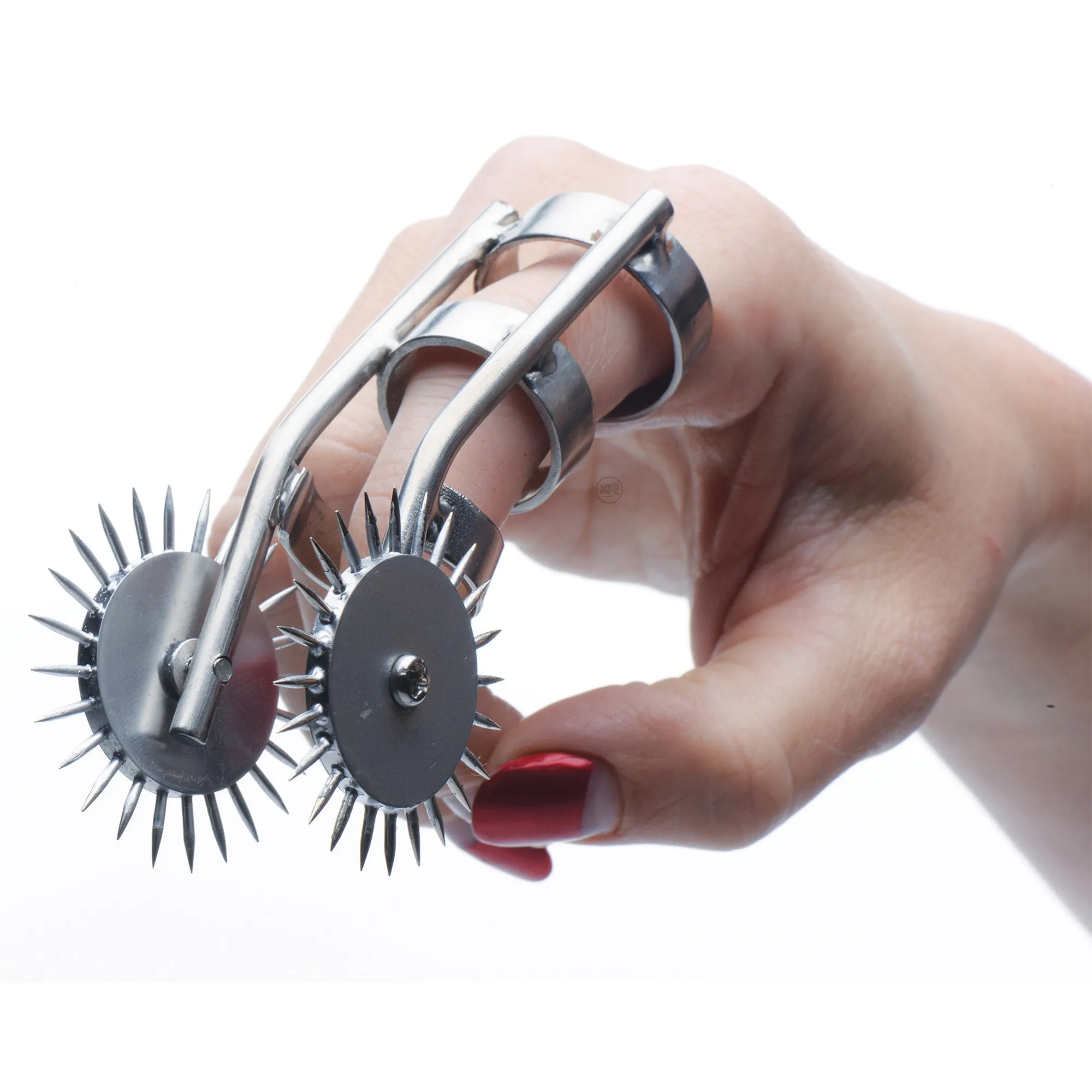
A Wartenberg pinwheel is a handle with a spiked wheel that rolls across skin to create a prickling sensation. A single wheel gives you one clear line of contact, which is easier to control and easier to stop when your partner signals. A double-wheel design like the Spikes Double Finger Pinwheel puts two pinwheels on a ring-like device worn on the finger, so each pass creates two parallel tracks. That doubles the sensation and the coverage, but it also doubles the chance of rolling over a spot that is already sensitive. For a first pinwheel, single wheel is the safer learning tool; move to double when you can reliably control speed and pressure.
Material and Cleaning Trade-Offs
Silicone and TPR are common for beginner-friendly sensation toys because they are soft and flexible, but they are not interchangeable in care. TPR is porous, so it holds onto oils and bacteria more than silicone and should be cleaned promptly and inspected for wear. Silicone is non-porous and easier to sanitize, which is why a silicone plug or silicone-tipped clamp is a better long-term choice if you plan to share or use it often. Metal clamps and pinwheels are the easiest to clean thoroughly, but they feel colder and less forgiving on first contact, so warm them in your hand first.
Building a Starter Set Without Overbuying
You do not need a full kit to begin. One adjustable clamp pair, one single pinwheel, and a safe word or tap-out signal cover the core of beginner sensory play. Add a blindfold only after you are comfortable with the sensations, because removing sight heightens every touch and can make a light clamp feel much stronger. Skip anything marketed as a complete beginner BDSM sensory play starter kit until you know which sensations you actually enjoy; a kit often includes fixed-tension clamps or multiple wheels you will not use.
Decision Rules for Your First Purchase
- If you have never worn clamps: Choose an adjustable screw or sliding clamp and start at the loosest setting that stays on. Test it on your inner forearm first to learn how the mechanism feels before placing it on the nipple. Adjustable first, fixed tension later.
- If you want to try pinwheel play: Buy a single-wheel pinwheel and roll it lightly over the forearm or thigh before moving to the chest or genitals. Keep the angle shallow and the speed slow until you know how much pressure the skin tolerates. One wheel, one direction, light pressure.
- If you plan to share toys: Prioritize silicone or metal over porous TPR, and clean between users. Porous materials can harbor bacteria in small surface imperfections even after washing. Shareable means non-porous and cleanable.
- If you are unsure about sensation: Buy a single adjustable clamp pair and one pinwheel rather than a kit. You can add a second wheel or a different clamp style once you know which sensation you want more of. Buy the smallest set that tests your interest.
Product Facts to Compare
- Bauhaus Precision Nipple Vice: Two clamps with adjusting screws at the base set your desired level of tightness, and the tips are covered in soft TPR with a delicate curve at the end that assists in gripping the skin. The screw adjustment lets a beginner start at the lightest grip and increase gradually, while the curved TPR tip is designed to hold skin without the sharp bite of a bare metal edge.
- Spikes Double Finger Pinwheel: A ring-like device worn on the finger holds two pinwheels, and the smooth rolling motion produces a prickly, painful pleasure. Finger-mounted control keeps the wheel close to your hand for precise pressure, but two wheels mean twice the sensation per pass, so it suits someone who already knows their partner's tolerance for prickling play.
Who This Setup Fits
Best for
- Beginners who want to control tightness and pressure from the first session
- Couples exploring light sensory play with clear stop signals
- Anyone who prefers to buy one adjustable clamp and one single pinwheel before committing to a kit
Not for
- Shoppers who want a fixed-tension clamp with no adjustment
- Anyone looking for a double pinwheel as a first wheel
- Users who need a fully non-porous setup and will not consider TPR-tipped clamps