Quick answer
Timothy hay should be the everyday foundation for adult rabbits and guinea pigs because it is a grass hay built for daily, unlimited feeding. Oat hay is a grain hay with more seed heads, so it works best as a rotation hay for picky eaters, underweight pets, or animals that need encouragement to eat. Most healthy adults do best on timothy as the staple and oat hay as the occasional switch.
What actually differs between oat hay and timothy hay
Both are long-strand hays that support chewing and digestion, but they come from different plants and that changes how they fit into a feeding plan. Timothy is a grass hay, which is why it is the standard recommendation for adult rabbits and guinea pigs. Oat hay is a grain hay, and the seed heads make it smell sweeter and taste more interesting to many small pets.
The practical difference shows up in two places: how willing your pet is to eat it, and how much you want to lean on it as a daily staple. A pet that ignores timothy may clean up oat hay, but that does not automatically make oat hay the better everyday choice. It makes it a useful tool.
Nutrition trade-offs you should know before switching
Grass hays like timothy are the safer default for adult pets because they are lower in calories and protein than grain hays. Oat hay carries more protein and grain content, which can be helpful for a thin pet or a nursing mother, but it is not the right base for a healthy adult on a maintenance diet.
The exact protein percentage depends on the harvest and the supplier, and that number is not supplied for these products. Rather than guessing at a figure, treat oat hay as a richer hay and feed it with that in mind. If your pet has kidney or bladder concerns, ask your veterinarian before making oat hay a regular part of the rotation.
How to feed each hay without overdoing it
Keep timothy available at all times so your pet always has long-strand fiber to chew. Offer oat hay in a separate pile or manger, and let your pet eat it down before refilling. A common approach is one small handful of oat hay per day for an average adult rabbit, adjusted down for guinea pigs and smaller pets.
If you are using oat hay to tempt a picky eater, start by mixing a little into the timothy rather than replacing it. Once your pet is eating reliably, reduce the oat hay back to a treat-level portion. This keeps the fiber routine steady while still giving your pet the variety it wants.
Storage and freshness for both hays
Hay loses its appeal when it gets damp or dusty, so store both types in a cool, dry place with airflow rather than in a sealed plastic bin. A paper bag or a breathable container inside a cardboard box works well. Keep the hay off the floor and away from litter or cleaning supplies.
Buy in a size you can use within a few weeks. A large bag of oat hay that sits open for months will lose its sweet smell, and that smell is most of what draws a picky eater in. Rotating a smaller oat hay bag alongside your regular timothy order keeps both fresher.
Trade-offs at a glance
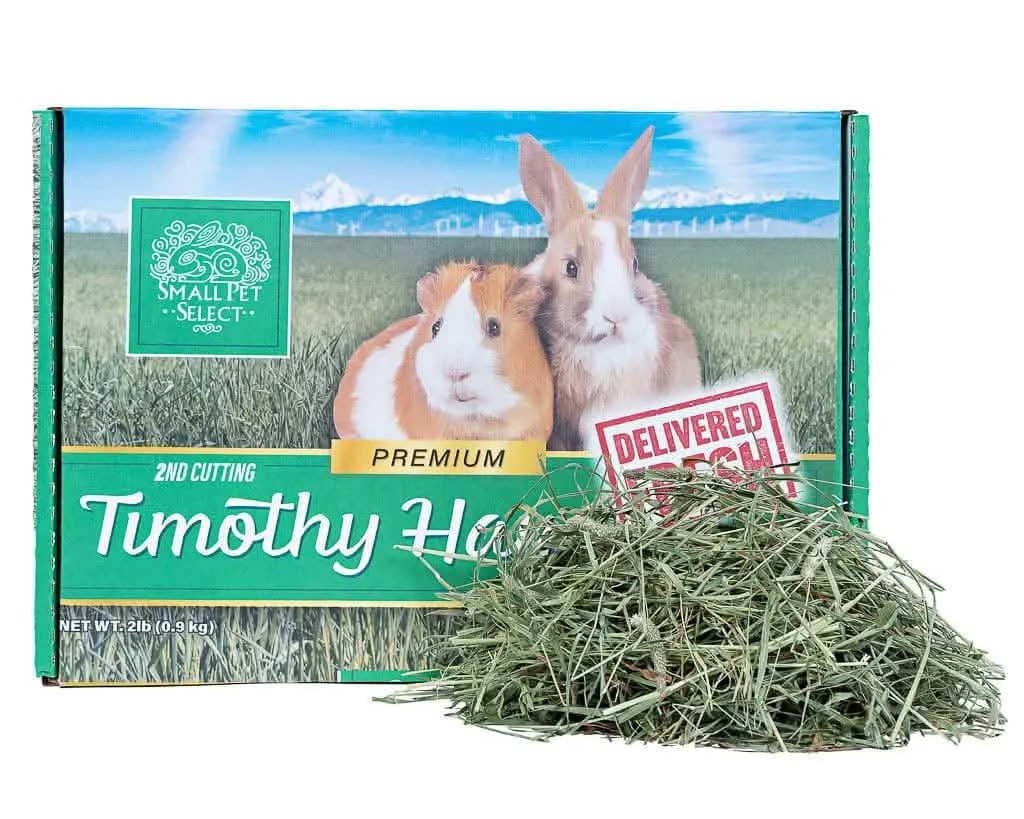
- Everyday staple: Timothy hay is the default for adult rabbits and guinea pigs because it is a grass hay suited to unlimited daily feeding. If you only keep one hay, make it timothy.
- Picky eaters: Oat hay's seed heads make it more aromatic and appealing, which can restart eating in a pet that has gone off its hay. Use oat hay as a bridge, not a permanent swap.
- Underweight or recovering pets: Oat hay is a grain hay with more protein and calories than timothy, which can help a thin pet, but the exact protein level is not supplied and varies by harvest. Ask your vet before making oat hay a long-term base.
- Dental and chewing routine: Long-strand timothy does the heavy lifting for tooth wear. Timothy hay cubes add a convenient chewing option but do not replace loose hay. Keep loose hay in the cage at all times.
Products that fit this comparison
- Oat Hay: Oat Hay is sold in multiple sizes and the catalog notes a July 21, 2026 update: as part of RHDV precautions, hay is typically held at least 90 days before sale, but this oat hay harvest reaches that 90-day holding period on October 10, 2026. The holding period is a safety step, not a quality problem. If you are ordering oat hay as a rotation hay, this tells you the supply is handled with the same care as the rest of the hay line.
- Hay Cubes - Timothy: Hay Cubes - Timothy are smaller than many hay cubes on the market and are sized for rabbits, guinea pigs, chinchillas, gerbils, hamsters, and mice, with the catalog describing them as a healthy and convenient treat. Cubes are not a replacement for loose timothy, but they are a tidy way to add chewing time and a little variety, especially for small pets that scatter loose hay.
Which hay fits your pet
Choose timothy hay if
- You have a healthy adult rabbit or guinea pig that needs a daily, unlimited hay
- Your pet already eats timothy well and you want a simple, low-risk routine
- You want a hay that works as the base of the diet rather than an occasional extra
Choose oat hay instead if
- Your pet is a healthy adult with no weight or appetite issues and you want one hay for everything
- You are looking for the lowest-protein option for a pet with urinary or kidney concerns
- You want a hay to leave in the cage all day without measuring portions