Quick answer
For precise, adjustable scent in the car, open air tech wins: it lets you change intensity and swap scents without touching a sticky vent clip. Traditional car air fresheners still make sense if you want the lowest upfront cost and don't mind a fixed strength. If you value control and a cleaner dashboard, go with open air tech. If you just need a simple, cheap refresh, a traditional vent clip or hanging freshener is enough.
How open air tech and traditional fresheners actually differ
Open air tech uses a small device that disperses fragrance on demand, often with adjustable intensity and timed bursts. Traditional car air fresheners—vent clips, hanging cards, and gel tins—release scent passively and continuously. That single difference drives everything else: control, longevity, and how often you replace the product.
With open air tech, you decide when scent is released. You can run it for a short commute or a long road trip, and you can dial it down if the scent feels strong. Traditional fresheners start strong and fade predictably, whether you're in the car or not. If your car sits parked for days, a traditional freshener keeps releasing scent into an empty cabin, while open air tech waits for you.
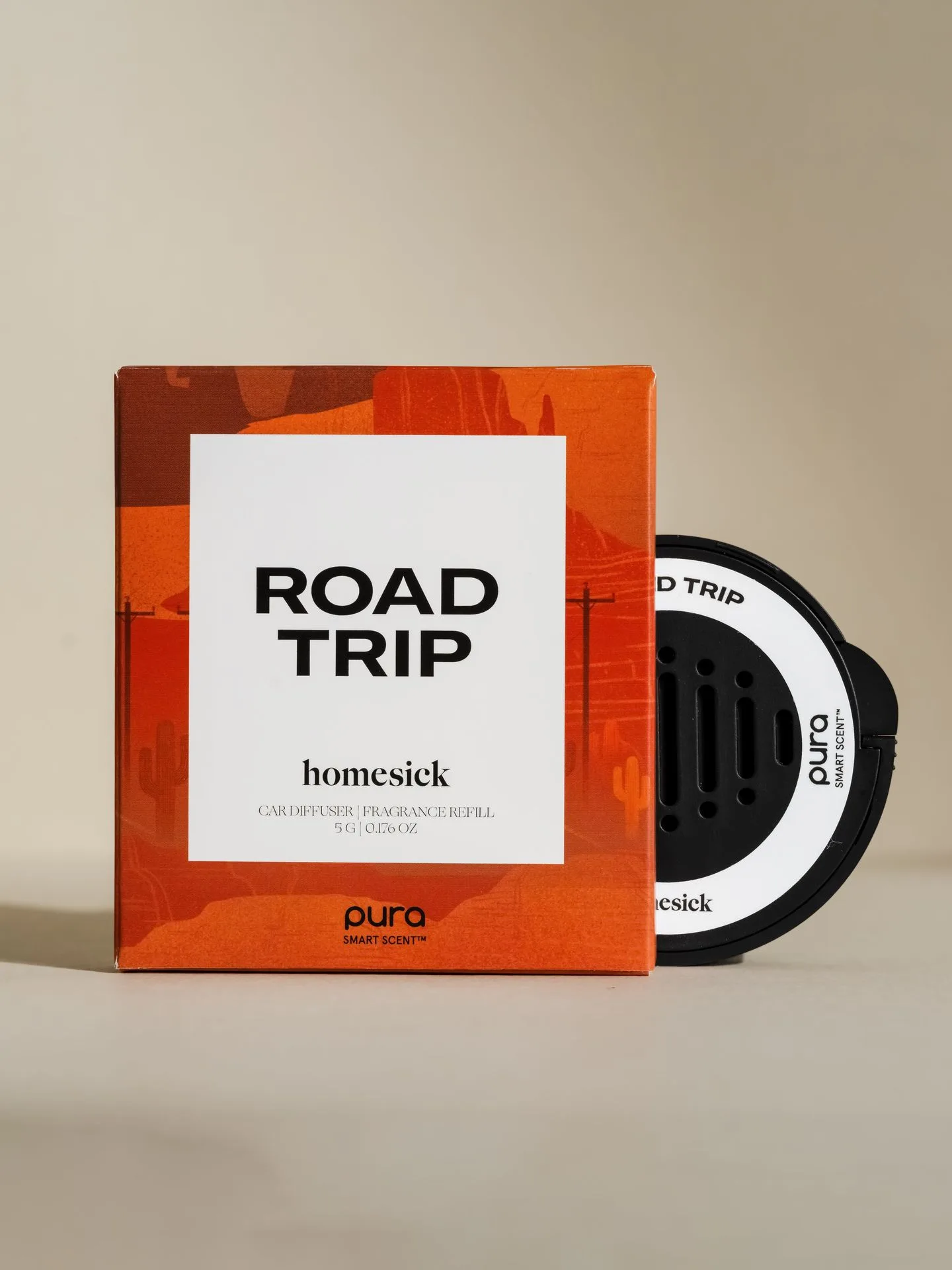
road trip
Scent control and intensity: the biggest practical gap
Open air tech gives you a strength setting, so you can match the scent level to your sensitivity or the size of your car. That matters if you share the car with someone who prefers a lighter scent, or if you want a burst of fragrance after gym class and a subtle background the rest of the day.
Traditional car air fresheners have no adjustment. A vent clip is as strong as it is until it dries out. You can partially open a vent or move the clip, but that's a crude fix. If you've ever wished a car freshener were half as strong, open air tech solves that problem directly.
Longevity and cost: what you replace and when
Open air tech typically uses replaceable scent cartridges or refills, so the device stays in the car and you swap the fragrance. That means ongoing refill costs, but you're not throwing away plastic clips every few weeks. Traditional fresheners are usually all-in-one: when the scent fades, the whole unit goes in the trash.
If you like changing scents often, open air tech can be more economical over a year because you only replace the scent, not the hardware. If you use one scent until it dies and don't care about variety, a traditional freshener can be cheaper upfront. Neither is universally better—it depends on how often you drive and how much you value choice.
Installation and dashboard footprint
Open air tech devices usually mount with a clip or adhesive base and need occasional charging or a cable. That's one more thing to manage, but the payoff is a cleaner look than a dangling tree or a bulky vent clip. Traditional fresheners are instantly usable: clip it, hang it, or peel and stick. No charging, no setup.
If you lease a car or trade vehicles often, traditional fresheners are easier to move because there's nothing to uninstall. Open air tech is better if you plan to keep the car and want a semi-permanent setup that looks intentional.
Scent quality and variety
Both formats can smell great, but open air tech often offers a wider library of scents because the brand sells refills separately. Traditional fresheners are limited to what's on the shelf in that format. If you want to try a new scent every month, open air tech makes that easier and less wasteful.
That said, some traditional fresheners come in classic, familiar scents that people love precisely because they're simple. If you have a favorite vent clip scent you've used for years, there's no reason to switch unless you want more control.
Trade-offs at a glance
- Control vs simplicity: Open air tech gives adjustable intensity and on-demand bursts, but you manage settings and refills. Traditional fresheners are passive and forgettable, but you can't turn them down. Choose control if you share the car or want scent only when you're driving.
- Upfront cost vs long-term cost: Open air tech has a higher initial device cost plus refills. Traditional fresheners are cheap to start but get replaced entirely when spent. If you change scents often, refills can cost less over a year; if you use one scent until it's gone, traditional wins on price.
- Clean look vs instant use: Open air tech looks more integrated but needs mounting and occasional charging. Traditional fresheners clip or hang in seconds with no power. For a leased car or quick setup, traditional is easier; for a long-term car you care about, open air tech looks better.
Car scents that work with either setup
- Honeydew Crush: Honeydew Crush blends tart grapefruit, lemon, and ripened honeydew with apple blossom, cactus flower, and wild bamboo. A bright, fruity profile that suits open air tech if you like to adjust intensity, since the citrus top notes stay lively at lower settings.
- Hawaii: Hawaii combines juicy pineapple, coconut, cyclamen flowers, and sandy shore breezes. A vacation-style scent that works well in a traditional vent clip if you want a constant, no-fuss tropical note during commutes.
Which should you choose?
Best for
- Drivers who want to adjust scent strength and change scents often
- People who share a car and need a lighter or stronger setting on demand
- Anyone who wants a cleaner dashboard look and less throwaway plastic
Not for
- Drivers who want the absolute lowest upfront cost and no charging or setup
- People who prefer a single, passive scent they never have to think about
- Leased cars or frequent vehicle swaps where quick removal matters most