Quick Answer
Optical flats are plane-parallel windows used as reference surfaces or in interferometry, while precision wedge windows introduce a deliberate angle to redirect back reflections. If your system suffers from ghosting or feedback, a wedge window is the better choice; if you need a flat reference plane, an optical flat is essential.
What Is an Optical Flat?
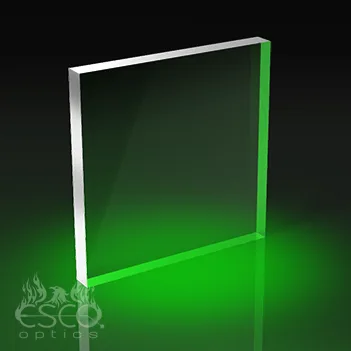
An optical flat is a precision-polished piece of glass with one or both surfaces flat to a fraction of a wavelength. It is commonly used as a reference surface to test the flatness of other optical components or as a mirror substrate. Because both faces are parallel, light passes straight through, and any back reflection returns along the same path—which can be a problem in laser systems.
What Is a Precision Wedge Window?
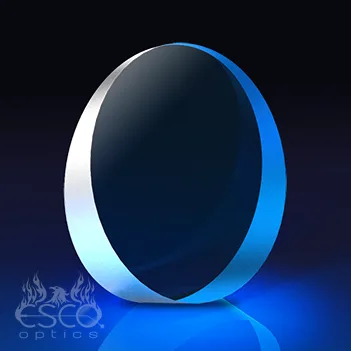
A precision wedge window has a deliberate angle between its two surfaces—typically 30 arcminutes—so that the back reflection is directed away from the optical axis. This prevents feedback and ghost images in laser cavities and other sensitive setups. The wedge also allows you to tune the beam path by rotating the window.
Flatness and Surface Quality: A Practical Comparison
Flatness is a key spec for both, but the emphasis differs. Optical flats are specified to very tight tolerances—often λ/10 or better—because they serve as reference surfaces. Precision wedge windows from Esco are available in flatness grades from λ/4 to λ/10, so you can match the flatness to your application. For less demanding tasks, commercial-quality windows offer surface accuracy of ≤2λ per inch and a 60-40 scratch-dig, which is fine for sight glasses or vacuum windows but not for interferometry.
Trade-offs to Consider
- Flatness vs. Wedge Angle: Optical flats have parallel faces, so they don't redirect reflections. Wedge windows sacrifice perfect parallelism to gain back-reflection control. Choose a wedge if you need to eliminate ghosting; choose a flat if you need a true reference plane.
- Cost vs. Performance: Precision wedge windows with λ/10 flatness are more expensive than commercial quality flats. Commercial windows are budget-friendly but have looser tolerances. Match the spec to your application—don't overpay for λ/10 if your system tolerates λ/4.
- Material Options: Both flats and wedges are available in N-BK7 or UV-grade fused silica. Fused silica offers better thermal stability and UV transmission, but at a higher price. For UV or high-power laser use, choose fused silica; for visible light and general use, N-BK7 is sufficient.
Product Facts at a Glance
- Precision Wedge Windows, S1-UV Grade Fused Silica: Precision laser quality round wedge windows are ideal for applications where direct back reflections would be a problem. They have a deliberate wedge of 30 minutes and range from λ/4 to λ/10 flatness. If you're building a laser system or an interferometer, this wedge window eliminates ghost reflections and feedback without sacrificing flatness.
- Commercial Quality Windows, Square, N-BK7 Optical Glass*: Commercial quality windows, square, N-BK7 optical glass, have surface accuracy ≤5λ per inch (for 1.0-3.0 mm thickness) and a 60-40 scratch-dig, with fine ground and safety beveled edges. For sight glasses or instrument windows where back reflections aren't a concern, this lower-cost option provides adequate performance without the premium of a precision wedge.
Which Should You Choose?
Best for
- Laser systems where back reflections cause instability or damage
- Interferometry setups that require a flat reference but also need to avoid feedback
Not for
- Simple sight glass or vacuum window applications where back reflections aren't a problem—a commercial flat is more economical
- Applications requiring a true optical flat as a reference surface—a wedge window is not parallel