Quick answer
Choose socks with a high organic cotton content for breathability, plus a small amount of elastane or modal for stretch and shape retention. Match the size to your baby's foot length rather than age, and pick non-slip grips once your baby is pulling to stand or walking on smooth floors.
What to look for in organic baby socks
Start with the fiber blend. Organic cotton is soft and breathable, which helps keep feet from getting clammy. A small percentage of elastane adds stretch so the sock moves with the foot instead of sagging. Modal, a semi-synthetic fiber made from beech wood, adds a silky feel and helps the sock resist pilling and stains. A blend like 60% organic cotton and 40% modal, for example, stays smooth after repeated washing.
Check the cuff. A ribbed or gently elasticated cuff holds the sock up without leaving marks. If the cuff is too loose, the sock slides off; too tight, and it digs into the ankle. Look for a cuff that stretches easily over the heel but springs back.
Inspect the toe and heel seams. Flat seams reduce rubbing, especially for babies who are crawling or scooting. A reinforced heel and toe adds durability for walkers.
How to choose the right baby sock size
Baby sock sizes usually follow foot length in centimeters or a small range of ages. Because babies grow at different rates, always measure the foot from heel to the tip of the longest toe, then add about 0.5 cm of growing room. If the sock is more than 1 cm longer than the foot, it will bunch and slip. If it is shorter, it will pull at the toes.
When between sizes, size up rather than down. A slightly larger sock with a good cuff stays on better than a too-small sock that rolls down. Wash new socks before the first wear to shrink them slightly and remove any manufacturing residue.
Non-slip vs. plain socks: when each makes sense
Plain knit socks are fine for babies who are mostly carried, lying down, or in a stroller. They are thinner and fit easily inside booties or shoes.
Non-slip socks have grippy dots or treads on the sole. They help when your baby is pulling up, cruising, or walking on hardwood or tile. The trade-off is that grips can feel bulky inside tight shoes, so keep a separate pair of thin plain socks for shoe wear.
If your baby has chubby ankles or wide feet, look for socks with a generous cuff and a bit more stretch. If your baby has long, narrow feet, a snugger cuff and a slightly longer size may work better.
How many pairs do you actually need?
For a newborn, six to eight pairs covers laundry cycles and inevitable lost socks. For a crawling or walking baby, eight to ten pairs is more realistic because socks get dirty faster and tend to disappear. Choose a couple of neutral colors that match most outfits, then add one or two fun prints.
If you use socks under shoes or booties, keep a few thin plain pairs separate from thicker non-slip pairs so you always have the right sock for the right activity.
Decision rules for buying baby socks
- For newborns and pre-walkers: Choose thin, plain organic cotton socks with a soft ribbed cuff. Skip non-slip grips until your baby is mobile. Prioritize comfort and easy shoe fit.
- For crawlers and early walkers: Choose non-slip socks with grips on the sole for safe traction on smooth floors. Keep a few plain pairs for wearing inside shoes. Grip matters more than thickness.
- For sensitive skin: Look for a high organic cotton content and flat seams. Avoid synthetic blends that trap heat or feel scratchy. Fewer chemicals and softer fibers reduce irritation.
- For laundry practicality: Buy at least eight pairs in a consistent size and color family so matching is easy and lost socks do not leave you short. A small uniform stash saves time.
Jamie Kay pieces that pair well with socks
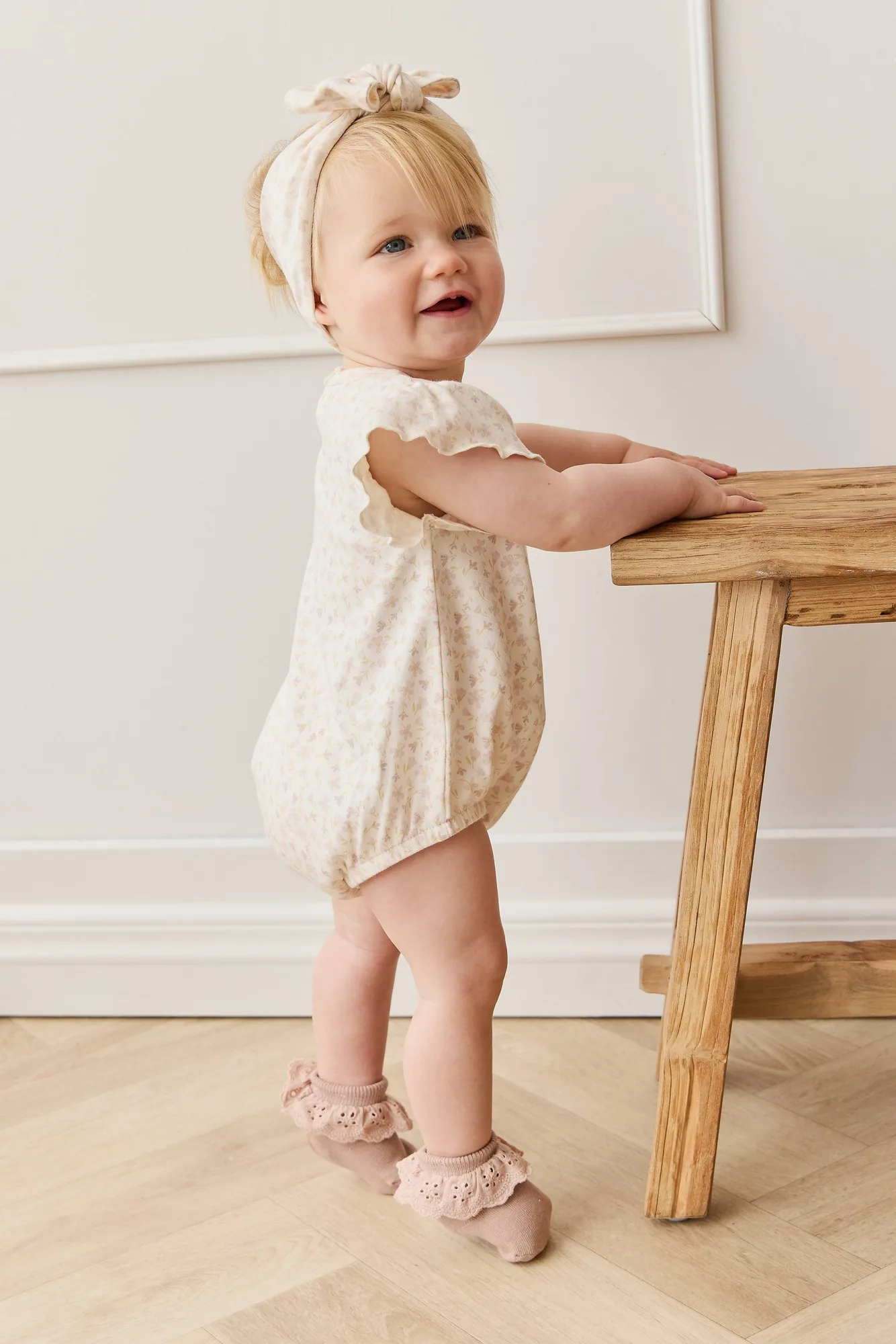
- Organic Cotton Sage Onepiece - Aries Mauve: Organic Cotton Sage Onepiece - Aries Mauve has short ruffled sleeves, a round neckline, and elasticated leg openings with snap closures. Snap closures make diaper changes quick, and the leg openings sit smoothly over socks without bunching.
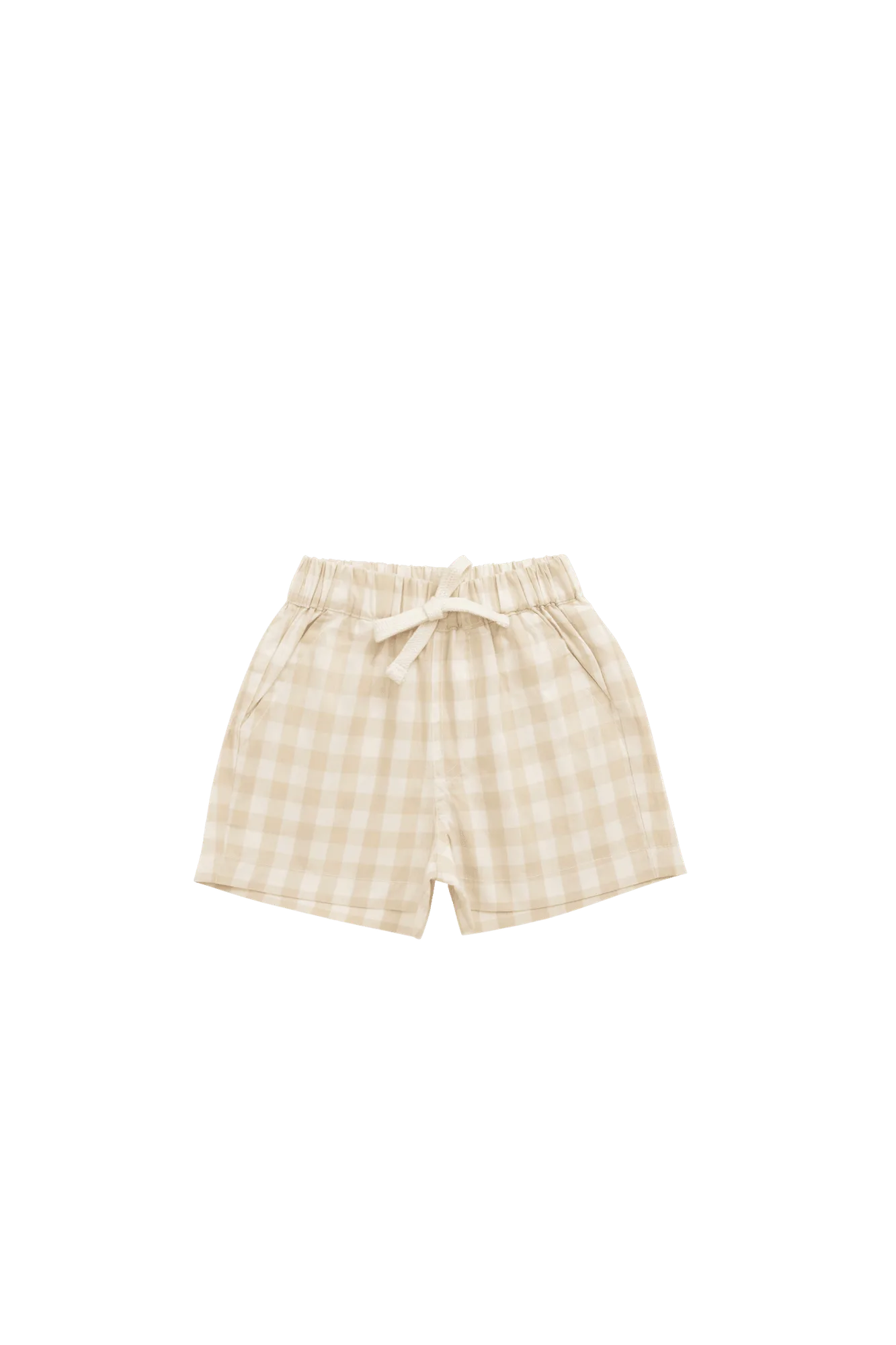
- Organic Cotton Louis Short - Gingham Pale Khaki: Organic Cotton Louis Short - Gingham Pale Khaki is made from 95% organic cotton and 5% elastane. The elastane adds stretch, so the shorts move with your baby and leave room for socks at the ankle.
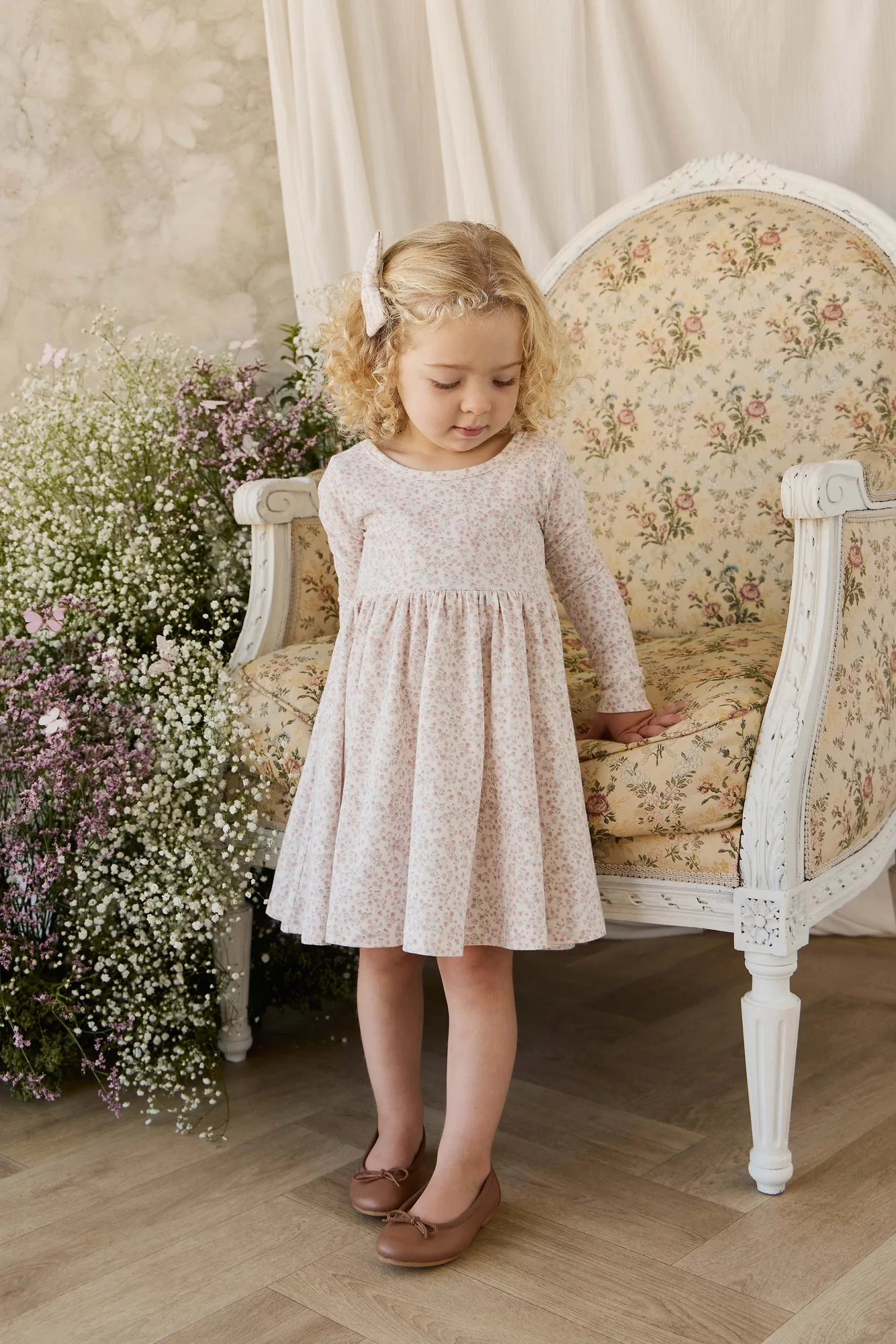
- Organic Cotton Tallulah Dress - Posy Milk: Organic Cotton Tallulah Dress - Posy Milk is made from 95% organic cotton and 5% elastane with a softly gathered skirt and long sleeves. The long sleeves and dress length mean you can add socks for warmth without layering too many pieces.
Is this the right sock for your baby?
Best for
- Babies with sensitive skin who need breathable, soft fibers
- Parents who want socks that stay on during crawling and early walking
- Anyone building a practical sock stash that survives frequent washing
Not for
- Babies who need compression or medical-grade socks
- Parents looking for waterproof or outdoor-specific socks
- Anyone who wants a one-size-fits-all sock without measuring