Quick answer
Choose organic rooibos tea if you want a smooth, earthy base that takes milk or citrus well. Choose honeybush if you prefer a sweeter, floral cup with notes of honey. Both are caffeine-free red teas from South Africa, so the real decision comes down to taste and how you drink them. For a flavored rooibos that leans fruity and tropical, try Organic Rooibos High Spirits Tea; if you want a lighter green-tea alternative with citrus, Organic Limoncello Tea is a different direction.
Taste: earthy rooibos vs sweeter honeybush
Rooibos has a rounded, slightly woody flavor with a natural sweetness that some describe as nutty or earthy. Honeybush is generally sweeter and more floral, often with honey-like notes, and it tends to have a lighter body. That means rooibos holds up better when you add milk or a strong flavoring, while honeybush is easier to drink plain. If you want a rooibos that already carries fruit and vanilla, Organic Rooibos High Spirits Tea blends rooibos with mango, papaya, banana, and rose petals for an exotic, vanilla-forward cup.
Caffeine and daily drinking
Both rooibos and honeybush are naturally caffeine-free, so they work for evenings or for anyone limiting caffeine. That makes them a practical swap for black tea or green tea later in the day. If you are choosing a caffeine-free red tea for a daily routine, rooibos is the more common base and is easy to find in flavored blends. Honeybush is less widely blended, so you may need to drink it plain to appreciate its subtler character.
How to brew each for the best cup
Use freshly boiled water and steep rooibos for 5 to 7 minutes; it rarely turns bitter, so a longer steep builds body. Honeybush can go 5 to 6 minutes, but taste it at 4 minutes if you want to keep the floral notes bright. Both are forgiving, which is why they suit large mugs and travel tumblers. If you are used to green tea, note that Organic Limoncello Tea uses green tea China Sencha as its base, so it does contain caffeine and needs cooler water, unlike rooibos or honeybush.
Flavor add-ins and blending
Rooibos takes well to vanilla, citrus, and warm spices, and it also works with a splash of milk. Honeybush is better with a light touch: a slice of orange, a little honey, or nothing at all. If you want a caffeine-free herbal blend that is more savory than sweet, Organic Amour Provence Herbal Tea Blend combines lemongrass, rosemary, thyme, and lavender for a Provençal profile. That is a different taste direction from either red tea, but it shows how rooibos and honeybush can fit into a larger herbal rotation.
What to check before you buy
Look for certified organic leaves and a clear ingredient list. If you want a flavored rooibos, check whether the flavor comes from natural flavoring or added sugar; the High Spirits blend uses natural mango flavoring and includes banana with coconut oil, cane sugar, and honey, so it is not an unsweetened plain rooibos. If you want to taste honeybush on its own, buy it plain rather than in a heavily flavored blend. Also check the available size options so you can try a smaller amount before committing to a larger pouch.
Trade-offs at a glance
- Rooibos: flavor flexibility: Earthy and sweet, it stands up to milk, citrus, and spices, and it is widely available in flavored blends like Organic Rooibos High Spirits Tea. Best if you want a daily caffeine-free tea that works with add-ins.
- Honeybush: delicate sweetness: Sweeter and more floral, it is pleasant plain but can be overwhelmed by milk or strong flavorings. Best if you drink your red tea without milk and want a lighter cup.
- Flavored vs plain: Flavored rooibos adds fruit or vanilla notes, while plain honeybush lets the natural honey character show. Check the ingredient list for added sugar or natural flavoring. Decide whether you want a flavored blend or a single-ingredient tea.
- Caffeine-free vs green tea: Rooibos and honeybush are caffeine-free; Organic Limoncello Tea is a green tea blend with caffeine and needs cooler water. Choose red tea for evenings; choose green tea for a morning caffeine option.
Product facts
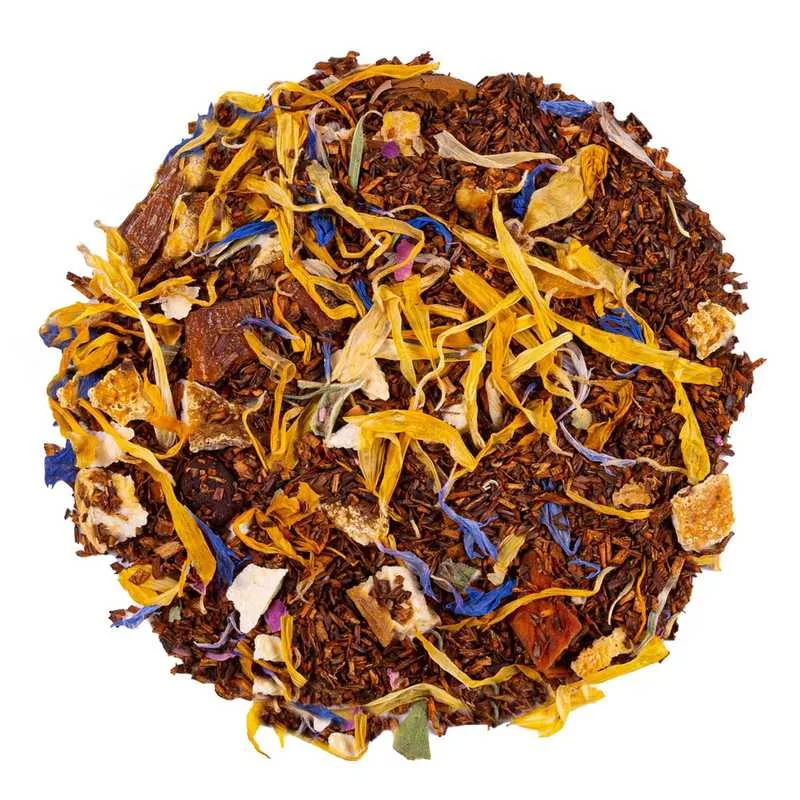
- Organic Rooibos High Spirits Tea: Ingredients include rooibos natural, orange peels, natural mango flavouring, banana, papaya, mango pieces, marigold, vanilla extract, rose petals, apricot, and cornflower blue; taste is exotic and vanilla. This is a flavored rooibos rather than a plain one, so it suits drinkers who want fruit and vanilla instead of a neutral earthy cup.
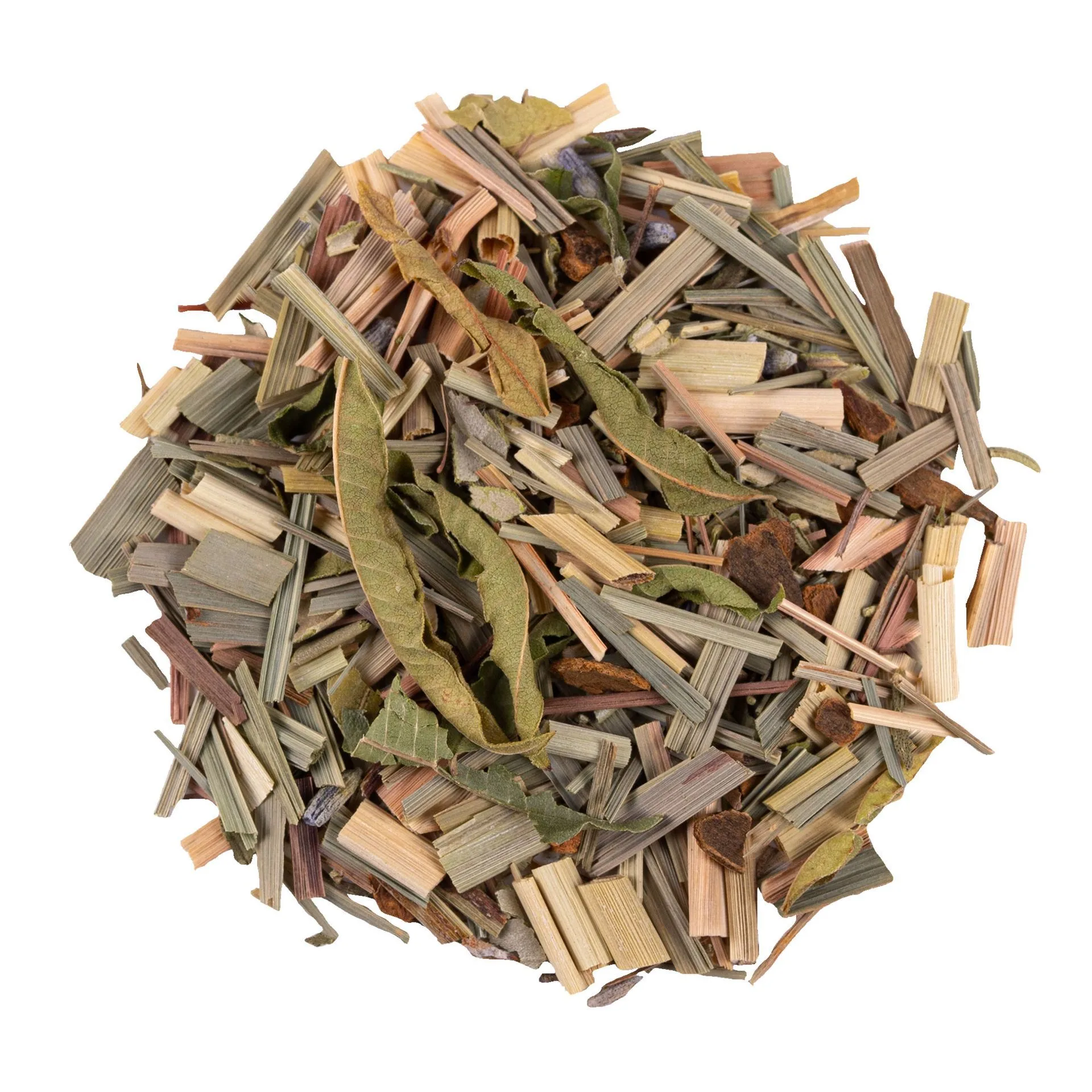
- Organic Amour Provence Herbal Tea Blend: Ingredients include lemongrass, cinnamon sticks, rosemary, Ceylon cinnamon, verbena whole, thyme, olive leaves, natural lemon flavouring, lavender, lime oil, and natural grapefruit flavouring; taste is rosemary, thyme, and lemon. A caffeine-free herbal option for anyone who finds rooibos or honeybush too sweet and wants a savory, citrus-herbal cup.
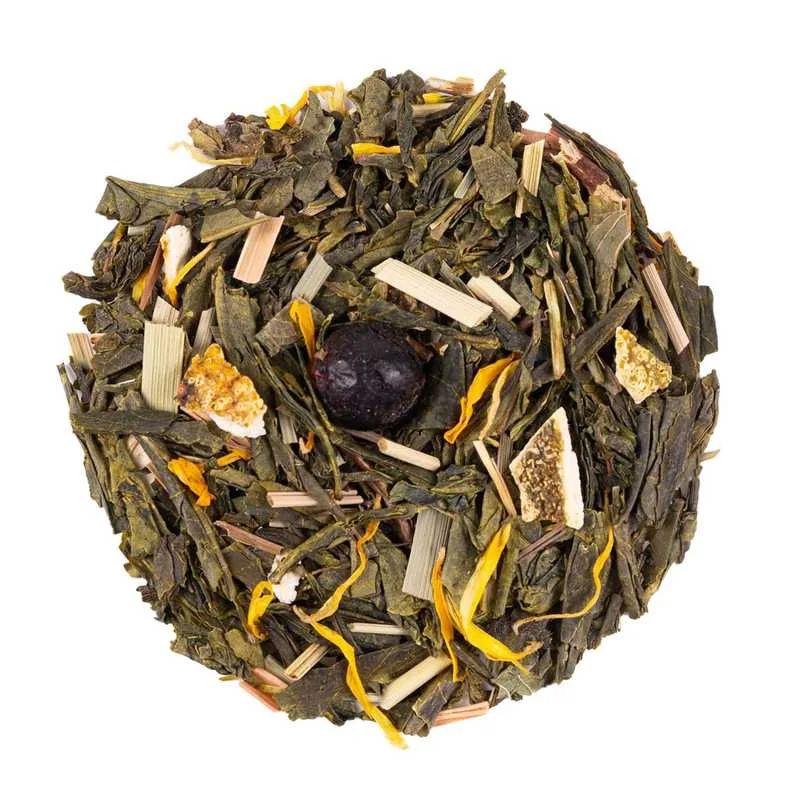
- Organic Limoncello Tea: Ingredients include green tea China Sencha, tulsi, lemon peels, mango pieces, star anise, lime oil, blackcurrant, natural lemon flavouring, and natural cranberry flavouring; taste is fruity lemon and lime. This is a green tea blend, so it contains caffeine and is not a direct substitute for caffeine-free rooibos or honeybush.
Which should you choose?
Best for
- Drinkers who want a caffeine-free red tea that takes milk, citrus, or spices
- Anyone who prefers a flavored rooibos with fruit and vanilla notes
- Evening routines or a caffeine-free swap for black tea
Not for
- Drinkers who want a caffeine boost in the morning
- Anyone who dislikes sweet or floral notes in tea
- People looking for a plain, unflavored single-ingredient tea