Start with the site, then the frame
The RV-3 is designed to go up quickly, but a quick pitch still depends on a sensible starting position. Clear the ground of sharp stones and sticks before you unroll anything, because the tent sits on a heat-sealed PVC floor that you want to keep intact. Pick a spot that gives you room to walk around all four sides while you peg out, and think about where the side and rear windows will face so you can use them for airflow rather than staring into a bank or a bush.
Lay the tent out with the floor flat and the canvas relaxed. The RV-3 uses 8oz Ripstop polycotton canvas, which is a fabric that behaves best when it is not dragged or twisted during setup. Once the floor is sitting square, you can move on to the frame and the pegging order that follows.
A supported pitching order for the RV-3
The catalog describes a one-person setup in less than 30 seconds, but it does not publish a numbered frame sequence. The steps below are an organizational order for the tasks the catalog does confirm: the tent, its awning poles, pegs and ropes, and the need to peg and tension the tent properly.
- 1. Position and unroll: Place the tent where you want the door and windows to face, then unroll it with the floor flat. Keep the canvas clear of the peg line so you are not stepping on fabric while you work.
- 2. Raise the main structure: Set up the tent body according to the frame and pole arrangement supplied with your RV-3. The catalog confirms that all necessary awning poles, pegs and ropes are included, so check you have the full set before you start tensioning anything.
- 3. Peg the floor and corners: Secure the corners and floor edges first so the tent cannot shift while you attach the awning and ropes. Use the supplied pegs and drive them at an angle that holds in your ground type.
- 4. Fit the awning poles: Attach the awning poles and tension the awning once the main body is pegged. The awning adds covered space, but it also catches wind, so it should be the last large fabric element you tension.
- 5. Run the guy ropes: Attach and tension the guy ropes last, working around the tent so the pull is even. The catalog confirms ropes are included but does not specify rope length or a peg angle, so use the supplied hardware and judge tension by feel rather than a published figure.
- 6. Check windows, power inlet and door: Open and close the side and rear windows, and check that the zippered power inlet is accessible and closes cleanly. Do this before you unpack gear so you are not leaning over bedding to reach a zipper.
What the RV-3 record confirms
-
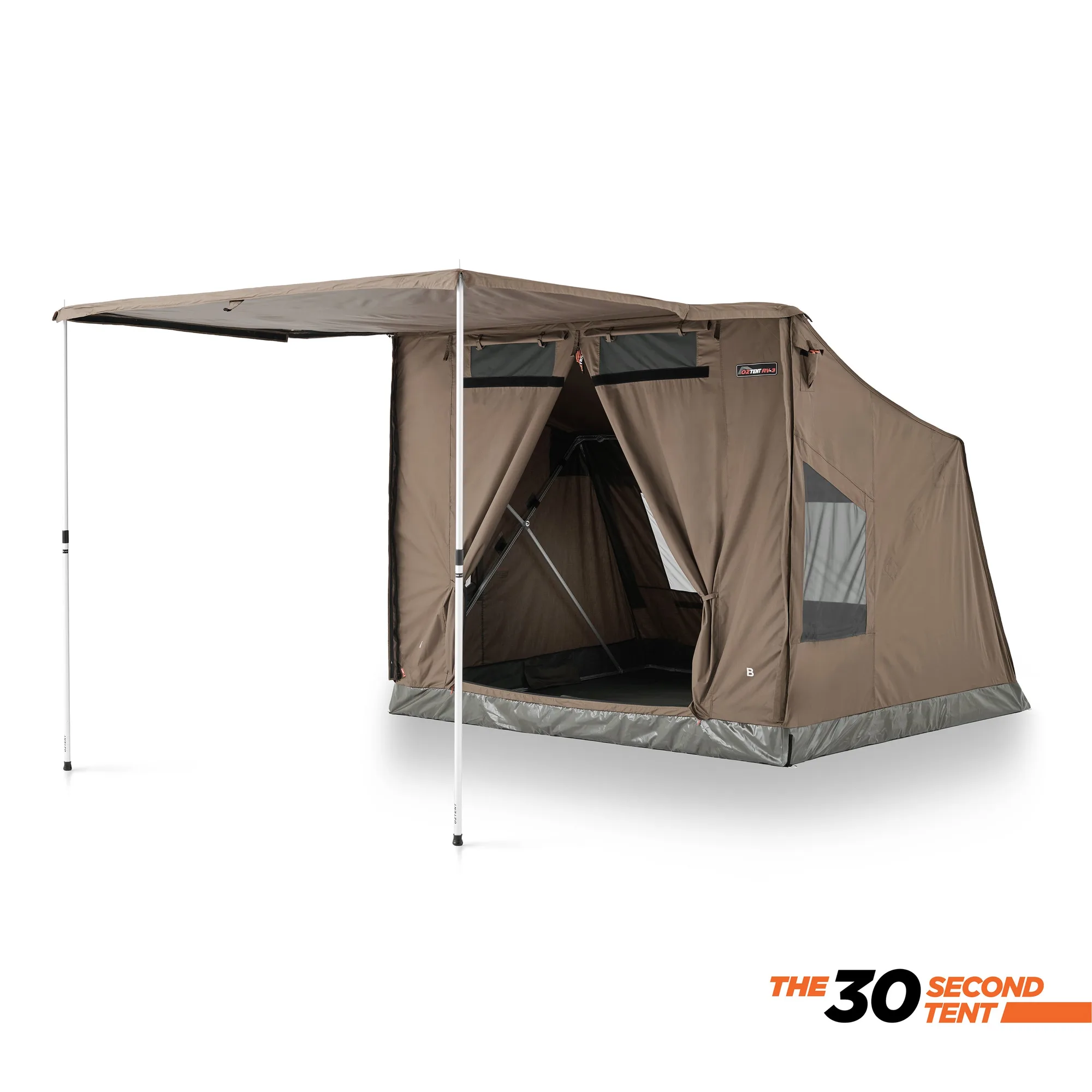
Oztent RV-3 Tent: The RV-3 is made from waterproof 8oz Ripstop polycotton canvas with a heavy-duty, heat-sealed PVC floor. These are the two surfaces that do most of the weather work, so knowing the materials helps you decide where to focus your prep and inspection.
Oztent RV-3 Tent
-
Oztent RV-3 Tent: All necessary awning poles, pegs and ropes are included, and the tent comes complete in a heavy-duty carry bag. You can plan your pitching order around the supplied hardware rather than improvising, and you know what to check back into the bag at pack-down.
-
Oztent RV-3 Tent: The RV-3 sleeps 3-4 and has side and rear windows plus a zippered power inlet. Capacity and window layout affect how you orient the tent and where you run a power lead, both of which are easier to plan before pegging.
Weather prep before rain or wind arrives
The RV-3's canvas and floor are described as waterproof, and the tent is covered by a full two-year warranty on that material. That is a useful starting point, but weather preparation is still about how you pitch and tension the tent. A canvas tent that is pitched loosely will flap and pool water, while one that is tensioned evenly sheds rain and stands up to wind more predictably.
Before you leave home, check that every peg and rope is present and that the canvas has no obvious damage. At camp, pitch the tent with the lowest corner facing away from the prevailing wind if you can, and keep the guy ropes tensioned so the canvas does not billow. The catalog does not publish a wind rating, a hydrostatic head figure or a recommended peg angle, so treat those as judgment calls rather than manufacturer instructions. If severe weather is forecast, the honest answer is that the supplied information does not confirm a safe operating limit for the RV-3, and you should make a conservative call about whether to pitch at all.
Guy ropes and pegging: what to check
The RV-3 ships with ropes and pegs, but the record does not give rope lengths, peg counts or a tension specification. Use these checkpoints as a practical routine rather than a published procedure.
- Even tension around the tent: Work around the RV-3 in order rather than tightening one rope hard. Even pull keeps the canvas sitting straight and reduces the chance of one corner taking all the load.
- Ropes clear of the floor: Keep guy ropes angled away from the PVC floor and doorways so they do not rub or become a trip hazard in the dark.
- Recheck after the first hour: Canvas and ropes settle after pitching. Walk the perimeter once the tent has been up for a while and adjust tension where needed.
- Pack the full set back: The heavy-duty carry bag is designed to hold the tent and its supplied hardware. Count poles, pegs and ropes at pack-down so the next pitch is not short of parts.
What the catalog does not confirm
The supplied RV-3 record does not include a frame-by-frame setup sequence, care instructions, a wind or rain rating, or guidance on re-waterproofing the canvas. That is not a criticism of the tent; it simply means those details are not part of the evidence available here. For anything safety-critical, such as pitching in strong wind or treating the canvas, follow the documentation that comes with your tent rather than treating this article as a substitute.
What the record does support is a straightforward pitching order: position, raise, peg, awning, ropes, then check windows and power inlet. Pair that with an honest look at the forecast, and the RV-3 is a tent that rewards a calm, methodical pitch over a rushed one.