Quick Answer
Buy a palm stone when you want a single, palm-sized piece to hold during meditation or carry in a pocket. Buy polished stones when you want smaller, lower-cost pieces for grids, bowls, or crystal sets. If you can only choose one, match the size to your main use: palm stones for holding, polished stones for arranging.
Palm stones and polished stones are often sold side by side, and the names get used interchangeably. That causes real confusion at checkout: you order a "polished stone" expecting something to hold, and a small tumbled piece arrives instead.
The difference is mostly about size and intent, not material. Both are shaped and smoothed, but a palm stone is cut to sit in your hand, while polished stones are usually smaller pieces sold individually or in sets. This guide gives you decision rules so you can pick the right one the first time.
The Real Difference: Size and Intent
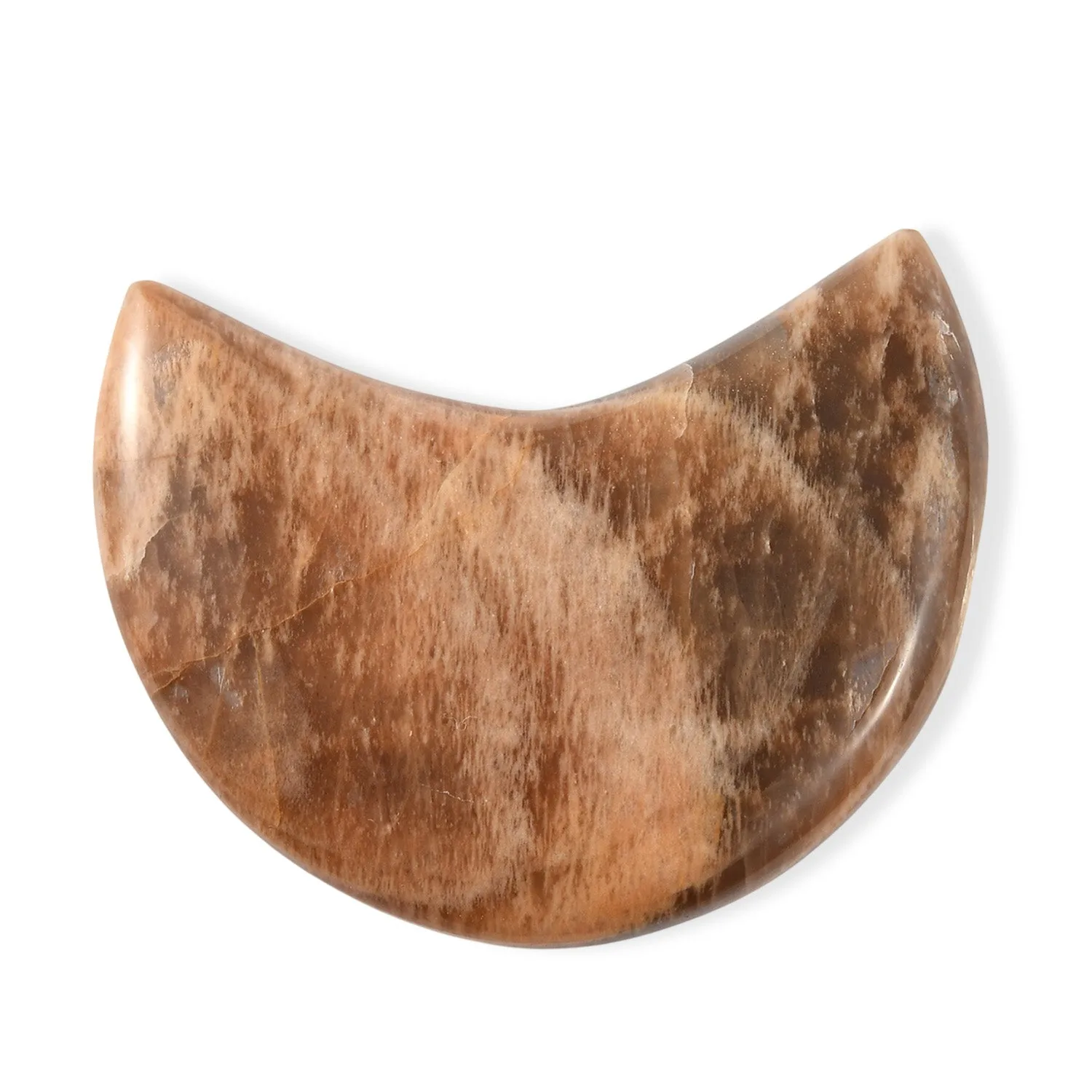
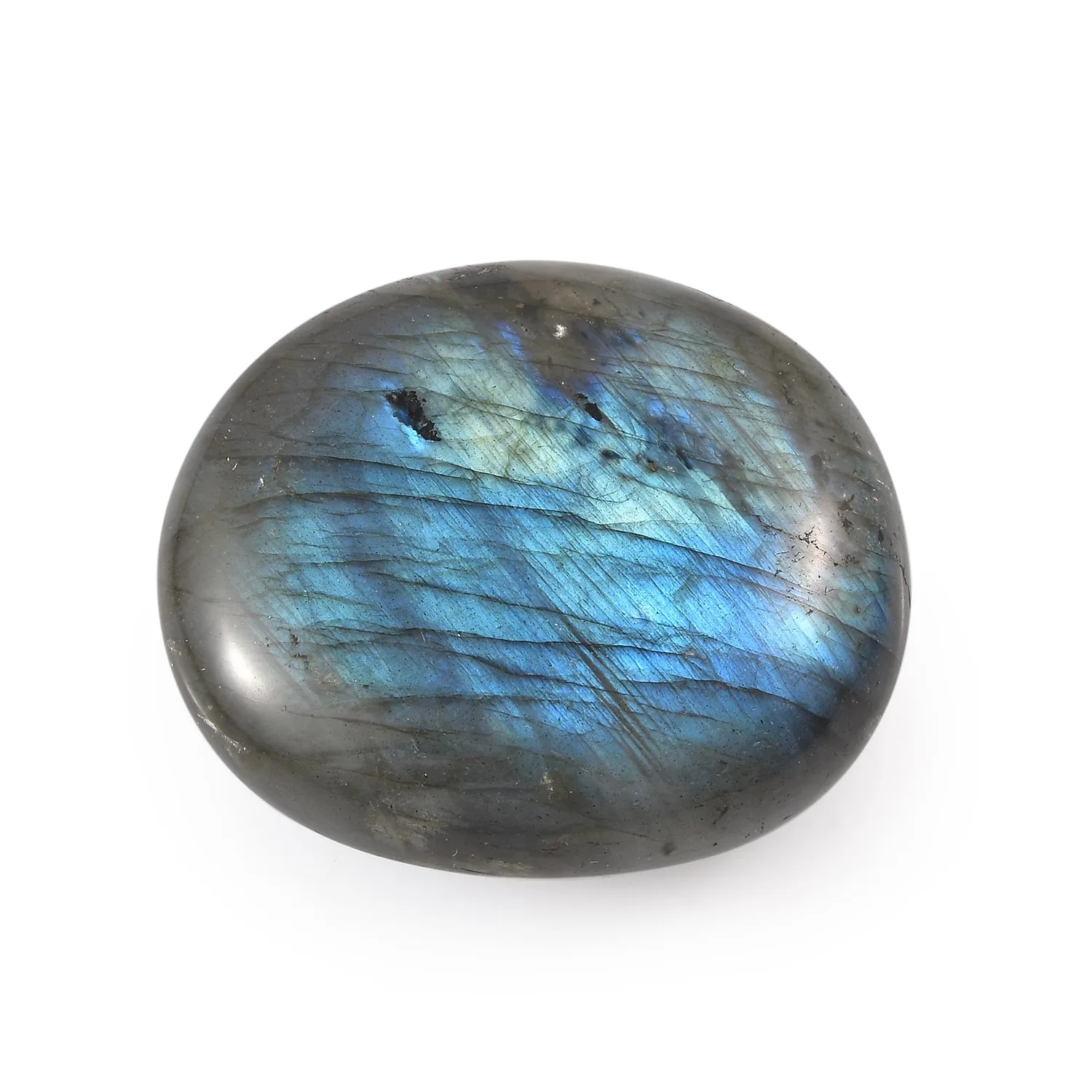
A palm stone is shaped to rest in the palm, roughly the size of a small bar of soap, with a smooth, rounded surface. Its purpose is contact: you hold it, thumb it during meditation, or keep it in a pocket. Polished stones are smoothed pieces that may be smaller, and they are often sold in sets or used as components in grids, bowls, and displays.
That means the same stone type can appear in both forms. Jasper, for example, can be cut as a sphere, a palm-sized piece, or small polished stones. The mineral is the same; the format changes how you use it. When you compare palm stones vs polished stones, you are really comparing a holding tool against a collection of smaller pieces.
- If you plan to hold it during meditation, prioritize palm-sized pieces.
- If you plan to arrange, grid, or gift multiple pieces, prioritize smaller polished stones.
Palm Stone Benefits and Trade-Offs
The main benefit of a palm stone is grip. A larger, rounded shape gives your thumb something to rest on and your fingers something to close around, which many people find easier during longer sits. It also carries well in a coat pocket or bag without rolling away like a small tumbled piece.
The trade-off is portability and price. Palm stones use more material, so they usually cost more than a single small polished stone, and they take up more space on a nightstand or altar. If you want a stone for a tight jeans pocket or a small pouch, a palm stone may feel bulky.
- Best for: meditation, breathwork, anxiety grounding, bedside use.
- Watch for: weight in a pocket and space on a crowded altar.
Polished Stones Uses and Trade-Offs
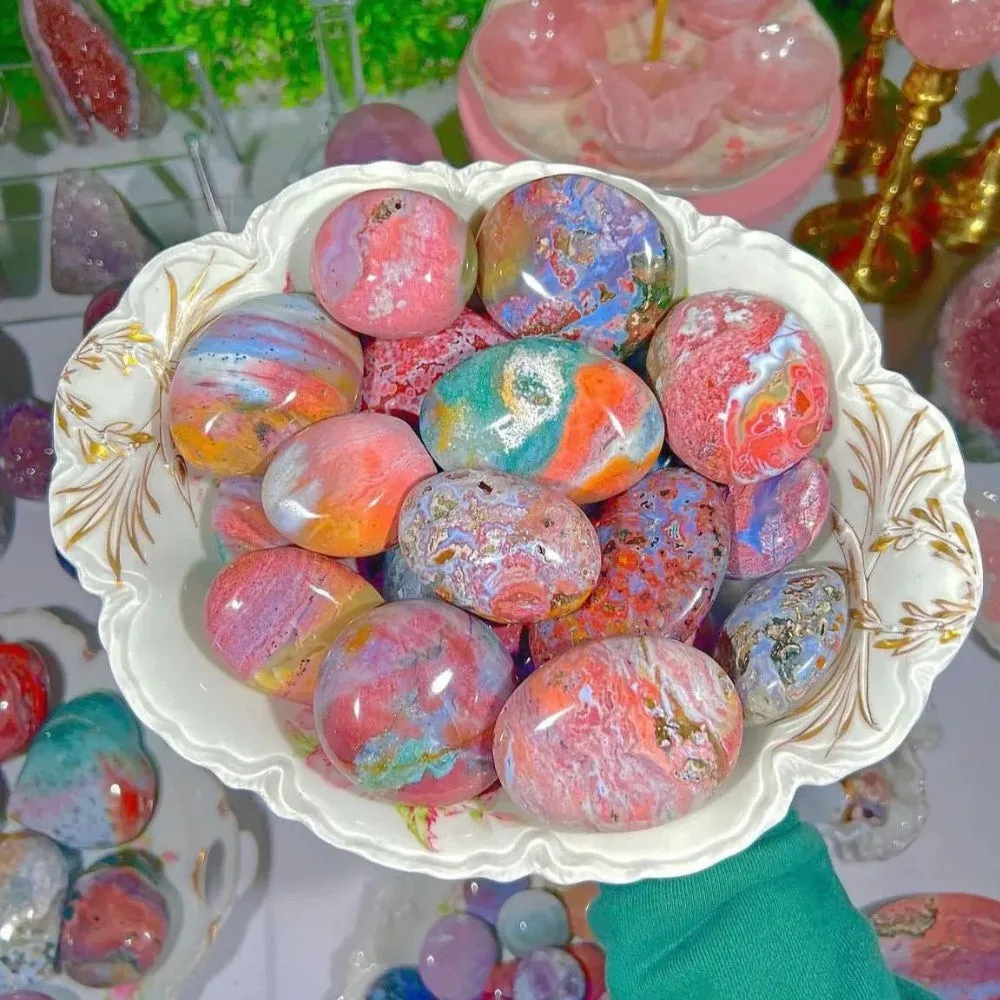
Polished stones earn their place through flexibility. Because they are smaller, you can place several in a bowl, lay them on a crystal grid, or keep a few in different rooms. They are also easier to buy in multiples, which makes them a practical choice for building a set or giving small gifts.
The trade-off is presence. A small polished stone can be harder to hold during meditation, and it is easier to lose. If you want one object that anchors a practice, a set of small stones may feel scattered rather than focused.
- Best for: grids, bowls, travel pouches, starter collections.
- Watch for: losing small pieces and needing several to fill a space.
Tumbled vs Polished Stones: A Quick Clarification
Tumbled and polished are often used as synonyms, but they describe different levels of finish. Tumbled stones are smoothed in a rotating barrel, which rounds edges and produces a soft, matte-to-satin surface. Polished stones usually receive additional finishing that produces a smoother, more reflective surface.
In practice, many sellers use the terms loosely, so the safest approach is to read the size and shape description rather than rely on the label alone. If grip matters, look for a palm-sized, rounded form. If shine and display matter, look for a clearly polished finish.
- Ask yourself: do I want matte softness or a glossy finish?
- When in doubt, choose by size first, finish second.
How to Choose Palm Stones in Person or Online
Start with your hand. A palm stone should sit comfortably without your fingers straining to close around it. If you have smaller hands, a slimmer, flatter piece often works better than a thick, chunky one. If you have larger hands, a wider stone gives your thumb more surface to work with.
Next, decide your primary location. A stone that lives on a nightstand can be larger and heavier. A stone that travels in a pocket should be flatter and lighter. Finally, check the listing for size and shape details. If the description does not state dimensions, treat that as a limitation and ask before buying rather than assuming.
- Measure your palm width before shopping online.
- Prioritize flat, rounded shapes for pocket carry.
- Confirm size and finish in the product description.
Decision Rules: Pick Your Stone in Under a Minute
- Rule 1: Choose by primary use: If you will hold it during meditation or breathwork, choose a palm-sized, rounded stone. If you will arrange it in a grid, bowl, or set, choose smaller polished stones. Holding favors size; arranging favors quantity.
- Rule 2: Choose by carry method: Pocket or pouch carry favors a flatter, lighter piece. Bedside or altar use allows a larger, heavier stone that stays in place. If it travels with you, keep it flat and light.
- Rule 3: Choose by finish preference: Matte, tumbled surfaces feel softer and grippier. Glossy polished surfaces reflect light and display better on a shelf. Grip points to tumbled; display points to polished.
- Rule 4: Choose by budget and set size: One palm stone usually costs more than one small polished stone. If you want several pieces for a grid or gift set, smaller polished stones stretch further. Count how many pieces you actually need before comparing prices.
Examples From Our Catalog
- Jasper Sphere — Grounding and Emotional Healing: Described as a grounding, stabilizing stone for emotional healing and clarity, ideal for meditation or energy work. If your priority is holding a single piece during meditation, a sphere form gives you a rounded surface to cup, similar to a palm stone.
- 7-Gemstone Chakra Bead Bracelet – Healing & Empowerment on Your Wrist: Features 7 gemstones aligned with the body's centers, designed to help clear negativity and calm the mind. If you want to carry crystal energy on the go rather than in a pocket, a bracelet solves the portability problem that palm stones can create.
- Pyrite Crystal Wand: Pyrite is associated with willpower, inner strength, creative thought, and action; available in multiple sizes. A wand is a directional tool rather than a holding stone, so choose it when you want to point or direct energy, not when you want something to grip.
Who Should Buy Which
Best for
- Meditators who want a single stone to hold for 10–20 minutes
- Anyone building a grounding or calming bedside practice
- People who prefer one meaningful piece over a collection
Not for
- Buyers who need multiple pieces for a crystal grid or bowl
- Anyone shopping for a small, low-cost gift under a tight budget
- People who want a stone that disappears into a tiny pocket
Decide your main use first, then let size follow. Hold it in your hand during meditation and a palm stone earns its place; arrange it in a grid or bowl and smaller polished stones do more work. When a listing does not state dimensions, ask before you buy rather than guessing.