Video Capabilities at a Glance
These three Panasonic Micro Four Thirds bodies have different video strengths. The GH5 is the hybrid all-rounder with high frame-rate 4K, the GH5S is the low-light cinema specialist, and the G100 is the vlogger's audio-first tool. Here's how they compare on the specs that matter.
- 4K Video & Frame Rates: GH5 records 4K up to 60 fps (no crop). GH5S also records 4K 60 fps but adds a higher-resolution sensor. G100 records 4K video but at standard 30 fps, which is fine for vlogs but less flexible for slow motion.
- Internal Recording & Bit Depth: GH5 offers 10-bit 4:2:2 internal recording at select 4K settings. GH5S matches that and adds DCI 4K. G100 records 4K internally but the supplied information does not confirm 10-bit 4:2:2.
- Audio Capabilities: G100 is the only one with OZO audio – a world-first for an interchangeable lens camera – using three microphones for immersive sound. GH5 and GH5S rely on external mics for comparable audio quality.
Why the GH5 with Leica 12-60mm Kit Still Matters for Video
The Panasonic Lumix DC-GH5 kit includes the Leica DG Vario-Elmarit 12-60mm f/2.8-4 ASPH. lens. That zoom covers a useful wide-to-short-telephoto range (24-120mm equivalent) with consistent sharpness and minimal distortion. For video, the GH5's 5-axis sensor stabilization works with the lens's POWER O.I.S. to reduce handheld shake. If you shoot a mix of interviews, run-and-gun, and cinematic scenes, this kit gives you a single-lens solution without swapping glass.
Key Specs from the Catalog
-
Panasonic Lumix DC-GH5 with Leica 12-60mm f/2.8-4 Lens Kit: The GH5 features a 20.3MP Digital Live MOS sensor and Venus Engine processor, enabling 4K video at up to 60 fps, 10-bit 4:2:2 internal recording, and 5-axis sensor stabilization. This makes the GH5 a strong choice for filmmakers who need high frame rates, good color depth, and stable handheld footage without extra gear.
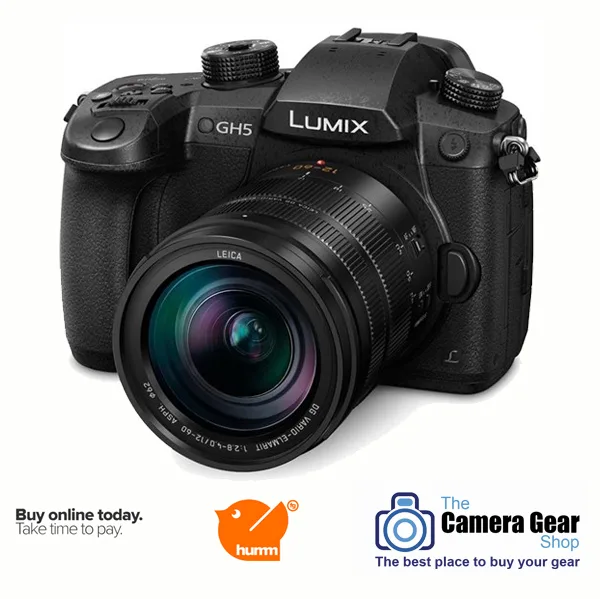
Panasonic Lumix DC-GH5 with Leica 12-60mm f/2.8-4 Lens Kit
-
Panasonic Lumix DC-G100M (12-60mm F3.5-5.6): The G100 is the first interchangeable lens camera with OZO audio, using three microphones to capture immersive sound. It also has a tilting touchscreen and selfie video mode. For vloggers and content creators, built-in high-quality audio and a flip screen simplify solo recording without external mics or monitors.
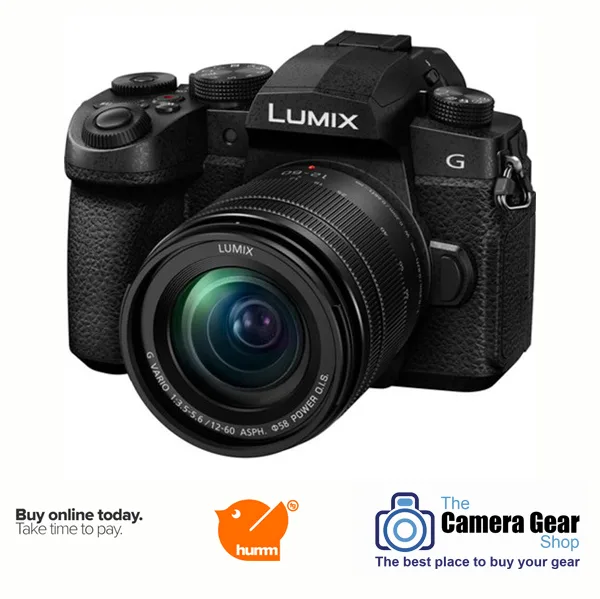
Panasonic Lumix DC-G100M (12-60mm F3.5-5.6)
G100: The Vlogger's Audio-First Tool
The Panasonic Lumix DC-G100M (12-60mm f/3.5-5.6) is built around audio. Its OZO system offers five modes – Surround, Front, Back, Tracking, and Auto – so you can capture sound from the right direction without a boom mic. The tilting touchscreen automatically switches to a selfie video mode when flipped forward. If your priority is talking to camera and capturing clean audio without extra gear, the G100 saves you setup time and expense. The trade-off is lower maximum video frame rates and a slower kit lens compared to the GH5.
Low-Light and Sensor Differences: GH5 vs GH5S vs G100
The GH5S is designed for low-light video with a dual-native sensor that the supplied evidence does not fully detail for the GH5. The GH5 and G100 both have a 20.3MP sensor, but the G100 lacks a low-pass filter for extra sharpness. The GH5S has a lower resolution sensor (10MP) but better sensitivity. If you shoot in dim interiors or at night, the GH5S is the best choice, but the GH5 and G100 still perform well up to ISO 25600.
Which Panasonic MFT Camera Should You Choose?
Your decision comes down to your primary video use:
- Choose the GH5 + Leica 12-60mm kit if: you need a versatile hybrid camera for both high-quality video (4K 60 fps, 10-bit internal) and stills, with a single high-quality zoom. It's the best all-rounder for filmmaking and event work.
- Choose the GH5S if: low-light video is your priority and you can accept lower stills resolution. It's the dedicated cinema body for controlled lighting environments.
- Choose the G100 if: you are a vlogger or content creator who values built-in audio, a flip screen, and a lightweight body. It's the most travel-friendly and selfie-ready option, though less capable for high-frame-rate or cinema workflows.