Why fit matters more than padding on a paracord strap
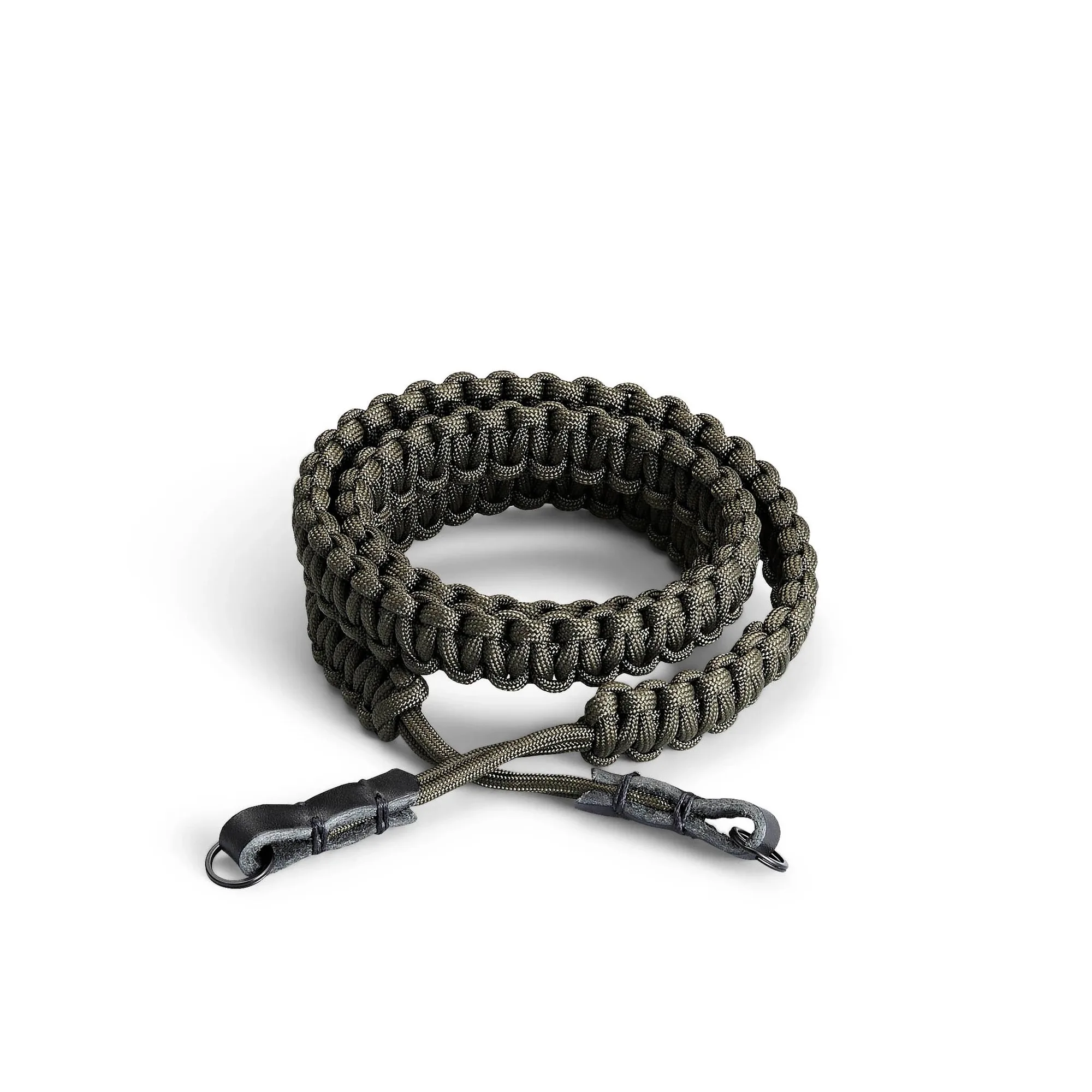
A camera neck strap is only as good as the way it sits on your body. The Paracord Camera Neck Strap is built around 550-lb test paracord, originally used in the suspension lines of US parachutes during World War II, and it flexes but doesn’t break. That flex is the point: the strap’s natural suspension shields your camera from shocks when you’re moving through rough terrain. But flex only helps if the strap is positioned so the load is carried where your body can handle it.
This guide walks through the practical setup for all-day carry, from checking the supplied length to fine-tuning the strap’s position on your shoulder and neck. It also covers what the strap does and does not do, so you can decide whether it fits your shooting day.
What the Paracord Camera Neck Strap gives you to work with
-
Paracord Camera Neck Strap: The strap is equipped with sturdy nylon webbing and a soft, suede lining. The nylon webbing carries the load while the suede lining sits against your skin or clothing, so fit adjustments should account for both the strap’s structure and the lining’s comfort.
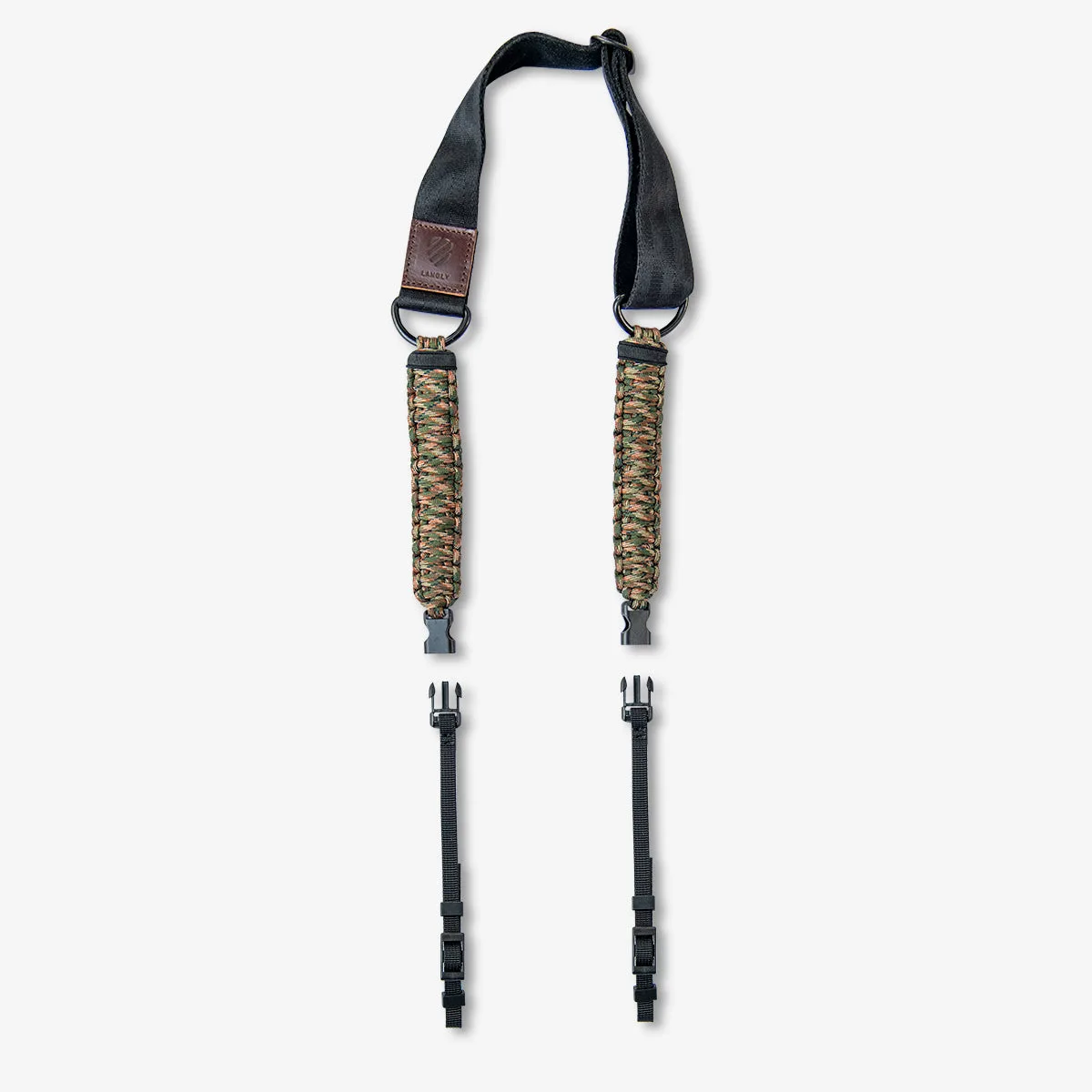
Paracord Camera Neck Strap
-
Paracord Camera Neck Strap: The paracord is 550-lb test paracord that flexes but doesn’t break. That flex is what provides the strap’s natural suspension, which shields your camera from shocks when you’re moving through rough terrain.
-
Paracord Camera Neck Strap: The strap can be worn as a sling or looped around your neck. Two carry positions mean you can shift the load during a long day rather than keeping all the weight in one place.
Set up the strap before you leave
Do this at home or at the trailhead, not while you are walking. The goal is to find a starting position you can adjust later.
- Check the supplied length against your carry style: The Paracord Camera Neck Strap is supplied in a 42" size across the Camo, Bootstrap, Orange, and Mercury color options. That is the length you have to work with, so decide first whether you plan to wear it around your neck or as a sling. The supplied information does not confirm an adjustable range, so treat the 42" size as your fixed starting point.
- Choose your carry position for the day: Loop it around your neck for hands-free carrying between shots, or wear it as a sling across your body when you expect to move through rougher ground. The sling position can keep the camera closer to your torso, but the supplied information does not specify a recommended sling length or fit, so test both and note which feels more stable.
- Seat the suede lining where it will stay put: The soft suede lining is the part that contacts your neck or shoulder. Position it so the lining, not the paracord or webbing edge, sits against your skin. This reduces the chance of the strap twisting or digging in during the first hour.
- Attach the strap to your camera and test the hang: With the camera attached, let the strap hang naturally. The paracord should flex under the camera’s weight rather than stay rigid. If the camera sits too low or too high for comfortable shooting, adjust your carry position before you start walking. The supplied information does not include attachment instructions, so follow your camera’s own strap-lug guidance.
Neck strap comfort tips for long walks
Small adjustments during the day make more difference than any single setup decision.
- Shift between neck and sling carry: Because the strap supports both a neck loop and a sling, use that flexibility. When your neck starts to feel the load, move the strap to a sling position across your body for a while. This changes where the weight sits without changing the strap.
- Keep the suede lining flat against your body: A twisted strap concentrates pressure on a narrow edge. Straighten the lining whenever you put the strap back on after a shot, especially if you have been moving through brush or rough terrain.
- Let the paracord do its job on rough ground: The strap’s natural suspension is designed to shield your camera from shocks when you’re moving through rough terrain. Walk with a normal gait rather than trying to hold the camera rigid; the flex is there to absorb movement.
- Check the strap at rest breaks: At each stop, glance at the webbing, the paracord, and the lining. The supplied information does not include care or inspection intervals, so use your own judgment and stop using the strap if you see damage.
- Match the strap to the day, not the whole season: A paracord strap is a good fit for long walks and rough terrain where its suspension helps. For a day that is mostly standing in one spot, a different strap may suit you better. The strap’s value is in movement, not in static shooting.
What the strap does not confirm about weight distribution
The supplied information describes the Paracord Camera Neck Strap as comfortable to wear, with sturdy nylon webbing and a soft suede lining, and it explains that the paracord flexes to shield the camera from shocks. It does not include a weight limit, a recommended camera weight, or a stated weight-distribution design. That means you should not assume the strap will redistribute a heavy camera’s load across your shoulders in a specific way.
In practice, weight distribution comes from how you wear the strap: neck carry puts load on your neck, and sling carry moves it across your torso. The strap’s flex helps with shock absorption, not with changing where the weight sits. If you regularly carry a heavy camera, test the strap on a short walk first and see how your neck and shoulder feel before committing to a full day.
A realistic all-day carry plan
Start the day with the strap in the carry position that matches your first hour, usually neck carry for easy access. Once you hit rough terrain or start walking longer stretches, switch to the sling position and keep the suede lining flat. At each rest break, straighten the strap and check that the camera hangs naturally.
The Paracord Camera Neck Strap is more than comfort and good looks, but it is still a strap. Its job is to carry your camera securely and take some of the shock out of movement. Fit it deliberately, adjust it as the day changes, and it will do that job well.