Quick answer
For safe, natural nesting, choose a twig or covered nest made from untreated plant fibers that your parakeet can shape and shred without risk of ingestion or injury.
Why material safety matters more than appearance
Parakeets explore nesting material with their beaks and may swallow loose fibers. Avoid synthetic strings, cotton batting, or anything treated with dyes or chemicals. Stick to natural, digestible options like shredded paper, coconut fiber, or untreated twigs.
Covered vs. open nests: what each supports
A covered nest mimics a tree cavity and gives breeding pairs a sense of security, which can encourage egg-laying. Open nests are easier to clean and monitor but may feel exposed. Choose based on your birds' behavior and your comfort with access.
How to choose parakeet nesting material
- Check fiber type: Use only untreated, unscented plant fibers such as shredded paper, coconut coir, or twigs. Avoid cotton, wool, or synthetic threads that can tangle around toes or be ingested.
- Match nest style to bird behavior: If your parakeets are timid or actively breeding, a covered nest helps them feel safe. If you need frequent access for monitoring, an open nest or a covered nest with a removable top works better. Observe your birds' body language after introducing the nest; retreat or avoidance means the setup is too exposed or too enclosed.
- Consider ease of cleaning: Nesting material should be replaced between clutches. Choose a nest that allows you to remove old material easily without dismantling the entire cage setup.
Product facts
-
Prevue Parakeet Twig Hut Covered Nest: Made from safe, all-natural fibers with a covered design. Provides a cozy, secure environment that supports natural nesting and breeding behaviors without synthetic materials.
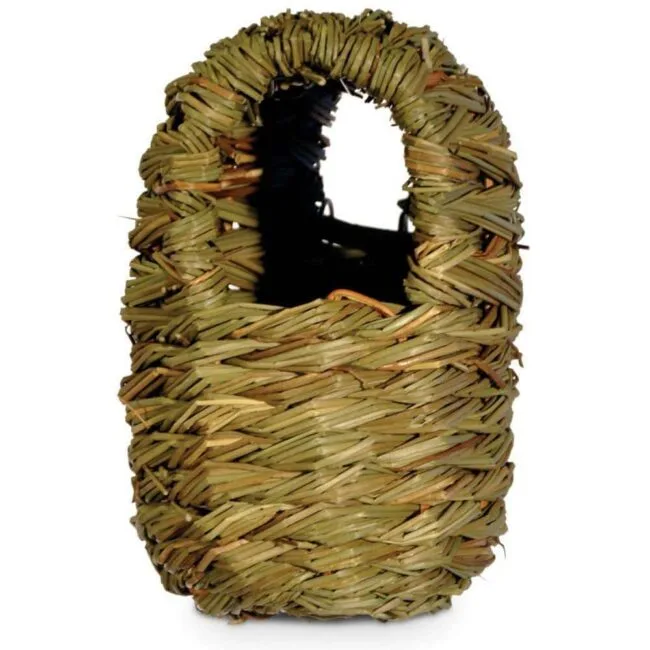
Prevue Parakeet Twig Hut Covered Nest
Who should use this approach
Best for
- Parakeet owners setting up a breeding pair for the first time
- Owners who want a natural, chemical-free nesting environment
Not ideal for
- Single or non-breeding parakeets that do not need a nest box
- Owners who prefer easy-to-clean plastic nests over natural materials