Quick answer
Most perimenopause bloating is driven by fluctuating estrogen and progesterone, which slow digestion and shift gut bacteria, so it rarely responds to diet changes alone. If your bloating tracks with your cycle, hot flashes, or mood swings, a hormone support supplement is a reasonable next step. If it is constant, painful, or comes with bleeding or weight loss, see a doctor before adding any supplement.
Why bloating shows up in perimenopause
Estrogen and progesterone do more than regulate your cycle. They influence how fast food moves through your gut, how much water your body retains, and which bacteria thrive in your digestive tract. As both hormones swing unpredictably in perimenopause, you can get slowed transit, gas, and a distended belly even when your diet has not changed. This is why perimenopause digestive changes often feel random: the trigger is hormonal timing, not last night's dinner.
Progesterone also affects the valve between your stomach and esophagus and the muscle tone of your intestines. When progesterone drops, digestion can feel heavier and slower. When estrogen spikes relative to progesterone, water retention can add a layer of puffiness on top of gas. That combination is what many women describe as estrogen dominance bloating, though the term is descriptive rather than a formal diagnosis.
How to tell hormonal bloating from other causes
Track your bloating for two cycles alongside your period, sleep, and stress. Hormonal bloating tends to cluster in the second half of your cycle, worsen before your period, and ease once bleeding starts. It often arrives with breast tenderness, mood shifts, or hot flashes. Food-related bloating, by contrast, usually shows up within an hour or two of eating a specific trigger and is more consistent day to day.
If your bloating is new, severe, or paired with changes in bowel habits that last more than a few weeks, that is a reason to see a clinician rather than self-treat. Perimenopause can unmask or worsen conditions like irritable bowel syndrome or small intestinal bacterial overgrowth, and those need a different approach than hormone support.
What actually helps: food, movement, and targeted supplements
Start with the levers you control daily. Eating smaller meals more often reduces the volume that sits in your gut at once. Reducing alcohol and very high-sodium meals can cut water retention. Gentle movement after meals, even a ten-minute walk, supports the muscle contractions that move gas through your system. These steps will not fix a hormonal trigger, but they lower the baseline so a supplement has less to overcome.
For natural remedies for hormonal bloating, the most useful additions are magnesium for bowel regularity, a probiotic for gut flora stability, and a hormone support formula that addresses the broader symptom cluster. If you are already taking a probiotic, keep it consistent for at least four weeks before judging it. If you are not, it is a reasonable first purchase because it supports perimenopause gut health without acting on hormones directly.
Where hormone support supplements fit
Hormone support supplements are not bloating pills. They work on the upstream driver, the hormonal fluctuation itself, and bloating is one of several symptoms that can improve when that fluctuation is better supported. That means you should judge them on a cluster of symptoms, not just your waistband. If your hot flashes, mood swings, and cycle-related bloating all ease together over six to eight weeks, the formula is doing its job.
Give any hormone support supplement a full two cycles before deciding. Perimenopause symptoms are naturally uneven, so a good week does not prove it works and a bad week does not prove it failed. Track bloating on a simple 1 to 5 scale each day so you can see a trend rather than react to a single rough day. If there is no change in any symptom after eight weeks, that is your signal to stop and reassess with a clinician rather than keep buying.
Diagnose your bloating before you buy
- Cycle-timed bloating with mood or breast changes: Bloating that builds in the second half of your cycle and eases when your period starts points to hormonal fluctuation rather than food. Support the hormonal driver with a formula aimed at menstrual symptoms, and track daily for two full cycles. If bloating improves alongside mood and cramps, continue. If nothing changes in eight weeks, stop and reassess.
- Bloating with hot flashes, night sweats, or irregular cycles: This cluster suggests you are further into the perimenopause transition, where estrogen and progesterone swing widely. A broader menopause-focused formula is a better match than a period-specific one, because it targets the wider symptom set. Expect gradual change across several symptoms, not immediate bloating relief. Two cycles is the minimum fair trial.
- Constant bloating, pain, or bowel habit changes: Bloating that is present most days, hurts, or comes with diarrhea, constipation, or bleeding is not a typical hormonal pattern. This needs a clinician's evaluation for gut conditions before any supplement is added. Do not self-treat this pattern. Get assessed first, then revisit hormone support if your doctor agrees.
Products that address the hormonal driver
- Peri/Meno Essentials: Peri/Meno Essentials is a hormone support supplement clinically studied to ease 14 measures of menopause, including hot flashes, mood swings, and hair changes. If your bloating arrives with hot flashes or mood swings, this formula targets the shared hormonal driver rather than bloating alone. Judge it on the whole symptom cluster over two cycles.
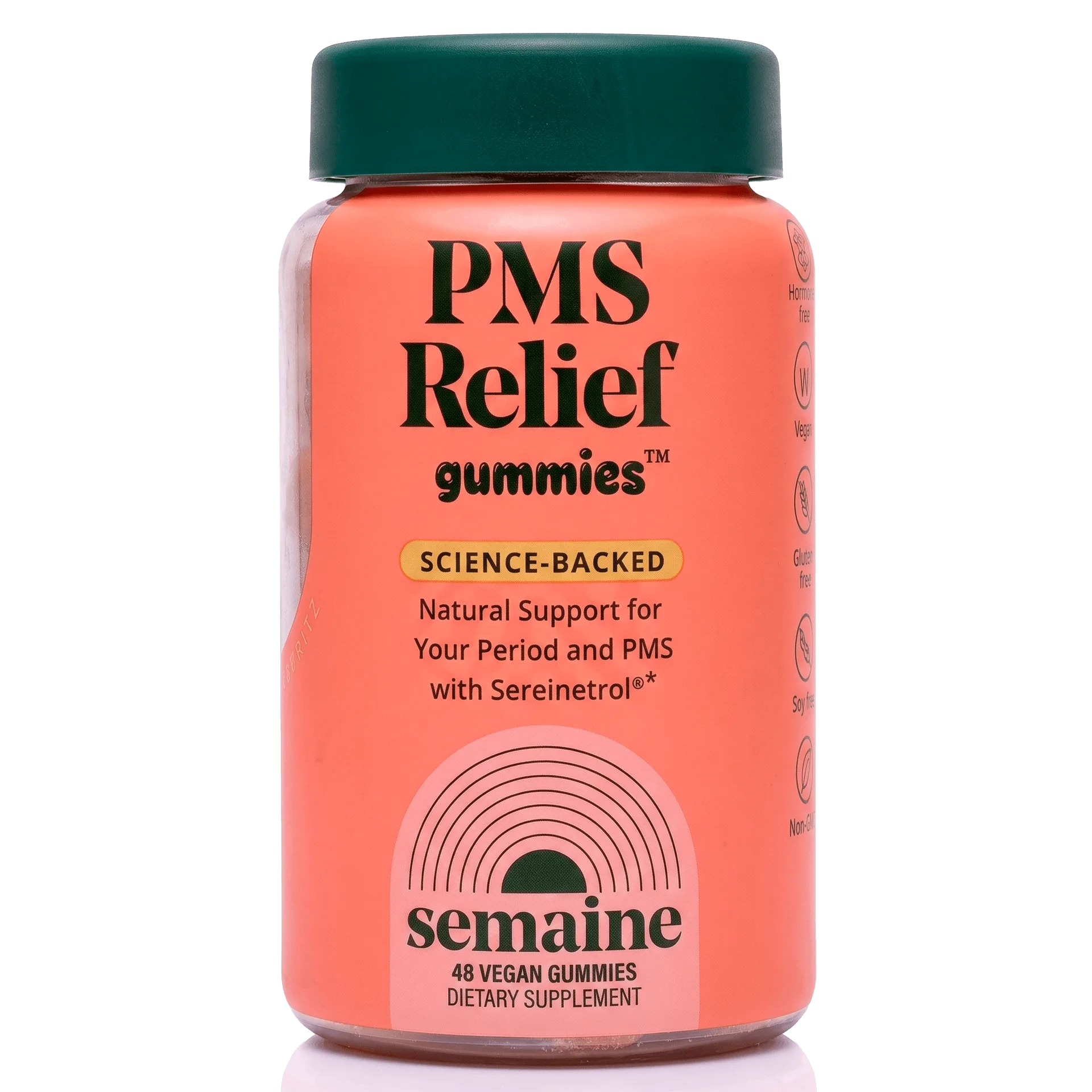
- PMS Relief Capsule: PMS Relief Capsule is a doctor-formulated supplement clinically studied to address menstrual symptoms such as mood swings, bloating, and cramps, available in 1, 2, and 3 packs. Bloating that peaks before your period and eases when bleeding starts fits this formula's focus. The multi-pack option suits the two-cycle trial period you need to judge results.
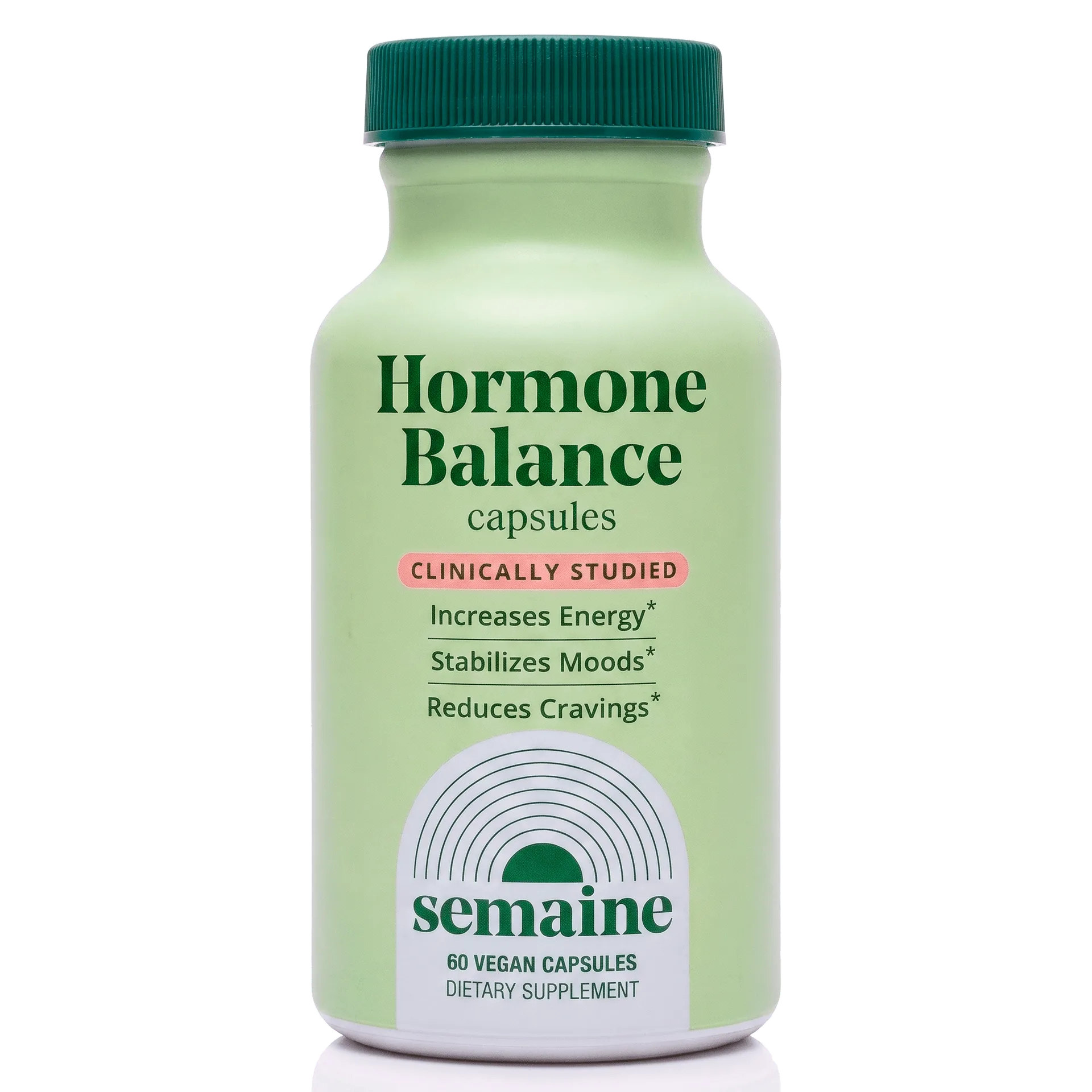
- Hormone Balance: Hormone Balance is clinically studied to promote metabolic health, boost mood, and hydrate skin for any life stage. This is the better fit if your bloating comes with low mood or skin changes rather than classic period-timed symptoms, since it supports general hormonal balance across life stages.