Quick answer
Nancy Levin's Permission to Put Yourself First offers a fresh framework for building healthier relationships by starting with yourself—ideal for anyone ready to practice self-care and set boundaries without guilt.
Why self-care starts with permission
Many people feel selfish when they prioritize their own needs. Levin's book directly addresses this inner conflict, showing that putting yourself first is not only okay but essential for sustainable relationships.
Trade-offs to consider
This book is not a quick-fix checklist. It requires honest self-reflection and a willingness to unlearn old patterns. If you prefer step-by-step exercises over narrative coaching, you may need to supplement with a workbook.
Decision rules for putting yourself first
- Start with your why: Identify one area where you consistently sacrifice your well-being. Use Levin's prompts to explore what you truly need instead. Write down one boundary you want to set this week.
- Practice small boundaries first: Begin with low-stakes situations—like saying no to an extra task—to build confidence before tackling bigger relationship shifts.
- Reframe guilt as growth: When guilt arises, ask: 'Is this guilt protecting an old pattern?' Levin's perspective helps you see discomfort as a sign of positive change. Journal one guilt trigger and reframe it as a step toward emotional health.
Product highlights
-
Permission to Put Yourself First: Author Nancy Levin shows you how to turn the old model of relationship on its head and build something better and more fulfilling. This reframing helps you stop repeating unhealthy patterns and start designing relationships that honor your worth.
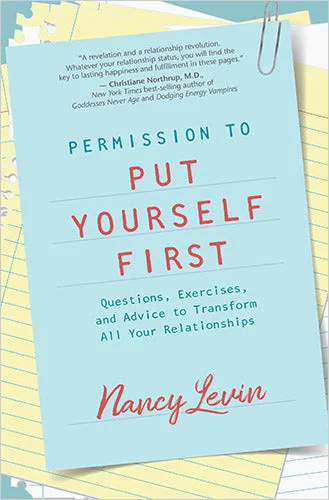
Permission to Put Yourself First
Who this is for
Best for
- People who feel drained by caretaking roles and want to reclaim their personal energy
- Anyone ready to examine how their upbringing shaped their relationship patterns
Not for
- Readers seeking a purely practical workbook with daily exercises
- Those who prefer a clinical, research-heavy approach to relationship psychology