Quick answer
Choose a 0.5-inch riser for absolute co-witness with standard AR-15 iron sights, a 0.83-inch for lower 1/3 co-witness, a 1-inch for scopes needing extra clearance, and a 0.88-inch for a middle-ground red dot riser that works with most optics.
Why riser height matters more than slot count
The height of your picatinny riser mount determines where your eye aligns with the optic and whether you can use iron sights as a backup. Slot count only affects how many accessories you can attach; it does not change sight picture. Focus on height first, then length.
Common heights are 0.5 inch, 0.83 inch, 1 inch, and occasionally 0.88 inch. Each serves a different sighting system and cheek weld preference.
Co-witness type drives your height choice
Absolute co-witness means the red dot sits exactly on top of the front sight post when viewed through the optic. This requires a 0.5-inch riser. Lower 1/3 co-witness places the dot slightly above the front sight, clearing the view – use a 0.83-inch or 0.88-inch riser for that.
If you run a magnified scope, you normally want the scope as low as possible for a natural cheek weld. A 1-inch riser is often used to clear a thick handguard or night vision mount, but it raises the scope higher than ideal for a standard stock.
Trade-off: height vs. cheek weld comfort
A taller riser (0.83 inch and above) can make it harder to get a consistent cheek weld if your stock is not adjustable. Shooters with a high cheekbone or a raised cheek piece may prefer a taller riser. Those with a standard AR-15 stock often find 0.5 inch most comfortable for red dots.
If your optic has a large objective lens (over 40mm), a 1-inch riser may be necessary to clear the barrel or handguard. For compact red dots, a shorter riser usually suffices.
Decision rules for choosing riser height
- 0.5 inch riser: Use for absolute co-witness with standard AR-15 front sight. Best for red dots only, not scopes. Gives the lowest profile and most natural cheek weld.
- 0.83 inch riser: Use for lower 1/3 co-witness. Works with most red dots and some compact scopes. Slightly higher cheek weld, but clears the front sight post.
- 0.88 inch riser (MT088-8L): Use as a middle-ground red dot riser when you want lower 1/3 co-witness but need a bit more clearance than 0.83 inch. The integrated locking nut makes installation quick. Check that your optic's objective lens clears the rail; 0.88 inch often works where 0.83 inch is tight.
- 1 inch riser: Use for scopes with large objective lenses (40mm+) or when you need to clear a thick handguard. Expect a higher cheek weld; consider an adjustable stock.
Product facts
-
Picatinny Rail Riser Mount Picatinny Red Dot Riser Mount 0.88“ Height 2.5" Long 8-Slot (MT088-8L): 0.88 inch height, 2.5 inches long, 8 slots, integrated locking nut for hand-tightening. This riser offers a middle height between 0.83 and 1 inch, giving you lower 1/3 co-witness with most red dots and extra clearance for scopes, all with tool-free attachment.
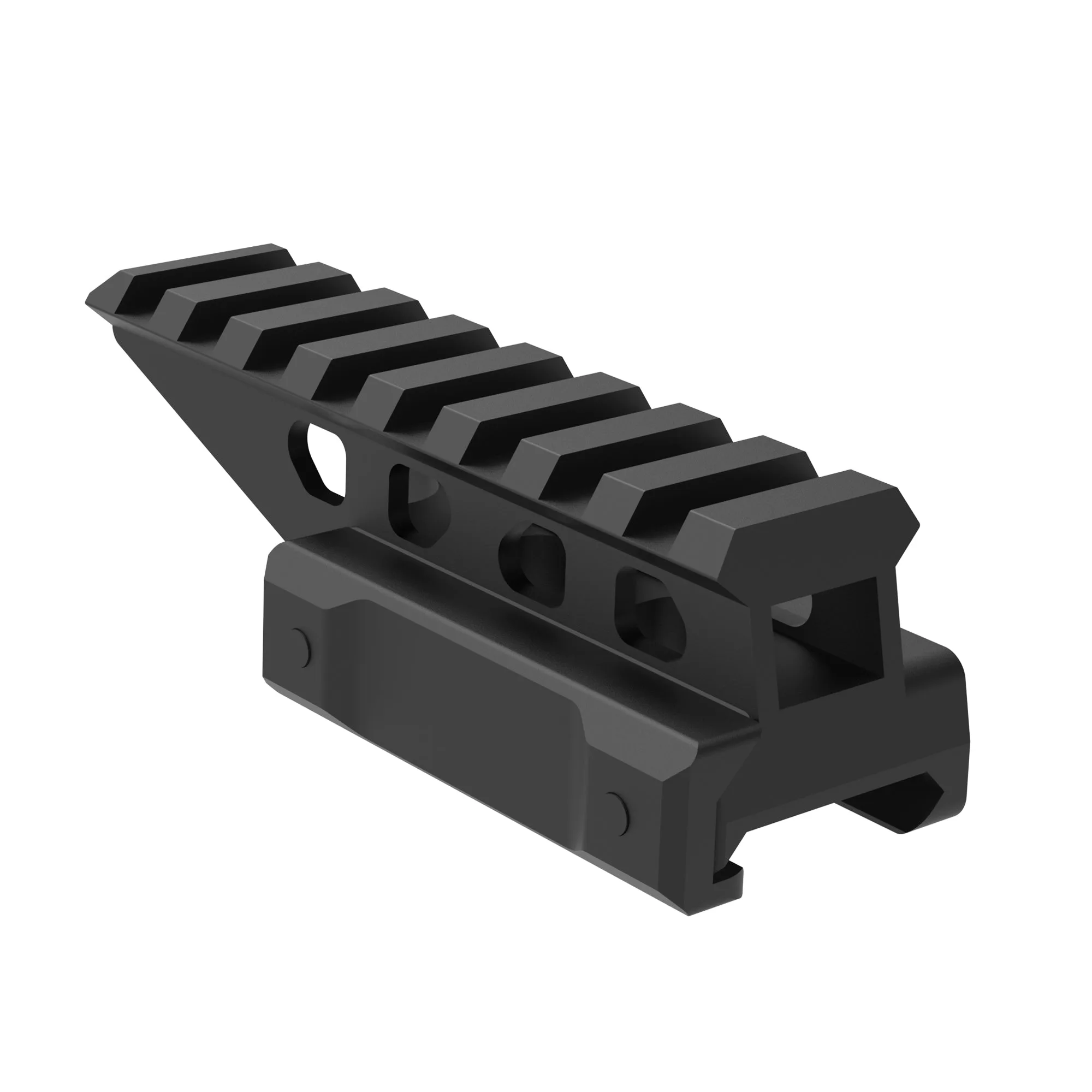
Picatinny Rail Riser Mount Picatinny Red Dot Riser Mount 0.88“ Height 2.5" Long 8-Slot (MT088-8L)
-
5-Slot Riser Scope Mount 0.5 inch /0.83 inch /1 inch Picatinny Rail Riser Mount: Available in 0.5, 0.83, and 1 inch heights, 5 slots, see-thru design, all-metal construction. The three-height option lets you match exactly the co-witness or clearance you need, and the see-thru design allows simultaneous use of optics and iron sights.
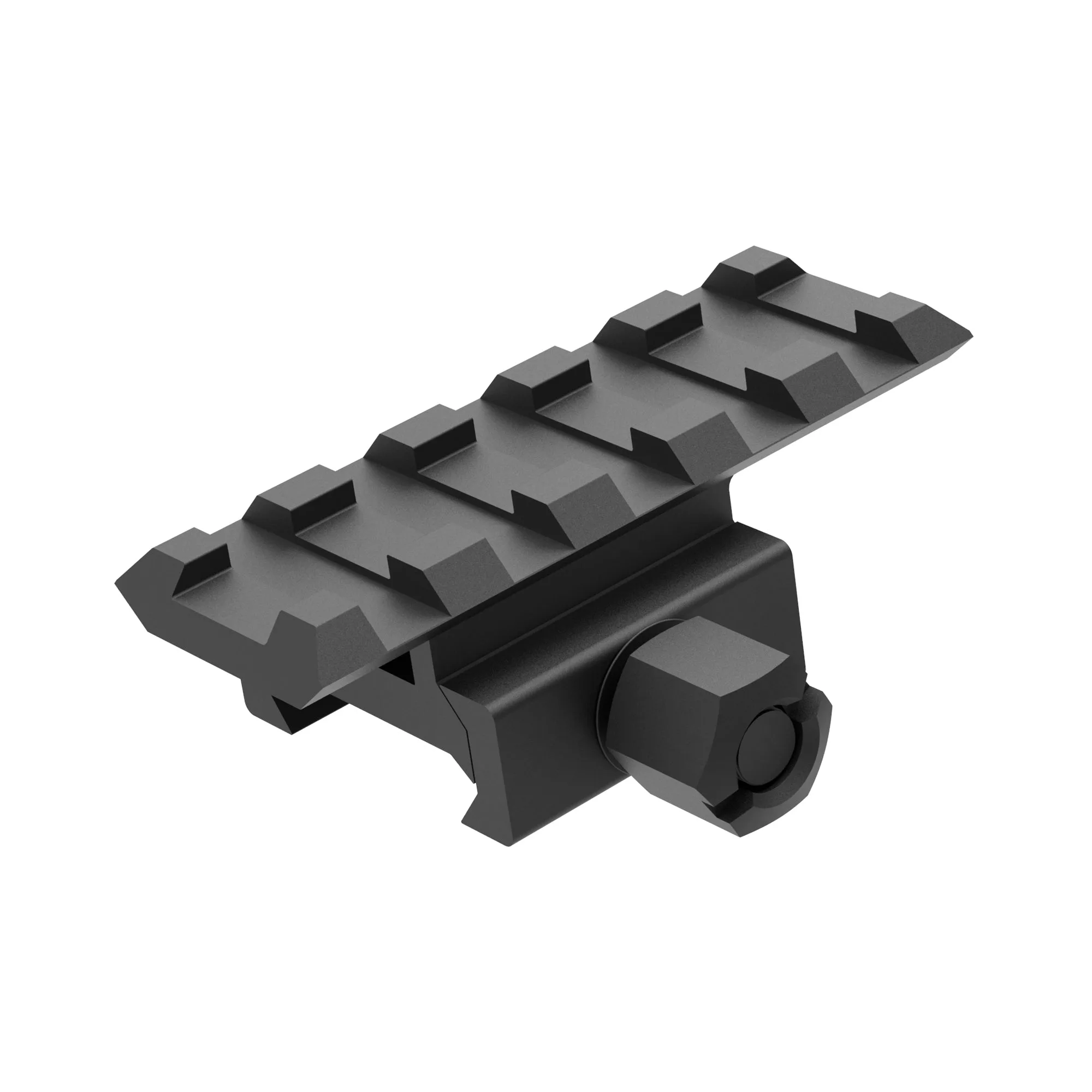
5-Slot Riser Scope Mount 0.5 inch /0.83 inch /1 inch Picatinny Rail Riser Mount
Which riser is best for you?
Best for
- Red dot users who want a natural cheek weld and absolute co-witness – choose a 0.5 inch riser
- Shooters who prefer lower 1/3 co-witness or need extra clearance for a scope – choose a 0.83 or 0.88 inch riser
- Those mounting a large scope on a flat-top AR – choose a 1 inch riser
Not for
- A 1 inch riser is not ideal for red dots on a standard AR-15; it raises the dot too high for a comfortable cheek weld
- A 0.5 inch riser will not clear most magnified scopes or thick handguards