Quick answer
A pizza cutter (wheel) is best for quick, straight cuts on thin-crust pizzas, while a rocking blade excels on thick, loaded, or crispy crusts. Choose based on your typical pizza style.
Why cutting tool shape matters for pizza
The main difference between a pizza cutter (wheel) and a rocking blade is how they apply force. A cutter uses a rolling motion that works well on flat, even surfaces. A rocking blade uses a seesaw motion that can push through thicker toppings and crusts without dragging toppings off.
Trade-offs in cutting performance
Pizza cutters are fast and intuitive for straight lines, but they can struggle with deep-dish or heavily loaded pizzas. The wheel may push toppings or slide on crispy crusts. Rocking blades offer more leverage and control for thick or uneven surfaces, but they require more counter space and can be trickier to store.
Trade-offs at a glance
- Pizza cutter (wheel): Best for thin-crust, evenly topped pizzas. Quick and easy to use. Requires a flat surface and can struggle with thick or crispy crusts. Choose a wheel cutter if you mostly make thin-crust or frozen pizzas.
- Rocking blade: Ideal for thick, loaded, or crispy crusts. Provides more leverage and control. Takes up more storage space and requires a larger cutting board. Opt for a rocking blade if you frequently make deep-dish or artisan pizzas.
- Cleanup and storage: Wheel cutters like the Palm Pizza Cutter are often dishwasher safe and compact. Rocking blades are larger and may need hand washing to protect the blade edge. If easy cleanup is a priority, a dishwasher-safe wheel cutter is more convenient.
Product facts
-
Palm Pizza Cutter: The Palm Pizza Cutter features an ergonomic design for a comfortable grip and easy handling, a stainless steel blade, and is dishwasher safe (top rack recommended). This cutter is easy to clean and comfortable to use for quick, straight cuts on standard pizzas, making it a practical choice for everyday slicing.
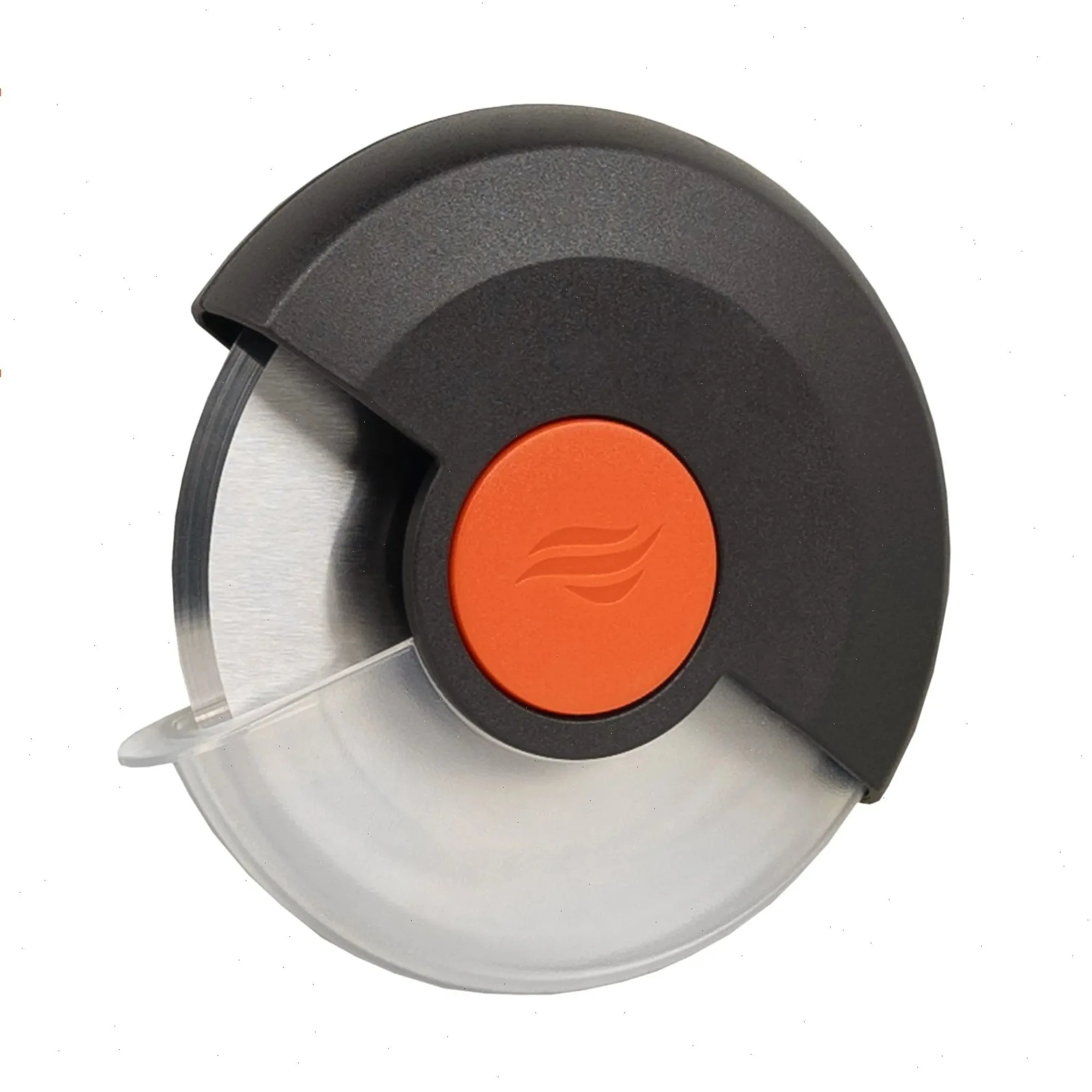
Palm Pizza Cutter
Which tool fits your kitchen?
Best for
- Quick, straight cuts on thin-crust pizzas
- Everyday home cooks who prioritize easy cleanup and compact storage
Not ideal for
- Thick, loaded, or crispy crusts that require more cutting force
- Users who need to slice multiple deep-dish pizzas in one session