Quick answer
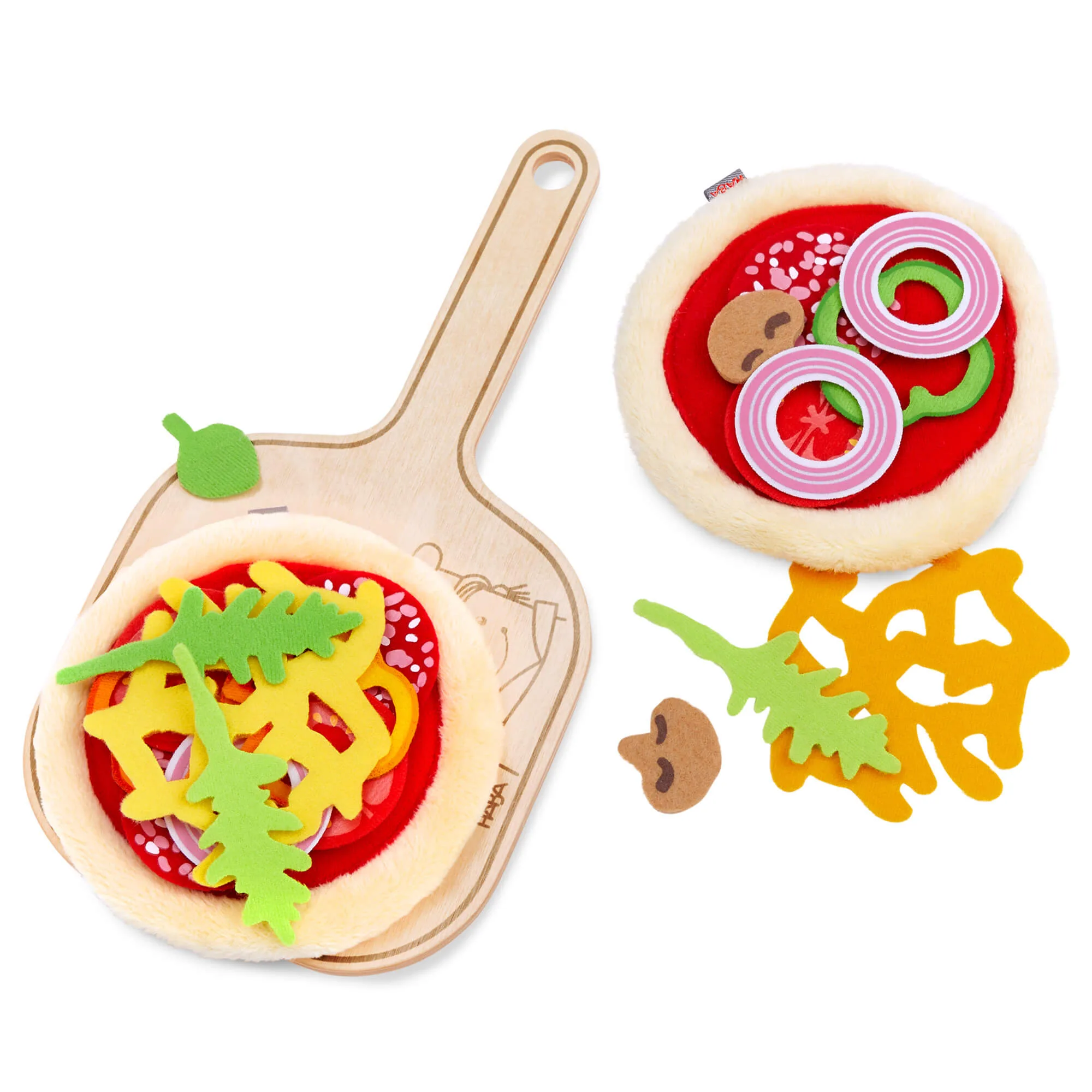
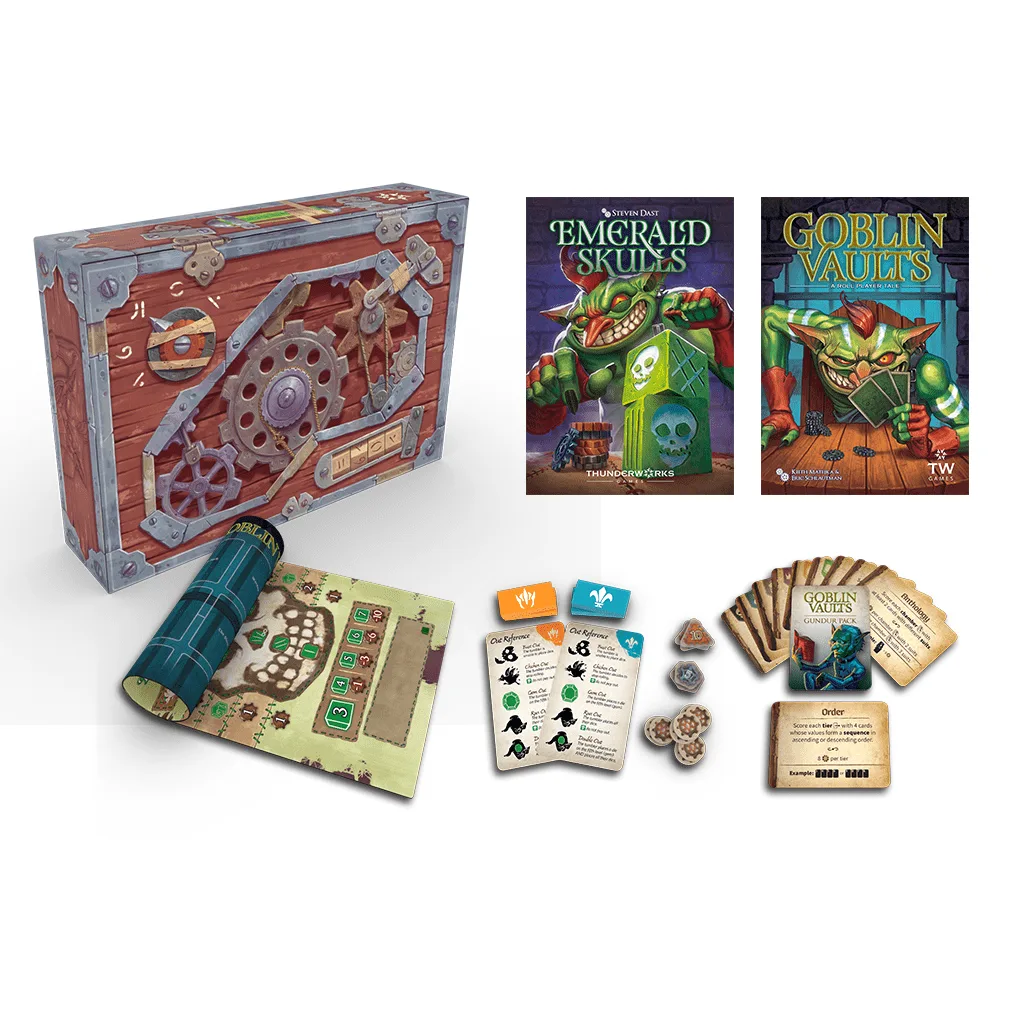
The fastest way to build language with play food is to narrate your actions, ask open-ended questions, and add one new word per play session. Keep sessions short, follow your child's lead, and repeat the same play routine several times a week. A set like the Creative Play – Pizza Party Play Food Set gives you ready-made vocabulary for toppings, tools, and restaurant talk.
Why play food works for early language
Play food is a natural language tool because it mirrors real routines your child already knows: choosing, cooking, serving, and eating. That familiarity lowers the pressure to perform and gives you shared context for new words. You can name colors, count pieces, describe textures, and model polite phrases like please and thank you without turning the moment into a lesson. The goal is conversation, not correction, so let your child's interest guide the pace.
Set up a language-rich play space
Keep a small basket of play food within reach and rotate items every week or two. A dedicated spot, such as a low shelf or a play kitchen counter, helps your child return to the same vocabulary. Add simple real-world props like a spoon, a small plate, or a notepad for taking orders. When the setup stays consistent, your child can focus on talking instead of searching for pieces.
7 steps to build language with play food
- 1. Start with a familiar routine: Set out two or three play food items and announce what you are doing: 'I'm making pizza. I need cheese.' This gives your child a predictable script to join. Checkpoint: your child looks at or reaches for the food, showing engagement.
- 2. Narrate your actions: Describe what you see, touch, and do. 'This mushroom is bumpy. I'm slicing it with the wooden peel.' Keep sentences short and repeat key words. Common mistake: narrating nonstop without pausing. Leave silence for your child to respond.
- 3. Ask open-ended questions: Trade yes-or-no questions for choices and wonderings: 'What topping should we add next?' or 'How many slices do we need?' Checkpoint: your child answers with a word, a point, or a gesture. Accept any response and expand on it.
- 4. Add one new word per session: Choose a word tied to the play, such as 'basil,' 'peel,' 'order,' or 'delivery.' Use it several times in different sentences. Common mistake: introducing too many new words at once. One or two is enough for toddlers.
- 5. Model polite restaurant talk: Pretend to take an order: 'May I take your order?' and 'Here is your pizza.' Encourage your child to echo or improvise. Checkpoint: your child uses a phrase or a close approximation. Praise the attempt, not the accuracy.
- 6. Follow your child's lead: If your child wants to sort toppings by color or feed a stuffed animal, join that story. Language grows best when the child directs the play. Common mistake: steering back to your own agenda. Let the child's idea become the new script.
- 7. Repeat the same routine weekly: Return to the pizza restaurant or fruit harvest every few days. Repetition cements vocabulary and gives your child confidence to add new words. Checkpoint: after several sessions, your child uses a target word without prompting.
Play food that supports conversation
- Creative Play – Pizza Party Play Food Set: Includes soft fabric pizza bases, felt toppings such as mushrooms and basil leaves, and a wooden pizza peel. The variety of toppings gives you concrete words to name, compare, and request during play.
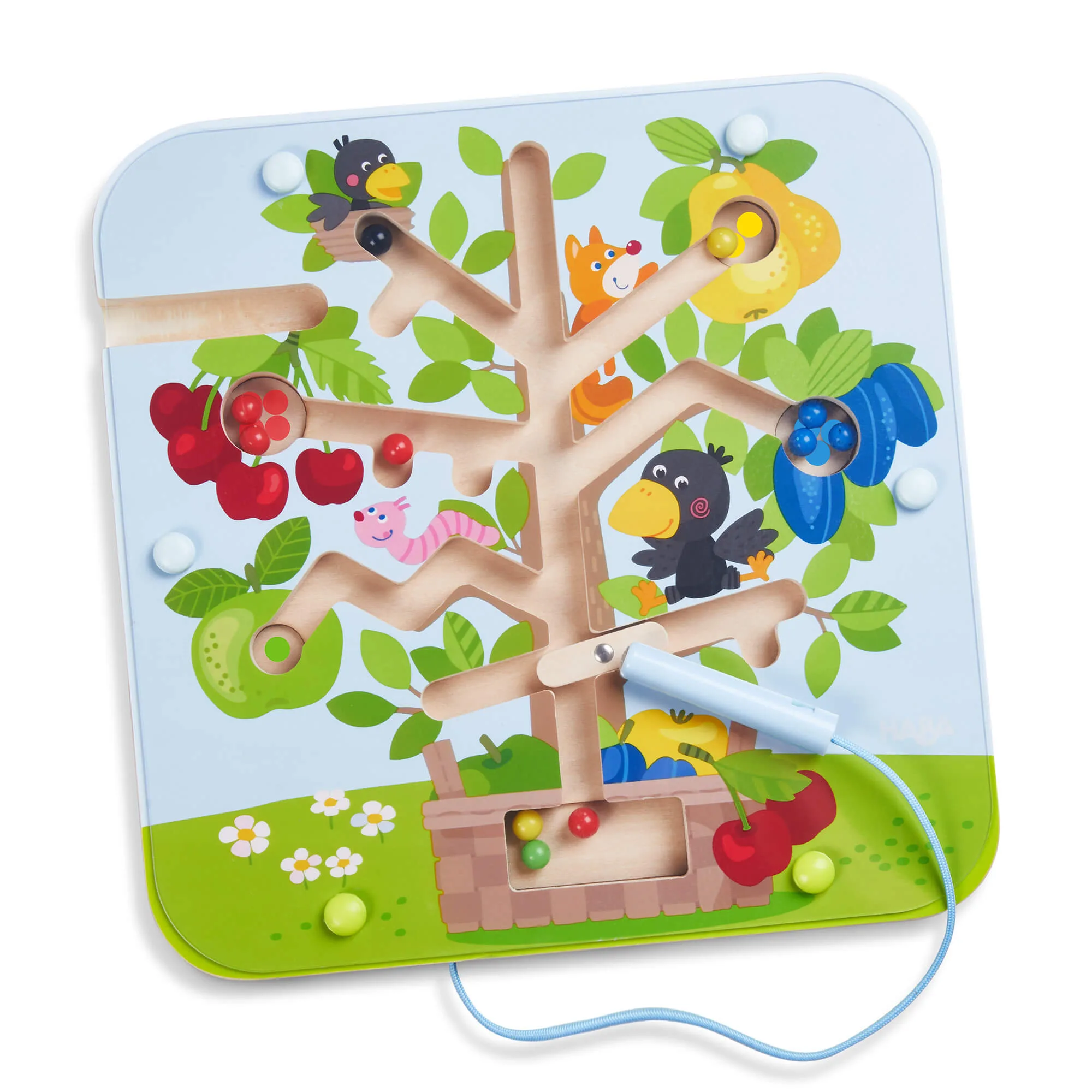
- Orchard Maze Magnetic Sorting Game: Uses a magnetic stick to move colored balls that become apples, plums, pears, and cherries, with a black raven ball to avoid. Sorting and counting fruit builds color and number vocabulary while keeping hands busy.