Quick answer
Buy a play food set first if you want an affordable, portable way to start pretend play. Choose a play kitchen first if your child already loves cooking routines and you have floor space. For most families, a play food set gives more play value per dollar and can be expanded later with a kitchen or more food.
What a Play Food Set Actually Gives You
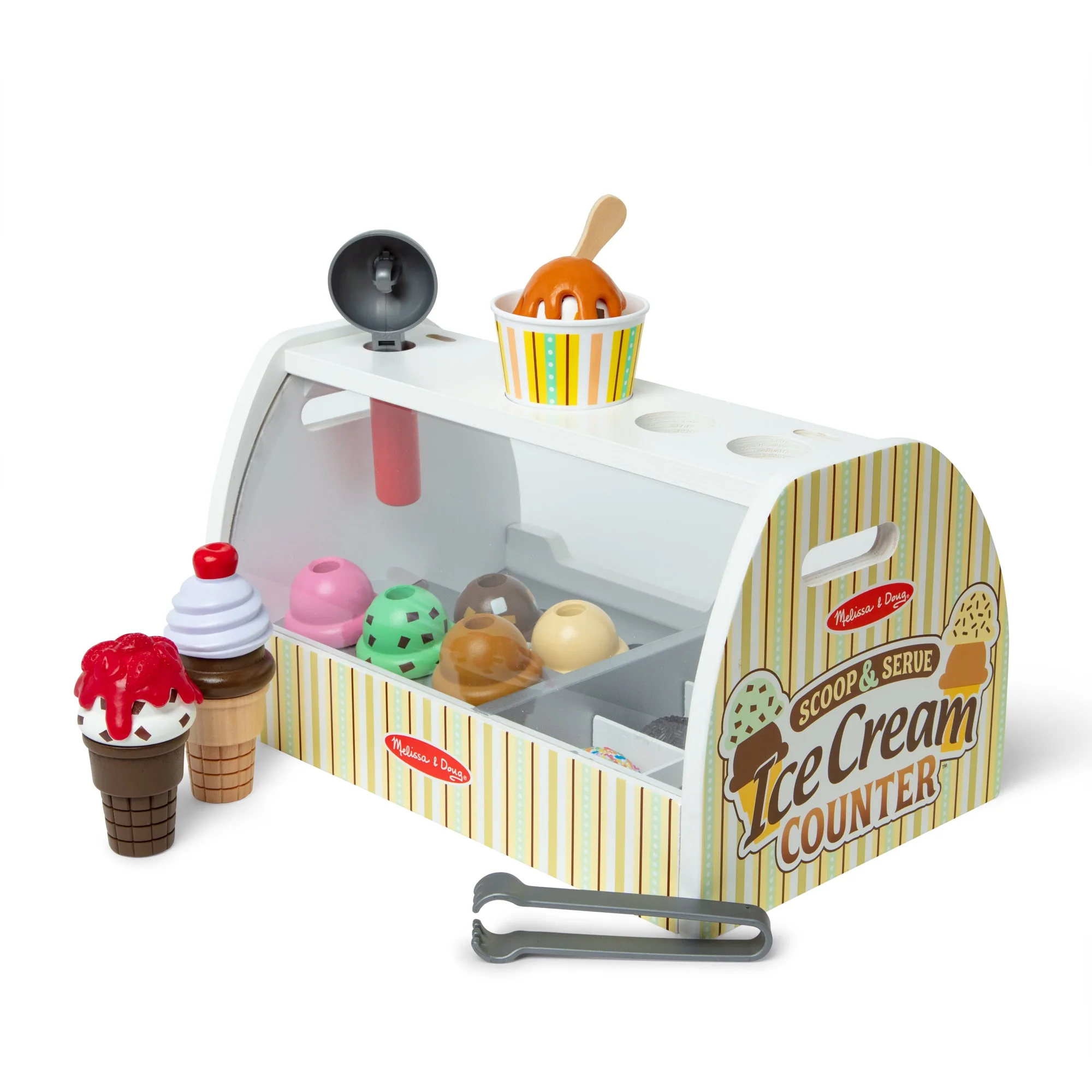
A play food set is the ingredients, not the room. It works on a table, floor, or couch, so play can happen anywhere. Sets like the Melissa & Doug Scoop & Serve Ice Cream Counter show how much play value fits in one box: 28 pieces including 8 wooden scoops, 6 toppings, 2 cones, a plastic cup, scooper, tongs, wooden spoon, reusable menu card, and pretend dollar bills. The scooper clicks into scoops so kids can lift, stack, and release like real ice cream, and toppings fit snugly for customizable creations. That kind of mechanical feedback keeps toddlers engaged without needing a dedicated play space.
What a Play Kitchen Adds That Food Alone Cannot
A play kitchen provides a home base for pretend cooking: a stove, sink, oven, and storage. It encourages longer, more narrative play sessions because kids can move through washing, chopping, cooking, and serving in one spot. The trade-off is footprint and cost. If you already own food, a kitchen can organize it and extend play. If you do not own food yet, a kitchen without ingredients can feel empty, so plan to add at least one food set. If you are following a play kitchen buying guide, check the height and counter depth against your child's reach before choosing a model.
How to Choose Based on Your Child's Stage
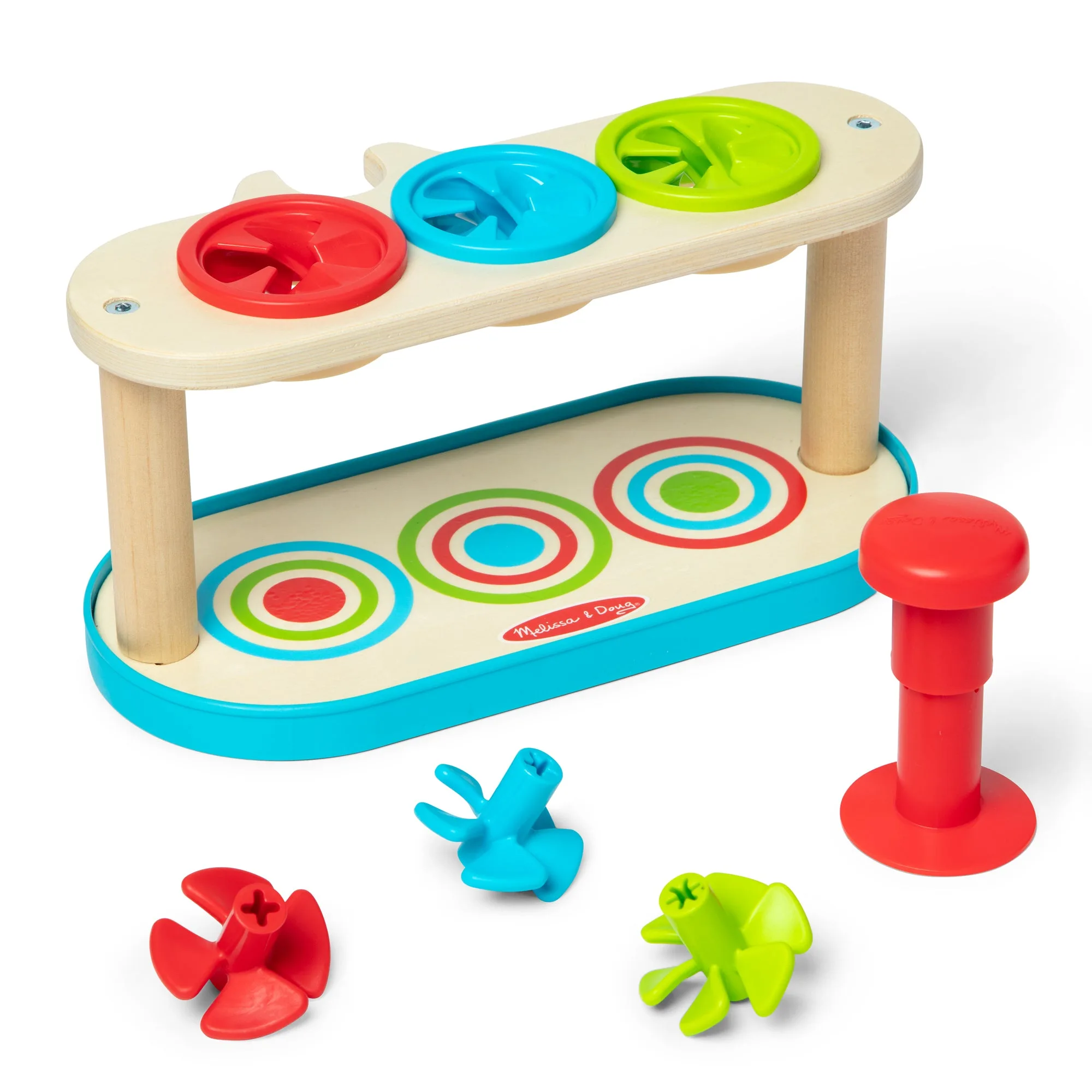
For toddlers around 18 months to 3 years, play food for toddlers works best when pieces are easy to grasp and the play is simple. The Match & Push Spinning Tops is not a food set, but it shows the same developmental principle: drop three colorful tops into matching wells and use the easy-to-grasp plunger to push and make them drop and spin. That cause-and-effect and color matching practice supports the fine-motor skills toddlers need before they can manage a full kitchen routine. For preschoolers, the Scoop & Serve Ice Cream Counter adds counting, stacking, and serving roles that pair well with a kitchen later.
Trade-offs: Play Food Set vs Play Kitchen
- Space and storage: A play food set stores in a bin or box and plays on any surface. A play kitchen needs a dedicated corner or wall and stays set up. Choose food first if you are short on floor space or move rooms often.
- Upfront cost and expansion: Food sets cost less and let you add pieces over time. A kitchen is a larger one-time purchase that often needs food bought separately to feel complete. Start with food if you want to spread the cost across birthdays or holidays.
- Play depth and routine: Food sets support short, flexible play bursts. A kitchen supports longer routines like washing, cooking, and serving in one place. Choose a kitchen first only if your child already acts out cooking sequences and you have the space.
Product facts that matter for this choice
- Scoop & Serve Ice Cream Counter: 28-piece wooden pretend ice cream shop with 8 scoops, 6 toppings, 2 cones, a plastic cup, scooper, tongs, wooden spoon, reusable menu card, and pretend dollar bills. This is a complete play food set on its own. The scooper clicks into scoops so kids can lift, stack, and release, which builds hand strength and sequencing without needing a kitchen.
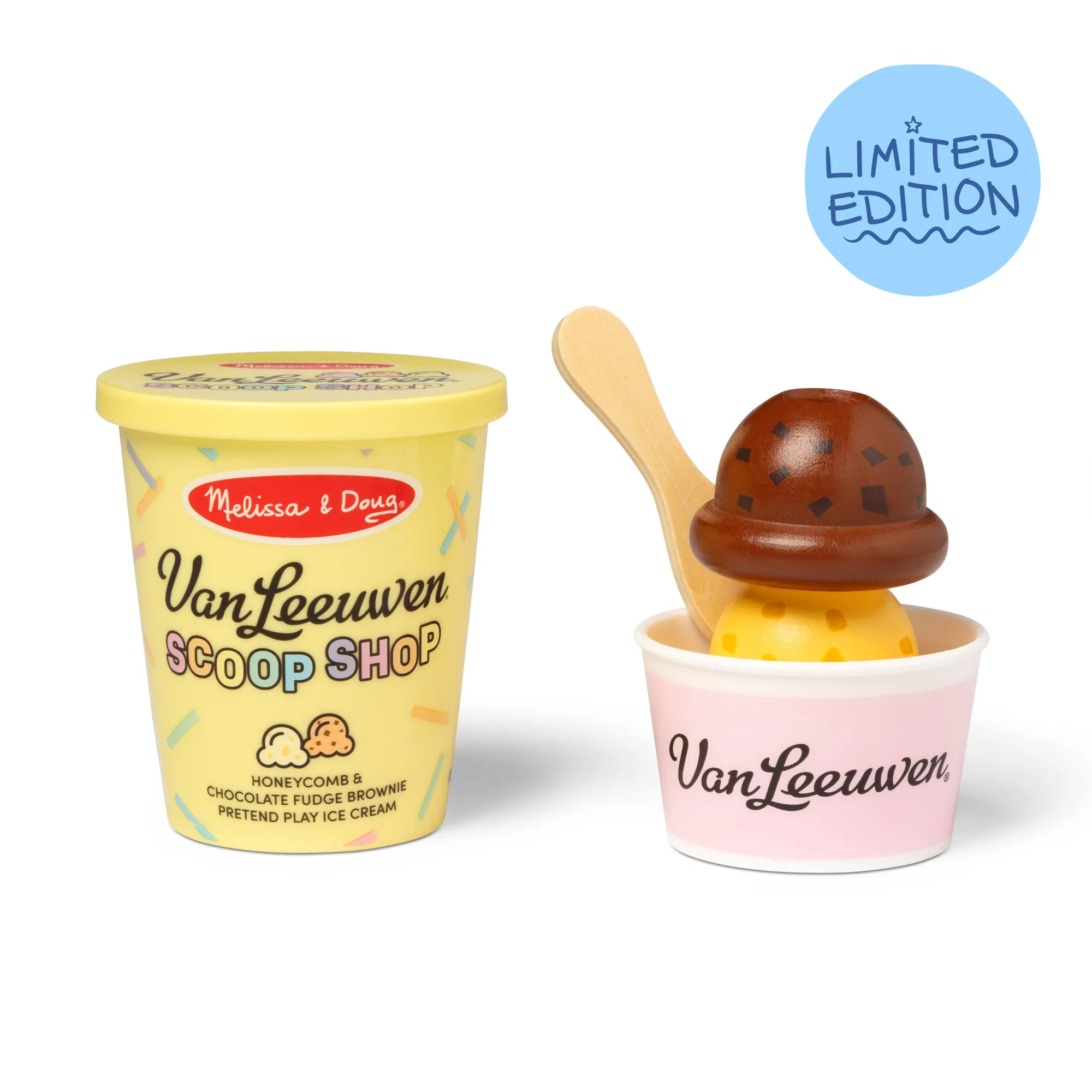
- Melissa & Doug x Van Leeuwen Scoop Pack: Van Leeuwen Scoop Pack with two pretend scoops (Chocolate Fudge Brownie and Honeycomb), a cup, and a wooden spoon; works as an add-on or standalone treat. A low-cost way to expand an existing set or test whether your child enjoys pretend food before investing in a kitchen. The realistic tub and stacking scoops add variety to menu play.
- Match & Push Spinning Tops: Match & Push Spinning Tops: drop three colorful tops into matching wells and use the easy-to-grasp plunger to push and make them drop and spin on a sturdy wooden base. Not a food set, but it builds the same cause-and-effect and color-matching skills toddlers need for pretend play. A smart first step if your child is not ready for multi-piece food sets.
Who should buy which first
Best for
- Families with limited space who want portable pretend play
- Toddlers and preschoolers who are new to pretend cooking
- Shoppers who want to test interest before buying a large kitchen
Not for
- Children who already have a dedicated play kitchen and need more ingredients
- Families looking for a single large furniture-style play piece
- Kids who prefer active, movement-based toys over tabletop play