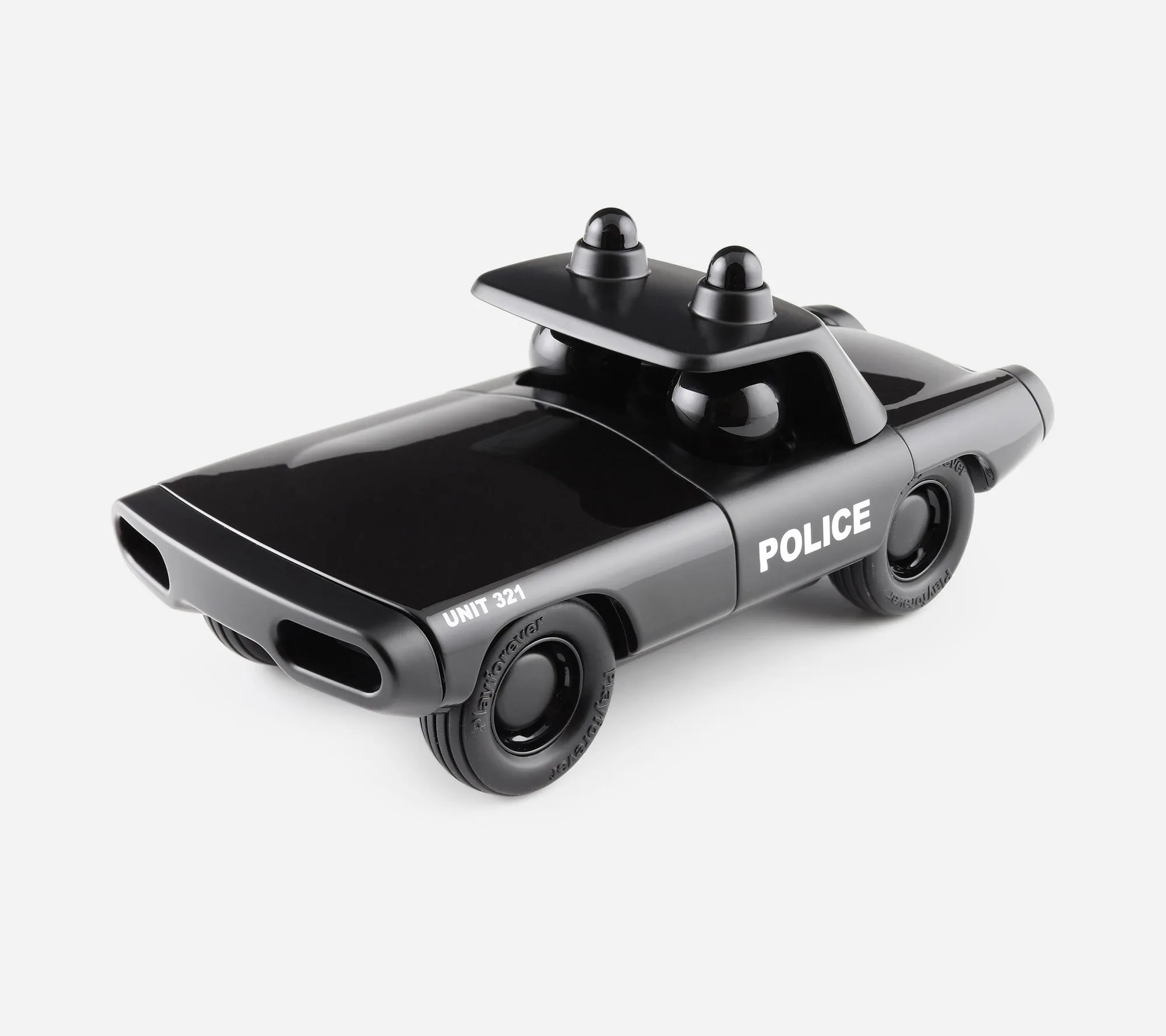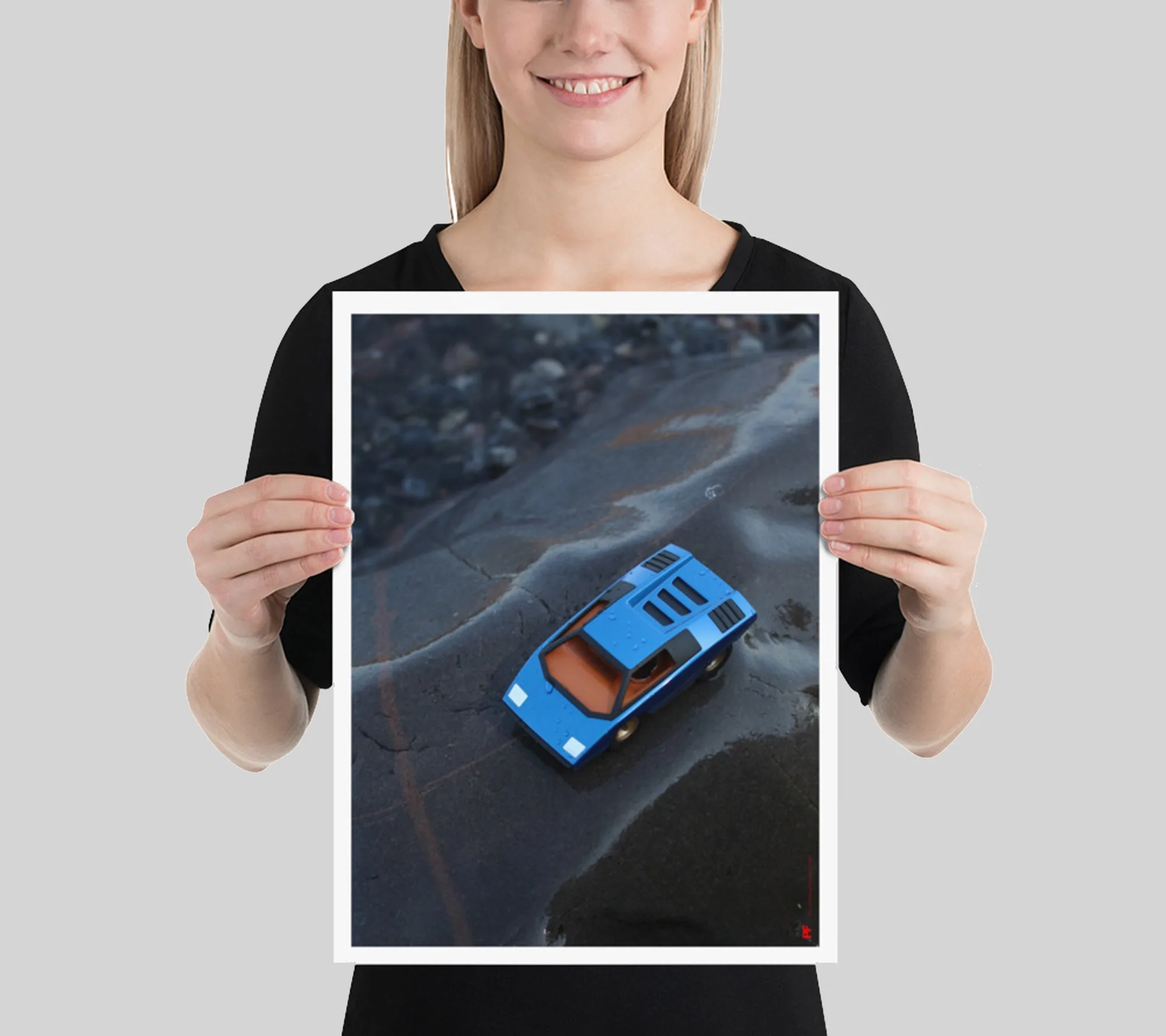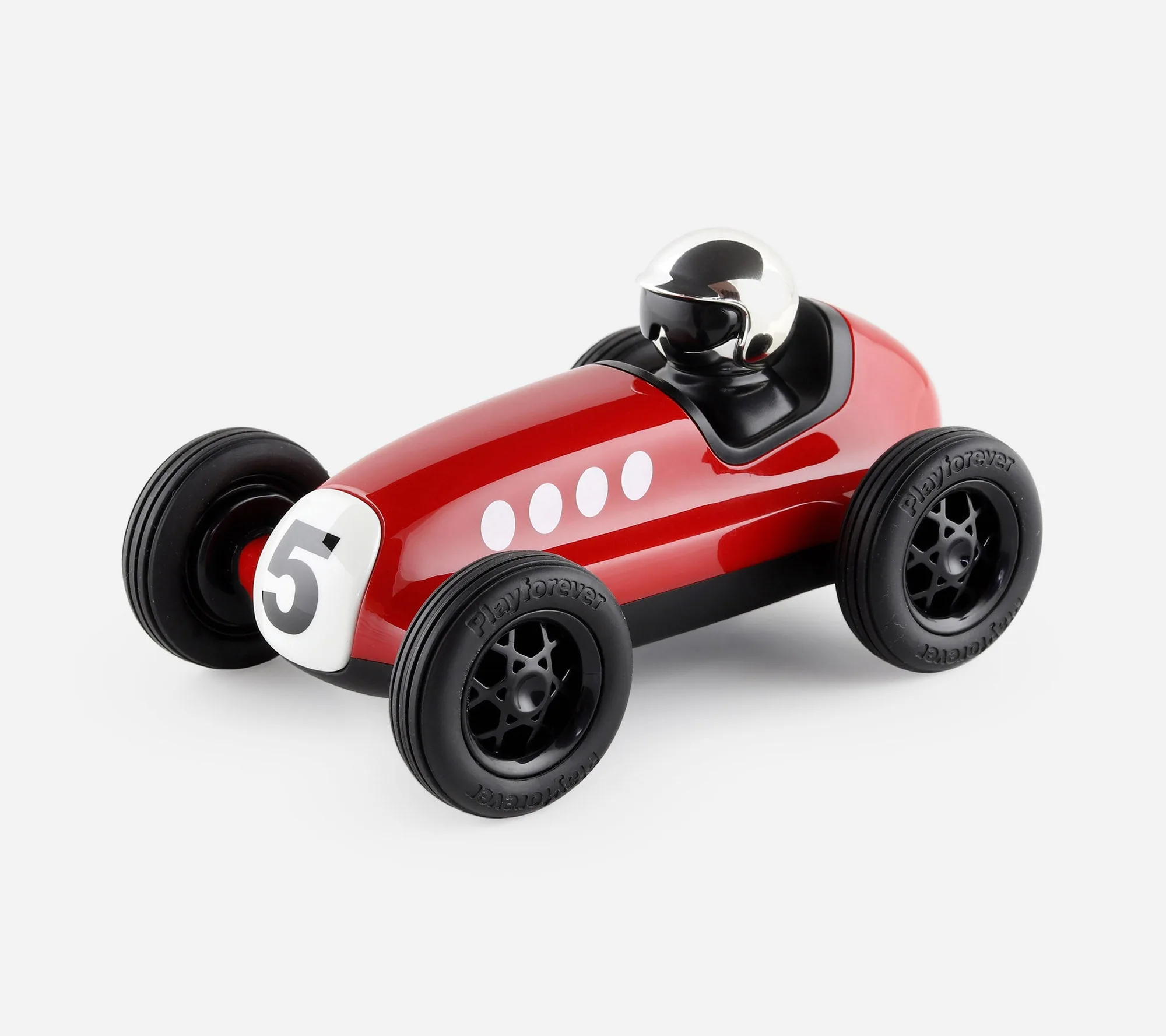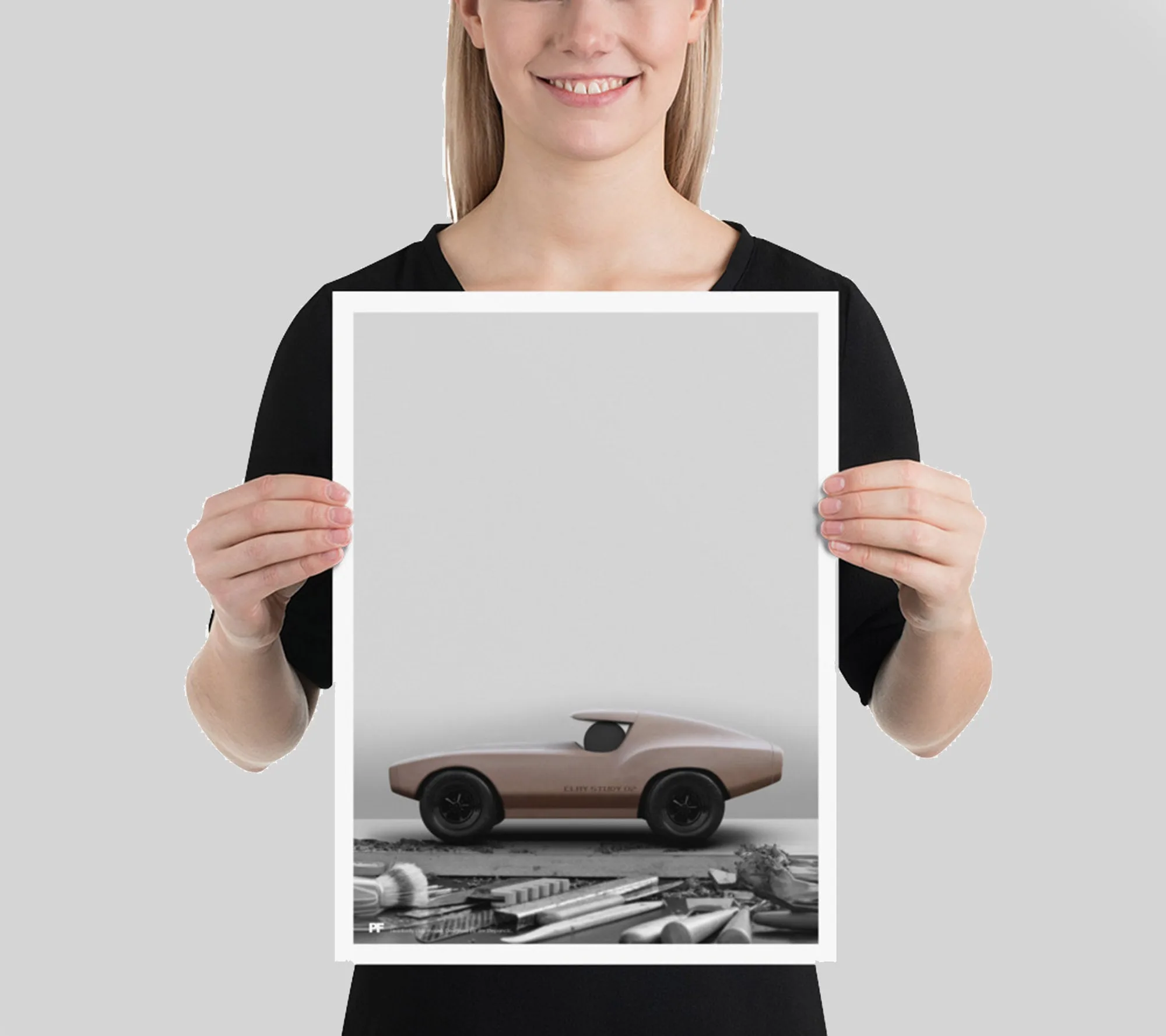
Quick answer
Playforever does not publish one universal scale or a single size chart that covers every model, so treat each car as its own size decision rather than assuming a shared scale. If you are buying blind, choose based on the job the car has to do: a desk or shelf display car, a gift for a child, or a piece that has to sit beside others you already own. When in doubt, buy the model you like and measure your space first, because the catalog does not supply exact dimensions for these listings.
Why there is no single Playforever size chart
Playforever builds its cars as stylized icons rather than scale models, so the range is not organized around a shared ratio the way a die-cast collector series might be. That means a Playforever size guide is really a set of per-model judgments: two cars from different collections can sit at noticeably different footprints even though they share the same design language and the same 'kids who play, adults that keep' positioning.
The practical consequence is that you should not buy one car expecting a second car from another collection to match it exactly on a shelf. If matching footprint matters to you, buy the models you want as a pair or group in the same order, and check the individual product page for any dimensions the listing provides. Where a specification is not supplied, treat that as a genuine limitation of the listing rather than guessing a number.
How to judge size before the car arrives
Work backwards from where the car will live. Measure the shelf, desk, or windowsill you have in mind, then leave a margin so the car is not touching a wall or the edge. A car that fits with a finger's width of clearance on each side reads as intentional; one that fills the space edge to edge reads as cramped.
For gifts, think about the hand that will hold it. A younger child needs something chunky enough to grip and push without it disappearing into a fist, while an older child or an adult collector usually cares more about how the car looks in place than about grip. If the car is going to a child who still puts things in their mouth, that is a different product conversation entirely, and you should check the listing and packaging guidance rather than relying on size alone.
Scale, proportion, and why the 70s and 80s cars look different
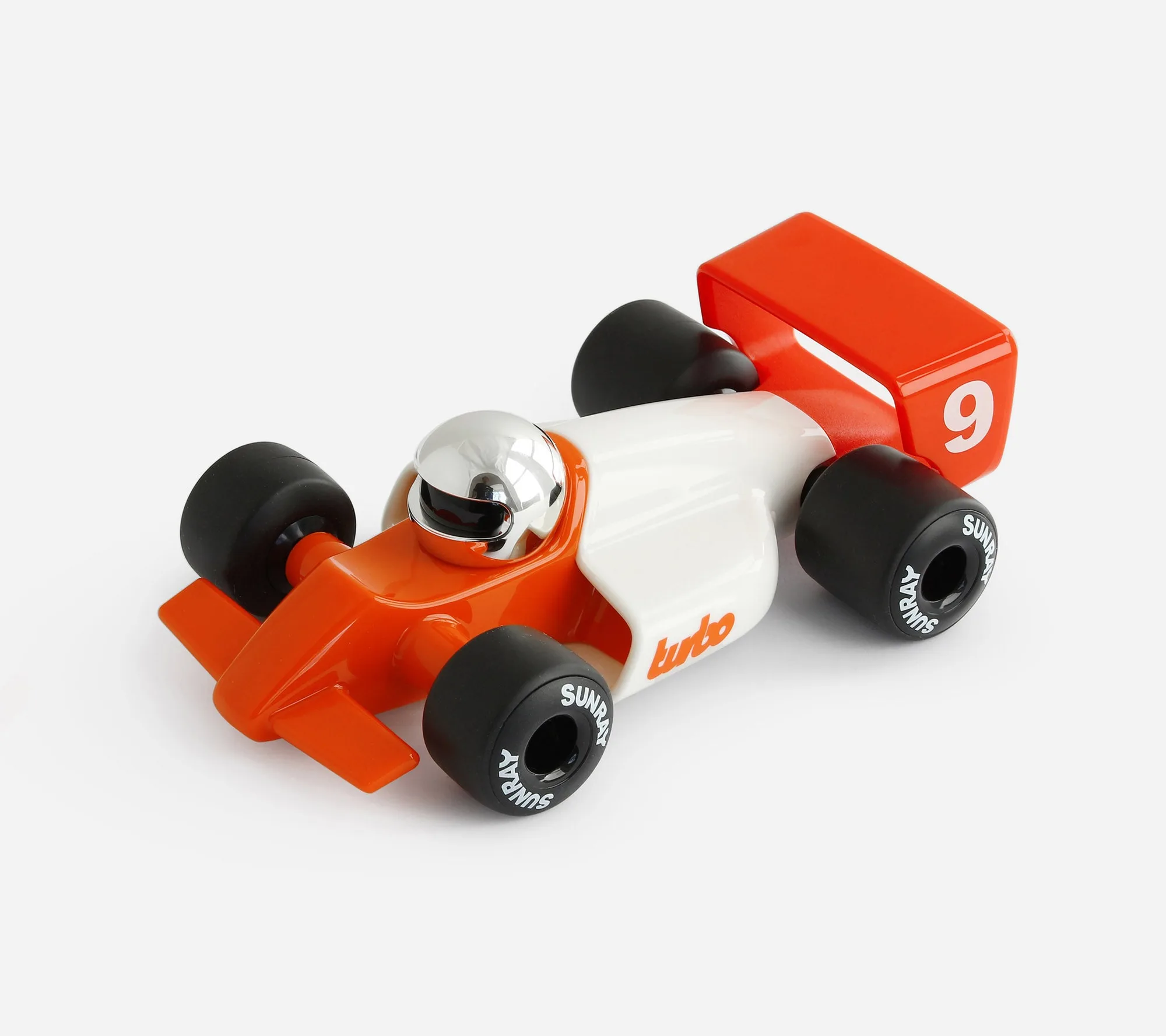
Playforever's collections pull from different eras of racing, and era changes proportion. The Velocita collection was inspired by the F1 scene of the 1970s, a period the catalog describes as a dangerous, high speed game, and those cars carry the long, low, open-wheel silhouette of that time. The Turbo cars draw on 1980s Formula 1, when turbocharging for more speed was the whole story and downforce was your only friend getting you around fast corners alive. That 80s brief produces a different, more grounded stance.
So when you compare Playforever car dimensions across collections, you are often comparing design intent, not just length. A Velocita car and a Turbo car can both be 'right' at the same nominal size and still look completely different next to each other. If you want a shelf that reads as one coherent set, group by collection; if you want contrast, mix them deliberately.
Sizing for a collection you already own
If you already have Playforever cars at home, use them as your reference. Put the car you own on the shelf, note how much room it leaves, and decide whether the next car should match it or contrast with it. This is far more reliable than trying to convert between collections on paper, because the catalog does not supply a shared scale figure to convert with.
One practical habit: photograph your shelf with the existing cars in place before you order. When the new car arrives, you will know immediately whether the proportion works, and you can rearrange rather than return. If you are buying two cars at once, order them together so you can judge them side by side rather than one at a time.
Decision rules for choosing a Playforever size
- Rule 1: Measure the destination first: Measure the shelf, desk, or ledge and subtract a margin on every side before you look at models. The catalog does not supply exact dimensions for these listings, so the space you have is the only reliable constraint you control. If the space is tight, choose a single car rather than a pair.
- Rule 2: Match by collection, not by assumed scale: There is no shared scale across the range. If you want a coherent look, stay within one collection or era brief; if you want contrast, mix a 70s-inspired car with an 80s-inspired one on purpose. Grouping by collection is the safest way to avoid an accidental mismatch.
- Rule 3: Let the handler decide the size class: A child who plays with the car needs a shape they can grip and push. An adult collector is choosing for how it looks in place. These two buyers should not be steered by the same size logic. Buy for the person who will actually hold it.
- Rule 4: When dimensions are missing, treat it as a limitation: If a listing does not state a measurement, do not infer one from another model or from a photo. Use your existing cars as the reference, or order the models you are comparing together so you can judge them side by side. Unstated dimensions are a reason to compare in person, not to guess.
Models that show how the range varies
- Velocita Emilio: Velocita Emilio belongs to the Verve Collection and draws on 1970s F1, a period the catalog calls a dangerous, high speed game. The 70s brief produces a long, low open-wheel look, so this is the model to choose when you want the classic-era silhouette rather than an 80s stance.
- Turbo Lauper: Turbo Lauper is a Rollin' Icons car inspired by 1980s Formula 1, when turbocharging for more speed was the focus and downforce was your only friend through fast corners. The 80s turbo era gives a different proportion and attitude from the 70s cars, which matters if you are grouping models on one shelf.
- Turbo Miami: Turbo Miami shares the 1980s turbo-era Formula 1 inspiration and the same Rollin' Icons positioning as Turbo Lauper. Two cars from the same era brief are the safer pairing if you want a shelf that reads as a matched set rather than a timeline.
- Luft Hopper: Luft Hopper is a collector grade icon inspired by a 1985 Porsche 911 Carrera 3.2 Targa that Playforever founder Julian Meagher owned while living in Florence, Italy. A road-car reference rather than an open-wheel racer, so it sits differently in a display and is the one to pick when you want a recognizable silhouette.
Who this size approach fits
Best for
- Buyers choosing a single Playforever car for a measured shelf, desk, or ledge
- Gift buyers who know roughly how big the car should feel in a child's hands
- Collectors adding to an existing group and wanting the new car to sit coherently
Not for
- Buyers who need an exact published scale or dimension figure before ordering
- Buyers trying to match Playforever cars to a specific model-railway or die-cast scale
- Anyone choosing a car primarily by age rating rather than by size and use