Quick answer
Choose a deck by matching stock thickness, finish texture, and cut direction to your primary use. For cardistry, prioritize a snappy stock with an air cushion finish and a modern cut; for magic, favor a softer stock with a traditional cut for easy faros; for collecting, focus on limited editions and historical print runs. If you are unsure, start with a mid-weight stock and an air cushion finish—it is the most versatile combination.
Why stock, finish, and cut matter more than brand
Stock is the paper itself—its thickness, stiffness, and snap determine how the deck feels in your hands and how long it lasts. Finish is the surface treatment applied to the cards; it controls glide, friction, and how smoothly cards slide over each other. Cut refers to how the cards are separated from the sheet: a traditional cut leaves a rougher edge that helps cards lock together for faro shuffles, while a modern cut produces a smoother edge that suits fans and spreads. These three factors interact: a thick stock with a smooth finish can feel stiff and slippery, while a thin stock with a textured finish may clump quickly. Understanding them lets you predict how a deck will perform before you buy.
How to read a deck description without getting lost
Product listings often mention stock type (e.g., casino-grade, crushed, or premium) and finish (e.g., air cushion, linen, or smooth). But not every deck discloses these details. When a specification is missing, treat it as a decision limitation: you cannot reliably compare that deck to others on that factor. Instead, look for clues in the description—words like 'snappy' or 'soft' hint at stock behavior, while 'glide' or 'texture' suggest finish characteristics. If the cut is not stated, assume it is a modern cut unless the deck is marketed for traditional cut or faro shuffling. For a deeper dive into specific deck options, our guide on how to choose the right playing cards for cardistry covers more examples.
Stock types explained: thickness, snap, and durability
Card stock is typically measured in caliper (thickness) and stiffness. Thin stocks (around 0.25–0.30 mm) feel flexible and break in quickly, making them ideal for cardistry moves that require bending and springing. Thick stocks (0.32–0.35 mm) hold their shape longer and resist warping, which suits magic tricks that rely on consistent card condition. Crushed stock is a thinner, denser variant that offers a broken-in feel from the first shuffle but may wear faster. There is no universally best stock; the right choice depends on how you handle cards and how often you replace them.
Finish types: linen vs air cushion and what they do
The finish is what you feel when you run a thumb across the cards. Linen finish has a visible, cloth-like texture that adds friction—great for control in magic but can slow down fans. Air cushion finish creates tiny dimples that trap air, reducing surface contact and allowing cards to glide smoothly; it is the standard for cardistry and casino play. Smooth finish (often called 'ivory' or 'gloss') is the slickest and works well for faro shuffles but can be unforgiving if your hands are dry. Neither is superior; pick based on whether you prioritize glide or grip.
Cut guide: traditional vs modern and why it matters
The cut determines the edge texture of each card. A traditional cut (also called 'casino cut') leaves a slightly rougher edge that helps cards interlock during faro shuffles, making it a favorite for magicians. A modern cut produces a smoother edge that reduces friction during spreads and fans, which cardists often prefer. Some decks are cut in a way that makes them easier to faro in one direction than the other. If you rely on faro shuffles, look for decks explicitly described as traditional cut. Otherwise, a modern cut is a safe default.
Matching deck quality factors to your primary use
For cardistry, prioritize a snappy, mid-weight stock with an air cushion finish and a modern cut. This combination supports smooth fans, springs, and aerials. For magic, a softer stock with a traditional cut and a linen or air cushion finish gives you better control and easier faros. For collecting, stock and finish matter less than rarity, print run, and historical significance—a deck printed at a specific factory or in a limited edition may be valuable even if it handles poorly. For casual play, any mid-range deck with an air cushion finish will serve you well; do not overpay for features you will not use.
Decision rules for buying playing cards
- If you mainly practice cardistry: Choose a mid-weight, snappy stock with an air cushion finish and a modern cut. Avoid thick, stiff stocks that resist bending and linen finishes that add friction. Checkpoint: Can you spring the deck easily? If not, it may be too stiff for cardistry.
- If you perform magic: Opt for a softer stock with a traditional cut and a linen or air cushion finish. This combination gives you better control and makes faro shuffles easier. Checkpoint: Does the deck faro smoothly in at least one direction? If not, consider a different cut.
- If you collect: Prioritize limited editions, historical print runs, and unique collaborations over stock and finish. Handling characteristics are secondary to rarity and provenance. Checkpoint: Is the deck sealed and in good condition? That matters more than how it shuffles.
- If you are a casual player: Pick a mid-range deck with an air cushion finish and a modern cut. You do not need to pay extra for premium stock or limited editions. Checkpoint: Does the deck feel comfortable in your hands? If yes, it is good enough.
Decks that illustrate these factors
- Ace Fulton's Playing Cards: Produced in collaboration with Brad Fulton. Since the original release in 2011, the Ace Fulton's playing card line has seen over a dozen colorways including Pink, Blue, Green, and Gold. Offered here is a small supply from our private reserve. This deck's long history and multiple colorways make it a good example of how a single stock and finish can be offered in many editions. If you like the handling of one Ace Fulton's deck, you can often find another colorway with the same feel. The private reserve supply means limited availability, so if you find a color you like, act quickly.
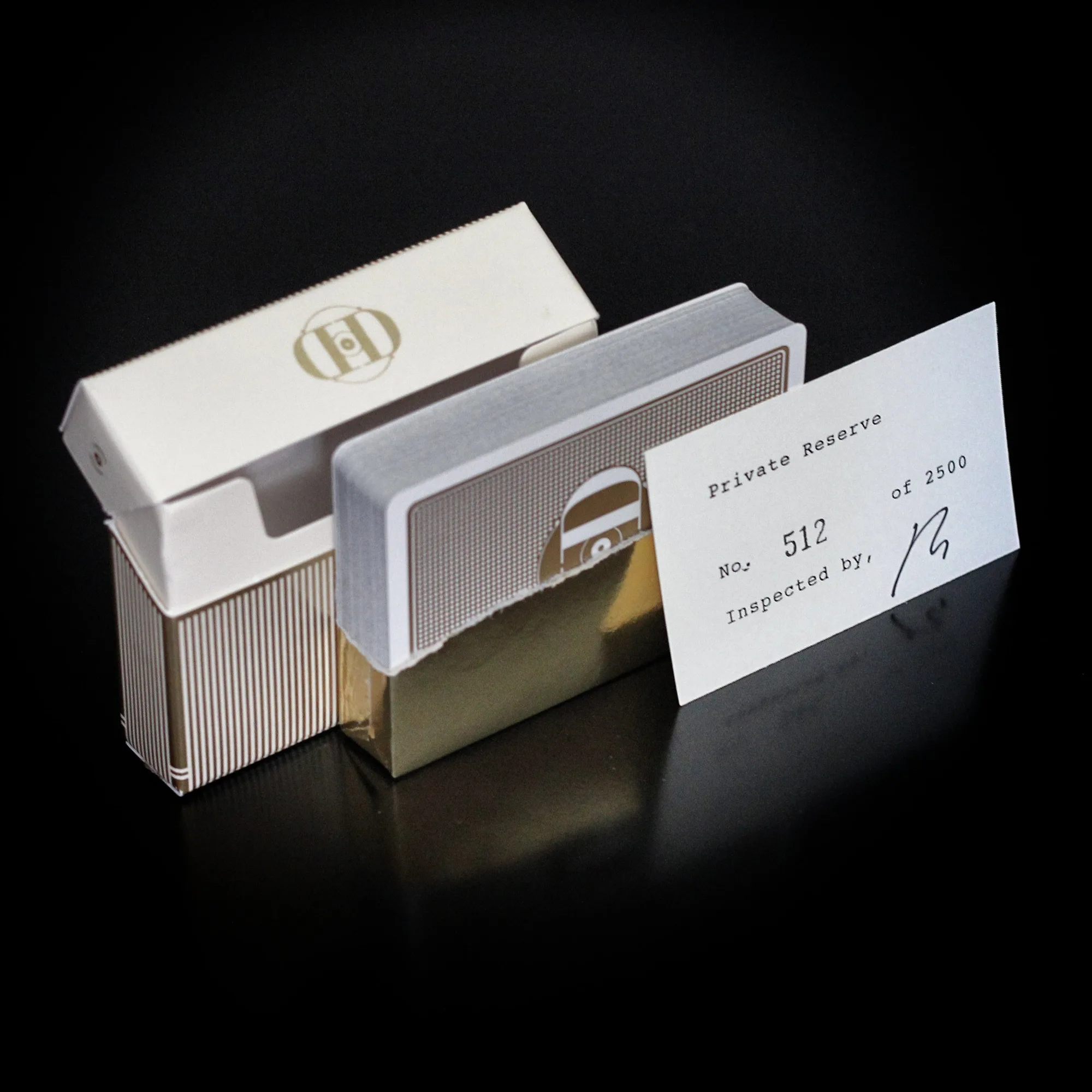
private reserve
- Smoke & Mirrors v9, Gold Edition: Back in print for the first time in nearly 10 years. To celebrate, we're offering an extremely small batch of Smoke & Mirrors, now in its ninth edition. Version 9 is a throwback to Version 4 released in 2010 and features a similar back design, minimal court cards, custom jokers, and an intricate ace of spades, just like the originals. Printed by the United States Playing Card Company on our proprietary... This deck demonstrates how a reprint can bring back a classic design with modern production. The proprietary stock and finish (as noted in the truncated description) are likely tuned for cardistry, given the Smoke & Mirrors heritage. The small batch means it may not be around long, so if you want a piece of cardistry history, consider it.
Who should buy which deck
Best for
- Cardists who want a snappy, durable deck for fans and springs
- Magicians who need a traditional cut for easy faro shuffles
- Collectors seeking limited editions with historical significance
Not for
- Casual players who only need a basic deck for family game night
- Beginners who are still learning to shuffle and may damage a premium deck