Quick answer
Start by sorting toys into activity zones, then match storage to each zone: a low bin or toy storage bench for daily play, a chest for dress-up and bulky items, and a designated surface for building or art. For a small playroom, use vertical storage and furniture that doubles as play space, like a swivel desk for kids room corners or a compact play kitchen against a wall. The goal is one clear home for every toy type.
Map the room before you buy a single bin
Walk the playroom and mark where your child actually plays, not where you wish they would. Most families end up with three or four activity zones: building and puzzles, pretend play, art and table work, and active or floor play. Measure the wall space in each zone and note door swings, heat vents, and outlets. A small playroom often has only two usable walls, so plan storage that goes up rather than out. If a zone has no wall space, it needs a mobile solution like a rolling bin or a toy storage bench that can tuck under a window.
Choose storage by toy type, not by color
Open bins work for blocks, cars, and large building pieces because kids can toss them in without a lid fight. Lidded chests suit dress-up clothes, stuffed animals, and anything you want out of sight. Clear or labeled bins help early readers and pre-readers find things independently. For toy chest organization, keep the heaviest items on the bottom and avoid deep chests for small pieces, since they become a jumble. A toy storage bench gives you seating plus hidden storage, which is useful in a reading corner or at the foot of a play table.
Set up a kids play kitchen that stays tidy
A play kitchen works best when it has a defined footprint and a nearby bin for play food and dishes. Place the kitchen against a wall with at least a small counter or shelf beside it, then add one shallow bin for utensils and one for play food. If the kitchen is in a shared room, use a low divider or the back of a shelf to separate it from quieter zones. Rotate play food weekly so the bin does not overflow. For small playroom storage, a kitchen with a built-in oven or cupboard reduces the number of loose items on the floor.
Make cleanup part of the play, not a separate chore
Kids are more likely to clean up when the storage is at their height and the categories are obvious. Label bins with a picture and a word, then practice a two-minute reset before transitions like snack or screen time. Keep one catch-all bin for mystery pieces and sort it monthly. If your child resists, reduce the number of toys available at once and store the rest out of reach. A playroom with fewer visible choices often stays neater and gets deeper play.
Seven steps to a playroom that stays organized
- 1. Sort everything into keep, rotate, and donate: Pull all toys into one pile and sort into three boxes. Keep what your child used in the last month, rotate the rest into a closet, and donate broken or outgrown items. Checkpoint: if you have not seen a toy used in two months, it belongs in rotation, not on the floor.
- 2. Define two to four activity zones: Assign each zone a purpose, such as building, pretend play, art, or reading. Mark the zones with painter's tape before you move furniture. Common mistake: creating more zones than the room can hold, which spreads toys out and makes cleanup harder.
- 3. Measure and choose the main storage piece: Pick a low shelf, toy storage bench, or chest that fits your largest zone. Measure the wall and the doorway, and leave at least two feet of walkway. Checkpoint: your child should be able to reach the bottom two shelves without help.
- 4. Assign one bin per toy category: Use open bins for blocks and cars, lidded bins for dress-up and stuffed animals, and a shallow tray for small figures. Label each bin with a picture and a word. Common mistake: mixing small pieces with large ones, which makes both harder to find and put away.
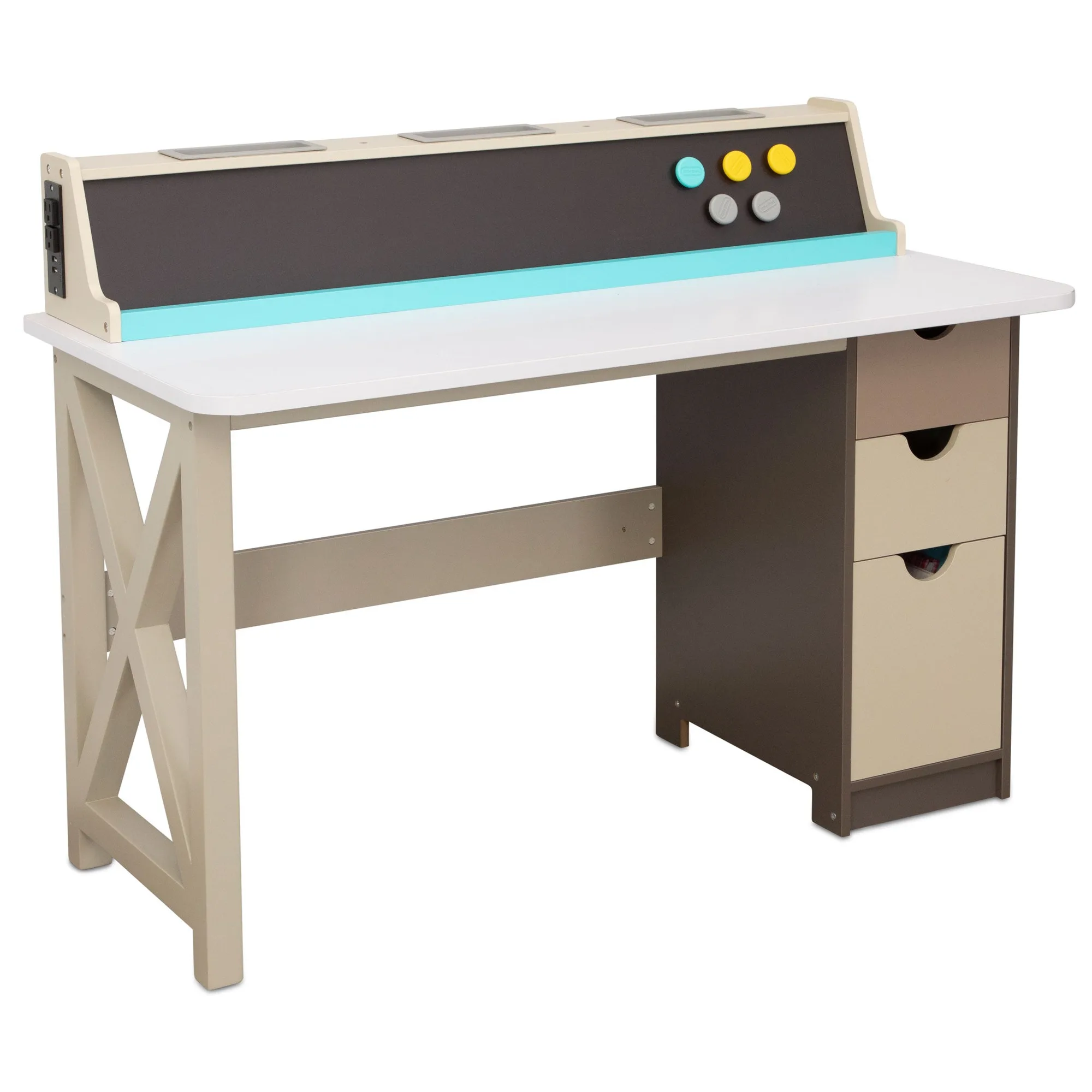
- 5. Place the play kitchen and desk against walls: Put the kids play kitchen on a wall near its food bin, and set a swivel desk for kids room use in the art or homework zone. Keep both out of the main traffic path. Checkpoint: you can walk from the door to the far wall without stepping over a toy.
- 6. Set up a two-minute reset routine: Before snack, dinner, or bedtime, set a timer and have everyone put toys back in their labeled bins. Do it with them the first week. Common mistake: expecting kids to clean up without practicing where things go.
- 7. Review and rotate monthly: Once a month, pull the rotation box from the closet and swap five to ten toys. Re-sort the catch-all bin and remove anything broken. Next step: if bins are overflowing, remove toys instead of adding another storage piece.
Products that support a playroom system
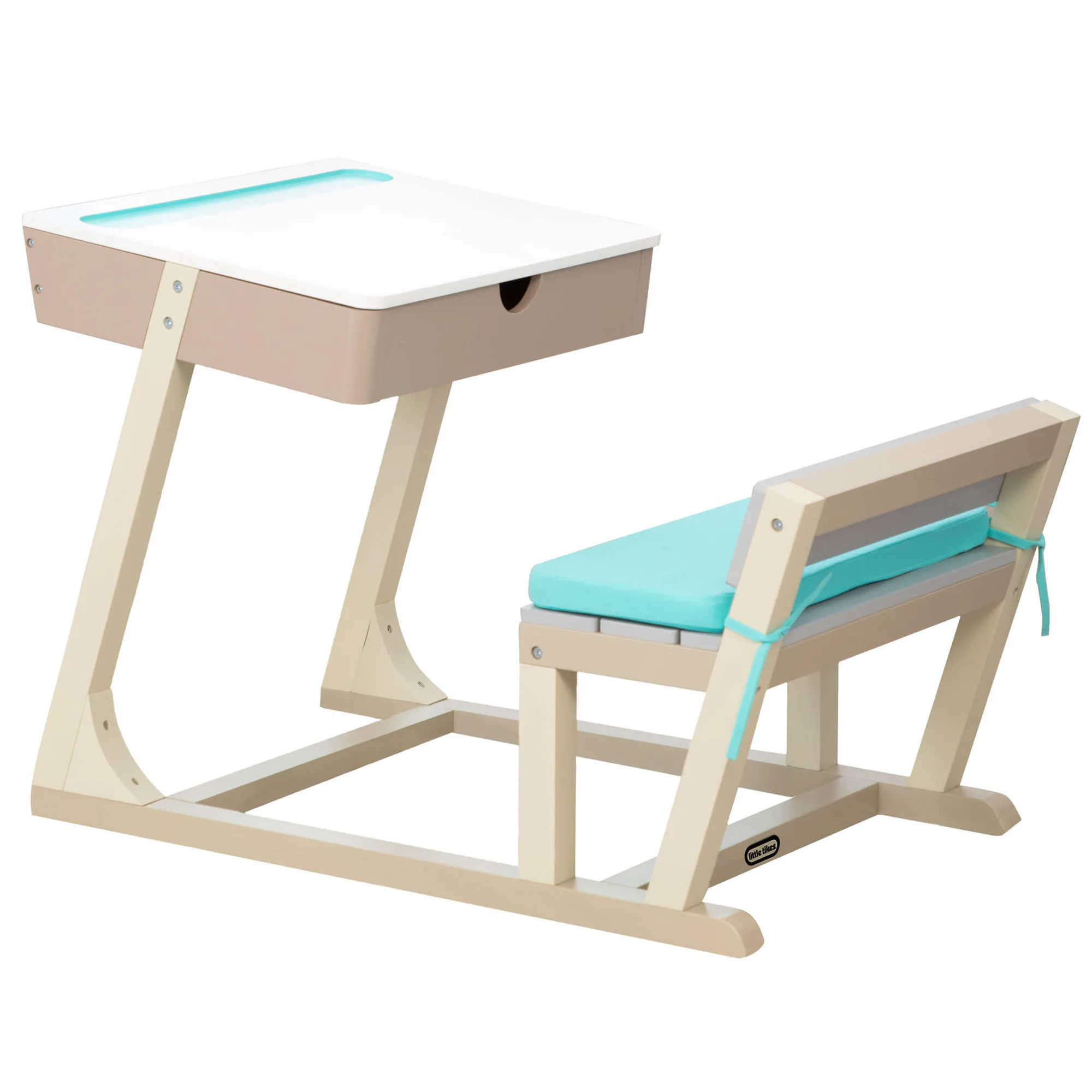
- 2-in-1 Fun & Study Swivel Desk: Little Tikes 2-in-1 Fun & Study Swivel Desk combines a plush fabric cushion with a rotating desk surface for kids ages 3-8. A swivel desk for kids room corners gives art and homework a dedicated surface, so paper and markers stop migrating to the floor.
- Sweet Spaces™ Mini Oven - Pink: Little Tikes Sweet Spaces Mini Oven in Pink has a modern-retro design, working features, and color-change cupcakes that bake under UV light. A compact play oven anchors a kids play kitchen setup without a full kitchen footprint, and the included cupcakes reduce loose accessory clutter.
- Creative Chefs™ Nachos Kit: Little Tikes Creative Chefs Nachos Kit includes hyper-detailed play ingredients for building loaded nachos. Small themed kits like this store neatly in one shallow bin, which makes toy chest organization easier and keeps pretend-play pieces together.