Quick answer
For most dog owners, the best dog poop bags are the ones you can actually open with one hand while holding a leash. Start with a no-tear, tissue-style roll like Diggs Poop Bags, then add a holder that clips to your leash so you never dig through pockets. If you already run an Evolv crate setup, the same walk gear logic applies: buy refills that fit your dispenser, and keep a spare roll in your walk bag. Choose gear that matches your daily route length and your dog's size, not the biggest kit on the shelf.
What belongs in a dog walking gear essentials kit
A workable everyday dog walking supplies kit has four jobs: contain waste, secure the leash, carry a spare roll, and handle weather or distance. You do not need every gadget. You need a bag that opens fast, a holder that stays put, and refills you can restock without thinking.
Distance changes the math. A ten-minute block walk needs one bag and a clipped holder. A 45-minute trail walk needs two bags, a treat pouch, and a way to carry a full bag without your hand. If you walk after dark, add a light or reflective clip to the leash, not to the bag itself.
How to judge a poop bag before you buy a pack
Thickness alone is not the best test. A thick bag that tears at the perforation wastes more bags than a thinner bag that dispenses cleanly. Look for how the roll separates: tissue-style dispensing means you pull one bag and it releases without ripping the next one. That matters most when your dog is mid-squat and you are holding a leash in the other hand.
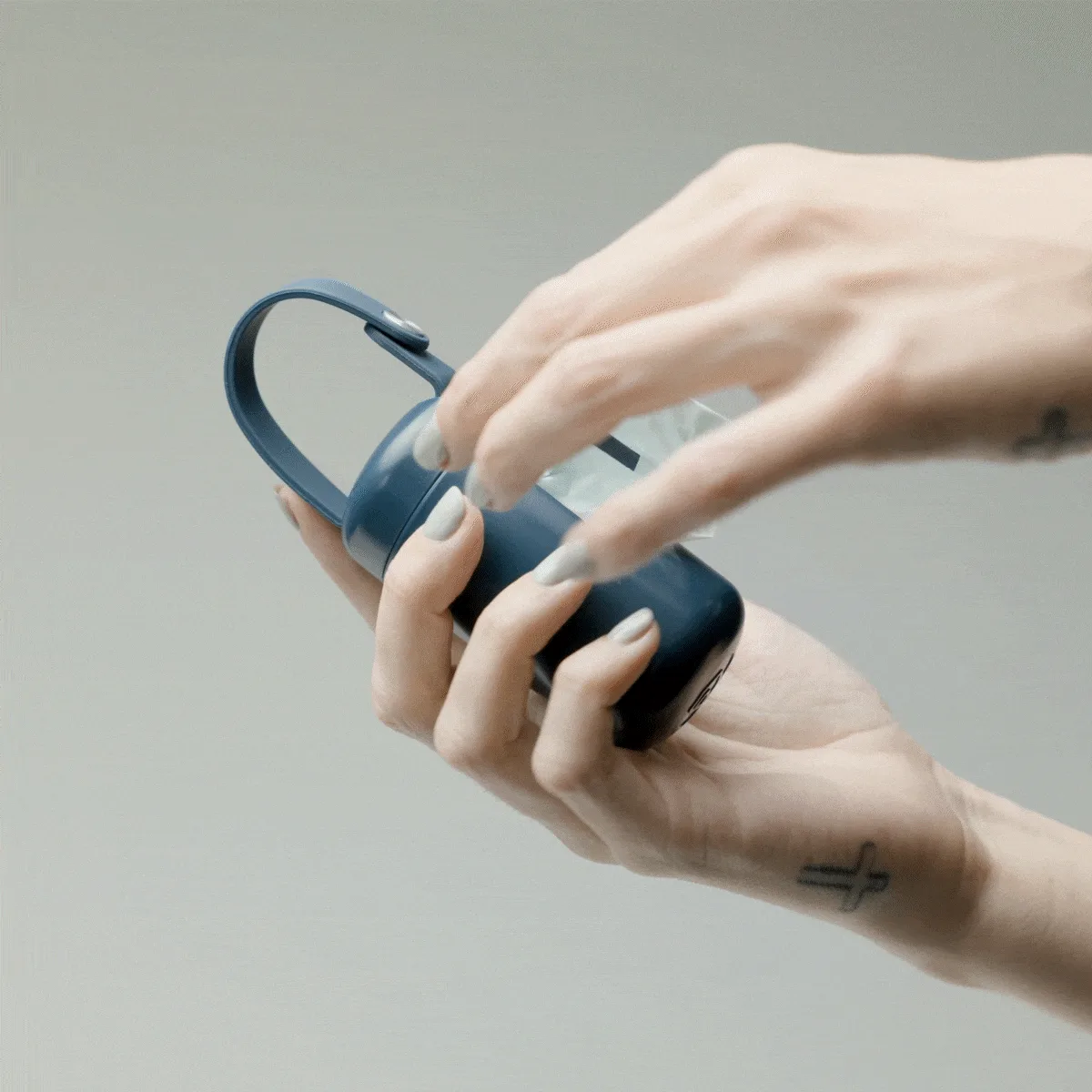
Opening the bag is the second test. A bag you can open with one hand saves you from putting your dog's leash under your foot. If a bag needs two hands and a dry day, it will fail in rain or cold. Check the roll core too: a cardboard core can be recycled when the roll is finished, which keeps the empty tube out of the trash.
Leash and poop bag holder: what actually stays on
The holder matters less than how it attaches. A clip that opens wide enough for a leash handle or a belt loop beats a holder that only fits one strap width. Test the clip with your actual leash, not the one in the product photo. If you use a hands-free belt, look for a holder that slides onto the belt rather than dangling.
Refill fit is the hidden cost. A holder that only takes a proprietary cartridge locks you into one refill shape. A holder that takes a standard roll lets you swap brands when you travel or when your local store is out. Before you commit, check whether the refill is sold as a single roll, a multi-pack, or a pack-size option, because that changes your cost per walk.
Refills, pack size, and cost per walk
Dog waste bag refills are a repeat purchase, so pack size is the real price lever. A larger pack lowers the cost per bag, but only if the bags stay usable. Store refills in a dry place; a roll that has been in a hot car for a month can stick to itself and tear on the first pull.
If you walk one dog twice a day, a single roll typically lasts a week or two depending on route length and how often your dog goes. Buy one pack to test the dispensing, then buy the larger pack size once you know the roll works with your holder. Do not stockpile a year of bags before you have tested one roll.
Where crate gear and walk gear overlap
Walk gear and crate gear share one principle: size and fit decide whether the product works. A crate divider that is too large for a puppy leaves too much space and undermines house training, just as a bag that is too small for a large dog's waste creates a mess. Match the tool to the dog in front of you, not the dog you expect in six months.
If you are already configuring an Evolv crate, keep spare parts and walk supplies in the same place. A divider that helps adjust interior space as your puppy grows is a fit decision; a poop bag roll is a daily-use decision. Both reward buying the correct size the first time.
Decision rules for buying walk gear
- If you walk one dog on short blocks: Buy a single no-tear roll and a clip-on holder that fits your leash handle. Skip the treat pouch and the multi-pack until you know the roll dispenses cleanly. Test one roll before you commit to a pack size.
- If you walk long routes or multiple dogs: Choose a larger pack size and carry two bags per walk. Add a holder that stays on a belt or hands-free leash so you are not juggling. Cost per walk drops with pack size, but only if the bags stay dry and usable.
- If you already run an Evolv crate: Match spare parts to your crate size before adding walk gear. A divider or add-on panel in the wrong size will not fit, and a pad cannot be used while the divider is installed. Fit first, then accessories.
- If you are buying for a puppy: Expect to change sizes. A divider that adjusts interior space as the puppy grows is more useful than a fixed setup, and walk gear should be light enough for a smaller dog. Buy for the dog you have now, with one size of room to grow.
Products that fit this walk gear setup
- Poop Bags: Tissue-style dispensing that pulls out one bag without ripping the next, and bags that can be opened with one hand. One-hand opening keeps your other hand on the leash, which is the difference between a clean pickup and a chase.
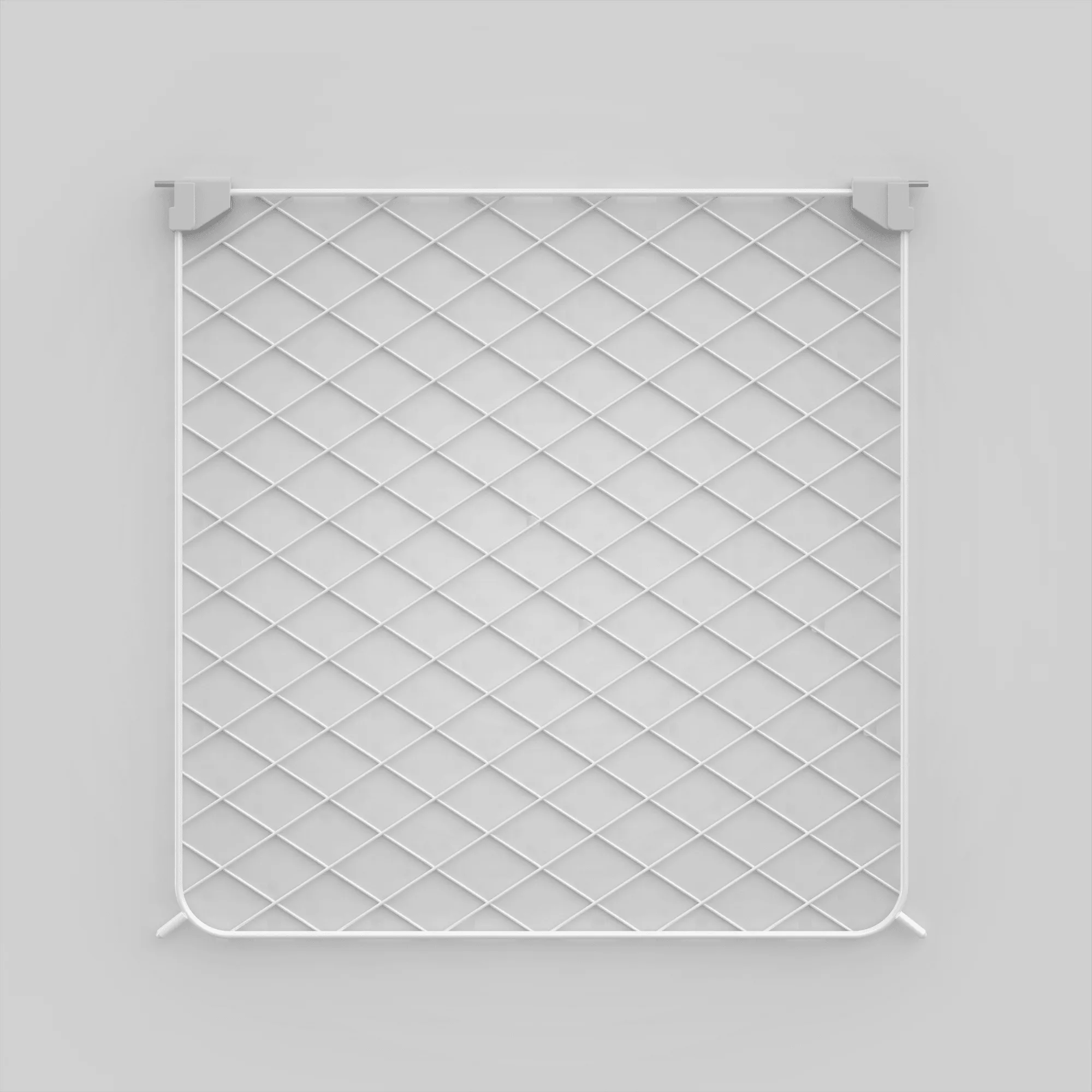
- Evolv Divider: The Diggs Evolv Divider is a spare part that fits Evolv crates and helps create a size-appropriate space, available in S, M, I, and L. If you are sizing a crate for a growing puppy, the divider is the fit tool; buy the size that matches your crate configuration rather than guessing.
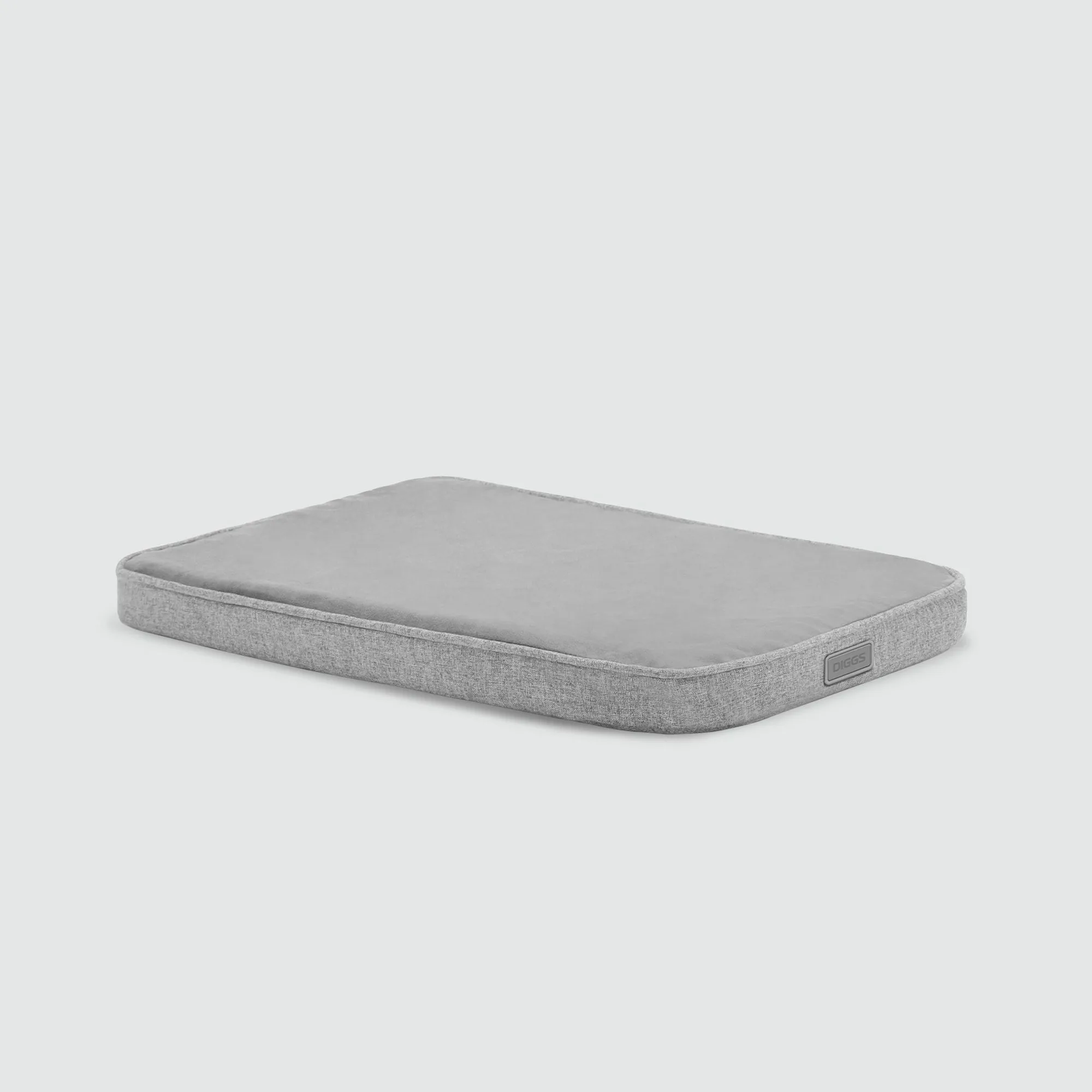
- Snooz Revol Pad: Snooz Revol Pad is an orthopedic crate pad with CertiPUR-US® memory foam and a washable outer layer, sized to match Revol. A washable outer layer matters for any dog that comes back from a muddy walk, and the pad cannot be used while the puppy divider is installed.
Who this walk gear approach fits
Best for
- Owners who walk one or two dogs daily and want a simple, reliable bag-and-holder setup
- People who have struggled with bags that tear at the roll or need two hands to open
- Evolv crate owners who want walk supplies and crate fit decisions to follow the same sizing logic
Not for
- Owners looking for a fully hands-free, long-distance hiking system with a dedicated pack
- Anyone who wants a compostable or specialty-material bag; this guide covers the no-tear dispensing approach, not material claims
- People who need a bag large enough for a giant-breed dog without checking the roll dimensions first