Quick answer
Choose a postcard when the message is short, the news is light, and you want the lowest-fuss mail option. Choose a folded greeting card when you need privacy, a longer note, or a keepsake. Use mini gift enclosure cards when the note rides along with a present and only needs a line or two.
Small formats solve a specific problem: you want to send a real note, but you do not have a full page of things to say. Postcards, mini gift enclosure cards, and standard greeting cards each handle that differently, and picking the wrong one is usually why a note feels awkward or arrives damaged.
This FAQ answers the questions that come up most often, including when to send a postcard, how enclosure cards differ from regular cards, and what to check before dropping anything in the mail.
What is the real difference between a postcard and a greeting card?
A postcard is a single stiff card with no envelope, so the message is visible to anyone who handles it. A greeting card is usually folded and arrives in an envelope, which keeps the note private and gives you more room to write. That privacy and space are the main reasons to pay for an envelope.
Postcards also tend to be cheaper to mail and easier to display, since there is nothing to open. Greeting cards cost more in postage and materials but carry more weight as a keepsake, especially when the artwork is worth keeping.
- Short, shareable news: postcard.
- Private or longer message: folded card in an envelope.
- Something the recipient will pin up or keep: either, but a postcard displays without unfolding.
When should I send a postcard instead of a card?
Send a postcard when the message is one or two sentences and there is nothing sensitive in it. Travel updates, a quick hello, a thank-you for a small favor, and a note that says you were thinking of someone all work well on a postcard.
Skip the postcard when you are writing condolences, an apology, or anything the recipient should read privately. Because the back of a postcard is exposed, treat it like a public message, not a sealed one.
- Good postcard moments: trips, quick thanks, thinking-of-you notes, invitations to something casual.
- Poor postcard moments: sympathy, apologies, money matters, or anything you would not say out loud in a group.
What are mini gift enclosure cards actually for?
Mini gift enclosure cards are the small cards that go with a present, a bouquet, a gift bag, or a package. They are not meant to carry a full letter. Their job is to identify who the gift is from and add one warm line, which is exactly why they are small.
They are also useful when you hand someone a gift in person and do not want to hand over a full-size card that will get lost in the wrapping. Keep a few on hand with gift bags and wrap so you are never writing on the back of a receipt.
- Write the recipient's name, one sentence, and your name.
- If you need more than three lines, move up to a standard card.
- Pair enclosure cards with gift bags and wrap so they are ready when you need them.
How do I mail a postcard so it arrives in good shape?
Use a pen that will not smudge, write the address clearly, and leave the bottom inch of the card free of writing. Postal equipment reads the bottom edge, and text there can cause delays or misreads. If the card is glossy, a permanent fine-tip pen holds better than a ballpoint.
For anything you care about, consider an envelope or a rigid mailer. Postcards are exposed to sorting machines, rain, and handling, so a card with sentimental value is safer inside something.
- Confirm the current postcard rate before buying a stack of stamps.
- Keep the address block clean and centered.
- For keepsake cards, mail them in an envelope even if they are postcard-style.
Can I send a greeting card without an envelope?
You can mail a folded card without an envelope, but you should not. The fold can catch in sorting equipment, the card can open and lose pages, and the message is no longer private. Envelopes exist to protect both the card and the note inside.
If you want the no-envelope convenience of a postcard but the privacy of a card, use a postcard inside an envelope. You get the smaller writing space and the protection, which is often the best of both.
- Folded cards: always use the envelope.
- Postcard-style cards: envelope optional, but recommended for keepsakes.
- Check that the envelope is the right size before you write the address.
How do I choose artwork that fits a small format?
Small formats reward simple, bold artwork because there is less surface area for detail to read. A single strong image or a short line of text works better on a postcard or enclosure card than a busy scene with tiny elements.
This is also where a themed set pays off. If you send notes for one occasion, such as Easter or Valentine's Day, buying a set keeps you stocked and gives you consistent artwork instead of mismatched cards.
- Look for one clear focal image rather than many small details.
- Buy in sets for occasions you send every year.
- Keep a small stash of blank cards for everything else.
Small-note quick reference
Postcard
One or two sentences, nothing private, no envelope needed. Best for travel updates and quick hellos.
Mini gift enclosure card
Name, one line, your name. It travels with a gift. Keep a few with your gift bags and wrap.
Folded greeting card
Longer note, private message, or a card worth keeping. Always mail it in its envelope.
Product facts worth knowing
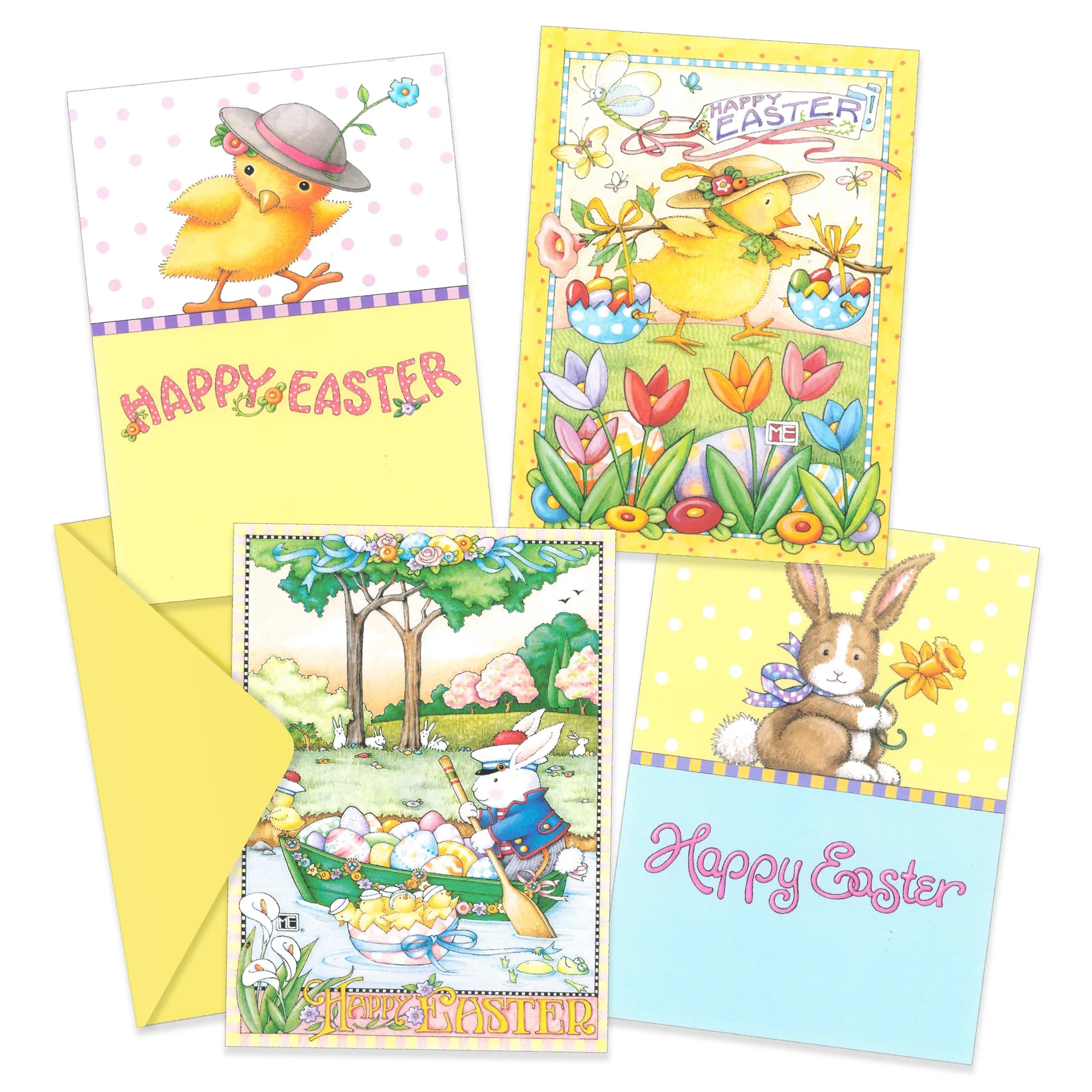
- The Easter Basket Greeting Card Bundle: Set of 8 cards, 2 of each design, 5 x 7 inches, with canary yellow envelopes, printed in the USA. A set this size covers several households without a second order, and the 5 x 7 size gives you room for a real note rather than a single line.
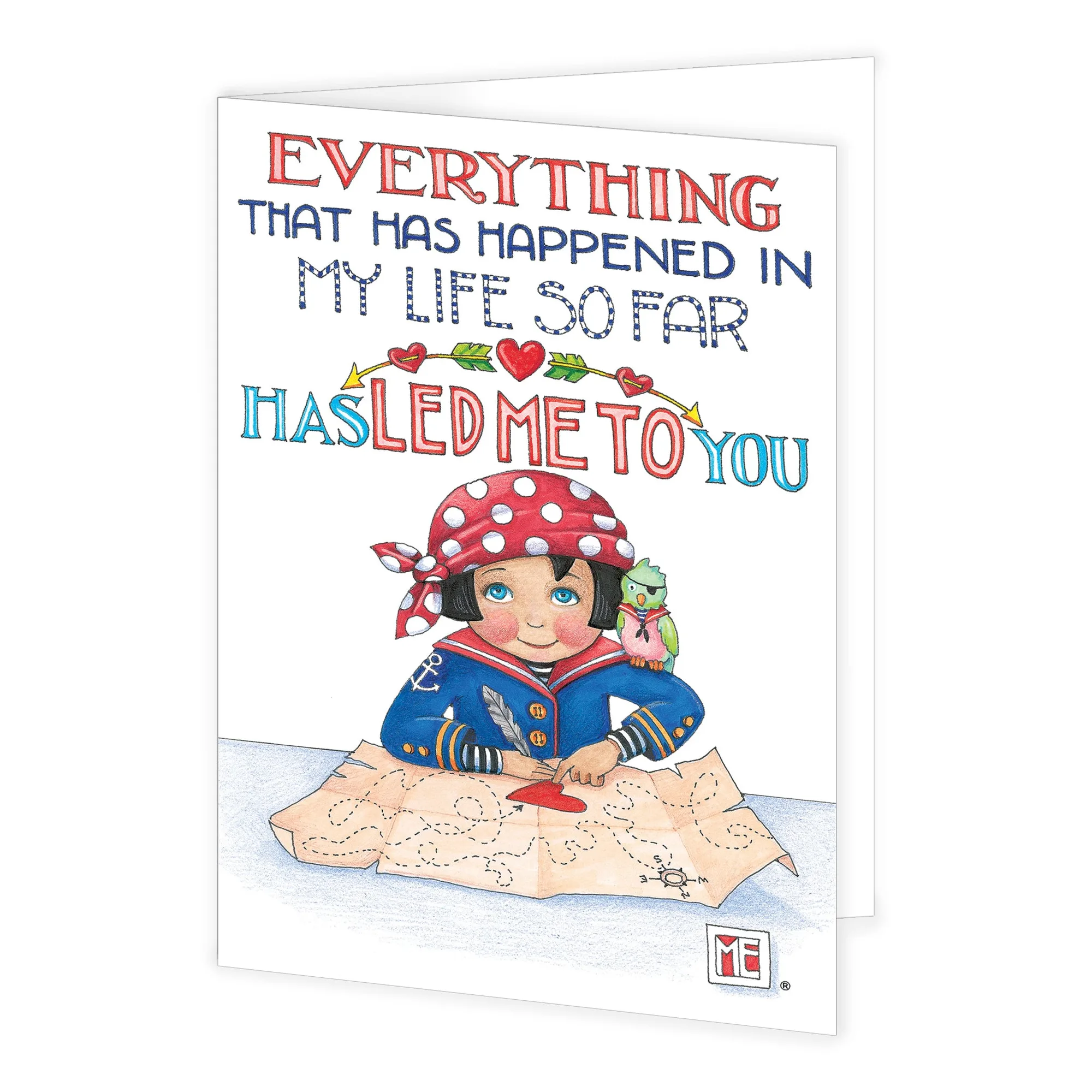
- Everything Led Me To You Greeting Card: Front reads 'Everything that has happened in my life so far has led me to you,' inside is blank, 5 x 7 inches, envelope included, printed on thick cardstock. The blank inside means you control the message, which makes it work for an anniversary, a long-distance note, or a just-because card.
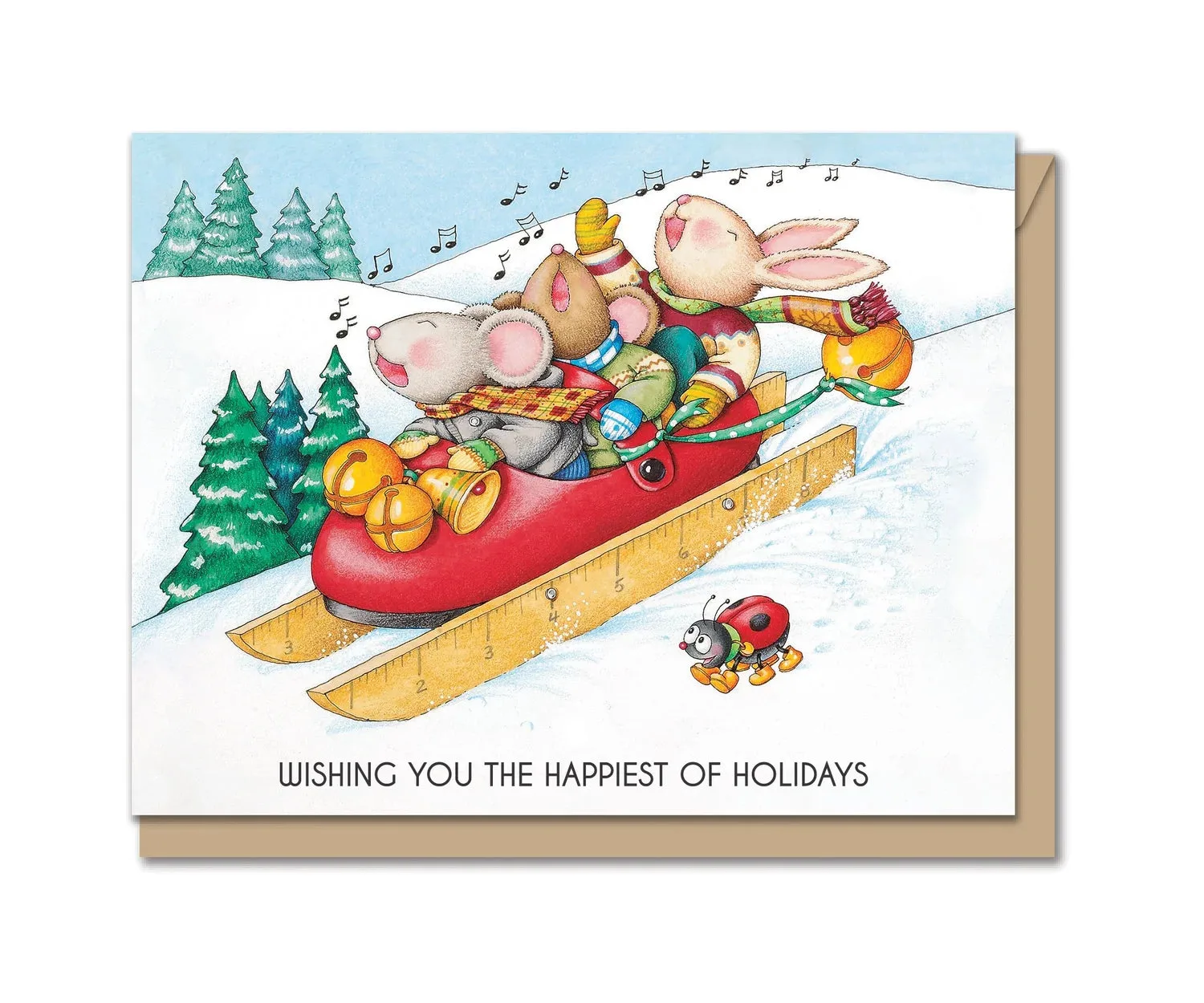
- Dashing Through the Snow Greeting Card: Front reads 'Wishing You the Happiest of Holidays,' inside is blank, 4.25 x 5.5 inches, 100% recycled envelope with a gummed flap. The smaller 4.25 x 5.5 size is closer to enclosure-card scale, so it fits a gift bag or a small package without dominating it.
Match the format to the message: postcard for short and shareable, enclosure card for gifts, folded card for anything longer or private. Get that right and the note feels intentional instead of improvised.