Quick answer
The Bravus II 12D is a self-powered subwoofer: its 650W Class D amplifier is built in, so you do not need an external power amplifier. Connect it to your receiver or processor with a single LFE or line-level RCA cable, set the sub's gain to about 10 o'clock, and start with the crossover at or near its highest setting if your receiver is handling bass management.
Does the Bravus II 12D need an external amplifier?
No. The Bravus II 12D is a powered subwoofer, meaning its 650W Class D amplifier is already mounted inside the cabinet. Your AV receiver or processor only needs to send it a low-level signal, not speaker-level power. That is why the back panel has line-level and LFE inputs rather than binding posts for an external amp. If you already own a separate two-channel amplifier such as the Aperion Energy E2, use it for your main speakers, not for the subwoofer.
LFE vs line level: which input should you use?
Use the LFE input when your receiver has a dedicated subwoofer output. That path bypasses the sub's own crossover in most designs and lets the receiver's bass management do the work. Use the line-level inputs when you are connecting a stereo preamp, an integrated amp without a sub out, or a receiver where you want the sub's internal crossover to handle the blend. If you use line level, you will set the crossover on the sub itself; if you use LFE, leave the sub's crossover as high as it will go or defeat it if the option exists.
How should you set gain and crossover?
Start with the subwoofer gain around 10 o'clock, then run your receiver's calibration routine or play familiar bass-heavy material and adjust from the listening seat. The goal is for the sub to disappear into the main speakers, not to call attention to itself. For crossover, a common starting point is 80 Hz when using small bookshelf or on-wall speakers, and 60 Hz or lower when your mains have real low-frequency output. If you are using the LFE input, set the receiver's crossover and leave the sub's own crossover wide open.
Where should the Bravus II 12D go in the room?
Corner loading gives you the most output but can make bass uneven; a front-wall position a quarter of the way in from a side wall is often a better starting point. Because the Bravus II 12D uses a dual 12-inch passive driver design with a single 12-inch active driver and 650 watts of digital power, it moves a lot of air. Give it a few inches of clearance from walls and avoid stuffing it into a closed cabinet. If you have two seating rows or a very large room, the dual-sub option on the Bravus II 12D is worth considering for smoother coverage.
Bravus II 12D setup FAQ
Do I need a separate amp for the Bravus II 12D?
No. The 650W Class D amplifier is built into the subwoofer, so an external amp like the Aperion Energy E2 is not required and should be used for your main channels instead. Connect the sub with a single RCA cable and let its internal amp do the work.
LFE or line level for movies?
For home theater, use the LFE input and let your receiver's bass management set the crossover. Use line level only when your source lacks a dedicated subwoofer output. LFE for receivers, line level for stereo preamps.
What gain and crossover settings should I start with?
Set gain near 10 o'clock, run calibration, then fine-tune from the listening seat. Start crossover at 80 Hz with small speakers and lower if your mains reach deep. Adjust by ear after calibration, not before.
Where does the Bravus II 12D sound best?
Begin along the front wall, about a quarter of the way in from a side wall, with a few inches of clearance. Corner placement adds output but can sound boomy. Move it a foot at a time and listen before committing.
Bravus II 12D facts that affect setup
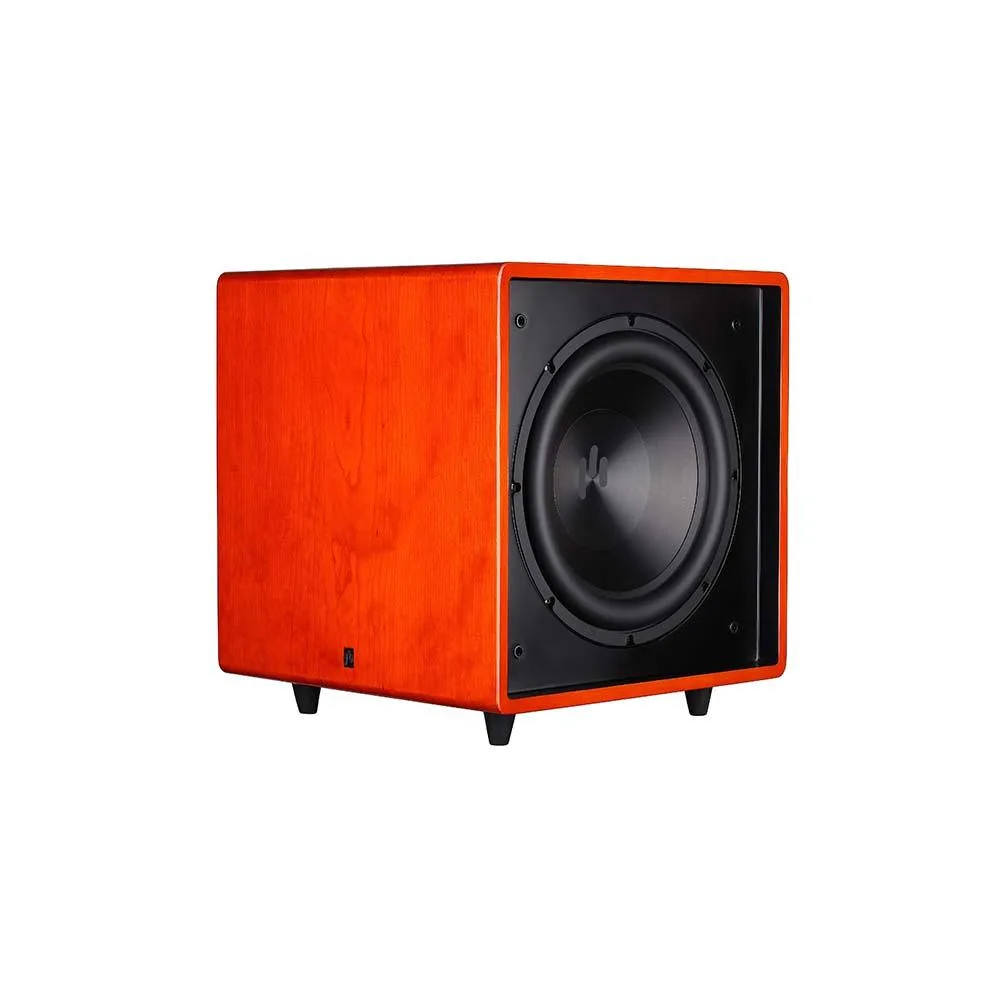
- Bravus II 12D 650W 12" Powered Subwoofer: The Bravus II 12D pairs two 12-inch passive drivers with a single 12-inch active driver and 650 watts of Class D power. That driver-and-power combination is why the sub can pressurize a large room without an external amplifier, so your receiver only needs to supply a line-level signal.
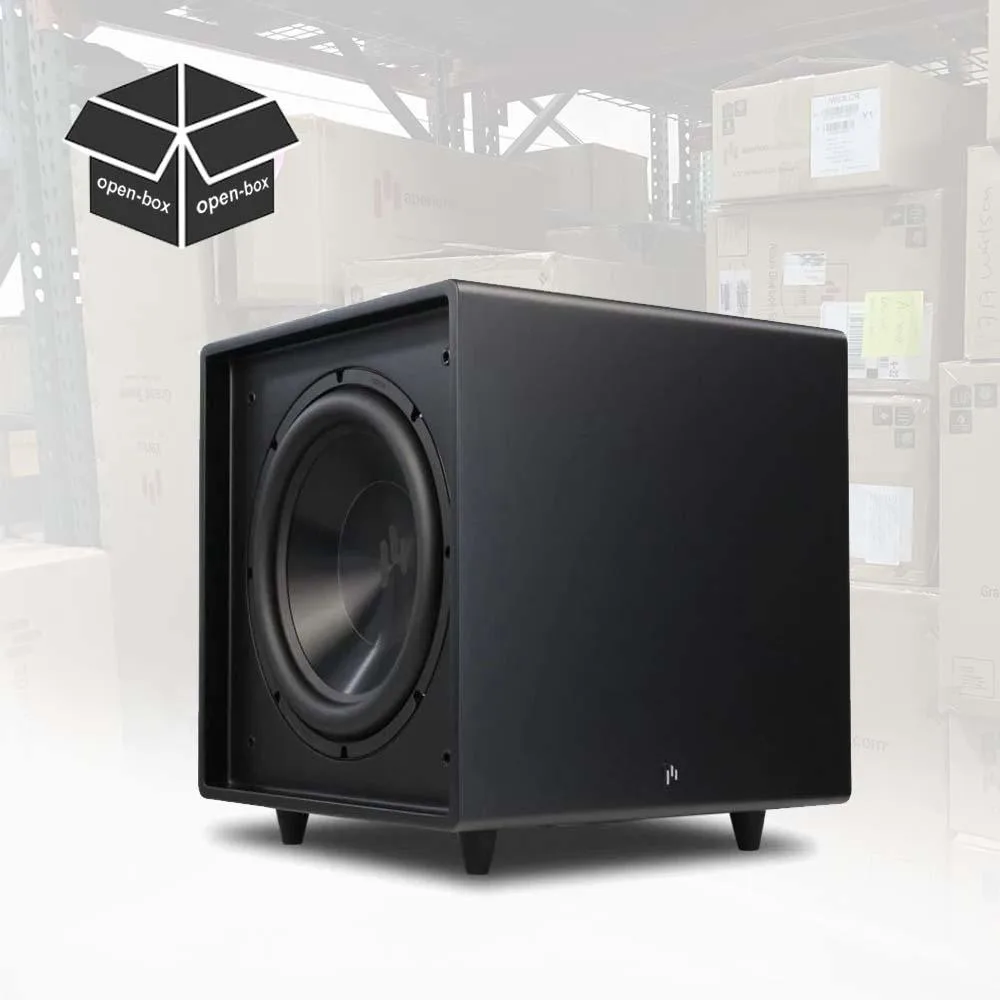
- Bravus II 12D 650W Class D Powered Subwoofer Single (Open Box): The Bravus II 12D is available as a single sub or a dual-sub option, and in multiple finishes. If your room has two rows of seats or a stubborn null at the main listening position, the dual-sub option lets you smooth response instead of just adding more output.