Quick answer
For young learners ages 4–7, the Primary Calculator is a reliable, eco-friendly choice that combines solar and battery power with an auto shut-off feature—ideal for classroom use without distractions.
Why a dedicated kids calculator matters
Standard calculators often overwhelm young children with extra functions and small buttons. A preschool math tool like the Primary Calculator simplifies number exploration, helping kids focus on counting, addition, and subtraction without confusion.
Trade-offs to consider
The Primary Calculator is designed for basic arithmetic—it won't handle fractions or advanced operations. If your curriculum requires scientific functions, you'll need a different model. Also, while the solar panel extends battery life, it needs adequate light to charge; in dim classrooms, keep the included backup batteries handy.
How to choose the right kids calculator
- Age range: Choose the Primary Calculator for children ages 4–7 who are learning number recognition, counting, and simple operations. For older students needing fractions or negatives, look for a basic scientific model.
- Power source: Prefer dual-power (solar + battery) for classroom use. It reduces battery waste and ensures the calculator works even when the solar panel isn't fully charged. Check classroom lighting before relying solely on solar.
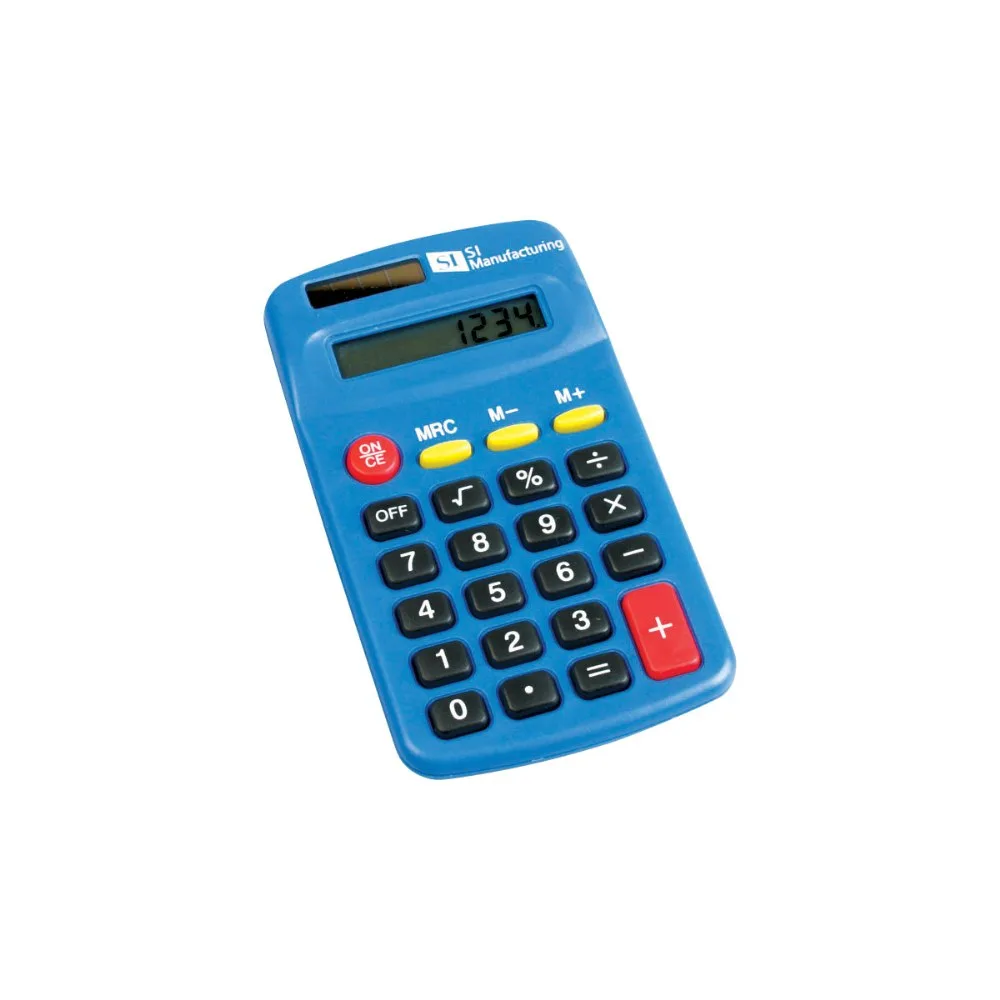
- Durability and size: The Primary Calculator's handheld size fits small hands. Look for a sturdy casing and large buttons—avoid models with tiny keys that frustrate young fingers.
- Auto shut-off: Auto shut-off saves battery life and prevents distraction. This feature is essential for young children who may forget to turn off their calculator. Confirm the shut-off time is short enough to conserve power but long enough for a typical problem set.
Product facts
-
Primary Calculator: Eco-calculator with dual power, both solar and battery. Energy saving auto shut-off functionality. Ideal handheld size. Batteries included. No need to hunt for batteries mid-lesson—the solar panel handles most tasks, and auto shut-off prevents dead batteries if a child leaves it on.
Primary Calculator
Who should buy this
Best for
- Preschool and kindergarten classrooms introducing basic math concepts
- Teachers who want a low-maintenance, eco-friendly calculator for group work
Not for
- Upper elementary students studying fractions, decimals, or scientific notation
- Classrooms with very dim lighting where solar charging may be unreliable