Quick Answer
https://procapslabspou.com/products/301654-453538https://procapslabspou.com/products/301606-453539https://procapslabspou.com/products/301367-453540https://procapslabspou.com/products/302253-453541ProCaps Laboratories supplements are over-the-counter (OTC) products designed to support general wellness, while prescription supplements are medically supervised and used for diagnosed deficiencies or conditions. The main trade-off is that OTC options like ProCaps are more accessible and affordable, but prescription supplements offer higher potency and clinical oversight. Your choice depends on your specific health needs and whether you require medical guidance.
Regulation and Quality Control
Prescription supplements are regulated by the FDA as drugs, meaning they must undergo rigorous testing for safety and efficacy before reaching the market. OTC supplements like ProCaps Laboratories are regulated as dietary supplements under the FDA's current Good Manufacturing Practices (cGMPs), which set quality standards but do not require pre-market approval. This means ProCaps Laboratories can innovate faster and offer a wider variety of formulations, but you rely on the brand's own quality assurance rather than government testing.
ProCaps Laboratories emphasizes quality through its own manufacturing standards, using ingredients like calcium ascorbate and palmitate for vitamin C, and sourcing fish oil from anchovy, mackerel, menhaden, sardine, and tuna for its Essential Omega-3. These choices reflect a commitment to ingredient transparency, but they are not subject to the same clinical trials as prescription drugs.
Potency and Dosage
Prescription supplements often contain higher doses of active ingredients, sometimes several times the amount found in OTC products. This is because they are intended to correct specific deficiencies under medical supervision. For example, a prescription vitamin D supplement might provide 50,000 IU per dose, while a typical OTC supplement like ProCaps Laboratories' Women's Wellness Multi provides 1,000 IU of vitamin D3 per packet. The lower dose in OTC products reduces the risk of toxicity but may not be sufficient for therapeutic needs.
ProCaps Laboratories' Essential Omega-3 provides over 800 mg of total omega-3 fatty acids per serving, including 400 mg DHA and 280 mg EPA. This is a moderate dose suitable for general brain, eye, and heart health support. A prescription omega-3 product might contain a higher concentration of EPA or DHA for managing specific conditions like high triglycerides. The trade-off is that OTC doses are generally safe for long-term use without monitoring, while prescription doses require periodic blood tests.
Cost and Accessibility
OTC supplements are typically more affordable and do not require a doctor's visit or prescription. ProCaps Laboratories products, for example, are priced competitively: Phosphatidyl Serine is $14.13 (compared to $19.90), Essential Omega-3 is $19.73 (compared to $29.90), and Women's Wellness Multi is $16.49 (compared to $22.90). You can purchase them directly without insurance or co-pays.
Prescription supplements often involve higher out-of-pocket costs, even with insurance, due to co-pays and deductibles. However, they may be partially or fully covered by insurance if prescribed for a diagnosed condition. The accessibility trade-off is that OTC products are available immediately, while prescription products require a healthcare provider's approval and a pharmacy visit.
Medical Oversight vs. Self-Direction
Prescription supplements come with built-in medical oversight: your doctor determines the appropriate dosage, monitors your response, and adjusts treatment as needed. This is crucial for conditions like severe vitamin deficiencies, where incorrect dosing can be harmful. OTC supplements like ProCabs Laboratories allow you to self-direct your wellness routine, choosing products based on your own research or general recommendations.
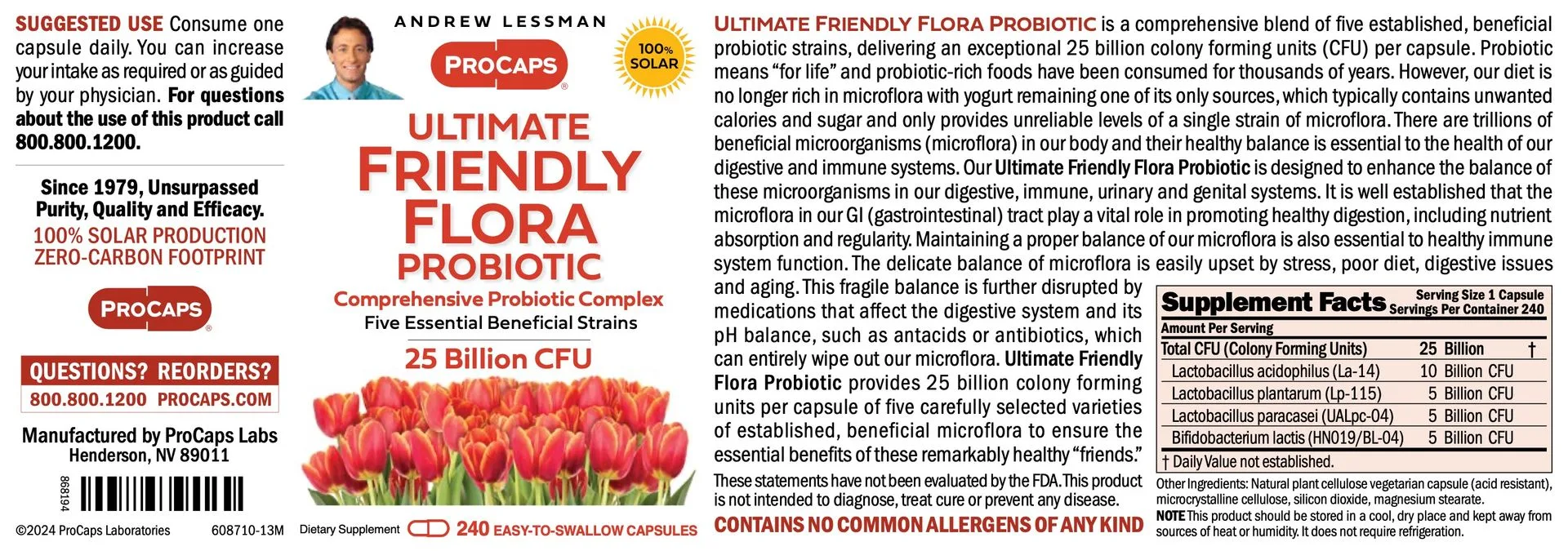
For example, ProCaps Laboratories' Friendly Flora Probiotic provides 10 billion CFU from four bacterial strains to support digestive and immune health. While this is a well-chosen blend, you are responsible for deciding whether it fits your needs. Without medical guidance, you might miss interactions with medications or underlying conditions. The trade-off is autonomy versus safety net.
Trade-Offs at a Glance
- Regulation: Prescription supplements are FDA-approved as drugs; OTC supplements like ProCaps Laboratories follow cGMPs but lack pre-market approval. Choose prescription if you need guaranteed clinical efficacy; choose OTC for faster access and variety.
- Potency: Prescription supplements often have higher doses for therapeutic use; OTC doses are lower and safer for long-term self-administration. Prescription is better for diagnosed deficiencies; OTC is sufficient for general maintenance.
- Cost: OTC supplements are generally cheaper and do not require insurance; prescription supplements may be covered but often have higher upfront costs. OTC is more budget-friendly; prescription may be cost-effective with insurance for specific conditions.
- Medical Oversight: Prescription supplements include doctor monitoring; OTC supplements rely on your own research and judgment. Prescription offers safety through supervision; OTC gives you control over your routine.
Key Product Facts
- ProCaps Laboratories: PS 200 Phosphatidyl Serine provides a concentrated source of Phosphatidyl Serine to help support mental clarity, memory, and cognitive function. This is a targeted cognitive support supplement that can be taken without a prescription, making it accessible for anyone looking to maintain brain health. A prescription alternative might be used for diagnosed cognitive decline, but this OTC option is suitable for general use.
- ProCaps Laboratories: Essential Omega-3 provides over 800 mg of total omega-3 fatty acids per serving, including 400 mg DHA and 280 mg EPA, to support brain, eye, heart structure and function. This moderate dose supports general health without requiring medical monitoring. Prescription omega-3s often have higher EPA/DHA concentrations for specific conditions, but this OTC option is a practical choice for daily wellness.
Which Is Right for You?
Best for
- People looking for affordable, accessible general wellness support without a doctor visit
- Those who prefer to self-manage their supplement routine with quality OTC products
Not for
- Individuals with diagnosed medical conditions requiring high-potency, medically supervised treatment
- Anyone who needs insurance coverage for supplement costs