Quick answer
Puppets tend to build language faster because they invite two-way dialogue: your child makes the puppet 'talk' and waits for a reply. Stuffed animals are better for comfort, cuddling, and open-ended pretend play, but they rarely demand a verbal response. For speech and language growth, choose puppets first; add stuffed animals for emotional security and quiet play.
Why puppets pull more words out of kids
A puppet is a conversation partner. When a child puts a puppet on their hand, they naturally give it a voice, which means they practice turn-taking, question-asking, and answering. That back-and-forth is the engine of language development.
Stuffed animals are usually silent companions. A child might narrate what the bear is doing, but the bear doesn't 'respond.' That's fine for storytelling, yet it doesn't create the same pressure to speak and listen.
- Puppet play benefits: role-play, silly voices, and direct questions ('What's your name?')
- Stuffed animal play: soothing, hugging, and solo imaginative scenes
- Both support pretend play, but only puppets naturally demand a reply
What the research and speech therapists say
Speech-language pathologists often use puppets in therapy because they lower anxiety and make kids forget they're 'practicing.' A puppet can model sounds, ask for a turn, or pretend not to understand, prompting the child to explain again.
Stuffed animals can also be part of therapy, but usually as a comfort object or a prop the child talks about, not to. The key difference is the expectation of a response.
How to use each for language growth
With puppets, keep the conversation going. Ask your child to introduce the puppet, order food for it, or tell it a story. With stuffed animals, you can narrate your child's actions or ask them to describe what the animal is feeling. Both work, but puppets do more of the heavy lifting for speech.
- Puppet prompt: 'Your puppet looks sad. Ask him why.'
- Stuffed animal prompt: 'What did Bunny do at the park today?'
- Rotate toys to keep novelty high and language fresh
When a stuffed animal is the better choice
If your child is shy, tired, or needs comfort, a stuffed animal is the kinder option. Forced puppet play can feel like a test. Stuffed animals also work well for quiet, independent play that lets a child rehearse language privately before speaking aloud.
Trade-offs: puppets vs stuffed animals
- Language demand: Puppets require a response; stuffed animals do not. Choose puppets when your goal is more talking.
- Comfort factor: Stuffed animals are soft, huggable, and soothing; puppets are usually less cuddly. Keep a stuffed animal for bedtime or big feelings.
- Ease of use: Stuffed animals need no setup; puppets may require a hand and a bit of silliness from you. Start with short puppet sessions and build up.
Play sets that support both kinds of play
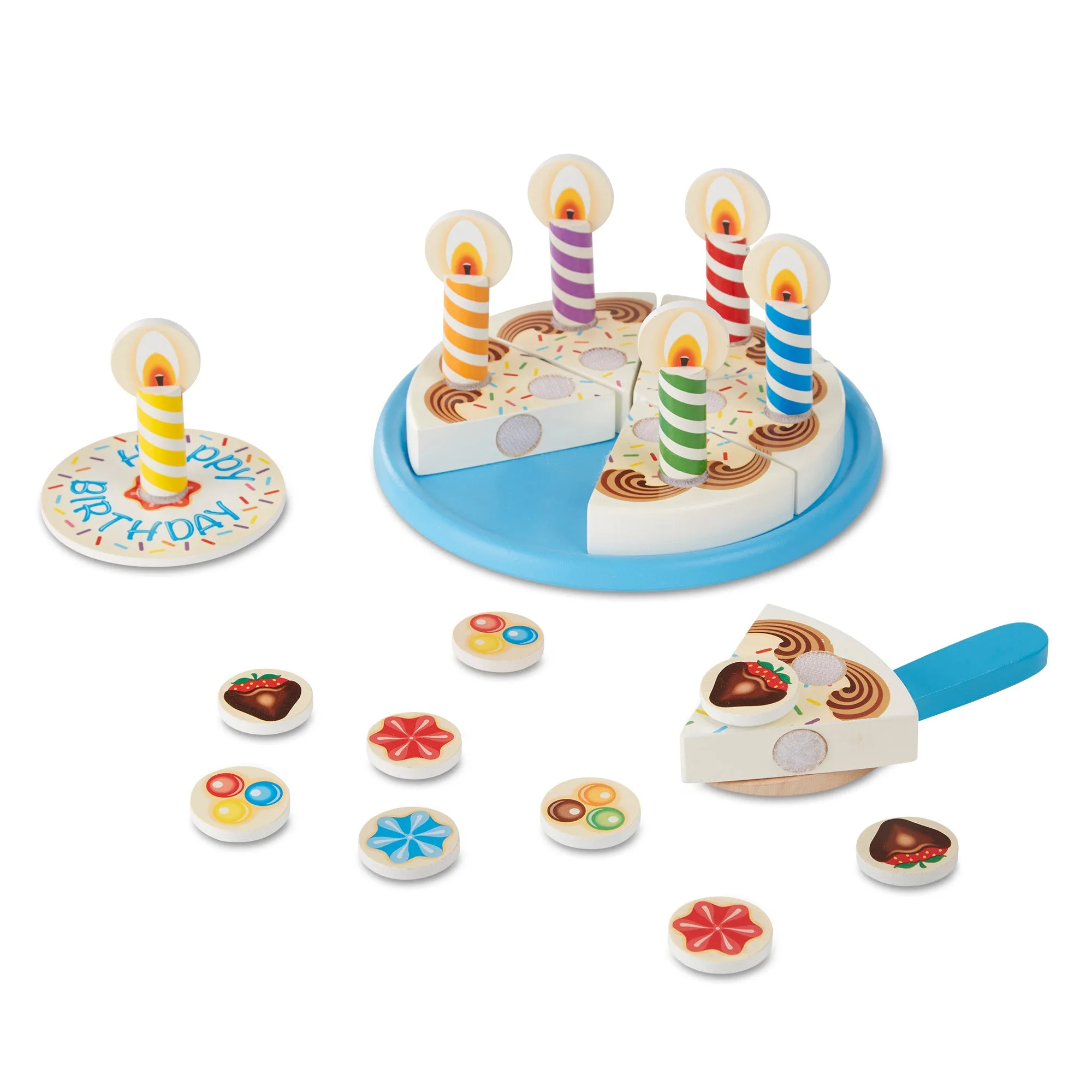
- Wooden Birthday Cake Play Set: The Wooden Birthday Cake Play Set includes six ready-to-cut slices, removable candles and toppings, and a cake plate and server. The serving knife makes a slicing sound, and all 34 pieces store in a wooden box. This set gives puppets and stuffed animals a shared activity—hosting a birthday party—so kids practice vocabulary like 'slice,' 'candle,' and 'share' while playing.
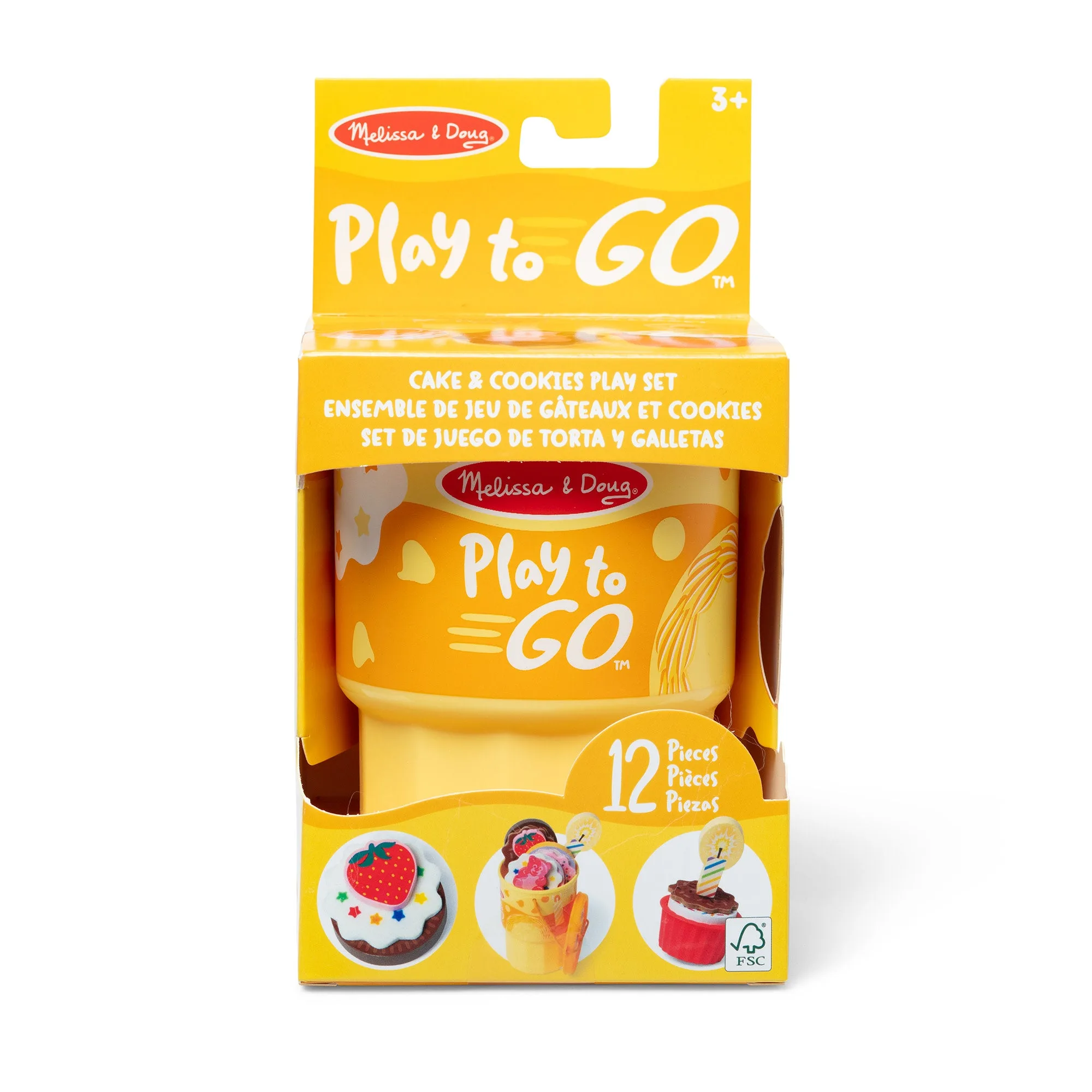
- Play to Go Cake & Cookies Play Set: The Play to Go Cake & Cookies Play Set is a 12-piece portable bakery that stores inside a travel-friendly cup. Its small size makes it easy to bring along for on-the-go pretend play, which means more chances for language practice outside the house.
Which should you choose?
Best for
- Toddlers working on turn-taking and answering questions
- Families who want a playful way to practice speech sounds
- Kids who enjoy silly voices and role-play
Not for
- Children who need a comfort object for sleep or separation anxiety
- Quiet, solo play where no verbal response is expected
- Kids who feel pressured by direct interaction