Hay first, pellets second
If you are searching for a rabbit food pellets portion size, the most useful starting point is not a number on a scoop. It is the order of the bowl. Small Pet Select describes hay as the most important part of your rabbit's diet, with pellets as a supplement when you want to provide a little extra nutrition. That framing does the heavy lifting: build the day around hay and fresh water, then decide how much pellet to add on top.
That also answers the pellet-to-hay ratio question in practical terms. The supplied product information does not give a specific ratio or a gram-per-kilogram feeding formula, so treat any exact number you see elsewhere with caution and confirm it with your veterinarian for your individual animal. What the record does support is the direction of the relationship: hay is #1, pellets are the supplement.
What the Timothy pellets actually are
-
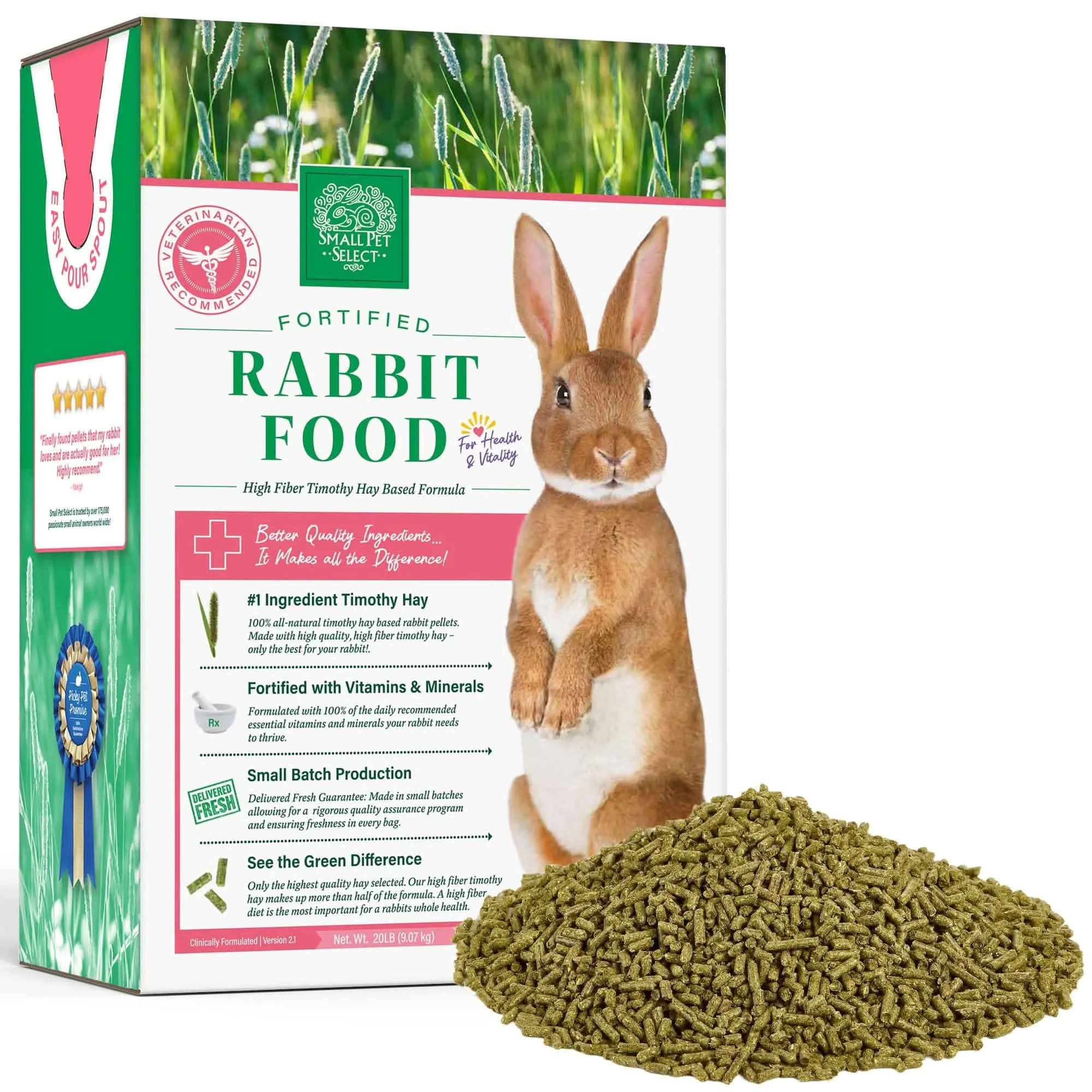
Rabbit Food Pellets: Small Pet Select rabbit food pellets are Timothy-based and fortified with essential vitamins and minerals. A fortified Timothy pellet is designed to sit alongside hay, not replace it, so your portion decision starts from a hay-based diet.
Rabbit Food Pellets
-
Rabbit Food Pellets: The pellets are made in small batches using hand-selected Timothy hay chosen from the fields. Knowing the base ingredient helps you describe the diet accurately when you talk to your vet about portions.
-
Rabbit Food Pellets: The pellets contain no nuts, but they are manufactured in a facility that processes nuts. This is the key allergen detail to check before you set any feeding plan, especially in a multi-pet household.
Set a starting portion in four steps
- 1. Put hay and water in place first: Small Pet Select recommends feeding these pellets with Timothy hay, fresh water, and moderate amounts of fresh veggies. Get that base right before you measure pellets.
- 2. Pick a bag size that matches your routine: The pellets come in 5lb, 10lb, 20lb, and 40lb sizes. A single rabbit and a multi-rabbit household should not be buying the same bag; match the size to how fast you will actually use it.
- 3. Measure rather than free-feed: Because the supplied information gives no daily gram target, the honest approach is to start with a measured amount, serve it consistently, and treat that measurement as the variable you adjust, not the hay.
- 4. Adjust with your vet, using body weight and body condition: Weight, age, activity, and whether your rabbit is growing or maintaining all change the right amount. Your veterinarian can turn those factors into a number for your rabbit.
Why the bag size matters more than you think
Portion planning and bag choice are the same decision viewed from two ends. If you feed a small measured amount each day, a 40lb bag may sit around far longer than you expect, while a 5lb bag keeps the supply fresher and easier to store. If you have several rabbits, the larger sizes make more sense because the bag empties on a realistic schedule.
The catalog also lists a comparison price of USD 19.99 against a current price of USD 13.99. That is a reason to check the size you are actually choosing rather than assuming the biggest bag is the best value for your household.
Rabbits vs guinea pigs: what changes
- Rabbits: The supplied record is written for rabbits: Timothy-based pellets fed alongside hay, fresh water, and moderate fresh veggies. Use the rabbit guidance as your anchor.
- Guinea pigs: The supplied product information does not confirm this pellet as a guinea pig food or state a guinea pig portion. Do not assume the rabbit amount transfers; ask your vet about guinea pig pellets and portions specifically.
- Young or growing rabbits: The record does not give growth-stage portions. Growth feeding needs veterinary input rather than a guess extrapolated from an adult routine.
Checkpoints before you change the amount
- Hay is still the majority of the diet: If pellets are crowding out hay, the portion is working against the diet the record describes.
- Fresh water is always available: The record pairs pellets with fresh water, always.
- Fresh veggies stay moderate: The recommended feeding approach includes moderate amounts of fresh veggies, not unlimited ones.
- You know your nut-allergen position: The facility processes nuts even though the pellets contain none. Confirm this fits your household before buying a large bag.
- You have a vet-confirmed target: Without a supplied gram target, a professional number for your rabbit is the only defensible adjustment anchor.
What the supplied information does not cover
The product record does not include a daily feeding amount, a pellet-to-hay ratio, a body-weight formula, storage instructions, or a stated shelf life. That is not a flaw in the pellets; it simply means those numbers should come from your veterinarian and from the packaging you receive, not from an article.
One useful caution does come through clearly: Small Pet Select warns against junky big-box rabbit pellets packed with unsafe ingredients, which the brand links to obesity and teeth issues. The takeaway for portioning is that what is in the bowl and how much of it are two halves of the same habit. Measure the Timothy pellets, keep hay generous, and revisit the amount whenever your rabbit's weight or routine changes.