Quick Answer
If you want the most intact nutrients and a truly raw product, choose unpasteurized raw almonds. Roasted almonds offer a deeper flavor and crunchier texture, but the heat can reduce some heat-sensitive nutrients.
Nutritional Differences
Raw almonds are naturally rich in vitamin E, magnesium, and healthy monounsaturated fats. Because they are not heated, these nutrients remain in their most natural state. Roasting, especially at high temperatures, can degrade some heat-sensitive vitamins and alter the fats slightly, though the overall nutrient profile remains similar.
One key distinction: most almonds sold in the U.S. are pasteurized, even if labeled 'raw.' This process uses steam or chemical treatments that can affect the almonds' natural enzymes and fats. Unpasteurized almonds, like those from Spain, are truly raw and retain their enzymes and fats intact.
Taste and Texture
Roasting brings out a nuttier, more intense flavor and a satisfying crunch. It also reduces moisture, making roasted almonds slightly more shelf-stable. Raw almonds have a milder, more delicate taste and a denser texture, which some people prefer for snacking or baking.
If you enjoy the flavor of roasted almonds but want to avoid added oils, look for dry-roasted varieties. However, many commercial roasted almonds are cooked in oils and salted, which can add extra calories and sodium.
Culinary Uses
Raw almonds are ideal for homemade almond milk, where a neutral flavor lets the milk shine. They also work well in raw desserts and energy bars, or as a topping for oatmeal and salads. Roasted almonds add a bold crunch to trail mixes, salads, and savory dishes, and they make a great standalone snack.
When baking, raw almonds are often preferred because they can be chopped or sliced without the risk of over-toasting. Roasted almonds can become bitter if baked for too long.
Raw vs Roasted: Trade-Offs to Consider
- Nutrient retention: Raw almonds, especially unpasteurized ones, retain heat-sensitive nutrients like vitamin E and enzymes. Roasting can reduce these slightly. Choose raw if maximizing nutrient intake is your priority.
- Flavor and texture: Roasted almonds offer a richer, nuttier flavor and crunchier texture. Raw almonds are milder and denser. Pick roasted when you want a bold snack; choose raw for a subtle addition to recipes.
- Shelf life: Roasting reduces moisture, which can extend shelf life. Raw almonds may go rancid sooner if not stored properly. Store raw almonds in a cool, dark place or refrigerate for longer freshness.
Product Spotlight
-
Almonds (Unpasteurized, Raw): Our certified organic raw almonds are imported from Spain, where pasteurizing is not a requirement. They are never treated by irradiation, high heat, steam, or chemically sterilized. This means you get a truly raw almond with its natural enzymes, fats, and nutrients intact—ideal for those seeking maximum nutritional benefits.
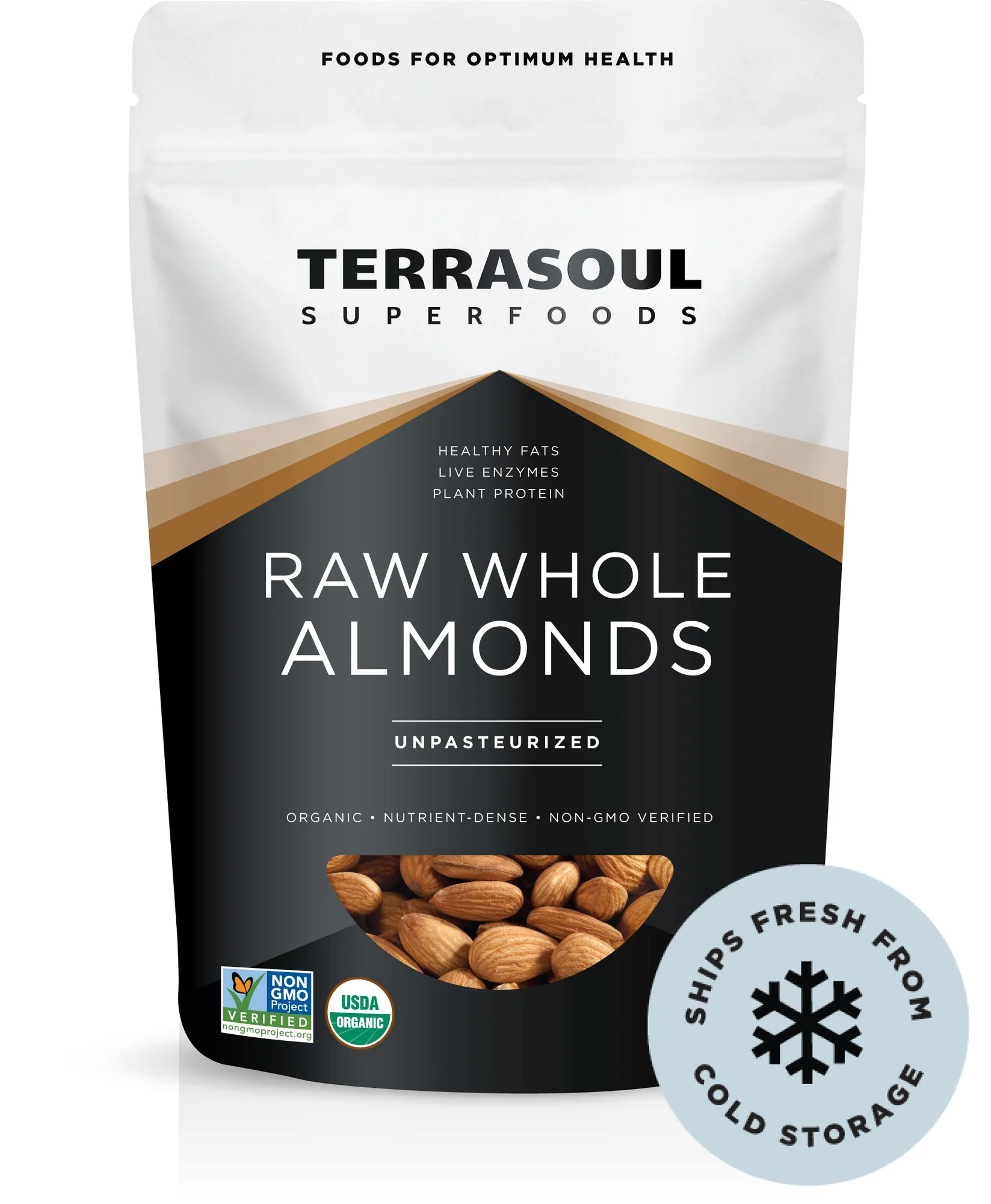
Almonds (Unpasteurized, Raw)
Which Should You Choose?
Best for
- Health-focused snackers who want maximum nutrient retention and enzymes
- Home cooks making almond milk or raw desserts
Not for
- Those who prefer a stronger roasted flavor and extra crunch in snacks