Quick answer
Yes, sunscreen can hydrate while it protects. Ingredients like rice seed water and vitamin B5 (panthenol) are added to support moisture and comfort, but they don't replace your moisturizer or boost SPF. The sun protection comes from the UV filters and the labeled SPF/PA rating. If you have oily or combination skin, a lightweight hydrating fluid like Relief Sun Aqua-Fresh is a practical choice; for all-over body use, a mineral lotion like Comfort Protection Mineral Body Sun Lotion SPF 30 is a gentle option.
Myth: Hydrating sunscreens weaken UV protection
Hydration and UV protection are separate jobs. The SPF number and PA rating tell you how well a formula shields against UVB and UVA, and those ratings come from the UV filters and the tested formulation, not from added moisturizers. Rice seed water and vitamin B5 are there to improve how the sunscreen feels and how your skin feels after application—they don't dilute protection. In fact, a sunscreen that feels comfortable is one you're more likely to apply generously and reapply, which is what actually keeps you protected.
What rice extract and vitamin B5 actually do in sunscreen
Rice extract (often as rice seed water) is used for lightweight hydration. It gives a fresh, watery feel without heavy oils, which is why it shows up in formulas designed for oily and combination skin. Vitamin B5, or panthenol, is a humectant that helps skin hold onto water and supports a comfortable, soothed feel. Neither is a UV filter, and neither changes the SPF. If you see 'rice B5 sunscreen' on a label, think of it as a comfort upgrade—not a protection upgrade. For a dry or sensitive body, a mineral lotion with soothing claims can be a better fit because it's formulated for all-over gentleness.
SPF50+ PA++++ explained without the hype
SPF50+ means the formula meets the highest tested UVB protection level under the SPF scale, and PA++++ is the top UVA protection grade. Those ratings are measured in a lab on real skin, not guessed from the ingredient list. A higher rating doesn't mean you can skip reapplication. Sweat, toweling, and time break down the protective film, so reapply at least every two hours during sun exposure—more often if you're swimming or sweating. A stick format like Matte Sun Stick makes midday reapplication realistic, even over makeup.
Myth: Oily skin should avoid hydrating sunscreen
Oily and combination skin often do better with hydration than with heavy occlusives. The problem isn't moisture—it's richness. An ultra-lightweight fluid that uses rice seed water instead of heavy oils can deliver hydration without a greasy after-feel. If your current sunscreen feels like it's sitting on top of your skin, the fix is usually the base formula, not the presence of hydrating ingredients. Look for 'fluid' or 'aqua-fresh' textures and avoid layering too many rich products underneath.
How to choose a hydrating sunscreen that fits your day
Start with your skin type and where you'll wear it. For face-only daily wear on oily or combination skin, a lightweight fluid with rice seed water and vitamin B5 keeps things fresh. For body and sensitive skin, a mineral body lotion with soothing and water-resistant claims is more practical because it's designed for larger areas and repeated exposure. If you wear makeup or need to reapply outdoors, a matte stick is the easiest format to carry and use without disturbing your base. You can mix formats—fluid for morning, stick for touch-ups—without losing protection as long as you reapply properly.
Verdicts on hydrating sunscreen claims
- Sunscreen can hydrate skin: True. Humectants like vitamin B5 and ingredients like rice seed water improve moisture and comfort, but they don't replace a moisturizer or change SPF. Verdict: Hydration is a real benefit, not a marketing trick.
- Hydrating ingredients boost SPF: False. SPF and PA ratings come from UV filters and tested formulation. Rice extract and B5 are comfort ingredients, not UV filters. Verdict: Don't expect a higher SPF from hydrating ingredients.
- SPF50+ PA++++ means you can skip reapplication: False. Even the highest rating needs reapplication every two hours during sun exposure, or sooner after swimming or sweating. Verdict: Reapplication is non-negotiable.
- Oily skin should avoid hydrating sunscreen: False. Oily and combination skin often do well with lightweight hydration. The issue is richness, not moisture. Verdict: Choose a fluid texture, not a heavy cream.
Product facts that matter for this choice
- Relief Sun Aqua-Fresh : Rice + B5 (SPF50+ PA++++): Relief Sun Aqua-Fresh : Rice + B5 (SPF50+ PA++++) is an ultra-lightweight fluid made with rice seed water for refreshing hydration, ideal for oily and combination skin. If you liked the original Relief Sun but found it too rich, this gives you the same high protection in a lighter texture that's easier to wear daily.
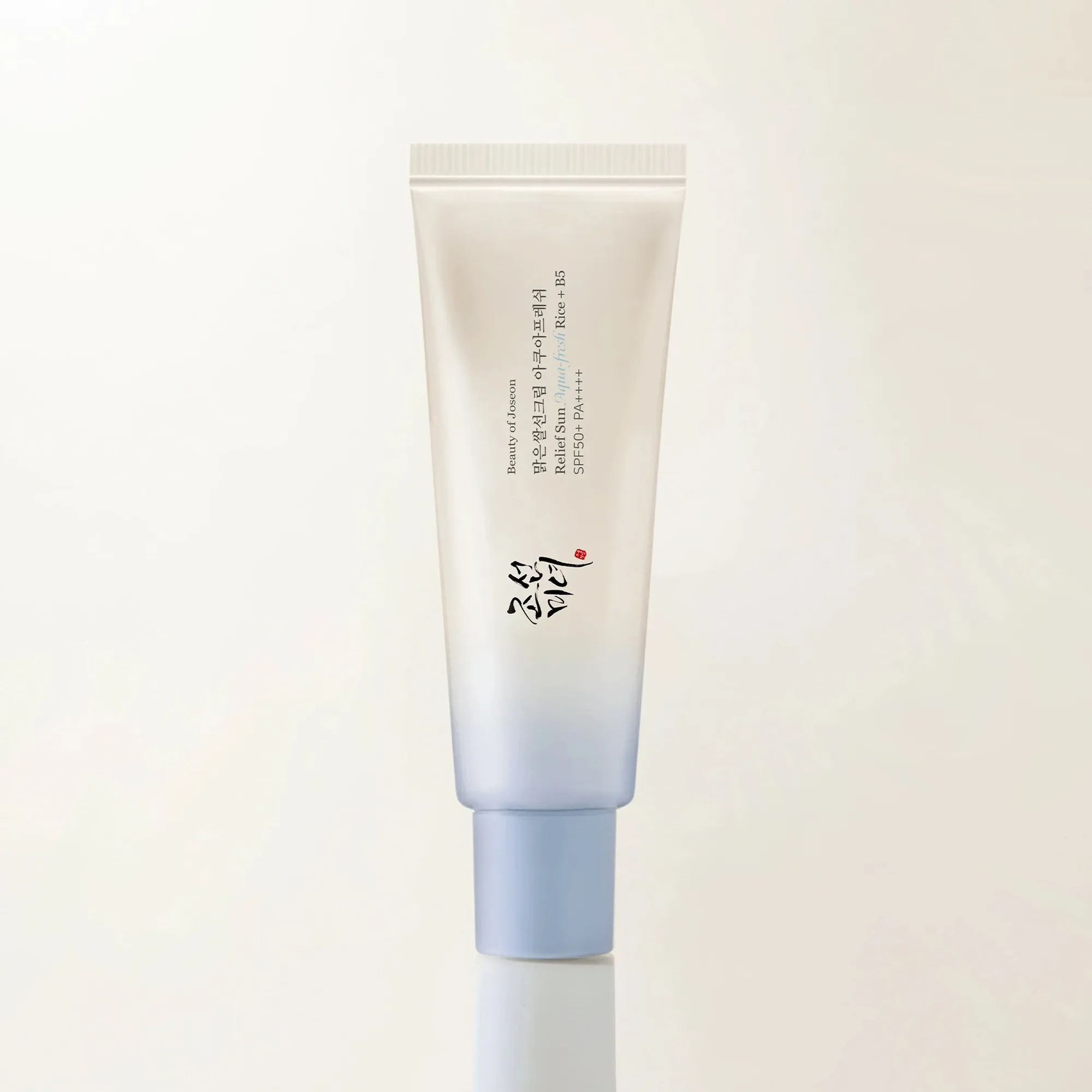
Relief Sun Aqua-Fresh : Rice + B5 (SPF50+ PA++++)
- Matte Sun Stick : Mugwort+Camelia (SPF 50+ PA++++): Matte Sun Stick : Mugwort+Camelia (SPF 50+ PA++++) is a sebum-controlling matte stick infused with artemisia capillaris and green tea, designed for easy reapplication on the go, even over makeup. A stick solves the reapplication problem for busy days and touch-ups, and the soft-matte finish suits oily or combination skin.
- Comfort Protection Mineral Body Sun Lotion SPF 30: Comfort Protection Mineral Body Sun Lotion SPF 30 is a lightweight, gentle body sunscreen with clinically tested soothing effects, water resistant, noncomedogenic, and suitable for sensitive skin. For all-over body use, especially on sensitive skin, this mineral lotion prioritizes comfort and gentleness over a high SPF number.