Quick Answer
For most toddlers, start with a low, stable ride-on toy that lets their feet reach the floor, and choose a model that matches their current balance and coordination—not their age alone.
Why Age Alone Isn't Enough
Ride-on toys are often labeled by age, but a toddler's physical development varies. A 2-year-old who is still wobbly may need a toy that supports balance, while a 3-year-old with stronger legs might be ready for a more independent ride. Look for a toy that fits the child's current ability, not just the box's suggested age.
Balance and Stability: The Key Trade-Off
Low-profile ride-ons with a wide wheelbase are easier for beginners to mount and dismount, reducing the risk of tipping. However, they often have a lower weight limit and may be outgrown quickly. A taller toy with a higher seat might last longer but can be harder for a young toddler to manage. Decide which trade-off matters more for your child's current stage.
Safety Features That Matter
Check that the ride-on has no sharp edges, small parts, or pinch points. A stable base and wheels that grip well on your floor type reduce slips. Always supervise young riders and avoid ride-ons near stairs or driveways. Safety is about the environment as much as the toy itself.
Decision Rules for Choosing a Ride-On Toy
- If your toddler is under 18 months or not yet walking steadily: Choose a low-profile ride-on with a wide base and no pedals. The child should be able to sit with feet flat on the floor. Look for a model that supports balance and coordination, like the First Wheeler Beginner Ride-On Set. Check that the seat height allows feet to reach the floor comfortably.
- If your toddler is 2 years old and walking well: A ride-on with a slightly higher seat and maybe a steering wheel can be appropriate, but stability still comes first. The child should be able to get on and off without help. Avoid toys with small parts or sharp edges. Test the turning radius to ensure it won't tip during sharp turns.
- If your toddler is 3 years old and confident on ride-ons: You can consider a ride-on with pedals or a push handle for more independence. However, ensure the toy's weight limit and seat height fit your child's size. A toy that's too big can be hard to control, and one too small may be outgrown quickly. Measure your child's inseam and compare it to the seat height before buying.
Product Spotlight
-
First Wheeler Beginner Ride-On Set – 3 Pack: The First Wheeler Beginner Ride-On Set includes three low-profile ride-ons designed for beginner riders developing stability. The low-profile design lets toddlers keep their feet close to the ground, which helps them build confidence while learning to balance.
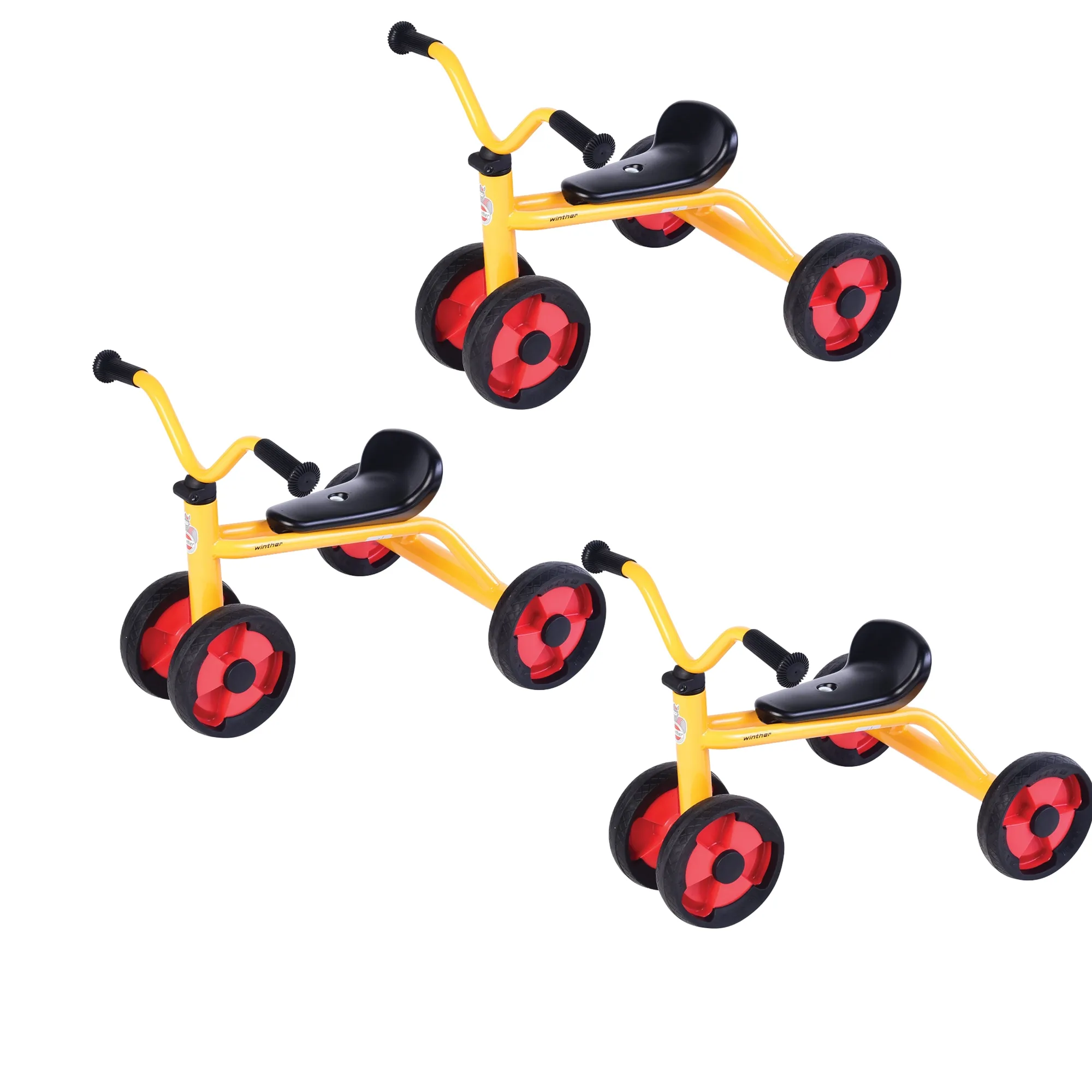
First Wheeler Beginner Ride-On Set – 3 Pack
Who Should Choose What
Best for
- Toddlers ages 1-3 who are just learning to balance and need a stable, low-profile ride-on
- Classrooms or families with multiple young riders who can share a set of beginner ride-ons
Not for
- Older children (4+) who need a more advanced ride-on with pedals or higher speed
- Toddlers who already show strong balance and are ready for a taller ride-on with more features