Quick answer
Pick Ring Rush if your family has a pool and wants an active, physical memory game for ages 6 and up. Choose Who Saw What? In 60 Seconds for a tabletop, all-ages party game that needs no water and plays in a tight 60-second loop. Both are fast-paced memory games, but they demand very different spaces and energy levels.
How each game actually plays
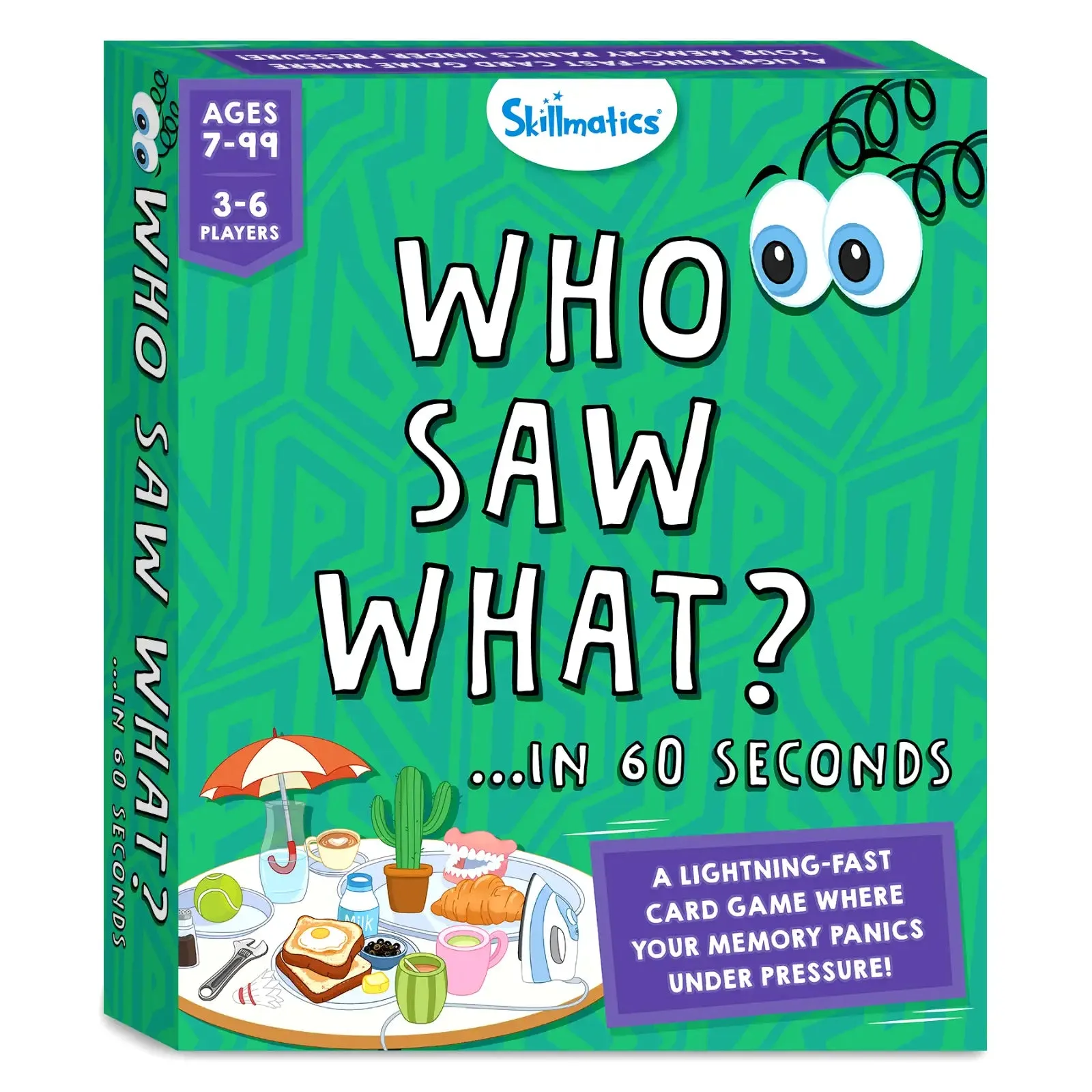
Who Saw What? In 60 Seconds is a tabletop memory sprint. You get 60 seconds to study a picture and memorize its details, then shout out what you remember and discard your letter cards. Every round is a high-pressure, laugh-out-loud race to victory, and the whole loop resets quickly, so you can play several rounds without setup.
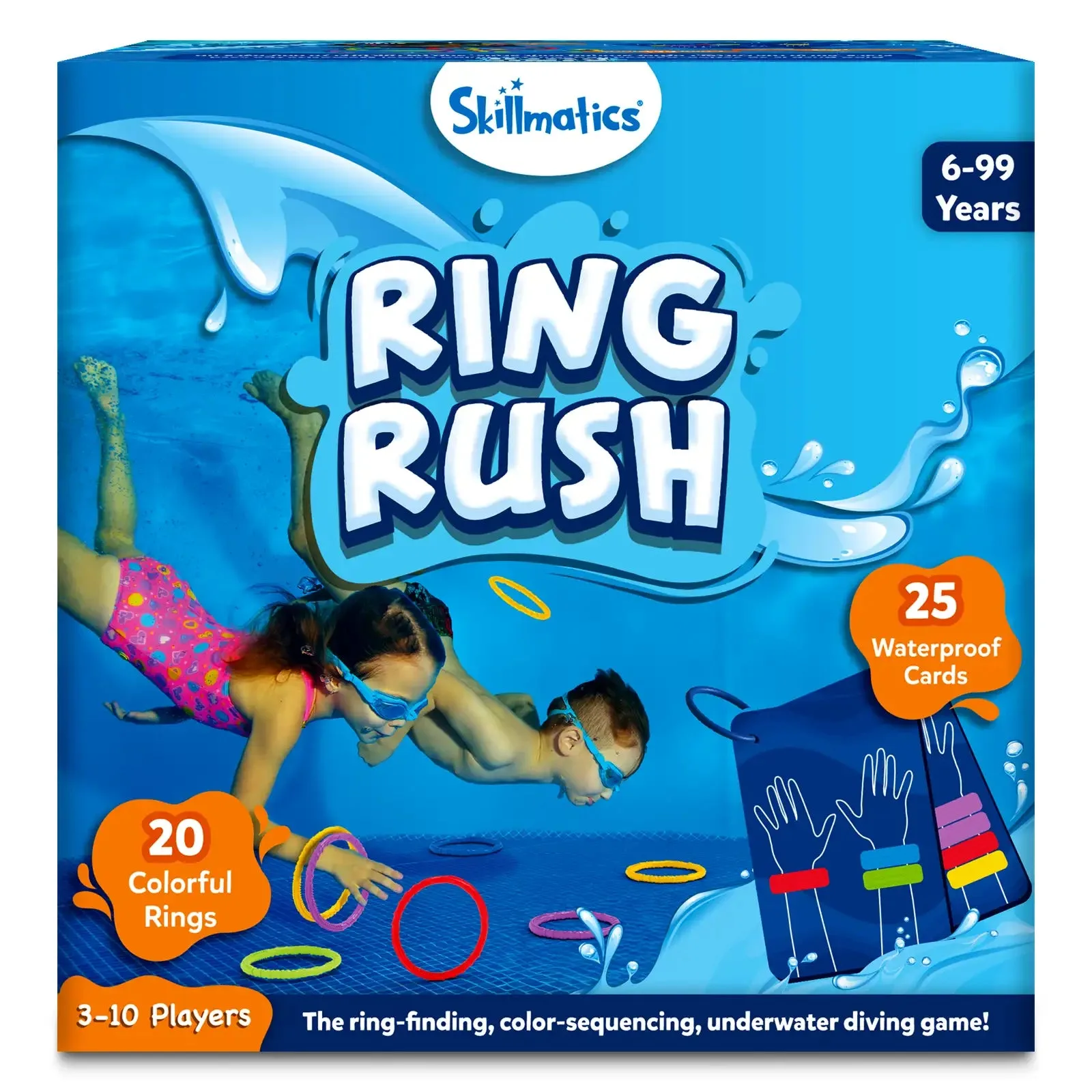
Ring Rush moves the same memory challenge into water. You memorize the card, dive into the pool, and find the colored rings. Swim quickly to stack them in the correct order on your arms and race back to win a point. The deck holder can switch cards without warning, so the game rewards attention even while you are moving.
Space, setup, and season
Ring Rush needs a pool and someone willing to hold the deck at the water's edge. That makes it a summer gathering game rather than a year-round one, and it works best when at least two players are comfortable in the water. It is a poor fit for small apartments, rainy days, or families who do not have pool access.
Who Saw What? In 60 Seconds needs only a table and the cards. It travels well, works indoors or outdoors, and does not depend on weather. If you want a quick family game that can come out after dinner or on a road trip, this is the more flexible option.
Age fit and player energy
Ring Rush is listed for ages 6 and up, while Who Saw What? In 60 Seconds is listed for ages 7 and up. The one-year gap matters less than the setting: younger kids who are strong swimmers may handle Ring Rush, but the pool adds a safety and supervision layer that a tabletop game does not.
Who Saw What? In 60 Seconds suits mixed-age groups because the 60-second study window gives everyone the same clock. Ring Rush suits kids who want to move, dive, and race rather than sit still. If your group has a wide age range and no pool, the tabletop game is the smoother pick.
Trade-offs to weigh before you buy
- Indoor vs outdoor: Who Saw What? In 60 Seconds plays on any table, while Ring Rush requires a pool and a deck holder at the water's edge. Choose the tabletop game if you want year-round use; choose Ring Rush if pool days are your main family gathering.
- Sitting vs swimming: Who Saw What? In 60 Seconds is a shout-and-discard memory sprint; Ring Rush adds diving, swimming, and stacking rings under time pressure. Match the game to your group's energy: calm table play or active water play.
- Age and supervision: Ring Rush is listed for ages 6+ and Who Saw What? In 60 Seconds for ages 7+, but the pool setting adds a supervision requirement that the tabletop game does not have. If younger kids will play without close water supervision, the tabletop game is the safer default.
Product facts at a glance
- Who Saw What? In 60 Seconds: Fast-Paced Memory Game for Kids (ages 7+): Ages 7+. You get 60 seconds to study a picture and memorize its details, then shout out what you remember and discard your letter cards. The fixed 60-second window keeps rounds short and gives every player the same challenge, which helps mixed-age groups start quickly.
- Ring Rush | Underwater Search and Find Game (ages 6+): Ages 6+. Memorize the card, dive into the pool, find the colored rings, stack them in the correct order on your arms, and race back to win a point. The deck holder switches cards without warning. The pool setting and surprise card changes add physical activity and unpredictability, but you need pool access and a willing deck holder.
Which game fits your family?
Best for
- Families with a pool who want an active, physical memory game for ages 6 and up
- Summer gatherings where kids need to burn energy between swims
- Groups that enjoy surprise twists, like the deck holder switching cards without warning
Not for
- Families without pool access or a safe place to swim
- Indoor game nights, travel, or rainy days
- Groups that prefer seated, tabletop play with no water supervision