Quick Answer
Educational board games are rising in popularity because they offer hands-on, social learning that digital tools often lack. They provide tangible experiences, promote critical thinking, and create memorable family moments. This trend is driven by a desire for screen-free interaction and proven educational benefits.
In an era dominated by screens, educational board games are experiencing a renaissance. Parents and educators are turning to tabletop games as a way to engage children in learning without passive screen time. This article explores the factors behind this trend and answers common questions about the role of board games in modern education.
From science-themed card games to detailed anatomy puzzles, the market for educational games has expanded significantly. We'll look at why these games are becoming a staple in homes and classrooms, and how they compare to digital learning tools.
Why Are Educational Board Games Becoming More Popular?
The rise of educational board games can be attributed to a growing awareness of the benefits of hands-on learning. Unlike passive screen time, board games require active participation, critical thinking, and social interaction. They offer a break from digital devices while still delivering educational content.
Additionally, many parents are seeking activities that bring the family together. Board games provide a shared experience that fosters communication and teamwork. The tangible nature of pieces and cards also helps kinesthetic learners grasp concepts more effectively than digital simulations.
- Board games encourage face-to-face interaction and communication.
- They provide a screen-free alternative that still promotes learning.
- Educational games often incorporate multiple subjects, making them versatile tools.
How Do Board Games Compare to Digital Learning Tools?
Digital learning tools offer convenience and scalability, but they often lack the tactile and social elements that board games provide. Board games engage multiple senses and require players to physically manipulate components, which can enhance memory retention and understanding.
Moreover, board games naturally teach skills like turn-taking, patience, and sportsmanship—soft skills that are harder to cultivate in digital environments. While apps and online platforms are excellent for individualized practice, board games excel at collaborative and experiential learning.
- Board games promote social skills and emotional intelligence.
- Digital tools are often more scalable for large groups, but board games offer depth of interaction.
- A hybrid approach can leverage the strengths of both mediums.
What Is Driving the Growth of STEM Games?
STEM (Science, Technology, Engineering, and Math) education has become a priority in many curricula. Educational board games that focus on these subjects make abstract concepts tangible and accessible. For example, games that simulate virus replication or genetic inheritance allow players to visualize and experiment with scientific principles in a controlled, engaging setting.
The success of crowdfunding campaigns and independent publishers has also fueled innovation in STEM games. Designers are creating games that are not only educational but also genuinely fun, appealing to a broad audience beyond just children.
- STEM games make complex topics approachable through gameplay.
- They often incorporate real-world scenarios, enhancing relevance.
- The variety of STEM games available has increased, catering to different age groups and interests.
Are Educational Board Games Effective for Learning?
Research suggests that active learning strategies, such as those employed in board games, can be more effective than passive instruction. Board games provide immediate feedback, encourage problem-solving, and require players to apply knowledge in dynamic situations. This active engagement helps reinforce concepts and improve retention.
Furthermore, the social aspect of board games can motivate learners who might otherwise disengage. Playing with peers or family creates a supportive environment where mistakes are part of the game, reducing the fear of failure and encouraging experimentation.
- Immediate feedback in games helps correct misconceptions quickly.
- Cooperative games foster teamwork and collective problem-solving.
- The fun factor increases motivation and sustained interest.
Key Takeaways on Educational Board Games
What is the main driver of the educational board game trend?
A desire for screen-free, interactive learning experiences that also foster social connections. Board games offer a unique blend of education and entertainment.
How do board games benefit learners compared to digital tools?
They provide tactile engagement, social interaction, and immediate feedback, which can enhance understanding and retention. Consider incorporating board games into your learning routine for a balanced approach.
What should I look for when choosing an educational board game?
Check the age appropriateness, educational content, and player count to ensure it fits your needs. Look for games that align with your learning goals and are enjoyable for all participants.
Educational Games That Exemplify the Trend
- Virulence: An Infectious Virus Card Game - Educational Bidding Game for Kids 8+ - Perfect Biology Board Game: Type of Game: Blind Bidding, Set Collection. Ages: 8+. Players: 2-5. Time: 15-20 mins. Science Concepts: Structure and components of viruses, genome, helical, icosahedral, spherical envelope, virus replication, vaccines, mutations. This game turns complex virology into a quick, competitive card game, making it an excellent example of how STEM concepts can be taught through engaging gameplay.
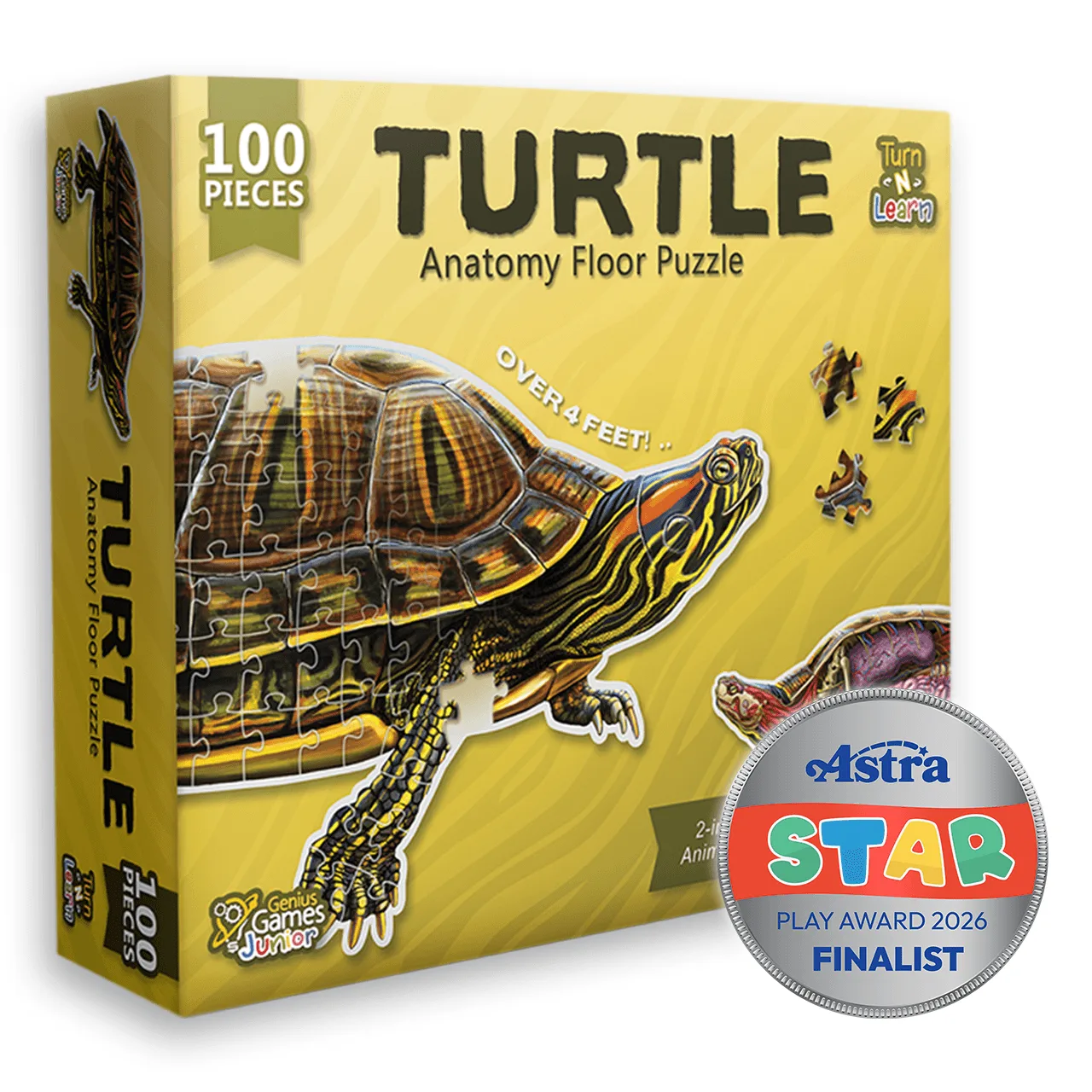
- Pond Slider Turtle Jigsaw Puzzle - 4FT Double Sided Floor Puzzle | 2026 Astra Play Awards Top 3 Finalist for STEM Category: This Puzzle is a 100-Piece Scientifically Accurate Turn N Learn Educational Puzzle for Kids recognized by ASTRA as one of their top 3 finalists for the 2026 ASTRA Play Awards. Includes: Double Sided Puzzle (Inside and Outside of a Turtle) Anatomy Guide Fact Sheet. This puzzle combines the classic jigsaw format with scientific accuracy, offering a hands-on way to learn anatomy while also being a fun family activity.
The rise of educational board games reflects a broader shift towards active, social learning. As digital tools continue to evolve, board games remain a valuable complement, offering tangible experiences that engage minds and bring people together. Whether you're a parent, teacher, or lifelong learner, exploring the world of educational board games can open up new avenues for discovery and fun.