Quick answer
For most drivers, a soft-sided car top carrier is the smarter first purchase because it attaches with or without a roof rack, folds away when empty, and costs far less than a hard box. Choose a hard box only if you need lockable, rigid storage and already have crossbars. Size the carrier so its footprint stays inside your roof width, and always add a non-skid pad under a soft carrier to stop shifting and protect the paint.
Soft carrier or hard box: the trade-off that decides everything else
A roof cargo box vs carrier decision comes down to three things: mounting, storage, and protection. Hard boxes need crossbars, stay on the roof year-round unless you have somewhere to store a bulky shell, and generally offer lockable, crush-resistant storage. Soft carriers attach to roof racks or directly to the door frame with clips, collapse into a duffel-sized bundle, and cost less. The trade-off is that soft carriers rely on their straps and a taut fill to hold shape, and they are not lockable.
If your vehicle has no roof rack, a soft carrier is often the only practical option. If you already run crossbars and carry fragile or theft-prone gear, a hard box earns its price. Everything below assumes you have made that call; if not, decide it first because it changes sizing and mounting.
How to size a carrier without guessing
Cargo carrier sizing starts with your roof, not the gear. Measure the usable flat area between the windshield and the rear of the roof, then measure the width at the widest point. A carrier should sit inside those dimensions with a little margin so straps can run cleanly and the load does not overhang the glass or block the antenna. Width matters more than length: an over-wide carrier forces straps outward and can rub the roof edges.
Then match the carrier to the load. Soft carriers are usually sold by volume or by a size label, and the practical limit is weight and bulk rather than the number on the tag. Bulky but light items such as sleeping bags, duffels, and tents fill volume quickly; dense items such as tools or coolers should stay in the trunk. If you are between sizes, go smaller for a sedan or narrow roof and larger only when the roof is genuinely wide enough.
Mounting tips for vehicles with and without a roof rack
With a roof rack, route the carrier's straps around the crossbars and cinch them so the base sits flat. Without a rack, use the included car clips to attach straps to the door frame weather molding, then close the door gently and check that the weatherstrip is not pinched. In both cases, stop after the first few miles and re-tension every strap; soft materials settle once the vehicle is moving.
Keep the load low and centered, and never let straps twist, because a twisted strap concentrates force on one edge. Check your owner's manual for a roof load limit before you load anything, and stay under it. Finally, a non-skid roof pad is not optional on a soft carrier: it grips the carrier base and protects the roof paint from grit and vibration.
Waterproof, weatherproof, and what those labels mean on the road
Weatherproof and waterproof are not the same promise. A weatherproof carrier sheds rain and road spray but can let water in through seams or a partly open closure in sustained downpours. A 100% waterproof carrier is built to keep contents dry even in heavy rain, which matters if you carry bedding, clothes, or electronics. Read the product description literally and pack accordingly: put anything that must stay dry inside a dry bag even in a waterproof carrier, and place soft items at the bottom where they cushion the load.
Decision rules for buying a roof cargo carrier
- No roof rack?: Choose a soft carrier that attaches with Car Clips to the door frame weather molding, and confirm the carrier includes them before buying. Rack-free mounting is the deciding feature, not volume.
- Rain expected on the trip?: Pick a 100% waterproof carrier over a weatherproof one, and still pack critical items in a dry bag. Match the waterproofing claim to your worst forecast, not the average day.
- Already have crossbars and carry valuables?: A hard box gives rigid, lockable storage; a soft carrier will not lock and depends on straps for shape. Security and rigidity are the reasons to pay for a box.
- Narrow roof or small car?: Measure roof width first and stay inside it; cut a non-skid pad down if the carrier footprint is smaller than the pad. A carrier that overhangs the roof edge is the wrong size, regardless of its volume rating.
Products that fit this buying guide
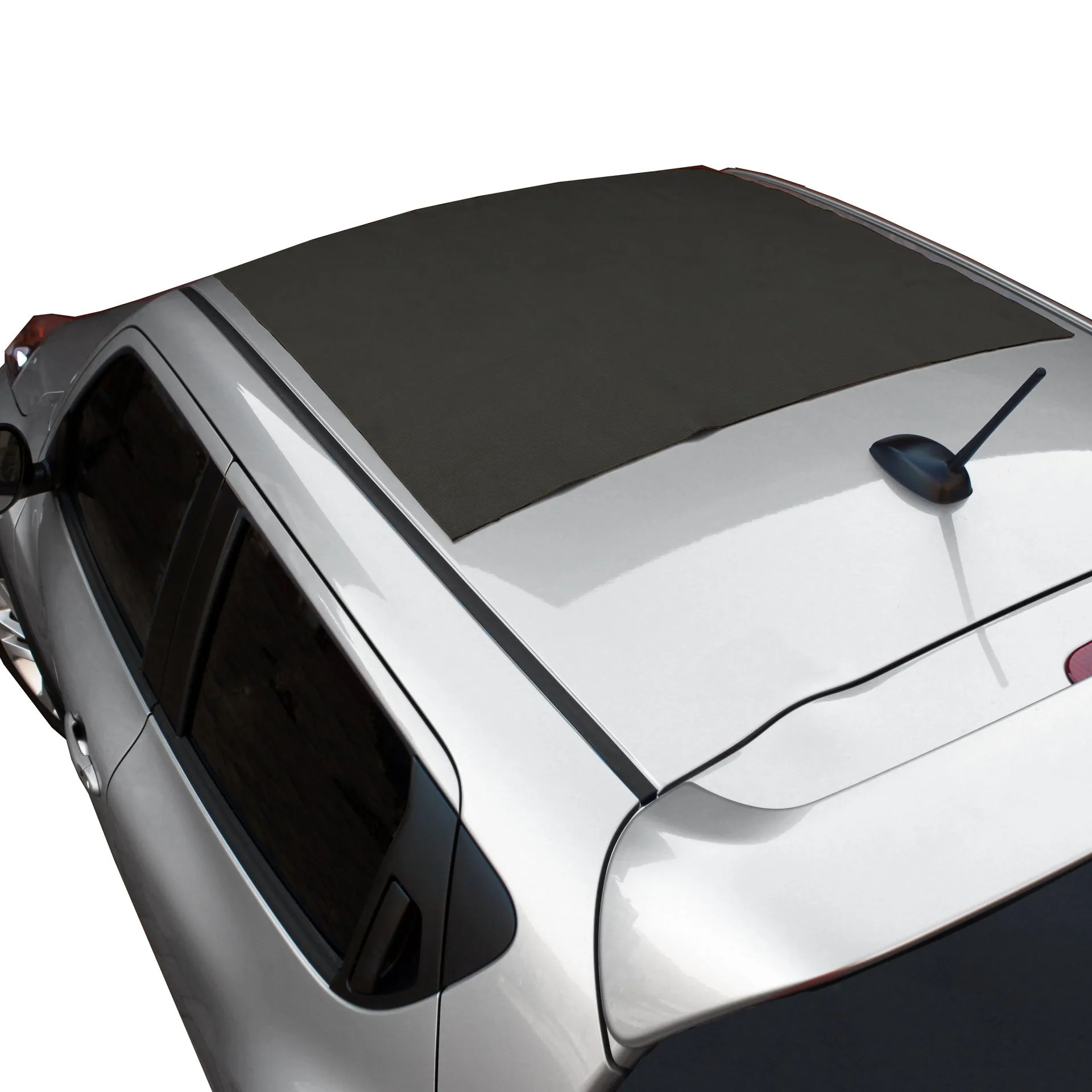
- Rightline Gear® Non-Skid Roof Pad: The Non-Skid Roof Pad is sized 39 x 34 inches and can be cut to fit smaller carriers; it is designed to keep a car top carrier from shifting while protecting the roof. It solves the two most common soft-carrier problems, movement and paint wear, and the cut-to-fit size means it works whether you buy a compact or full-size carrier.
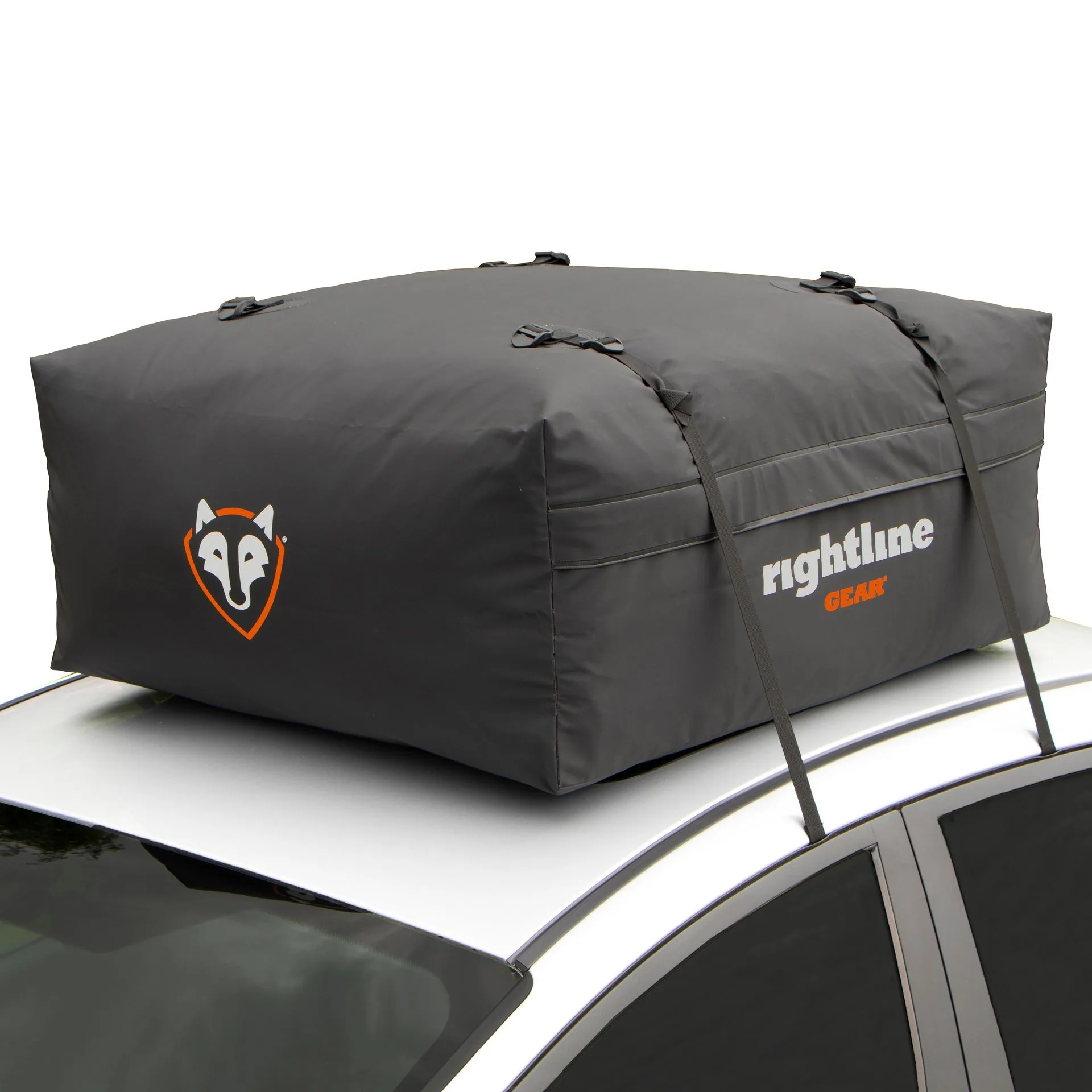
- Rightline Gear® Range Jr Cargo Carrier: The Range Jr Car Top Carrier is weatherproof, attaches with or without a roof rack, and uses UV protected PVC Semi-Coated Mesh XT; straps go to a roof rack or to the door frame with Car Clips. It is the low-commitment option for drivers without crossbars who want a packable carrier for occasional trips rather than a permanent roof fixture.
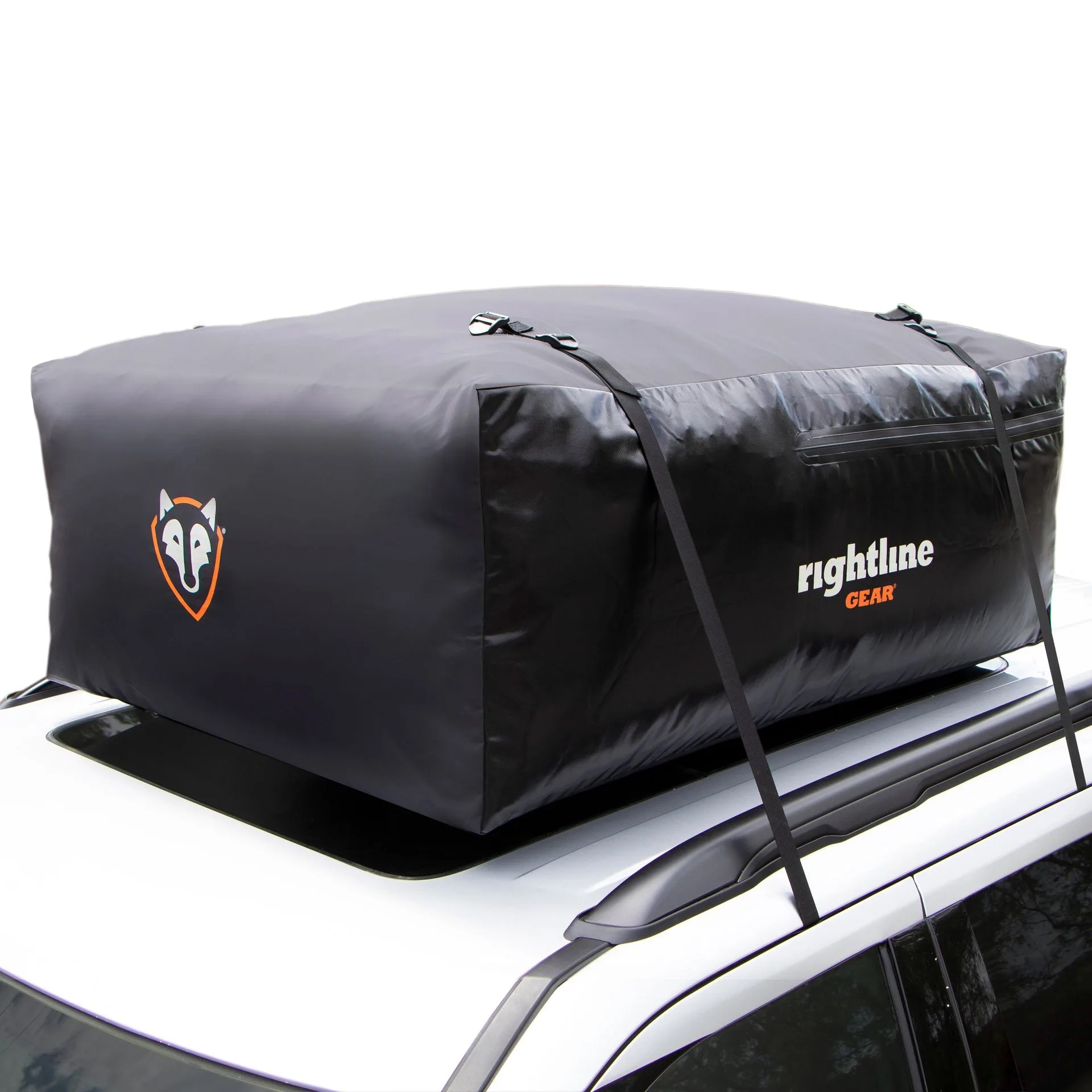
- Rightline Gear® Sport 3 Cargo Carrier: The Sport 3 Car Top Carrier is 100% waterproof and attaches with or without a roof rack using the same strap or Car Clip method, also in UV protected PVC Semi-Coated Mesh XT. Choose it over a weatherproof carrier when rain protection is the priority, such as carrying bedding or clothes on a multi-day drive.
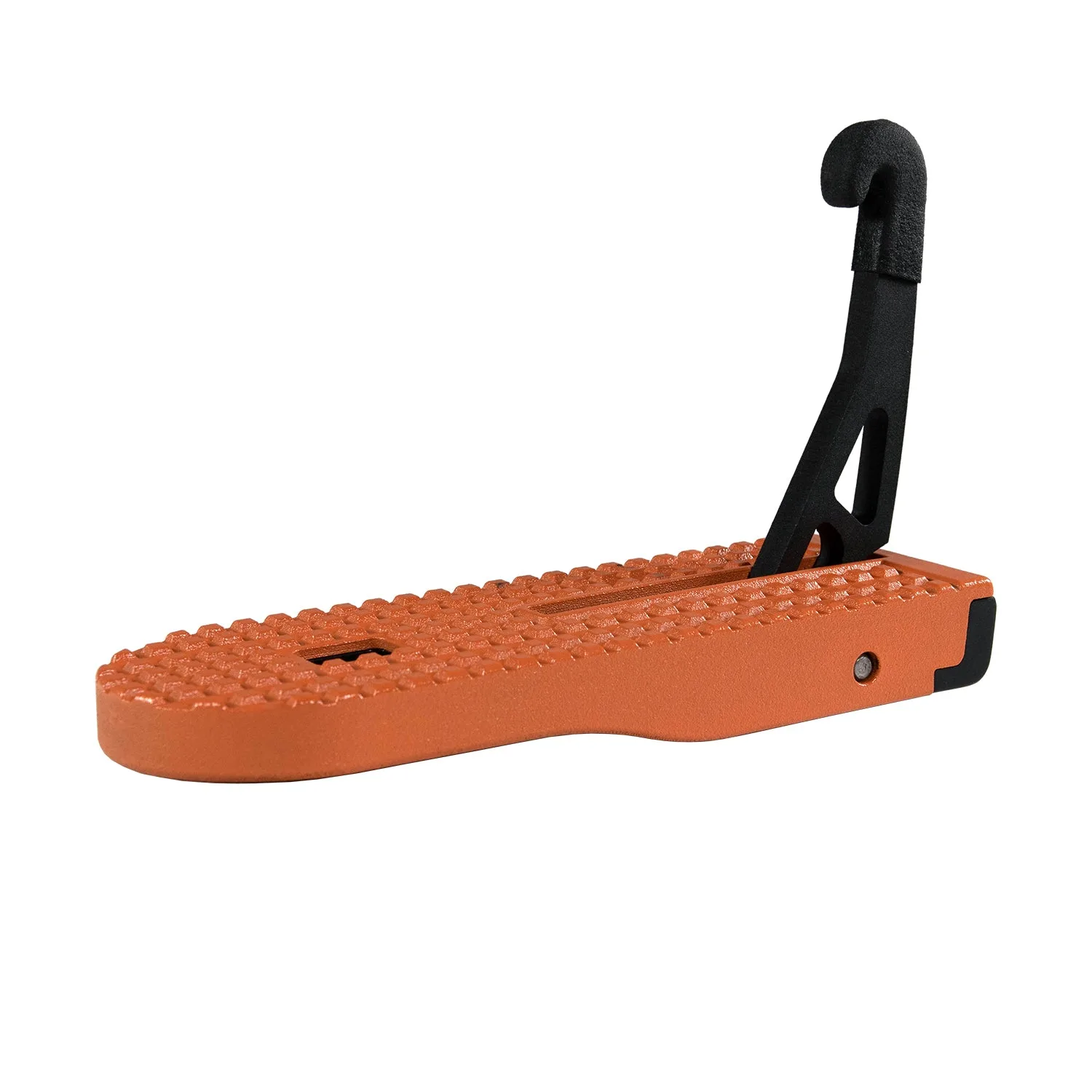
- Rightline Gear® Moki® Ascent: The Moki Ascent is a rooftop step built for quick, safe access to roof racks, cargo, kayaks, and gear, combining stability with simplicity for loading and unloading. If you cannot comfortably reach the roof, a step removes the awkward lift that causes most loading injuries and makes re-tensioning straps easier.
Who should buy which carrier
Best for
- Drivers without a roof rack who need occasional, packable cargo space
- Campers carrying bulky but light gear such as sleeping bags and duffels
- Anyone who wants a lower-cost carrier that stores in a closet between trips
Not for
- Drivers who need lockable, rigid storage for valuable or fragile items
- Vehicles with very narrow roofs where even compact carriers would overhang
- People who plan to leave the carrier mounted year-round and want a permanent fixture