Quick answer
Rooibos is naturally caffeine-free, so you can drink it any time of day. For a clean, consistent cup, use about one teaspoon of loose leaf per 8 ounces, pour water just off a boil, and steep 5–7 minutes. If you are new to rooibos, start with a sampler size before committing to a larger package.
Why rooibos is naturally caffeine-free
Rooibos comes from the Aspalathus linearis plant, not from the tea plant Camellia sinensis. Because it is an herbal infusion, it contains no caffeine at all. That makes it a practical choice if you want a caffeine-free herbal tea in the evening or if you are cutting back on caffeine for other reasons. The catalog confirms this for the green rooibos product, which lists caffeine content as none. If you are comparing it to decaf tea, remember that decaf starts as true tea and has caffeine removed, while rooibos never had caffeine to begin with. That difference can matter if you are sensitive to even small amounts of caffeine.
Green rooibos vs traditional rooibos
Green rooibos is unoxidized, so it keeps a lighter color and a more delicate flavor than the familiar red rooibos. The catalog describes green rooibos as very aromatic and more delicate than traditional rooibos, with a hearty herbal flavor and grassy overtones that remind you of a quality Sencha. Traditional rooibos, by contrast, is oxidized and tends to taste sweeter and deeper. Neither is better; they simply suit different moods. If you enjoy green tea but want zero caffeine, green rooibos is the closer match. If you prefer a fuller, rounder cup, traditional rooibos will feel more familiar.
How to brew rooibos without bitterness
Rooibos is forgiving, but it can still turn bitter if you overshoot the steep time or use too much leaf. A good starting ratio is one teaspoon of loose leaf per 8 ounces of water. Use water at about 200–212°F (93–100°C). If you do not have a thermometer, bring water to a boil and let it sit for a minute or two. Steep 5–7 minutes for a balanced cup. Taste at 5 minutes; if you want more depth, go to 7. For iced rooibos, brew a double-strength batch, then cool and pour over ice. The main checkpoint is simple: if the cup tastes harsh, reduce the steep time next round rather than adding more sweetener.
What to expect from rooibos tea benefits
Rooibos is often chosen as a caffeine-free herbal tea because it is naturally free of caffeine and pleasant to drink without milk or sugar. That said, avoid treating it as a medicine. The catalog does not make health claims, and you should not expect rooibos to replace medical advice. What it does offer is a smooth, hydrating beverage that fits into a daily routine. If you drink several cups, the main practical benefit is that you are not adding caffeine later in the day. If you are watching what you add, taste the tea first; good loose leaf often needs less sweetener than you expect.
Loose leaf vs tea bags for rooibos
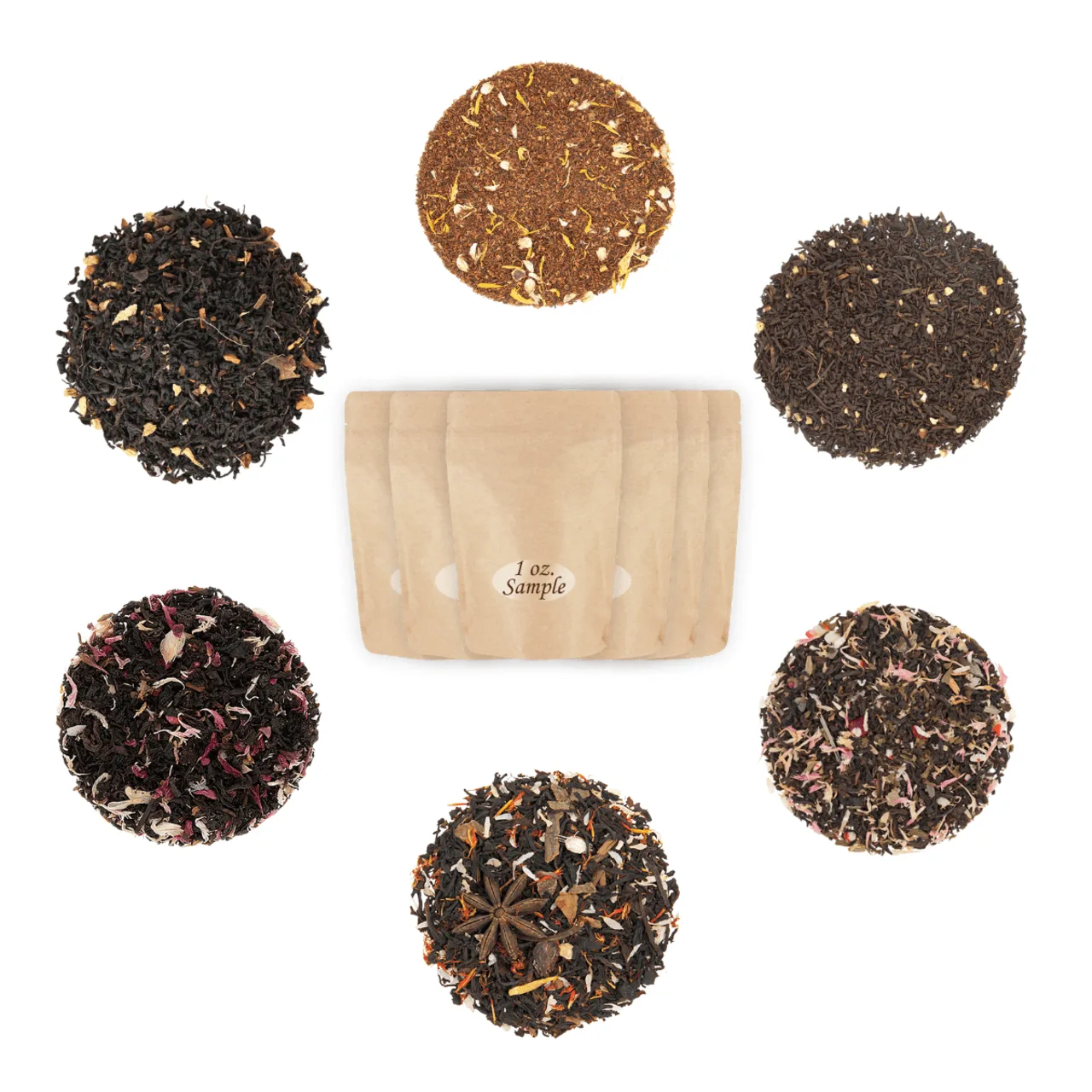
Loose leaf rooibos gives you more control over strength and flavor because you can adjust the amount of leaf and the steep time. Tea bags are convenient, but they often contain smaller pieces that can brew faster and flatter. If you are new to rooibos loose leaf, a sampler size is a low-risk way to test whether you like the flavor before buying a larger package. The sampler format also lets you compare green rooibos against other teas without committing to a full pouch. Store loose leaf in an airtight container away from light and strong smells, and use it within a reasonable time so the aroma does not fade.
Step-by-step: brewing rooibos loose leaf
- Measure the leaf: Use about one teaspoon of loose leaf rooibos per 8 ounces of water. If you are brewing green rooibos, start with the same ratio; its lighter flavor can handle a slightly generous teaspoon. Checkpoint: too much leaf is the most common cause of a bitter or overly strong cup.
- Heat the water: Bring water to a boil, then let it sit for a minute or two so it is just off a boil, around 200–212°F (93–100°C). Rooibos does not need a lower green-tea temperature. Checkpoint: if you do not have a thermometer, wait until the rolling boil stops before pouring.
- Steep and time it: Pour the water over the leaf and steep 5–7 minutes. Taste at 5 minutes. For a stronger cup, extend to 7 minutes rather than adding more leaf. Checkpoint: set a timer; going past 7 minutes is the easiest way to pick up bitterness.
- Remove the leaf: Strain or lift the infuser as soon as the time is up. If you leave the leaf sitting in the water, the cup will keep getting stronger. Checkpoint: if you plan to sip slowly, brew into a separate cup or pot.
- Adjust and enjoy: Taste before adding milk or sweetener. Rooibos is smooth on its own, and green rooibos has grassy, delicate notes that are easy to mask. Add sweetener only if you want it. Next step: if you like it, try a sampler size of green rooibos to compare with traditional rooibos.
Product facts
- Green Rooibos Herbal Tea - Loose Leaf - Sampler Size - 1oz: Green Rooibos Herbal Tea - Loose Leaf - Sampler Size - 1oz. Catalog facts: Green Rooibos is very aromatic and more delicate than a traditional rooibos. It features a hearty herbal flavor with grassy overtones that will remind you of a quality Sencha. Caffeine content: None - Herbal. This sampler lets you try green rooibos without buying a full package, and the none-caffeine fact confirms it fits an evening or caffeine-free routine.
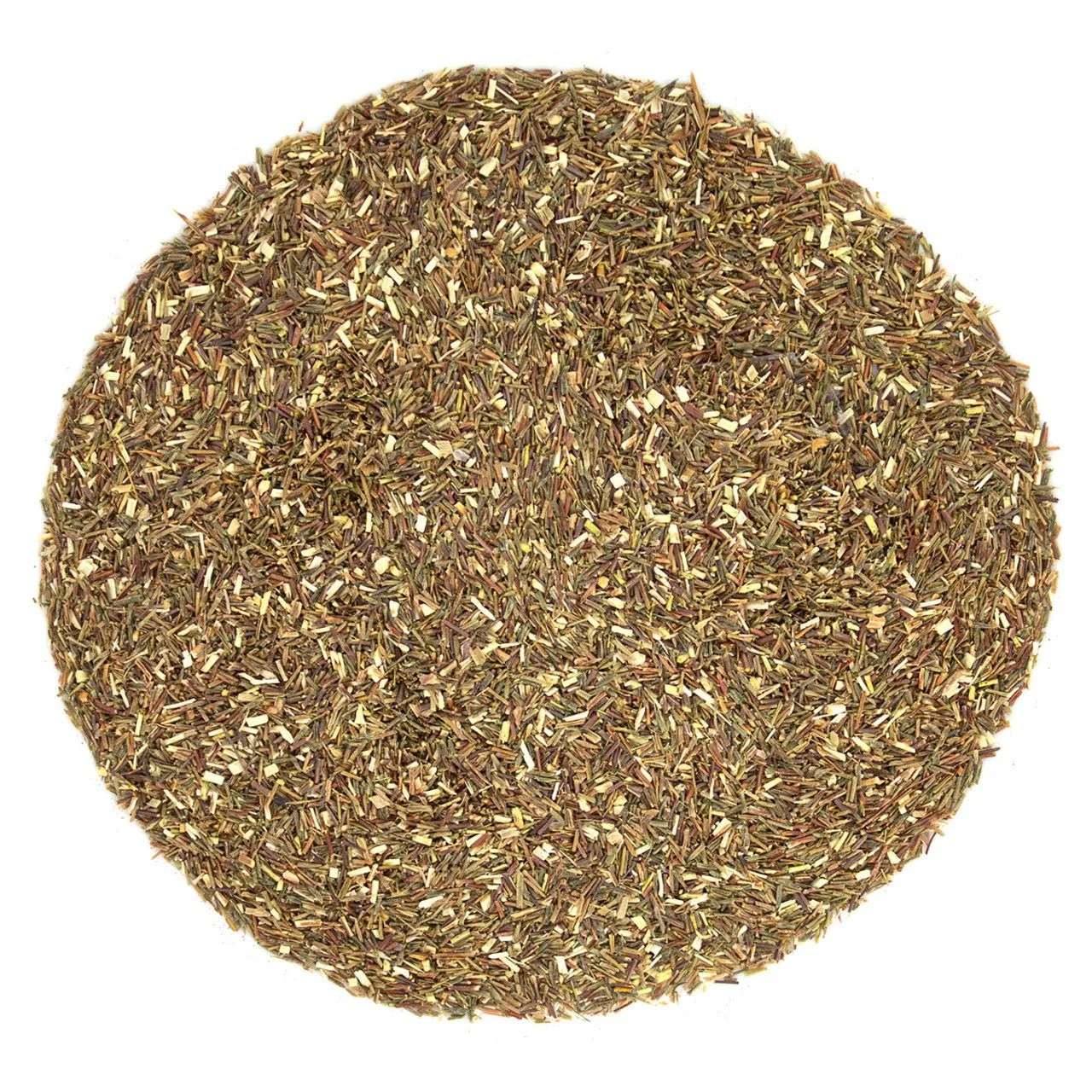
Green Rooibos Herbal Tea - Loose Leaf
- Organic Assam Tea - Fine Cut - Loose Leaf: Organic Assam Tea - Fine Cut - Loose Leaf. Catalog facts: Full bodied and brisk tea with tremendous flavor, all the characteristics that make this 2nd flush Assam a great tea. Fair Trade certified, USDA Organic, and QMI Certified. If you want a caffeinated alternative for mornings, this Assam is a full-bodied black tea; it is not caffeine-free, so keep it separate from your rooibos routine.