Quick answer
Flamingo Estate's Rosemary Clary Sage Glass Hand Soap offers a natural, botanical formula and a reusable glass vessel, while regular hand soaps typically use synthetic ingredients and disposable plastic bottles. Choose the glass soap for a sensory, eco-conscious hand-washing ritual; stick with regular soap if you prioritize low cost and convenience.
Ingredients and formulation
Most regular hand soaps rely on synthetic surfactants, fragrances, and preservatives to produce lather and scent. Flamingo Estate's Rosemary Clary Sage Glass Hand Soap uses a plant-based formula infused with rosemary and clary sage, aiming for a garden-fresh experience without harsh chemicals.
If you have sensitive skin or prefer to avoid synthetic additives, the natural composition is a clear advantage. However, the specific surfactant type and exact ingredient list are not disclosed, so those with known allergies should review the full label before purchase.
Vessel design and sustainability
The glass bottle is a custom fluted design inspired by the architecture of the Flamingo Estate bar. It is meant to be a keepsake—heavy, reusable, and visually distinctive. Regular hand soap packaging is almost always plastic, designed for single use and disposal.
Choosing glass reduces plastic waste and adds a decorative element to your kitchen or bathroom. The trade-off is weight and fragility: glass is heavier and can break if dropped, making it less practical for households with young children or for travel.
Cost per use
At a catalog price of $42.70 (compared to $70.00), the Rosemary Clary Sage Glass Hand Soap is a premium purchase. Regular hand soaps typically cost $3–$8 per bottle. The glass bottle is designed for refilling, so the long-term cost per use can decrease if you buy refills, but the initial investment is significantly higher.
For those who value the aesthetic and ritual, the cost may be justified. For budget-conscious shoppers or high-traffic households, a regular soap may be more practical.
Trade-offs at a glance
- Natural vs. synthetic ingredients: Flamingo Estate uses a botanical formula with rosemary and clary sage; regular soaps use synthetic detergents and fragrances.
- Glass vs. plastic bottle: Glass is reusable, heavier, and breakable; plastic is lightweight, disposable, and cheaper.
- Premium price vs. everyday affordability: The glass soap costs $42.70 (regularly $70.00) per bottle; typical hand soap costs $3–$8. Refilling can lower the per-use cost over time. If you plan to refill, the glass bottle becomes more economical after a few refills.
Product facts
-
Rosemary Clary Sage Glass Hand Soap: A garden kiss for the hands, poured in a custom fluted glass vessel. The newly molded Glass Bottle is a quiet pledge to real, breathing hospitality. The bottle is designed as a reusable keepsake, not disposable packaging, so you can refill it and reduce plastic waste.
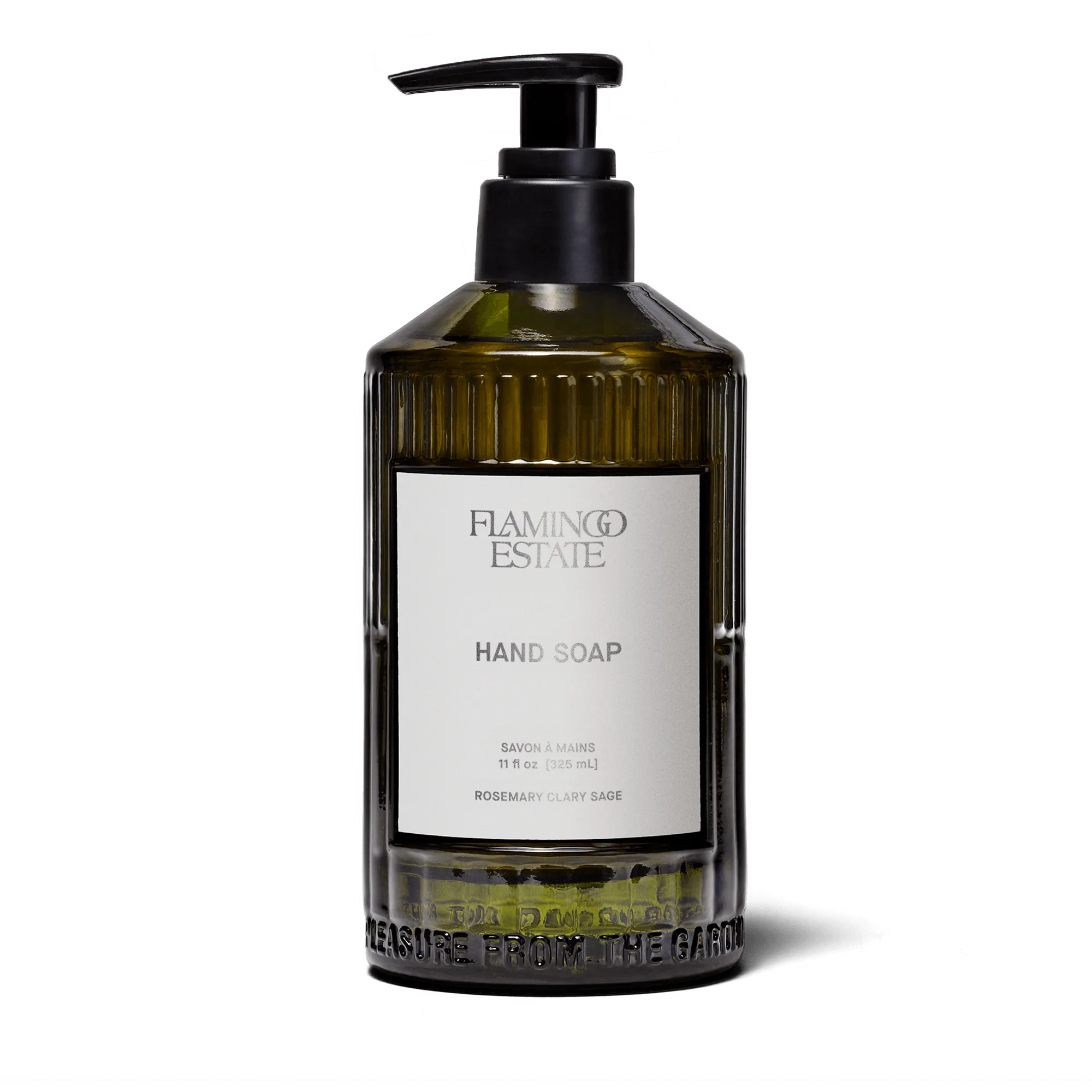
Rosemary Clary Sage Glass Hand Soap
Which one is right for you?
Best for
- Those who want a natural, botanical hand soap with a refined scent
- Shoppers seeking a reusable glass bottle that doubles as decor
- People who enjoy a sensory, ritualistic hand-washing experience
Not for
- Budget-focused buyers who need the lowest cost per wash
- Households with young children where breakable glass is a concern
- Anyone who prefers a lightweight, portable soap bottle