Quick answer
A rotating car seat makes daily loading and buckling easier on your back, especially in tight spaces, while a standard convertible seat is simpler, lighter, and often more budget-friendly. Your choice depends on vehicle size, how often you move the seat between cars, and your child's age.
Why rotation matters for your daily routine
If you've ever twisted sideways to buckle a sleeping toddler into a rear-facing seat, you know the strain on your lower back. A rotating seat swivels 180 degrees so you face the child directly, reducing awkward reaching. This is a genuine benefit for parents with limited mobility or those who load a child multiple times a day.
Standard convertible seats are fixed in position. They are typically lighter (often by 5–10 lb) and have a simpler installation, making them easier to move between vehicles. If you swap cars frequently or travel with the seat, the weight and complexity of a rotating mechanism can become a drawback.
Vehicle fit and passenger space
Not every rotating seat fits every car. The Revolve360 Slim 2-in-1, for example, has a 16.9-inch exterior footprint designed for compact vehicles. That slim base leaves more room for other passengers, which is a real advantage if you regularly have three across the back seat.
Standard seats vary widely in width, but many are narrower than the average rotating model. If your car has very tight rear legroom or you need to fit three seats across, a slim standard convertible may be the more practical choice. Always check your vehicle's seat width and the seat's stated dimensions before buying.
Long-term use and weight limits
Rotating all-in-one seats like the Revolve360 cover from 4 lb up to 120 lb, spanning rear-facing, forward-facing, and booster modes. That means one seat can last from infancy to booster age, which simplifies your purchase and reduces long-term cost.
Standard convertible seats also offer extended use, but many stop at 65 lb or require a separate booster later. If you want a single seat that grows with your child through all stages, a rotating all-in-one may save you money and hassle in the long run.
Rotating vs. standard: the trade-offs
- Daily convenience: Rotating seats let you face your child directly for buckling and unloading, reducing back strain. Standard seats require you to reach sideways, which is harder on your back but simpler mechanically.
- Installation and portability: Standard seats are lighter and easier to install, making them ideal for families who move seats between cars. Rotating seats are heavier and have more parts, so they are best left in one vehicle.
- Vehicle fit: Slim rotating models like the Revolve360 Slim can fit compact cars better than some standard seats. Standard seats vary widely; measure your back seat before choosing either type.
- Long-term value: A rotating all-in-one seat can last from 4 lb to 120 lb, potentially replacing two or three seats. Standard convertibles often require a separate booster later, increasing total cost.
Product facts
-
Revolve360 Slim 2-in-1 Rotating Car Seat with SensorSafe: The Revolve360 Slim 2-in-1 has a 16.9-inch exterior footprint designed for compact vehicles. This slim design helps you fit more passengers or additional seats in the back row without sacrificing your child's seating space.
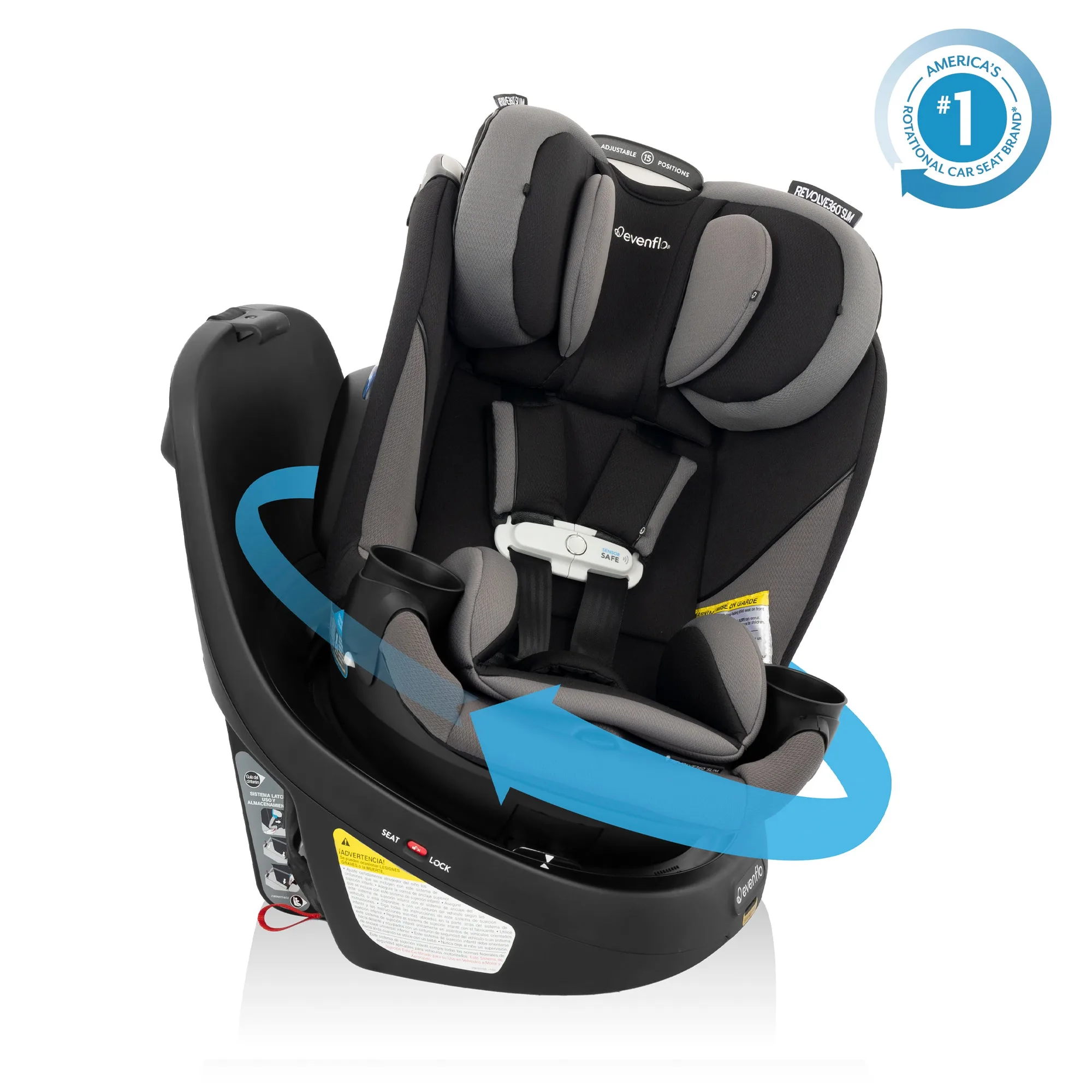
Revolve360 Slim 2-in-1 Rotating Car Seat with SensorSafe
-
Revolve360 Rotating All-In-One Car Seat: The Revolve360 Rotating All-In-One Car Seat accommodates children from 4 lb to 120 lb across all three modes of use. You can use this single seat from infancy through booster age, eliminating the need to buy multiple seats over time.
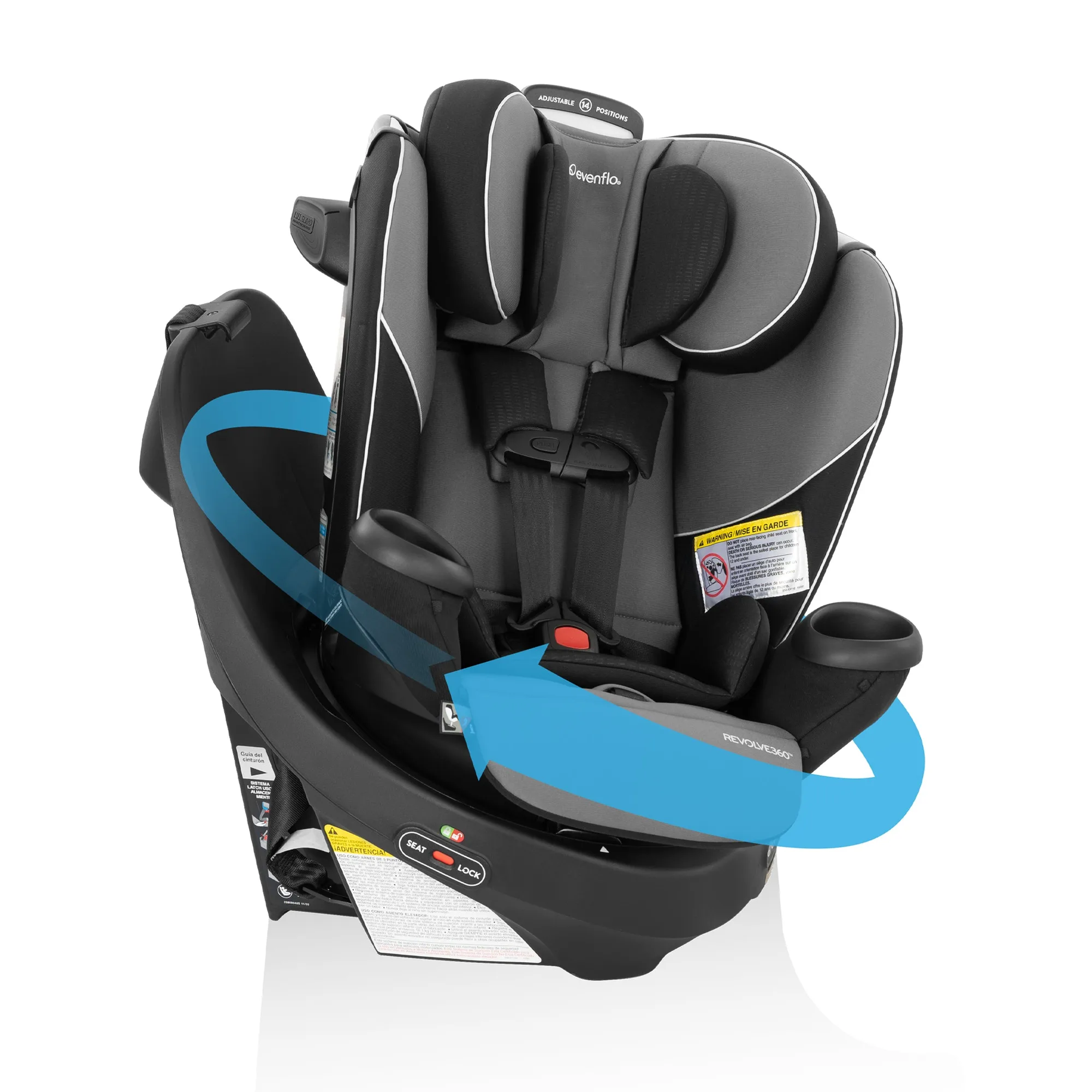
Revolve360 Rotating All-In-One Car Seat
Which seat fits your family?
Best for
- Parents who buckle a child multiple times daily and want to reduce back strain
- Families with a compact vehicle who need to maximize rear passenger space
- Caregivers who prefer one seat that covers all stages from infancy to booster
Not ideal for
- Households that frequently swap the seat between two or more vehicles
- Budget-focused buyers who want the lowest upfront cost and lightest seat