Quick answer
Start with the furniture footprint, not the wall-to-wall dimensions. For a king bed, choose a 9x12 or larger so the rug extends about 18-24 inches beyond the sides and foot. For a sofa, pick a rug that is at least as long as the sofa and wide enough to sit under the front legs. For a dining table, add 24 inches on every side to allow chairs to slide back. If you are deciding between 8x10 and 9x12, measure the open floor area first: 8x10 suits smaller living rooms and queen beds, while 9x12 fits larger seating groups and king beds.
Measure the footprint before you shop
Pull the furniture slightly away from the wall and measure the total width and depth it occupies. That footprint, plus the extension you want around it, determines the rug size. For a bed, measure from the headboard to the footboard and side to side. For a sofa, measure the full length and the depth of the front legs. For a dining table, measure the tabletop and add 24 inches on each side for chair pull-out. Write these numbers down and compare them with standard rug sizes before browsing.
Bedroom rug sizes: queen vs king
A common mistake is choosing a rug that only fits under the bottom half of the bed. For a queen bed, an 8x10 rug usually works if you want 18-24 inches of rug on three sides. For a king bed, a 9x12 rug gives you that same border without the rug looking small. If the room is tight, a runner along each side can work, but it will not give you a single soft landing spot when you get out of bed. A round rug can work beside a bed as an accent, but it is not a substitute for a full-size area rug under a king bed.
Living room rug sizes for sofa layouts
The rug should be at least as long as the sofa so the front legs sit on it. For a standard three-seat sofa (about 84 inches), an 8x10 rug is often the minimum; a 9x12 gives more breathing room if you have a chaise or two armchairs. If you have a sectional, measure the longest side and choose a rug that extends a few inches beyond it. In an open-plan space, use the rug to define the seating zone rather than trying to cover the entire floor. A smaller 5x8 can work in a tight apartment with a loveseat, but the front legs of the sofa should still rest on the rug.
Dining table rug size chart
For a dining table, the rug should extend 24 inches beyond each edge so chairs can slide back without catching. A 6-seat rectangular table (about 72 inches long) typically needs an 8x10 rug. A larger 8-seat table (about 96 inches) needs a 9x12. Round tables work well with round or square rugs: measure the table diameter and add 48 inches total. If your dining area is small, a rug that only extends 18 inches may still work if chairs are pulled out only occasionally, but 24 inches is the comfortable standard.
Runners and round rugs: where they fit
Runners are for hallways, kitchen galas, and beside beds. A typical runner is 2.5x8 or 2.5x10. Measure the length of the hallway and leave a few inches of bare floor at each end so the runner does not look wall-to-wall. For a round rug in a bedroom, a 6-foot round works beside a queen bed as a reading nook accent, while an 8-foot round can sit under a small round dining table. Round rugs are less forgiving in rectangular rooms because they leave odd-shaped bare corners, so use them where the furniture arrangement is also round or curved.
8x10 vs 9x12: which one do you need?
An 8x10 rug (80 square feet) fits a queen bed with 18-24 inches on three sides, a standard sofa with front legs on the rug, or a 6-seat dining table. A 9x12 rug (108 square feet) fits a king bed, a larger sectional, or an 8-seat dining table. The difference is not just size; it is how much bare floor remains around the rug. In a room smaller than 12x14 feet, a 9x12 can look wall-to-wall and make the space feel smaller. In a room larger than 14x16 feet, an 8x10 can look like a postage stamp. Measure your room and leave at least 12-18 inches of bare floor around the rug if you want a border effect.
Decision rules for picking a rug size
- King bed: Choose a 9x12 or larger so the rug extends 18-24 inches beyond the sides and foot. If the room cannot fit a 9x12 with at least 12 inches of bare floor around it, use two runners instead. Measure from the headboard to the footboard, then add 36-48 inches to the length.
- Sofa and living room: Pick a rug at least as long as the sofa. For a standard three-seat sofa, start with 8x10; for a sectional or two sofas, go 9x12. The front legs of all seating should sit on the rug. If the rug is shorter than the sofa, it will look like a bath mat.
- Dining table: Add 24 inches on every side of the table. A 6-seat table needs 8x10; an 8-seat table needs 9x12. Round tables work with round or square rugs that add 48 inches to the diameter. Test with chairs pulled out before you commit.
- Runner: Use a 2.5x8 or 2.5x10 runner in hallways and beside beds. Leave a few inches of bare floor at each end so the runner does not look wall-to-wall. Runners are for traffic paths, not for anchoring furniture.
- Round rug: Use a round rug under a round dining table or as an accent beside a bed. Measure the furniture diameter and add 48 inches for dining; for a bedroom accent, a 6-foot round is usually enough. Round rugs leave odd bare corners in rectangular rooms, so place them where the furniture is also round.
Rugs that work with these size rules
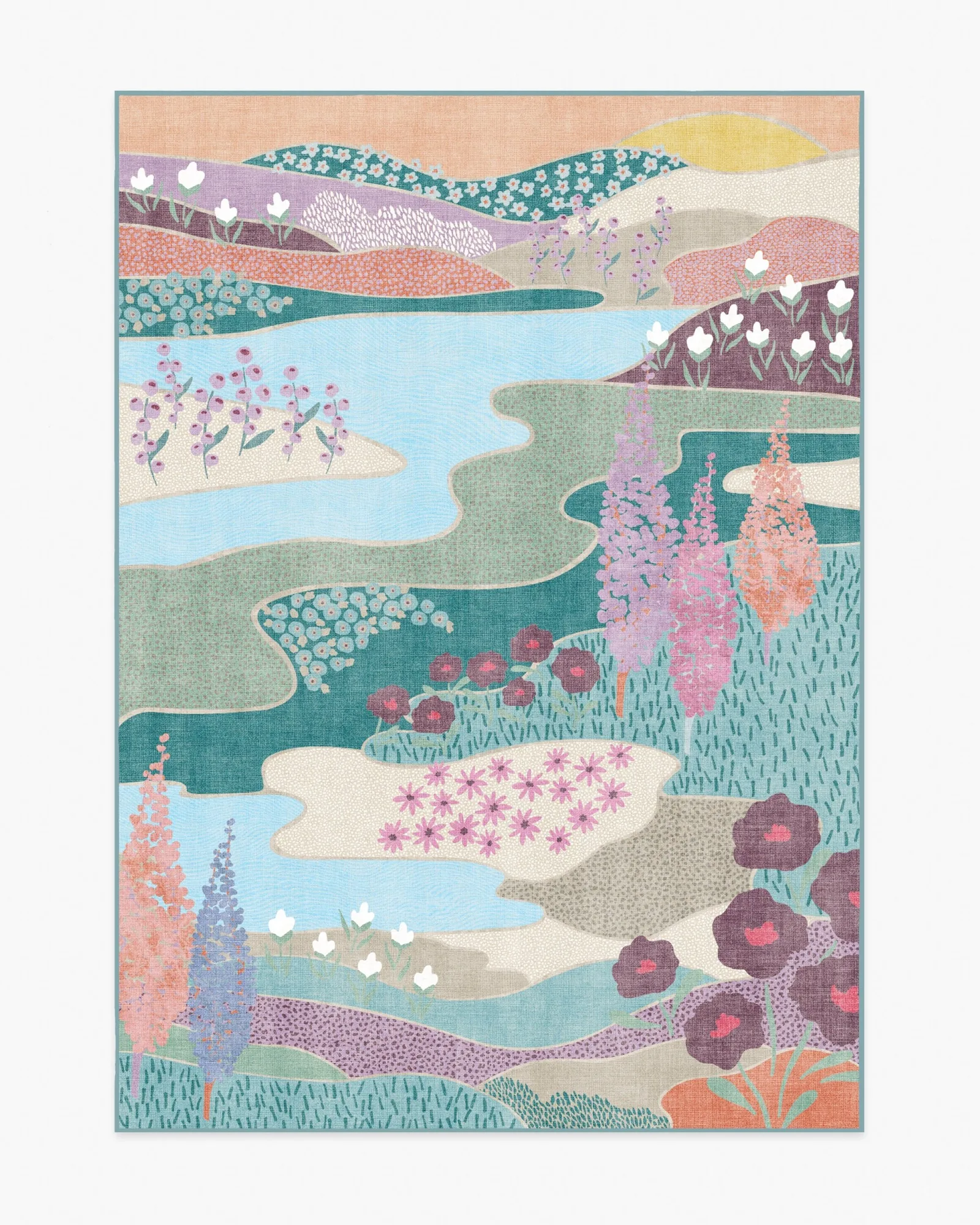
- Dreamland Multicolor Pastel Rug: The Dreamland Multicolor Pastel Rug is water-resistant, stain-resistant, and fully machine-washable, with a playful landscape design in teal, sage, orange, and pink. A busy, colorful pattern helps hide footprints and crumbs in high-traffic dining or living areas, and the washable construction means you can size up without worrying about cleaning a larger rug.
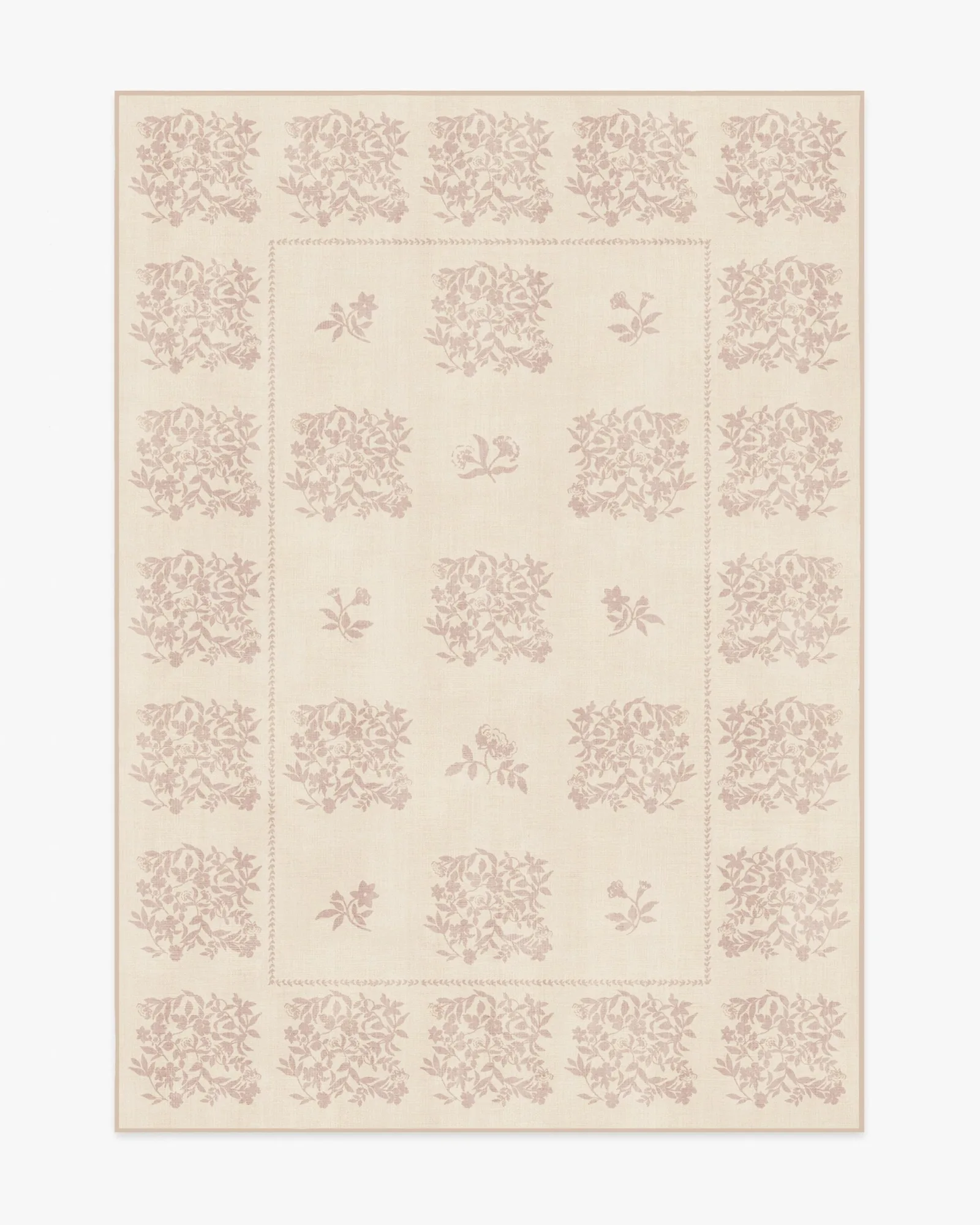
- Iona Cream & Vintage Blush Rug: The Iona Cream & Vintage Blush Rug is water-resistant, stain-resistant, and fully machine-washable, with a repeating floral block and a thin border on a cream ground. The structured border makes it easy to align with a bed or sofa, and the light neutral palette keeps a large 9x12 from overpowering a smaller room.
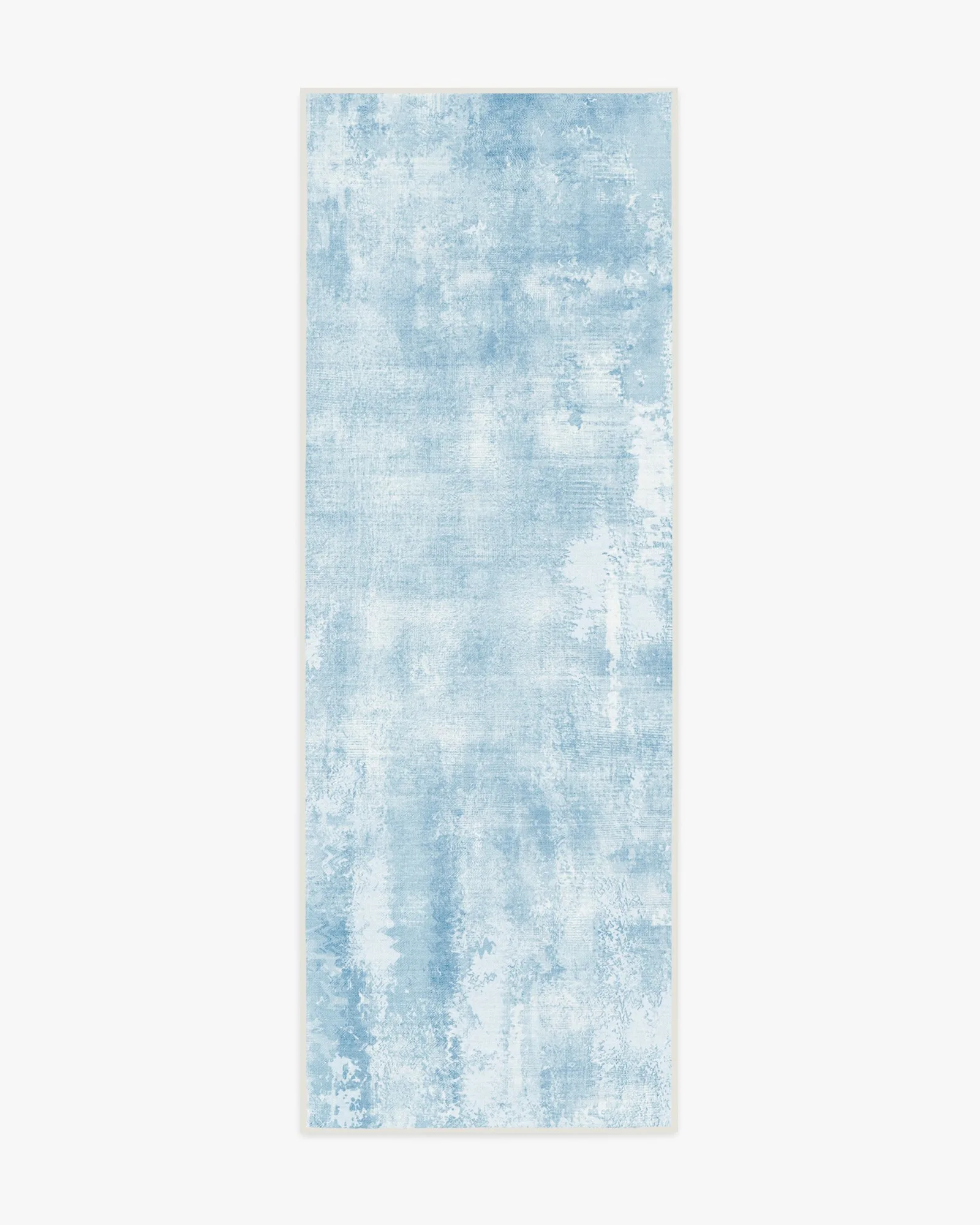
- Alister Soft Blue Rug: The Alister Soft Blue Rug is water-resistant, stain-resistant, and fully machine-washable, with soft blues, bright ivory, and pops of gold in a subtle textured pattern. The airy color story works well in a living room where you want the rug to define the seating zone without competing with artwork or upholstery.
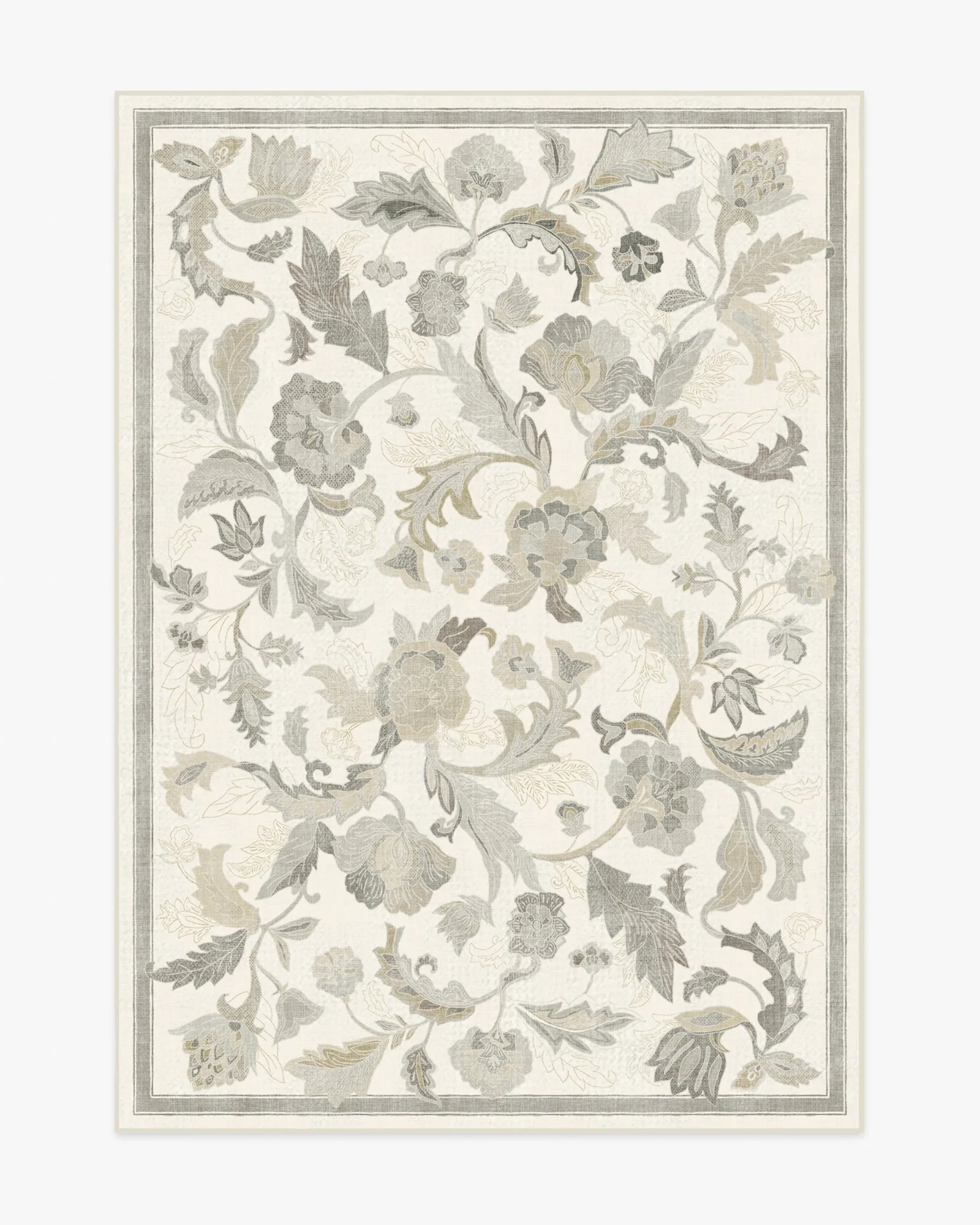
- Plume Ivory Rug: The Plume Ivory Rug is water-resistant, stain-resistant, and fully machine-washable, with feathered leaves in grey, taupe, and beige on an ivory ground. A low-contrast pattern is forgiving in dining rooms and bedrooms where you want the rug to blend rather than become the focal point.
Who this size guide is for
Best for
- Anyone measuring a bedroom, living room, or dining room before buying a rug
- Shoppers deciding between 8x10 and 9x12
- People who want a rug that sits correctly under a king bed, sofa, or dining table
Not for
- Shoppers looking for rug care or washing instructions
- Anyone choosing a rug pattern or color without size constraints
- Spaces where the rug is purely decorative and will not sit under furniture