Quick answer
For extended edge retention during heavy butchering, the Sawtooth Knife's serrated profile and MagnaCut steel outperform standard plain-edge hunting knives. The trade-off is that serrated edges are harder to field-sharpen than plain edges.
How Serrated Edges Retain Sharpness Longer
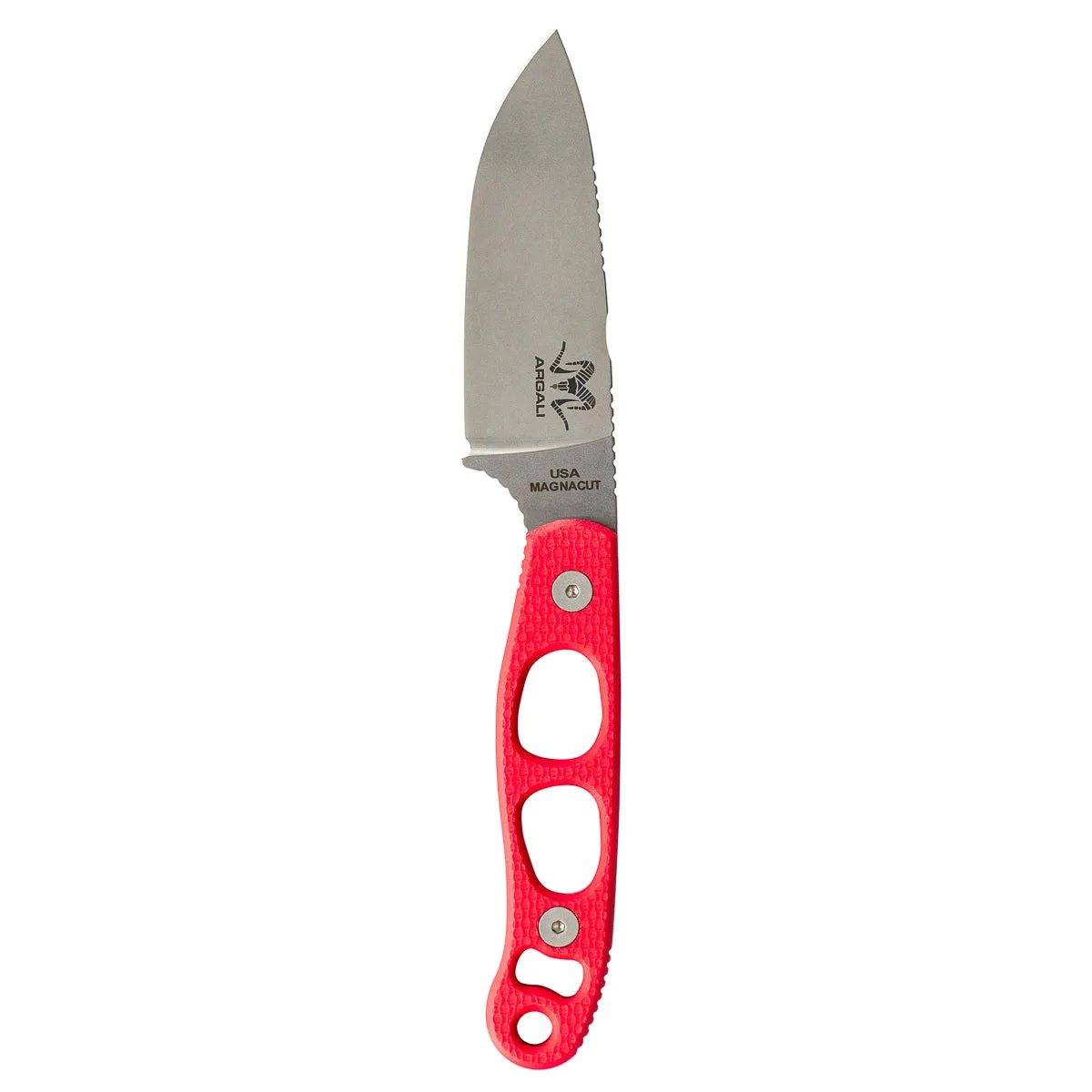
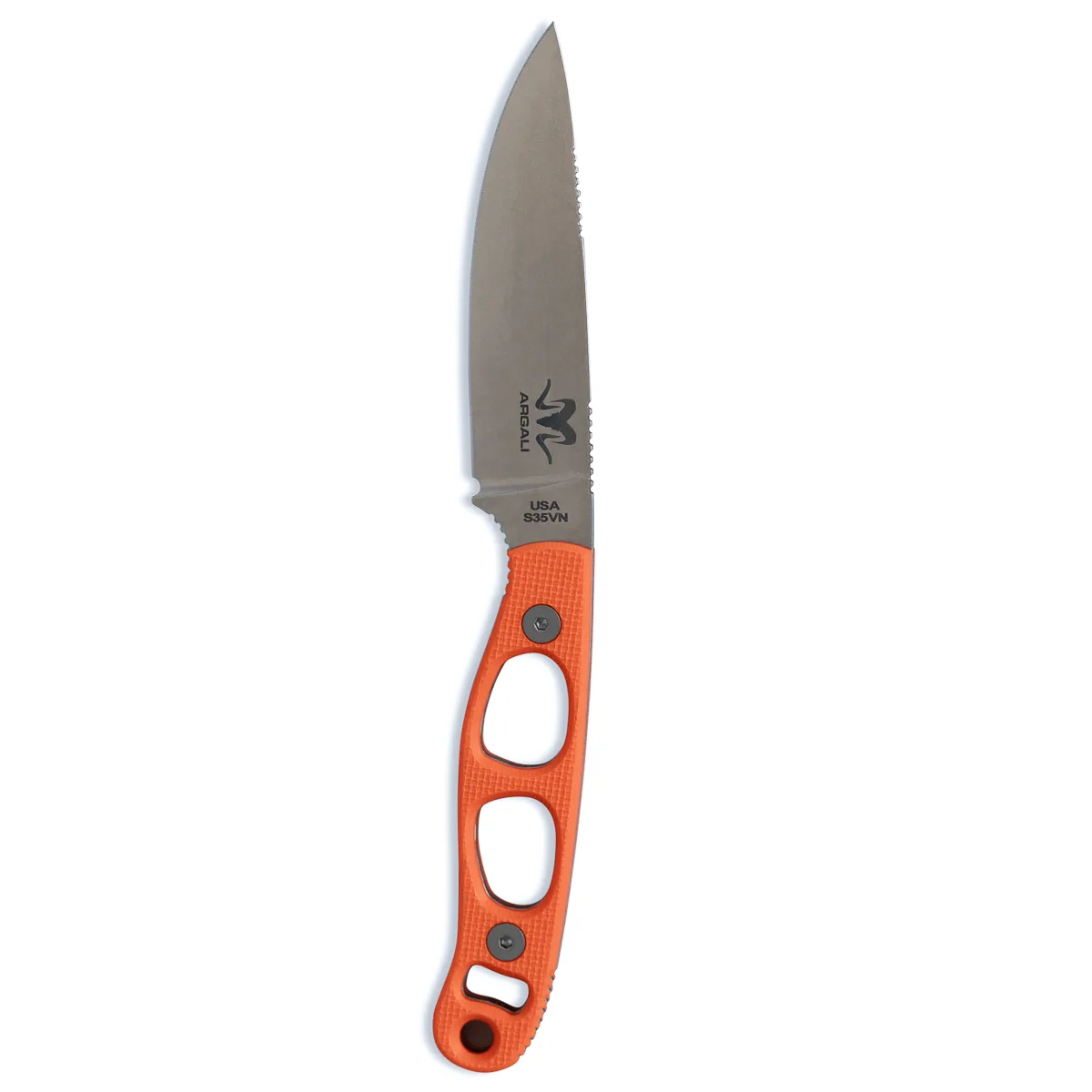
Serrated blades like the Sawtooth Knife maintain cutting ability longer because the scalloped teeth concentrate force on small contact points. This design reduces dulling from repetitive slicing through hide, sinew, and bone. In field dressing scenarios where you may not have time to stop and sharpen, a serrated edge keeps working effectively through multiple animals.
Plain-edge knives rely on a continuous thin edge that dulls faster when contacting bone or grit. While plain edges are easier to restore with a stone or steel, they require more frequent maintenance during extended butchering sessions. The Sawtooth Knife's serrations let you focus on the task rather than edge upkeep.
MagnaCut Steel: The Edge Retention Foundation
The Sawtooth Knife uses MagnaCut steel, a premium powder metallurgy stainless steel known for exceptional wear resistance and corrosion resistance. This steel holds a sharp edge significantly longer than common knife steels like 420HC or 8Cr13MoV found in many standard hunting knives. The combination of serrated geometry and MagnaCut steel means the Sawtooth Knife requires less frequent sharpening in the field.
Standard hunting knives often use softer steels that are easier to sharpen but dull faster. If you prioritize edge retention above all else, the Sawtooth Knife's MagnaCut steel is a clear advantage. However, when the edge eventually does need attention, you'll need a diamond rod or specialized sharpener designed for serrated blades.
Trade-Off: Field Sharpening Difficulty
The primary trade-off of the Sawtooth Knife's serrated edge is the difficulty of field sharpening. While a plain-edge knife can be restored with a few passes on a pocket stone or ceramic rod, serrated edges require a tapered diamond rod to match the scallop profile. Without the proper tool, you cannot effectively sharpen a serrated blade in the backcountry.
For hunters who process game at home or carry a sharpening kit, this trade-off is minimal. But for those who prefer a quick touch-up in the field without extra gear, a standard plain-edge hunting knife may be more practical.
Trade-offs at a glance
- Edge retention during heavy use: The Sawtooth Knife's serrated edge and MagnaCut steel maintain cutting ability longer than standard plain-edge knives when slicing through hide, sinew, and bone.
- Field sharpening ease: Plain-edge knives can be sharpened with a pocket stone or steel; serrated edges require a tapered diamond rod, which adds weight and complexity to your kit. If you carry a diamond rod, the Sawtooth Knife is still manageable.
- Versatility for different tasks: The Sawtooth Knife's modified skinning shape works well for both skinning and butchering, but a plain-edge knife may be better for precision work like caping or boning.
Product facts
-
Sawtooth Knife: The Sawtooth Knife is the largest knife in our lineup, made with premium MagnaCut steel and a modified skinning-style shape for any big game butchering task. MagnaCut steel provides excellent edge retention and corrosion resistance, reducing the need for frequent sharpening during multi-animal field dressing.
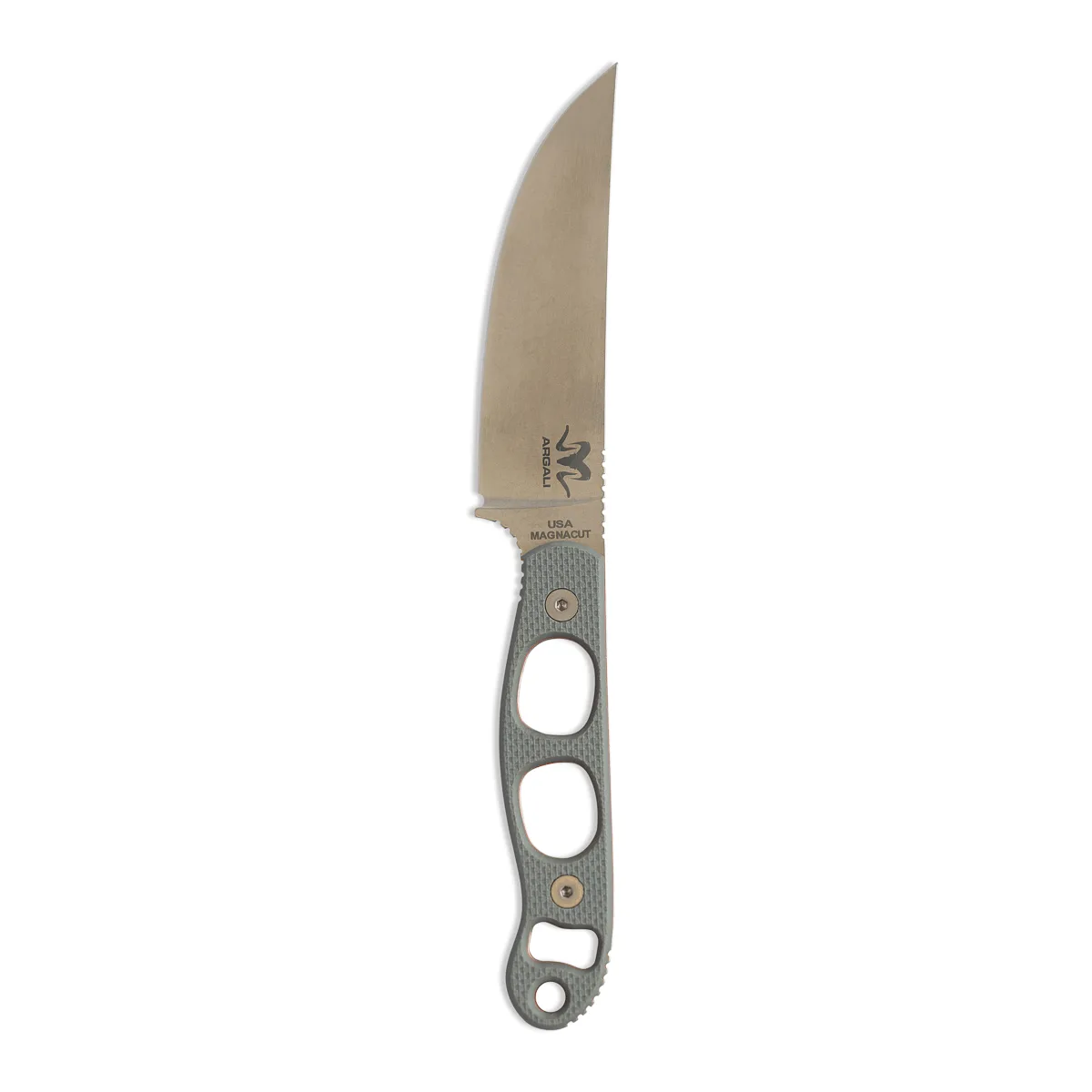
Sawtooth Knife
Which knife fits your style?
Best for
- Hunters who process multiple animals in a single trip and want to minimize sharpening stops
- Those who prioritize edge retention and are willing to carry a diamond rod for eventual sharpening
Not for
- Hunters who prefer quick field touch-ups with a pocket stone and don't want to carry extra sharpening gear
- Anyone who needs a knife for delicate tasks like caping or detailed boning where a plain edge offers more control