Quick answer
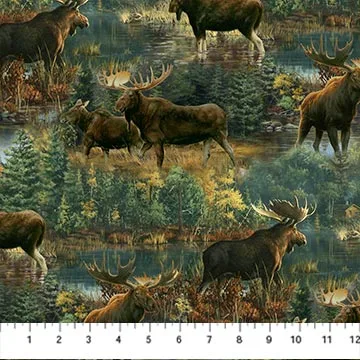
Choose a scenic quilt fabric panel when you want the artwork to do the work and you are ready to plan borders, backing, and quilting around a fixed printed size. Choose a pieced pattern instead when you want to control block placement, use scraps, or practice a specific technique. For a wildlife or landscape look, Northwood Naturescapes by Hautman Brothers is a strong candidate because the scenic print is designed as a focal fabric, not a background blender.
What a scenic panel actually gives you
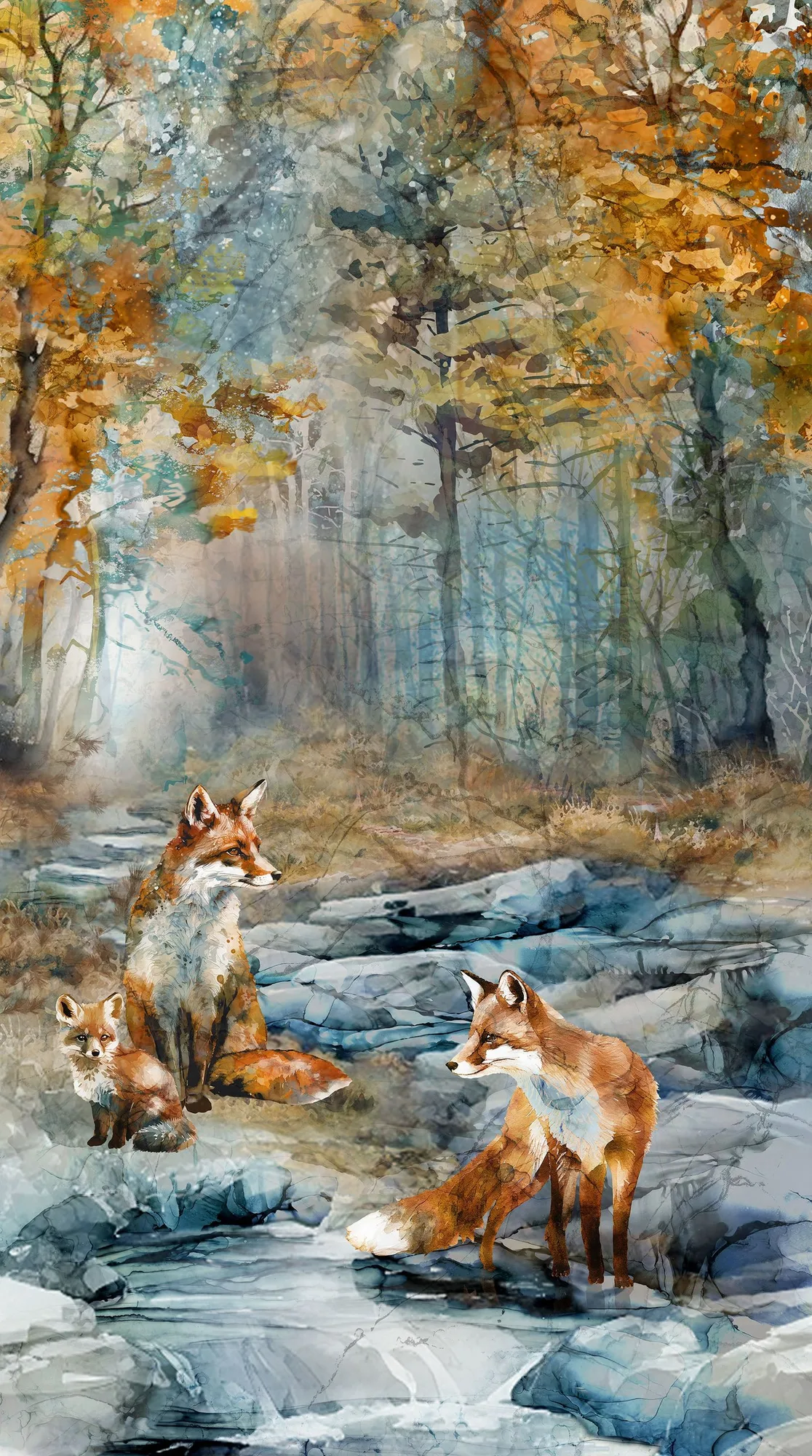
A scenic panel is a printed rectangle or square of fabric with a complete image, so the top is partly finished before you cut anything. That saves piecing time, but it also locks in the composition. You cannot move a tree or a fox to a better spot. Measure the printed image before you cut, because the usable design area is usually smaller than the cut width. If the panel has a directional print, keep the top edge consistent across every piece you cut from it.
Match the panel to the quilt's job
A wall hanging, a lap quilt for a nature lover, and a baby quilt have different demands. A wall hanging can let the panel dominate and use simple borders. A lap quilt usually needs more width, so you add side and top borders or set the panel with coordinating blocks. A baby quilt needs a soft, washable result, so check the fabric content before you commit. If the panel is 100% cotton quilting fabric, it behaves like standard quilting cotton and can be machine quilted and washed.
How to plan borders, backing, and quilting
Treat the panel as the center medallion. Pull two or three colors from the artwork for borders, then audition them next to the panel in daylight. A narrow inner border in a dark tone can frame the image, while a wider outer border in a mid-tone gives the eye a rest. For backing, choose a print that reads as a texture from a distance so it does not compete with the panel. Quilting can follow the printed shapes, such as outlining trees or water, or it can be an allover design that lets the print stay the focus.
When a pieced pattern beats a panel
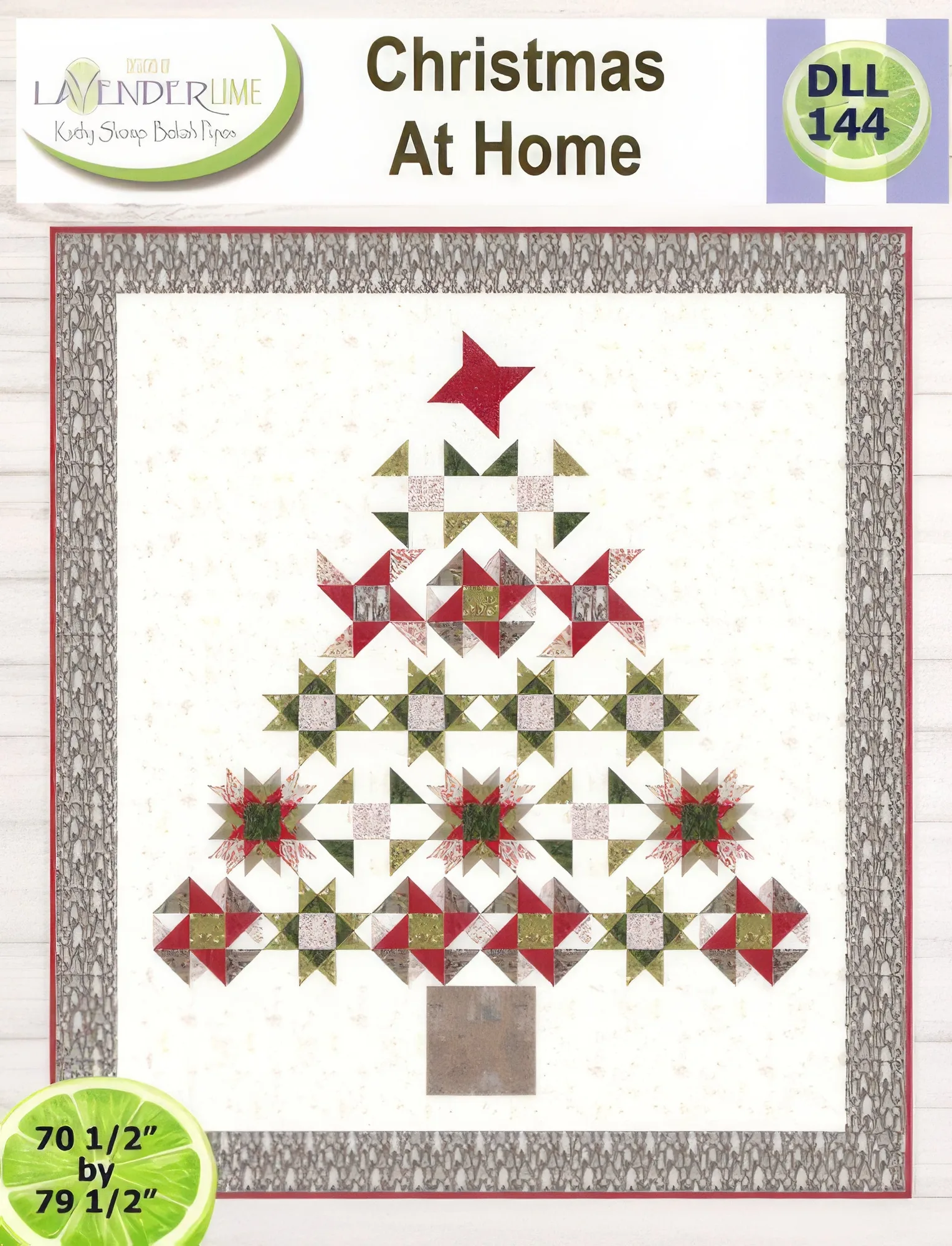
If you want to use a fabric collection across many blocks, a pattern gives you more control. A pattern such as Christmas at Home by Lavender Lime Quilting uses a variety of blocks, which suits quilters who enjoy piecing and want a seasonal project that is not built around one printed image. Panels are faster to assemble, but patterns let you adjust size, repeat blocks, and use up stash. If you are unsure, make a small panel project first and save the pattern for a larger quilt.
Decision rules for buying scenic quilt fabric
- Rule 1: Buy the panel if the artwork is the reason: If you chose the fabric because of the animals, trees, or landscape, buy the panel and build the quilt around it. Do not cut it into small pieces unless you have a specific pattern that calls for it. Panel first, pattern second.
- Rule 2: Buy a pattern if you want to control the layout: If you want to choose where each block goes, repeat a block, or use many fabrics, a pattern such as Christmas at Home is the better purchase. It gives you structure without a fixed printed image. Pattern first, panel as accent.
- Rule 3: Check the printed size before you plan borders: A panel listed as 24 inches by 43 inches has a printed image inside those dimensions. Measure the image, then add borders to reach the quilt size you want. If the size is not listed, ask before buying. Measure, then cut.
- Rule 4: Choose cotton for washable quilts: When the panel is 100% cotton quilting fabric, it can be pieced, quilted, and washed like standard quilting cotton. If the fiber content is not stated, treat it as a decision limitation and confirm before buying for a baby or utility quilt. Cotton for daily use.
Product facts to check before buying
- NORTHCOTT - Northwood Naturescapes by Hautman Brothers - Scenic - Green/Multi: NORTHCOTT - Northwood Naturescapes by Hautman Brothers - Scenic - Green/Multi, item DP27543-78. This is the scenic print itself, so it works as the focal fabric in a panel-style quilt or as a large-scale accent in a pieced top.
- NORTHCOTT - Fox Den by Deborah Edwards and Melanie Samra - Fox Den Panel - PL1231: The Fox Den Panel from Northcott is a quilting fabric panel designed by Deborah Edwards and Melanie Samra, made of 100% cotton quilting fabric and measuring 24 inches by 43 inches. The stated panel size tells you the finished center before borders, so you can calculate total quilt dimensions and backing yardage without guessing.
- Christmas at Home Quilt Pattern by Lavender Lime Quilting: Christmas at Home Quilt Pattern by Lavender Lime Quilting is a pattern for quilters who enjoy working with a variety of blocks. If you want piecing variety instead of one printed scene, this pattern gives you a block-based alternative and can be made as a gift or seasonal decor.
Who should buy a scenic panel
Best for
- Quilters who want a fast focal quilt with less piecing
- Nature and wildlife themes for wall hangings or lap quilts
- Quilters who prefer to quilt around printed shapes
Not for
- Quilters who want to control every block placement
- Projects that need many repeated blocks from one fabric line
- Quilters who have not confirmed the printed panel size